
Dacige Temple
Dacige Temple
Dacige Temple
CHINA, Hebei, Baoding
According to local gazetteers, the temple was built by General Zhang Rou around the founding of the Yuan dynasty (1271–1368). Originally called Zhenjue Chan Monastery, it was later renamed as Dacige Temple but was changed back to its original name in 2010 by Master Hsing Yun from Fo Guang Shan in Taiwan. The temple was destroyed by fire during the rule of Emperor Qianlong (reigned 1736–1795), and was rebuilt. It has been repaired a number of times throughout its history. It was listed as a National Cultural Heritage Site in 2006.
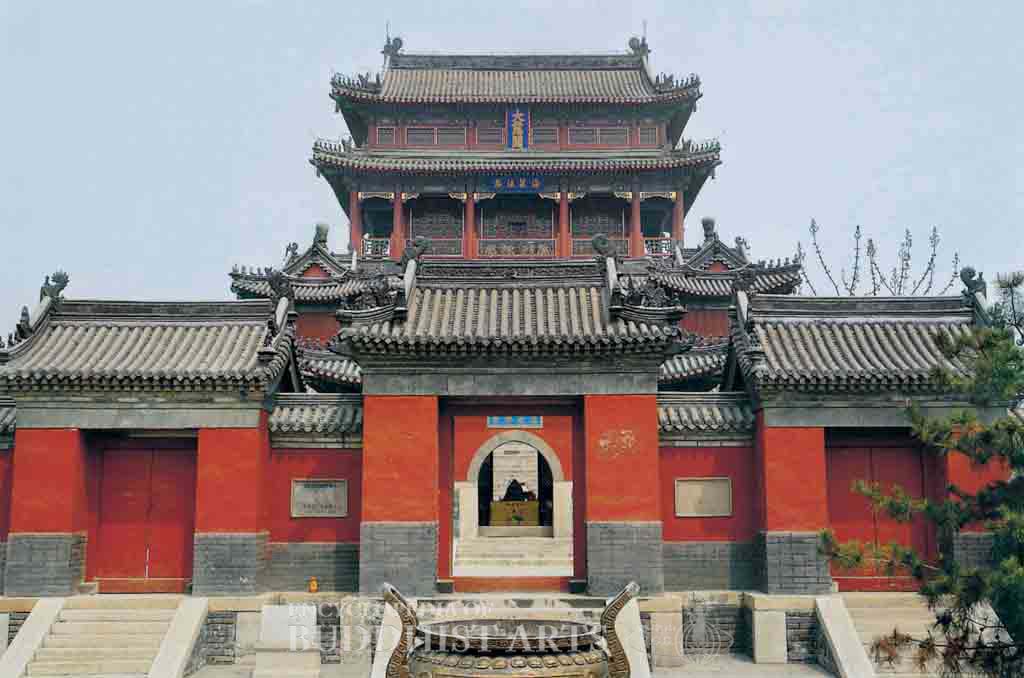
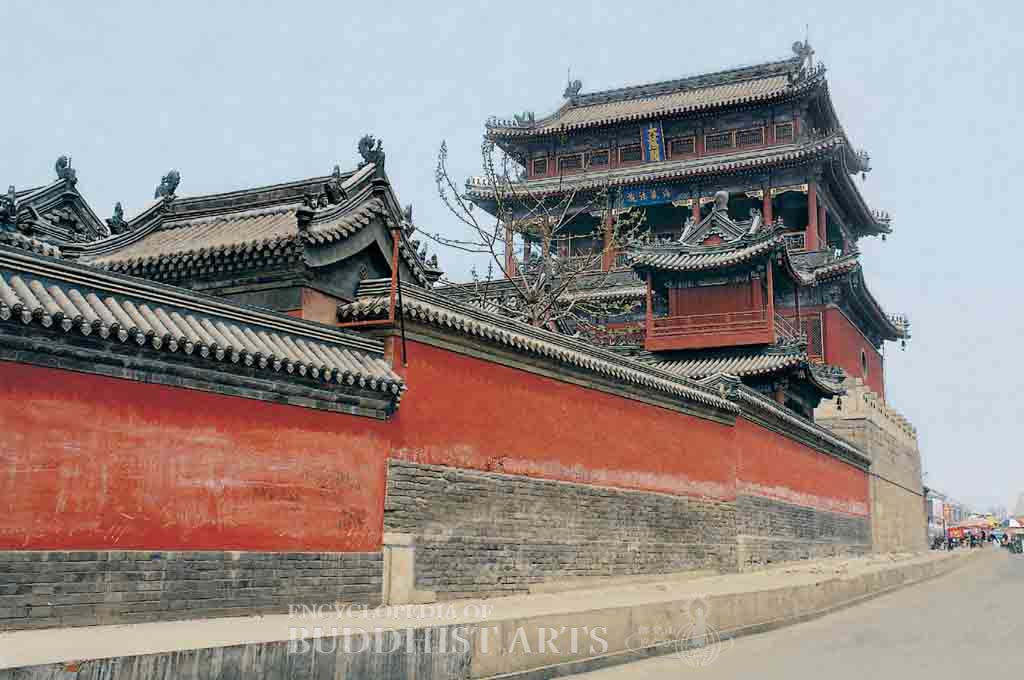
The south-facing temple consists of the Heavenly King Hall, Daci Tower, and bell and drum towers. The Heavenly King Hall was originally the main temple gate. It is a three-by-one bay structure with a single-eave hip-and-gable roof. The ridge ends are decorated with ornaments. Daci Tower is 25 m high and has a hip-and-gable roof. It is built on a 4.6 m high stone base, which is surrounded by white balustrades. The tower is three stories high with a five-by-three bay structure on the first story, while the upper stories have three-by-one bays. Within the tower there is a 5.5 m high statue of Thousand-Armed, Thousand-Eyed Avalokitesvara Bodhisattva on a Sumeru base. The ceilings, beams, and purlins are painted in Suzhou style.
The bell and drum towers are square and have an arched doorway at the front. Surrounded by walkways, the towers have a double-eave, cruciform hip-and-gable roof with a spire at the intersection of the main ridges, which have ornaments on them. The hips are embellished with auspicious creatures.
For more details, go to the Encyclopedia of Buddhist Arts: Architecture A-F, page 187.
Cite this article:
author = Hsingyun and Youheng and Johnson, Peter and Mankuang and Lancaster, Lewis,
booktitle = {Encyclopedia of Buddhist Arts: Architecture A-F},
pages = 187,
title = {{Dacige Temple}},
volume = 1,
year = {2016}}