
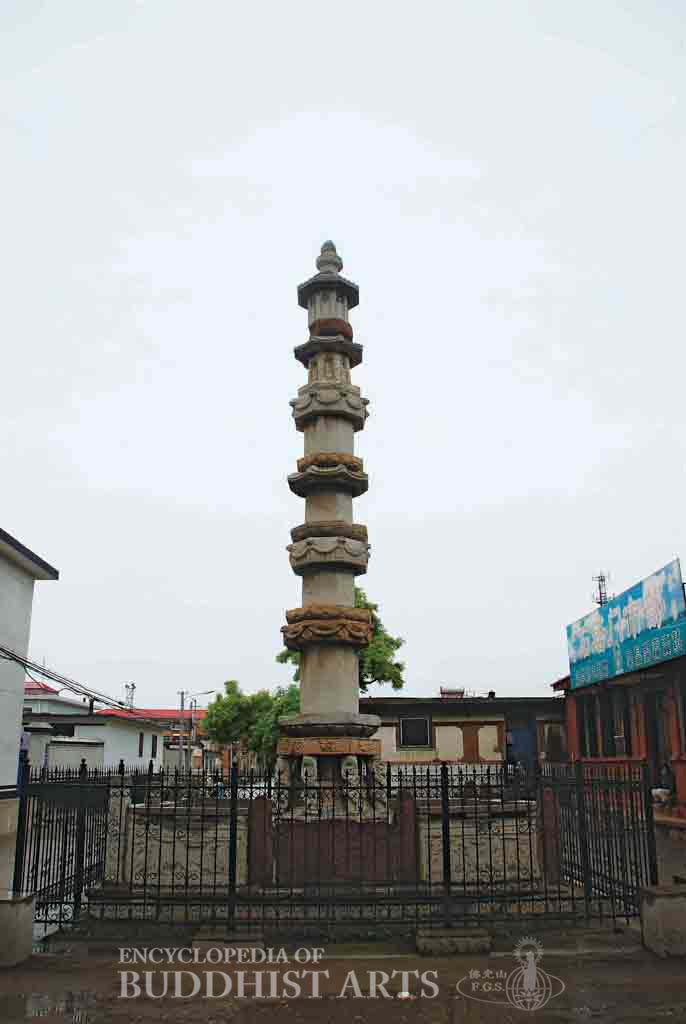
Lulong Sutra Pillar
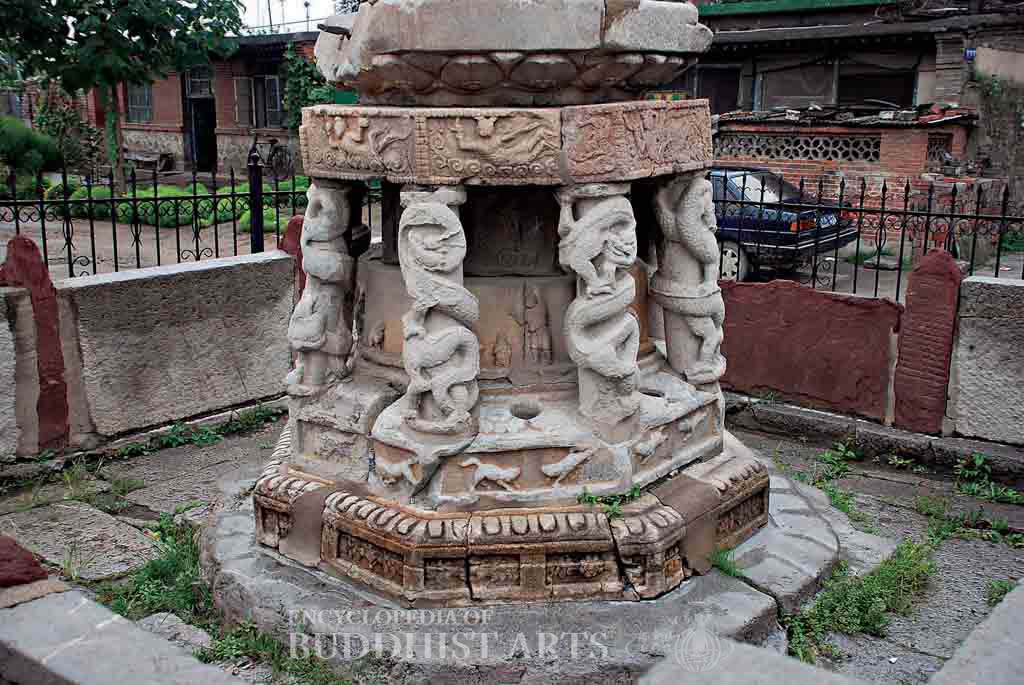
Lulong Sutra Pillar (detail)
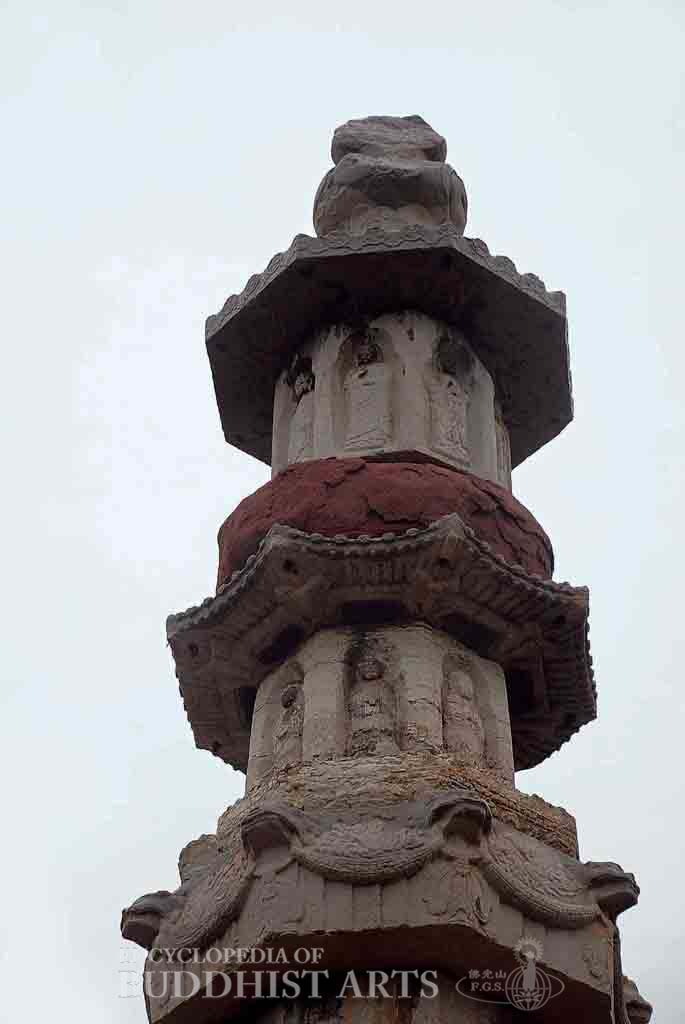
Lulong Sutra Pillar
Lulong Sutra Pillar
CHINA, Hebei, Qinhuangdao
This pillar’s complete name is Usnisavijaya Dharani Sutra Pillar. According to the records, the pillar was constructed during the Tang dynasty (618–907). It was repaired in 1169 during the Jin dynasty. It was listed as a National Cultural Heritage Site in 2006.
The octagonal pillar is 10 m high. It has a Sumeru base with eight short pillars, which are carved with dragon motifs. Each side of the Sumeru base is decorated with carvings of auspicious creatures, Buddhist figures, and apsaras. The rest of the pillar consists of six tiers. The first tier is carved with the Records of the Sutra Pillar in Pingzhou, the second features the Great Compassion Dharani Sutra, the third has the Usnisavijaya Dharani Sutra, and the fourth shows the Record of Repairs to Beiping Stone Sutra Pillar, which was carved during the rule of Emperor Wanli (reigned 1572–1620) of the Ming dynasty. The remaining two tiers are decorated with Buddha images on every side. Every tier is separated by either a canopy, eaves, or an upright lotus. The spire consists of an upturned lotus and a jewel. The whole structure is delicately carved.
For more details, go to the Encyclopedia of Buddhist Arts: Architecture G-L, page 704.
Cite this article:
author = Hsingyun and Youheng and Johnson, Peter and Mankuang and Lancaster, Lewis,
booktitle = {Encyclopedia of Buddhist Arts: Architecture G-L},
pages = 704,
title = {{Lulong Sutra Pillar}},
volume = 2,
year = {2016}}