
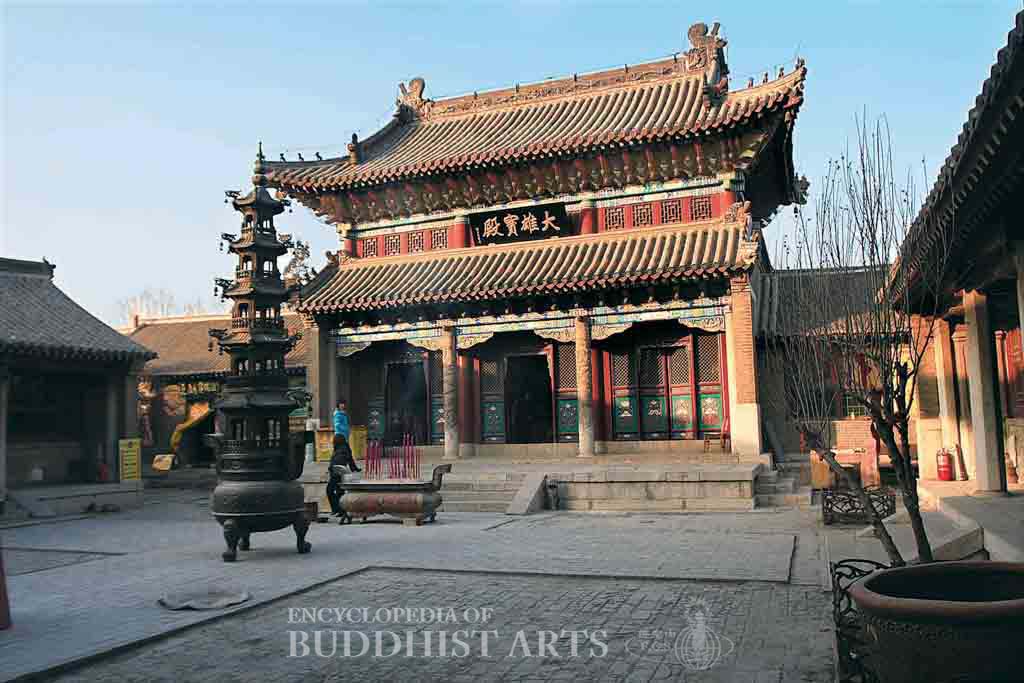
Jingjue Temple: Great Hero Hall
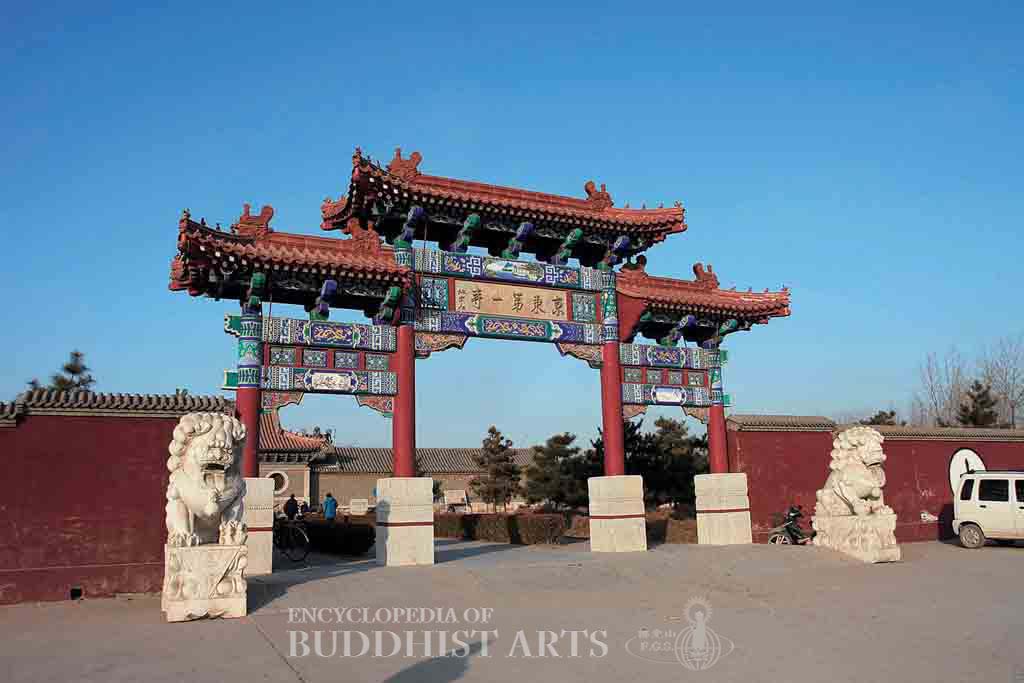
Jingjue Temple: Gateway
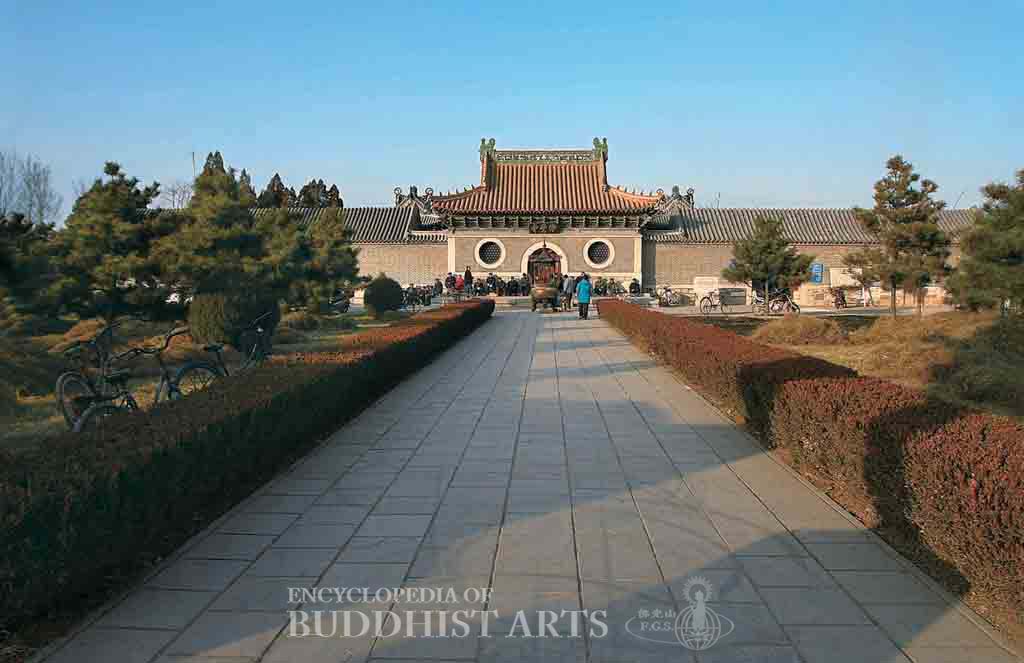
Jingjue Temple: Gate Hall
Jingjue Temple
CHINA, Hebei, Tangshan
Jingjue stands for Pure Awakening. According to a stele inscription, it was built in the Tang dynasty (618–907). Large-scale repairs were carried out during the second half of the Qing dynasty (1644–1911). It was listed as a National Cultural Heritage Site in 2006.
Facing south, the buildings along the central axis of the temple include the gateway, gate hall, gate tower, main hall, Great Hero Hall, and the bell and drum towers. The gateway is three bays wide. The three-by-one bay gate hall is a beamless brick building, also called the Beamless Hall. It has a single-eave hip-and-gable roof covered in yellow glazed tiles. The central bay consists of a large arched entrance to a corridor that passes through the building. The frame of the doorway is made from stone, as are the frames of the round windows on either side. A wooden statue of Maitreya Buddha is enshrined within the hall, along with two Dharma protectors made from clay. The three-by-one bay gate tower has a hip-and-gable roof. The central bay is two stories high, while the side bays have only a single story. The second story used to be the sutra repository, while the first story is used to store stone steles.
The three-by-three bay main hall is also called the Abundant Fragrance Hall. It has a double-eave hip-and-gable roof. A three-by-two bay portico is located at the front. A statue of the Thousand-Armed Avalokitesvara is enshrined inside the hall. The three-by-two bay Great Hero Hall has a hip-and-gable roof. At the front there is a covered extension supported by four stone pillars with carvings of encircling dragons. The beams are covered with embossed plaster and Suzhou-style decorative painting. Inside the hall, Sumeru platforms carved from large slabs of stone can be found in the center as well as on the sides. Seated statues of Sakyamuni Buddha and Eighteen Arhats are enshrined on these platforms with lotuses above them.
For more details, go to the Encyclopedia of Buddhist Arts: Architecture G-L, page 525.
Cite this article:
author = Hsingyun and Youheng and Johnson, Peter and Mankuang and Lancaster, Lewis,
booktitle = {Encyclopedia of Buddhist Arts: Architecture G-L},
pages = 525,
title = {{Jingjue Temple}},
volume = 2,
year = {2016}}