
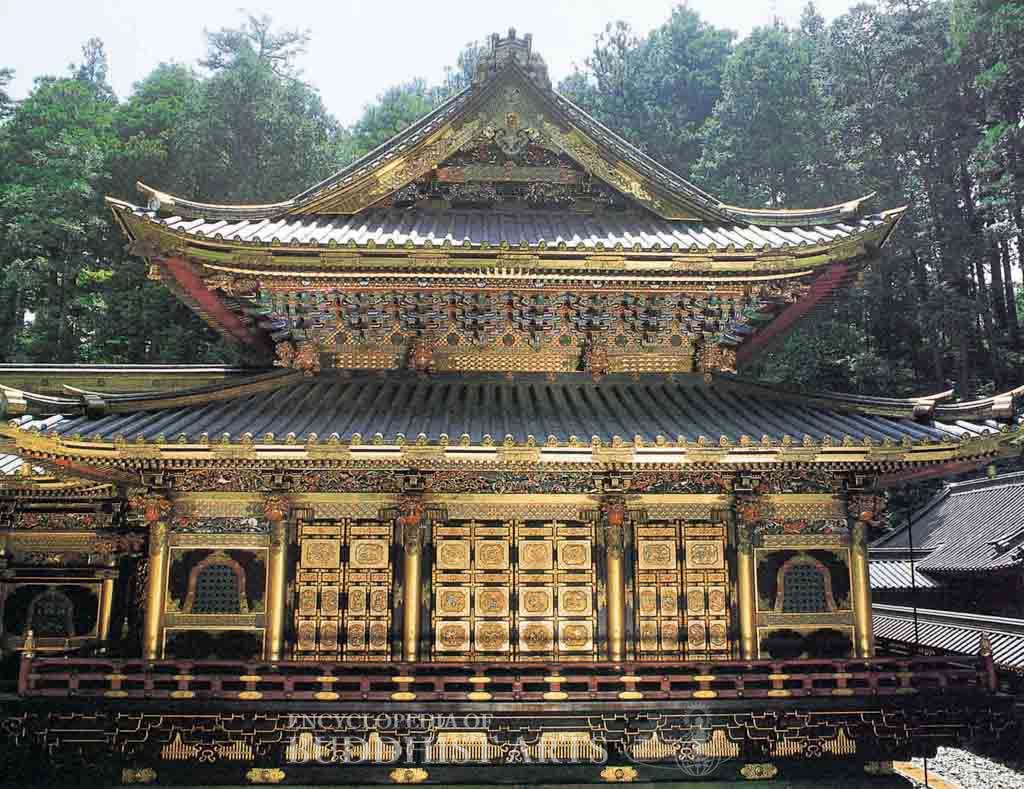
Rinnoji Temple Iemitsu Mausoleum: Shrine
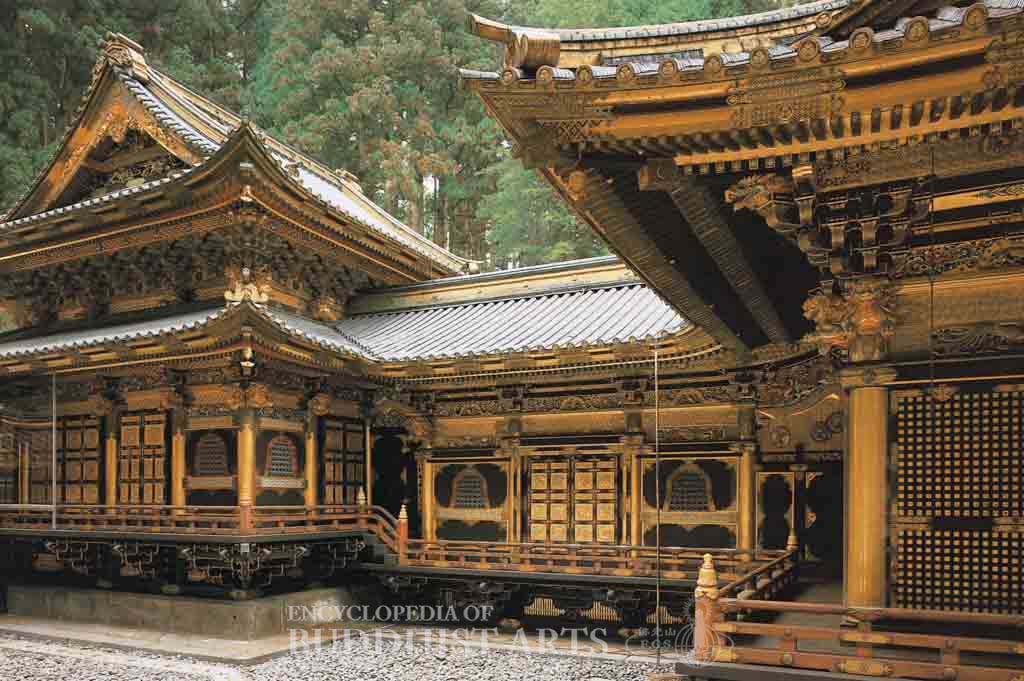
Rinnoji Temple Iemitsu Mausoleum
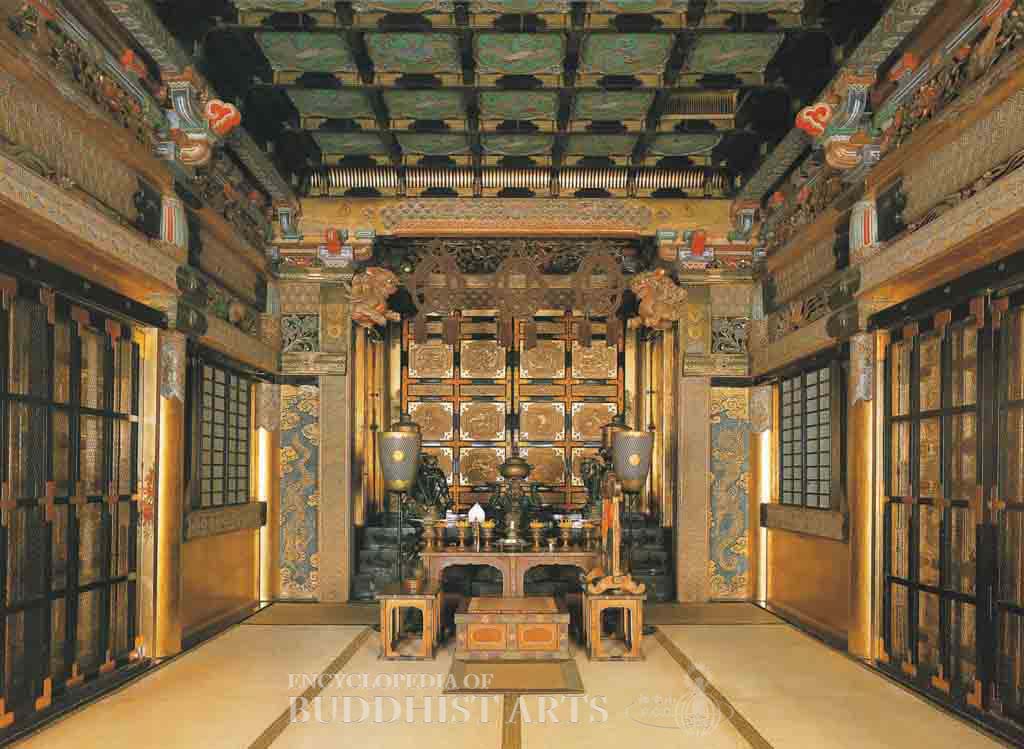
Rinnoji Temple Iemitsu Mausoleum: Connecting Chamber (interior)
Rinnoji Temple Iemitsu Mausoleum
JAPAN, Tochigi, Nikko
Rinnoji Temple belongs to the Tendai school of Buddhism and was founded in 766 during the Nara period. The mausoleum was completed in 1653 during the Edo period. It was listed as a National Treasure in 1952. As part of the Shrines and Temples of Nikko, it was listed as a UNESCO World Heritage Site in 1999.
This mausoleum is composed of a shrine, a worship hall, and a connecting chamber. The buildings are surrounded by a veranda with low balustrades. The three-by-three bay shrine has a double-eave hip-and-gable roof, while the seven-by-seven bay worship hall has a single-eave hip-and-gable roof. All three structures are covered in copper roof tiles. The interiors are filled with splendid decorations, such as engravings, paintings, murals, and golden instruments. Kano Tanyu and his team of artists completed both the interior and exterior decoration of the entire structure. The use of gold as the main color creates a brilliant effect.
For more details, go to the Encyclopedia of Buddhist Arts: Architecture M-S, page 896.
Cite this article:
author = Hsingyun and Youheng and Johnson, Peter and Mankuang and Lancaster, Lewis,
booktitle = {Encyclopedia of Buddhist Arts: Architecture M-S},
pages = 896,
title = {{Rinnoji Temple Iemitsu Mausoleum}},
volume = 3,
year = {2016}}