
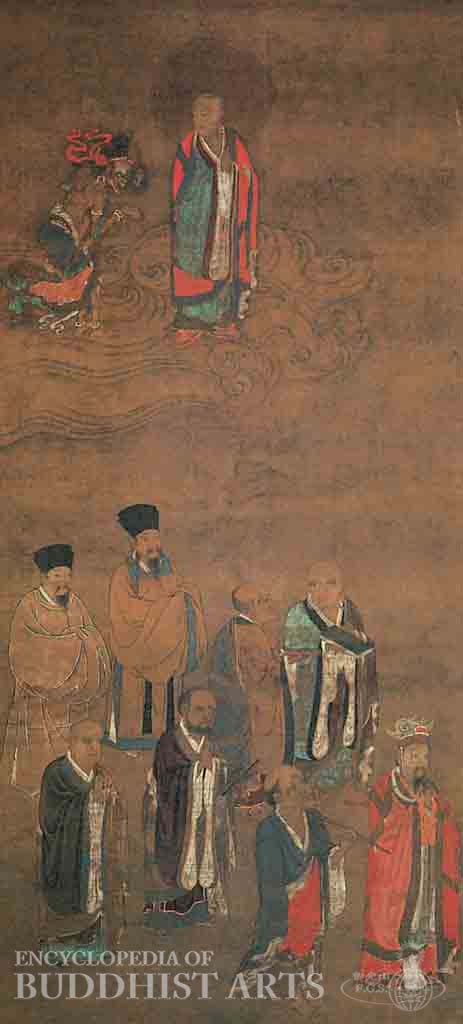
Six Realms of Existence - Human Realm
Ink and color on silk
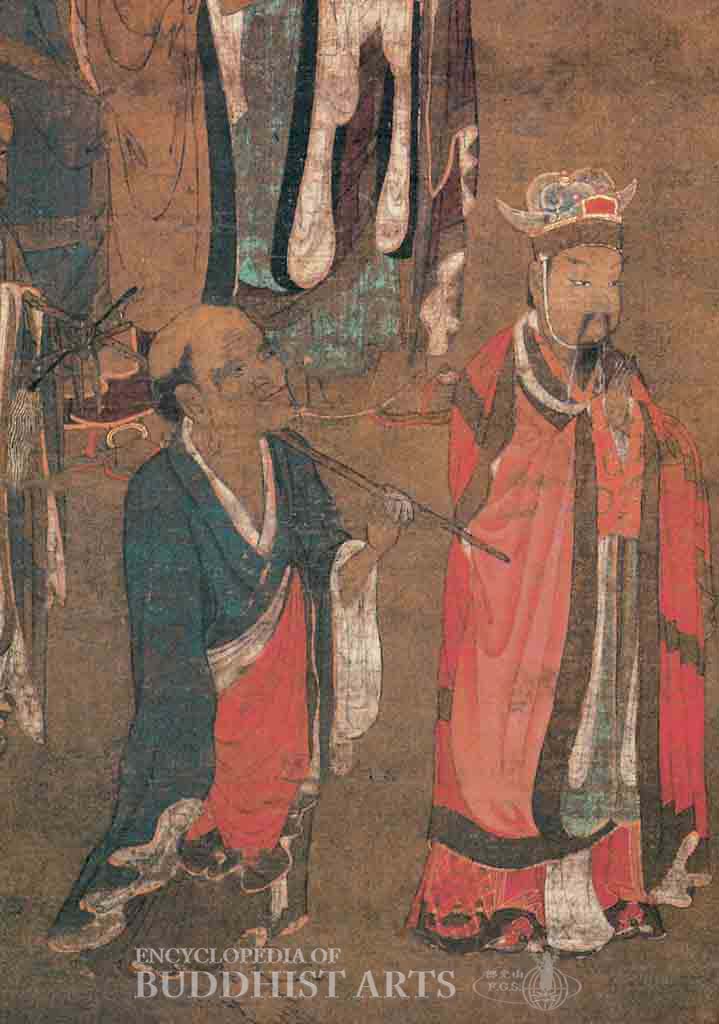
Six Realms of Existence - Human Realm (detail)
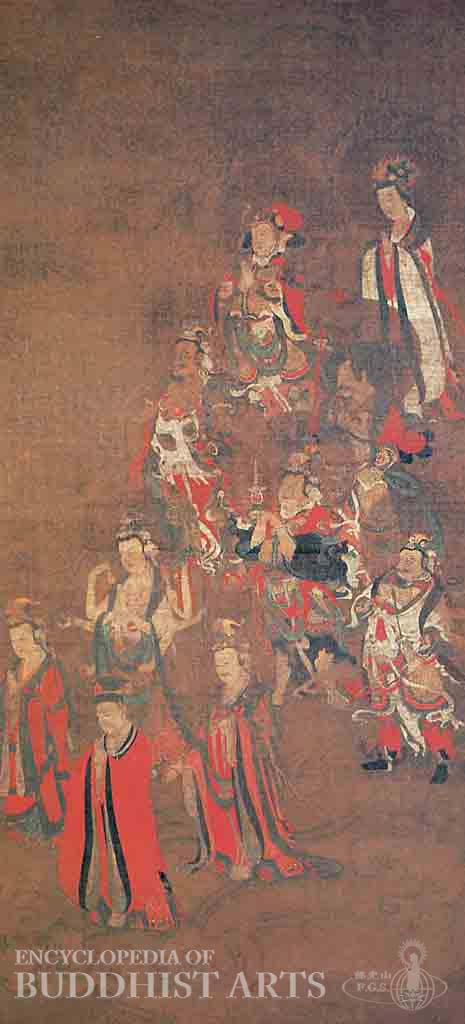
Six Realms of Existence - Heavenly Realm
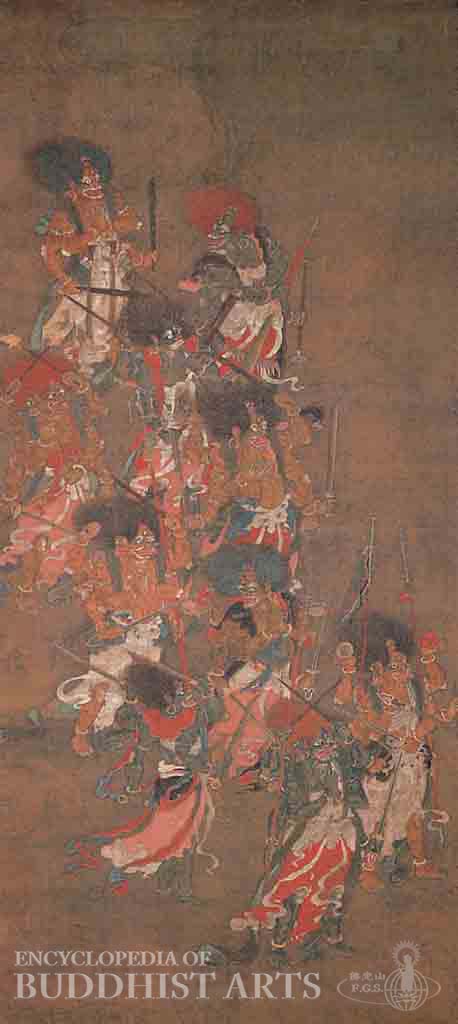
Six Realms of Existence - Asura Realm
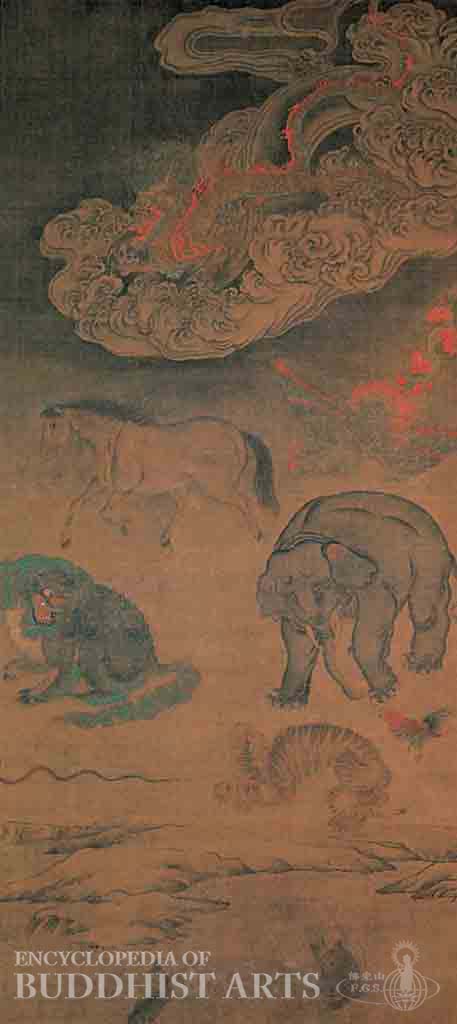
Six Realms of Existence - Animal Realm
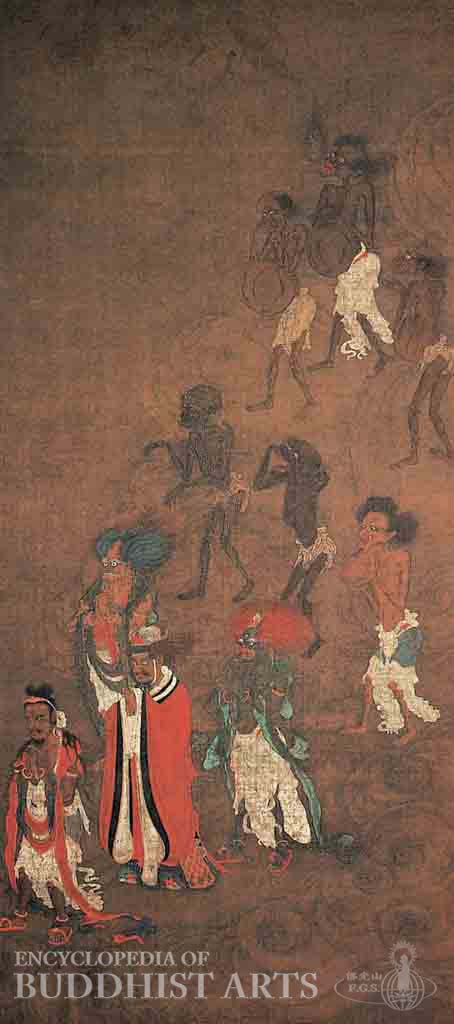
Six Realms of Existence - Hungry Ghost Realm
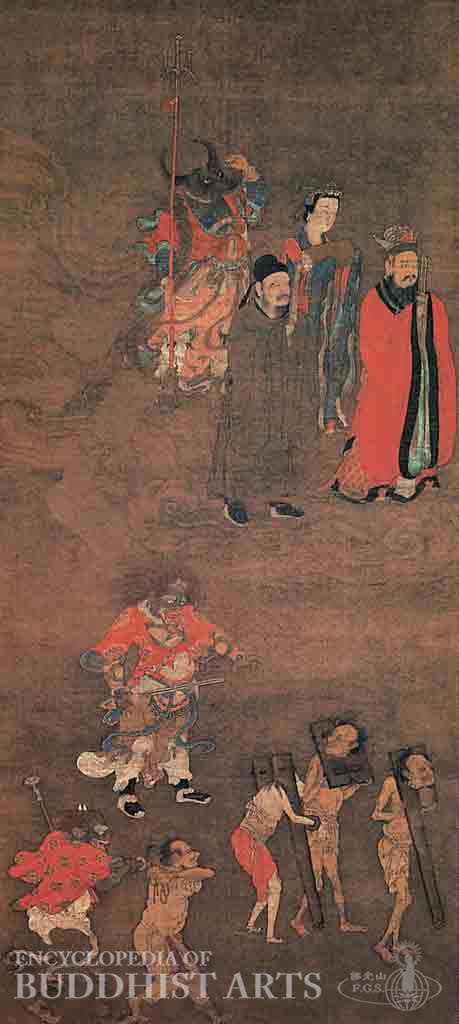
Six Realms of Existence - Hell Realm
Six Realms of Existence
CHINA; Southern Song dynasty
This set of paintings dates from the Southern Song dynasty (1127–1279) and was listed as an Important Cultural Property of Japan in 1964. It illustrates the six realms of existence, namely hell, hungry ghost, animal, asura, human and heaven, into which sentient beings are reborn according to their karma. The human realm is superior among the six realms because it is the only one in which enlightenment can be realized through discriminating wisdom. Heavenly beings enjoy long life and great pleasure, but they become complacent and eventually fall into a lower rebirth. The asuras are jealous beings who are constantly at war with the heavenly realm. Beings are born as animals due to strong ignorance, as hungry ghosts due to greed, or in the hell realm due to hatred. The six pictures are all the same size and are painted in a similar style. All except the picture of the animal realm feature a group of ten figures and a plain background.
In the upper register of the painting depicting the human realm, Ananda stands beside a hungry ghost. The Ulka Mukha Preta Sutra tells of how Ananda, while meditating in the forest, had a vision of the Burning-Mouth Ghost King. The ghost told Ananda that his life would end in three days and that he would be reborn in the hungry ghost realm. Ananda was terrified and sought help from the Buddha immediately. The Buddha taught a practice of making food offerings to avoid an unfavorable rebirth and help beings in the lower realms. In the bottom right corner of the painting, there is a figure with joined palms dressed in a hat and red robe. A similar figure can be seen in three of the other paintings. This is possibly a portrayal of Emperor Wu (reigned 502–549) of the Liang dynasty. He initiated the first Water and Land Dharma Service, an offering ceremony that seeks to ease the sufferings of all the beings in the six realms. These paintings were possibly used in such a service. A monk carrying a stick with scissors, a ruler and a whisk attached to it stands beside the emperor. His image matches the description of Baozhi in the Song Biographies of Eminent Monks.
Heavenly Kings, Dharma protectors, and heavenly beings are depicted in the illustration of the heavenly realm. In the realm of the asuras the beings have wide eyes and appear fierce, holding weapons in their multiple hands. A dragon flies in the clouds at the top of the painting of the animal realm. There are also images of an elephant, a horse, a lion, and a tiger. The hungry ghosts seem miserable, with emaciated bodies, flaming mouths, and huge bellies. In the hell realm, helpless beings in cangues are tormented by fierce hell guardians. The finely detailed figures in all of the paintings vividly convey the nature of each realm.
For more details, go to the Encyclopedia of Buddhist Arts: Painting P-Z, page 838.
Cite this article:
author = Hsingyun and Youheng and Youlu and Wilson, Graham and Manho and Mankuang and Huntington, Susan,
booktitle = {Encyclopedia of Buddhist Arts: Painting P-Z},
pages = 838,
title = {{Six Realms of Existence}},
volume = 16,
year = {2016}}