
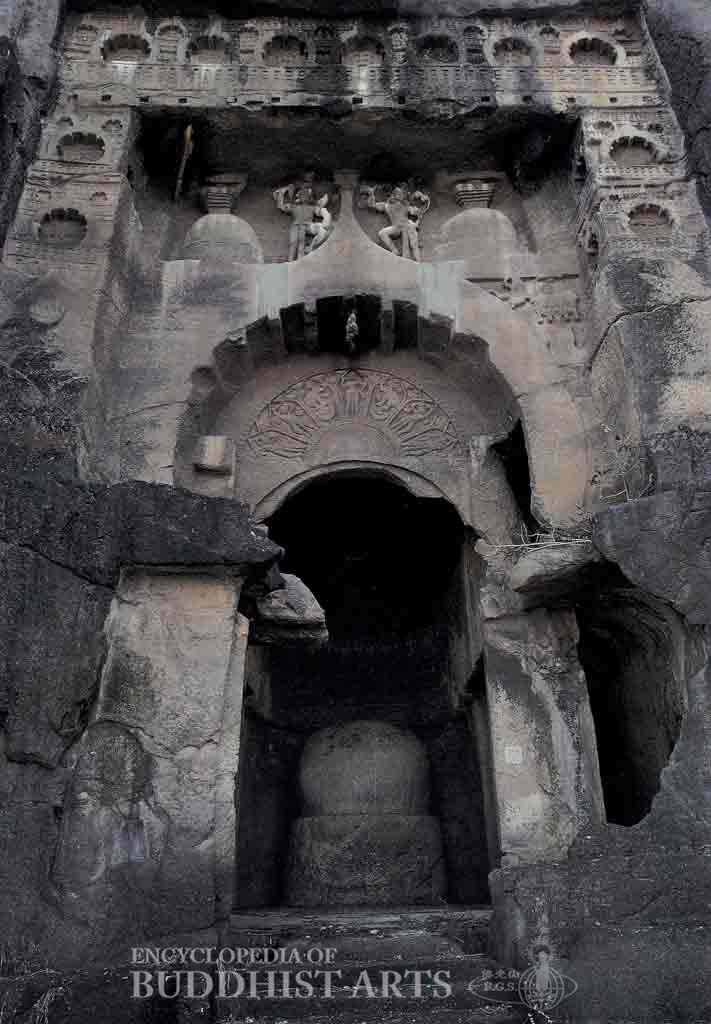
Junnar Caves: Bhutalinga Group - Cave 40
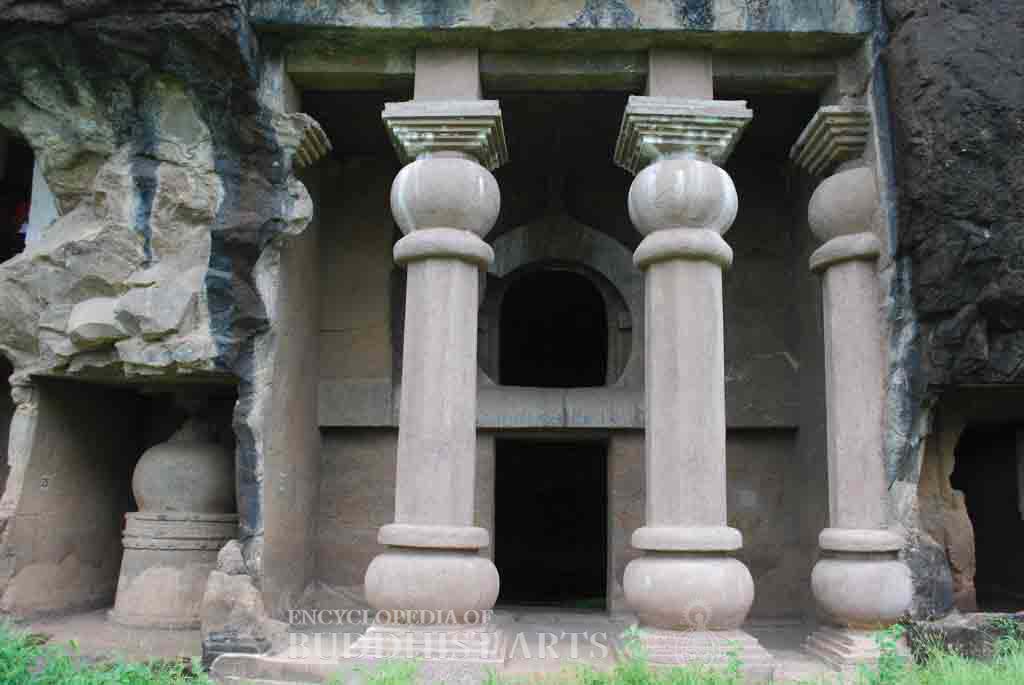
Junnar Caves: Ambika Group
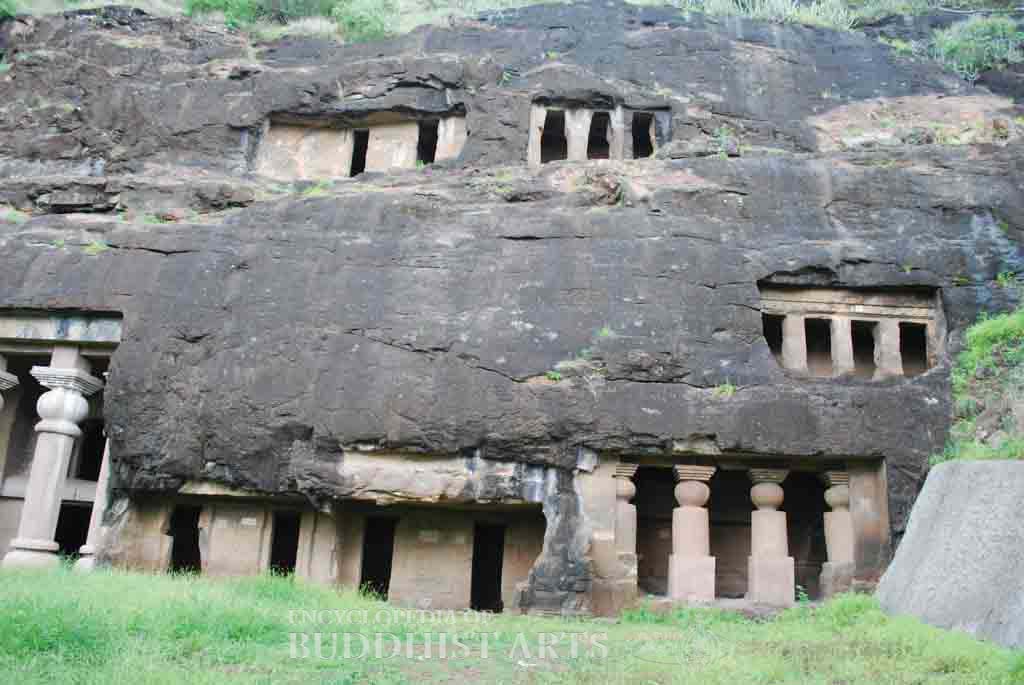
Junnar Caves: Ambika Group
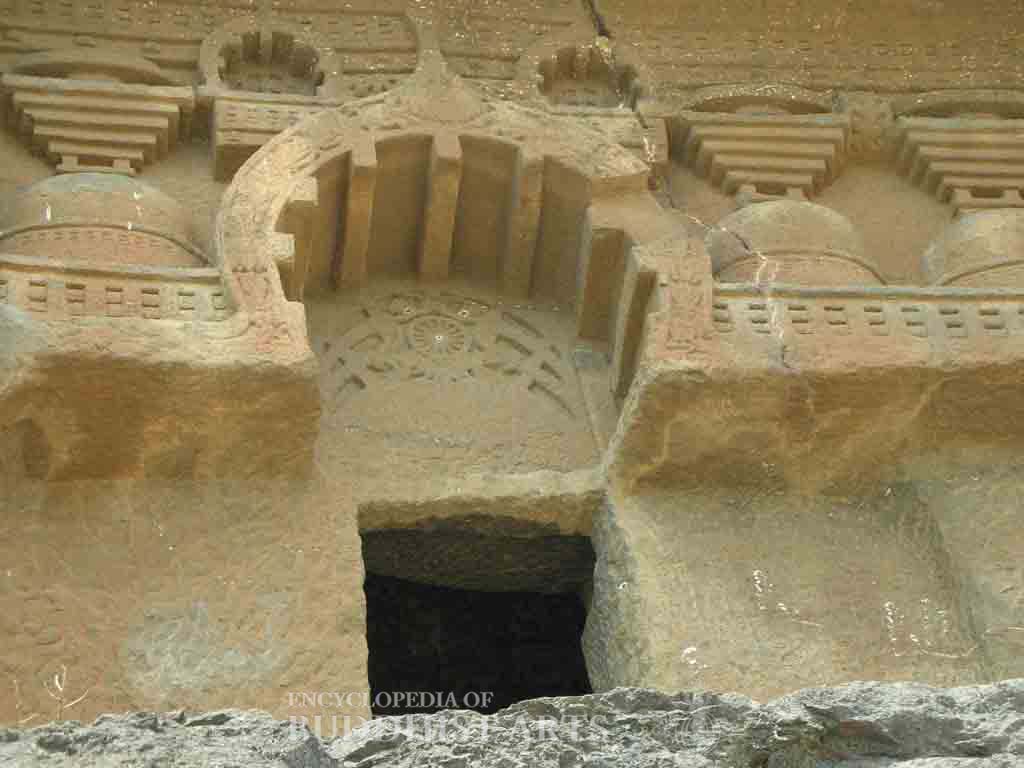
Junnar Caves: Bhutalinga Group
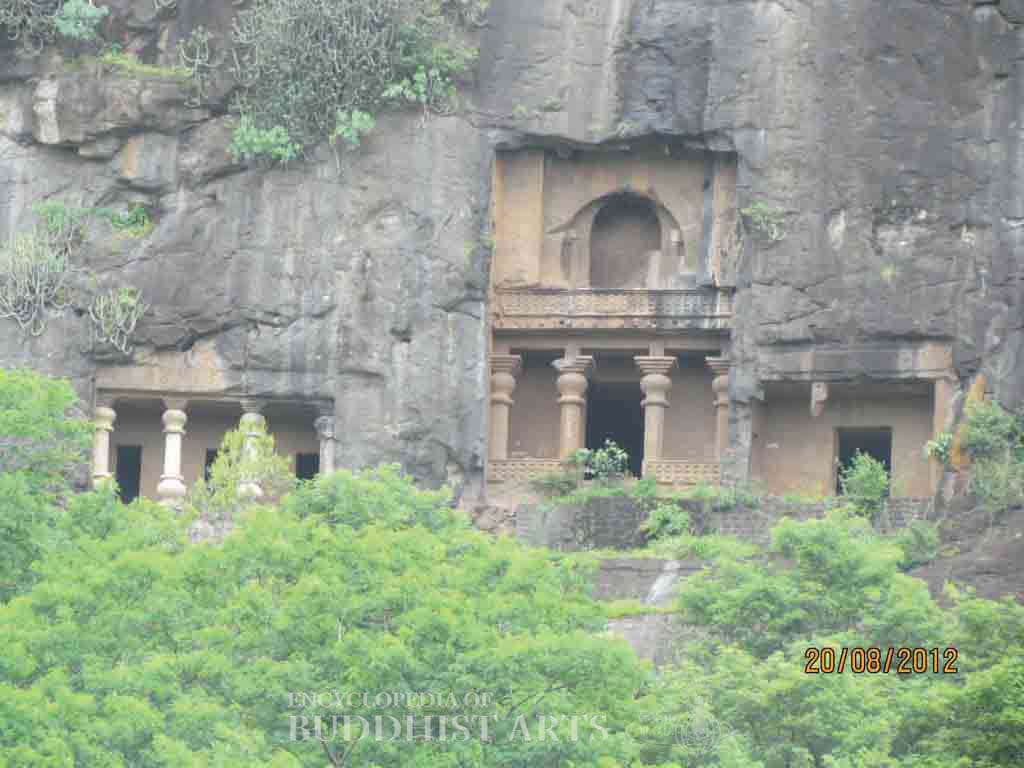
Junnar Caves: Bhimasankar Group
Junnar Caves
INDIA, Maharashtra, Pune
These caves form a ring within the hills of Junnar city in Pune district. They are divided into seven groups: three groups on Shivneri Hill, one group known as Tuljaleni, and three groups on Manmodi Hill, which are called Ambika, Bhimasankar, and Bhutalinga. There are over 140 caves in total, most of them being plain vihara caves. The caves are thought to have been created between the 2nd century BCE and the 3rd century CE. They are located near what was once the capital of the Satavahana Empire (circa 200 BCE–250 CE) and an important trade route on the Arabian Sea. The carvings in these caves show differences in style from others of this period.
The three groups on Manmodi consists of approximately 50 caves. Of the four caitya caves in these groups, Cave 40 is the largest and has the best preserved facade. It is located in the Bhutalinga group and was created around the 2nd century. Under the large imitation caitya window is a fan-shaped array of human and animal figures carved in relief. Contrary to other Indian Buddhist caves such as Bhaja Caves and Karla Caves, the exterior lacks much of the imitation wooden structures and a colonnade. Guardians and stupas are carved in relief to the left and right on top of the imitation caitya window, and three sides of the window are framed by motifs of smaller imitation caitya windows with balustrades. The stupa within the cave is in the shape of an inverted bowl and the height of its base and body are almost equal. It has an inscription that notes a donation by a foreign merchant.
During the Satavahana period, local trade with merchants from the Mediterranean flourished and, around the same time, Romans who had settled in the area were converted to Buddhism. Some attribute the unique style of the Junnar Caves to this foreign influence.
For more details, go to the Encyclopedia of Buddhist Arts: Caves R-L, page 443.
Cite this article:
author = Hsingyun and Youheng and Johnson, Peter and Mankuang and Huntington, Susan and Edson, Gary and Neather, Robert,
booktitle = {Encyclopedia of Buddhist Arts: Caves R-L},
pages = 443,
title = {{Junnar Caves}},
volume = 6,
year = {2016}}