
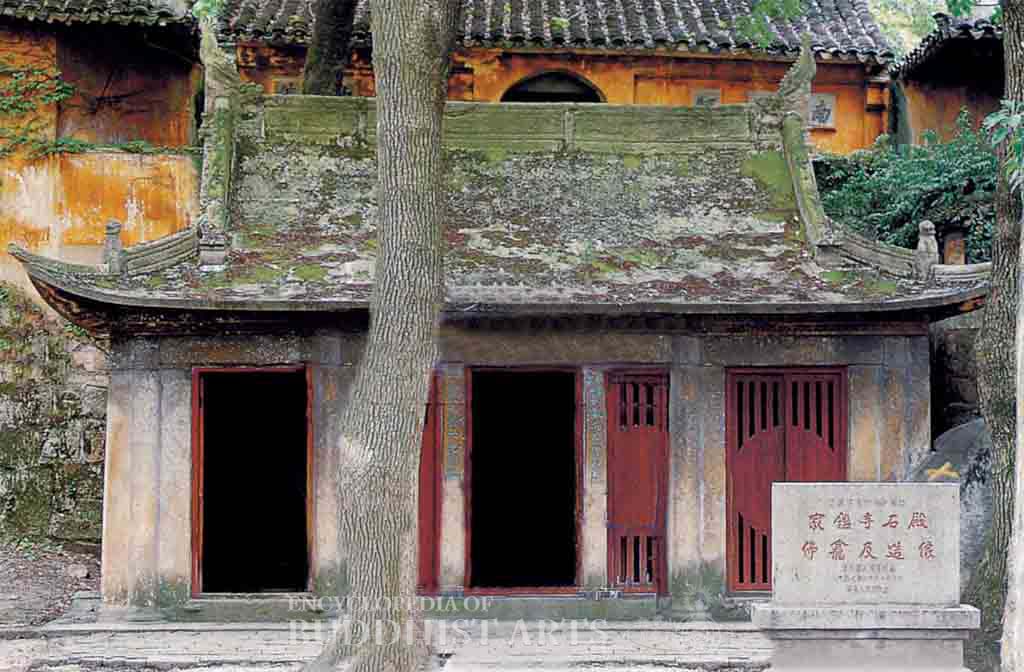
Jijian Temple Stone Hall
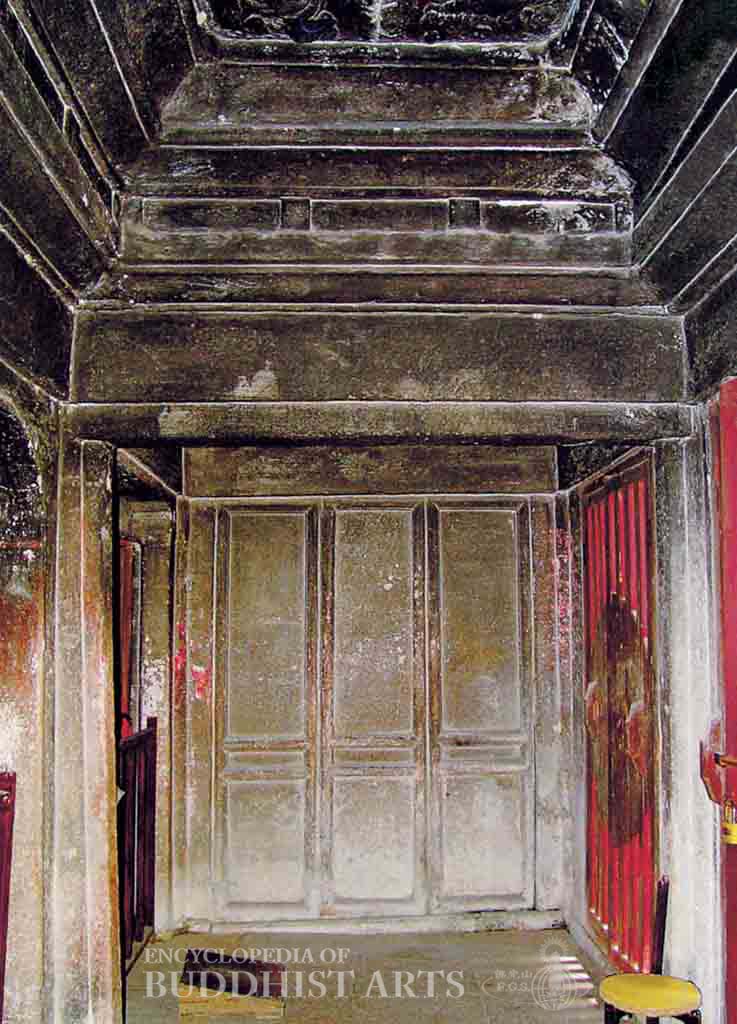
Jijian Temple Stone Hall (interior)
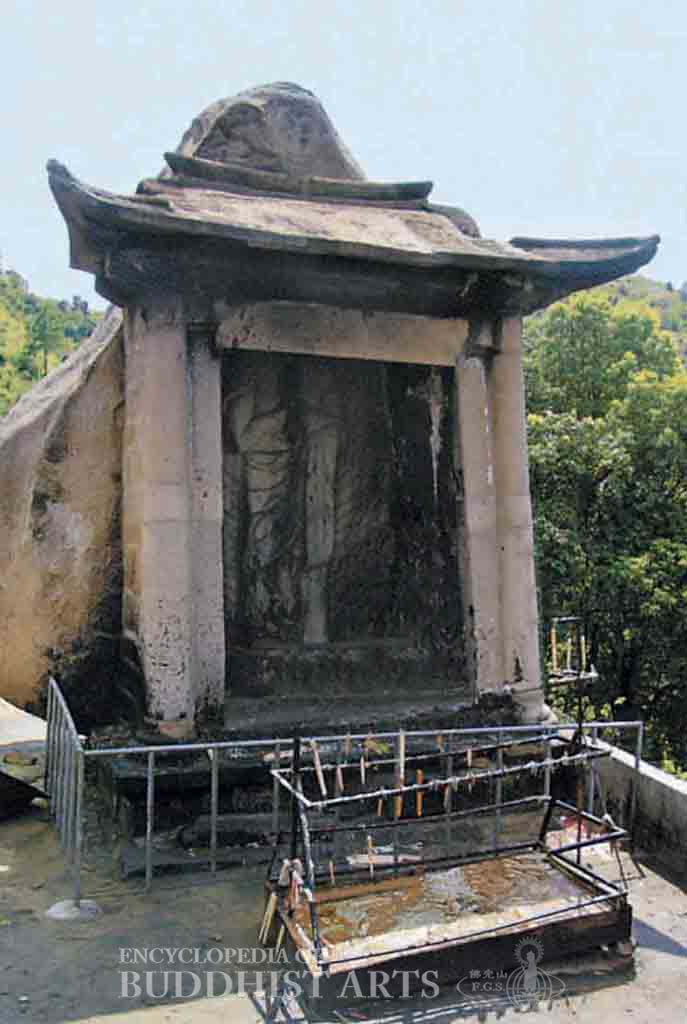
Jijian Temple Stone Hall: Tusita Palace
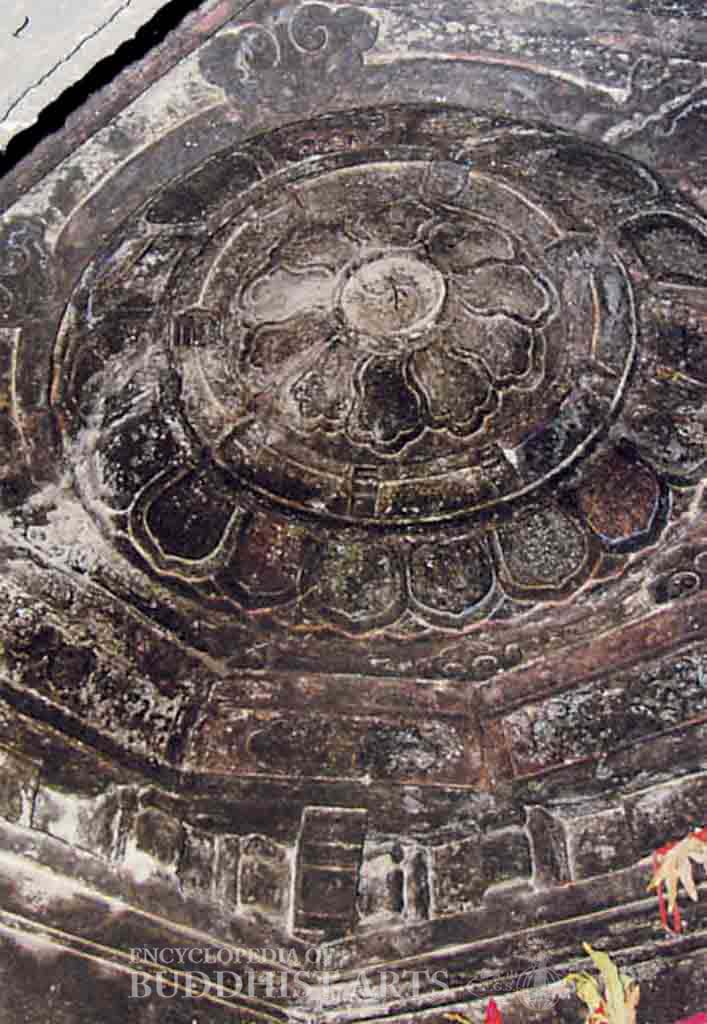
Jijian Temple Stone Hall: Ceiling
Jijian Temple Stone Hall
CHINA, Jiangsu, Suzhou
According to historical records and inscriptions found on steles, the temple was constructed in 1357 during the Yuan dynasty. It was listed as a National Cultural Heritage Site in 2006.
The main structures of the temple include the Stone Hall, and various Buddha niches and sculptures. Facing south, the Stone Hall, also known as Xitian Temple, is the main building. The three-by-two bay hall is built against a rock face and is made completely from stone. It has a single-eave hip-and-gable roof. A portico is located at the back of the building, giving it a T-shape structure, which is rarely seen in Chinese architecture. Above the pillars are architraves, but no bracket sets. Inside there are six highly decorative caisson ceilings in imitation of wooden ceilings. They represent some of the best stonework from the Yuan dynasty (1271–1368). The sculptures formerly inside have been destroyed.
The Buddha niches are located on either side of the main temple gate. They are about 80 m apart and are built into the rock face to resemble wooden structures. Facing north, they are 2.6 m wide and 1.2 m deep. They have round pillars, architraves and hip-and-gable roofs. One is called Tusita Palace and the other Ultimate Bliss Garden. A standing Buddha carved in the rock face can be found in each niche: Maitreya is featured inside Tusita Palace, while Amitabha Buddha is in the Ultimate Bliss Garden. The statues are about 3.3 m high and occupy most of the space inside. It is believed that the Buddha statues were carved first, followed by the external structures. Inscriptions on the east wall of the west niche state the year the niches were made, as well as the names of the benefactors.
Stone structures in China are mostly pagodas and bridges, with stone buildings in imitation of timber structures being quite rare. This is the only example in Jiangsu.
For more details, go to the Encyclopedia of Buddhist Arts: Architecture G-L, page 514.
Cite this article:
author = Hsingyun and Youheng and Johnson, Peter and Mankuang and Lancaster, Lewis,
booktitle = {Encyclopedia of Buddhist Arts: Architecture G-L},
pages = 514,
title = {{Jijian Temple Stone Hall}},
volume = 2,
year = {2016}}