
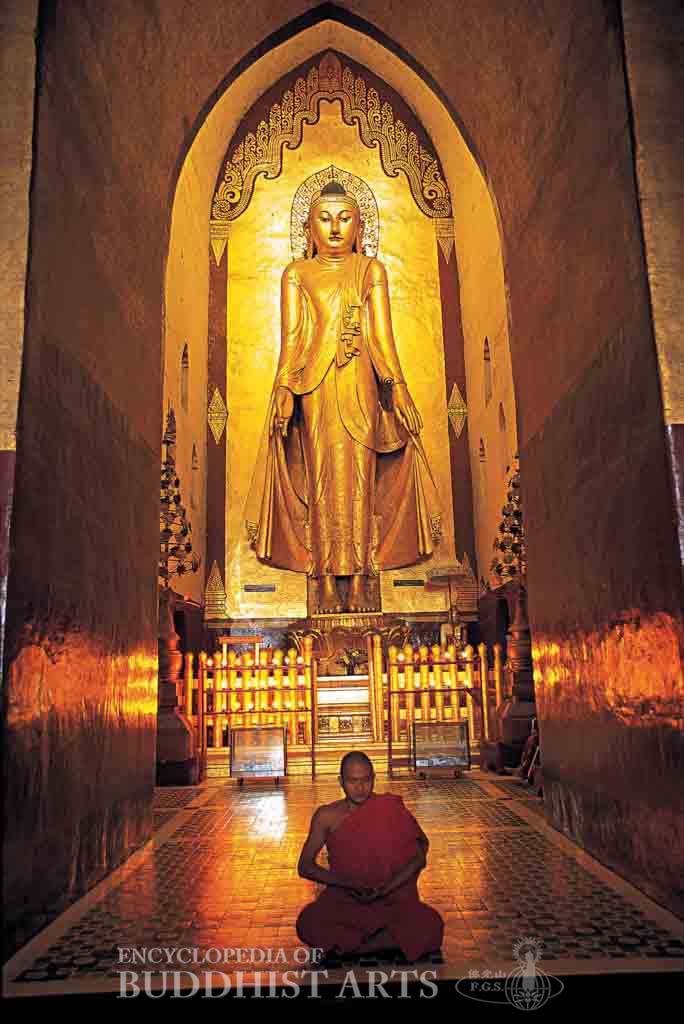
Ananda Temple: Buddhas of the Past and Present - Kanakamuni Buddha (east wall)
Wood
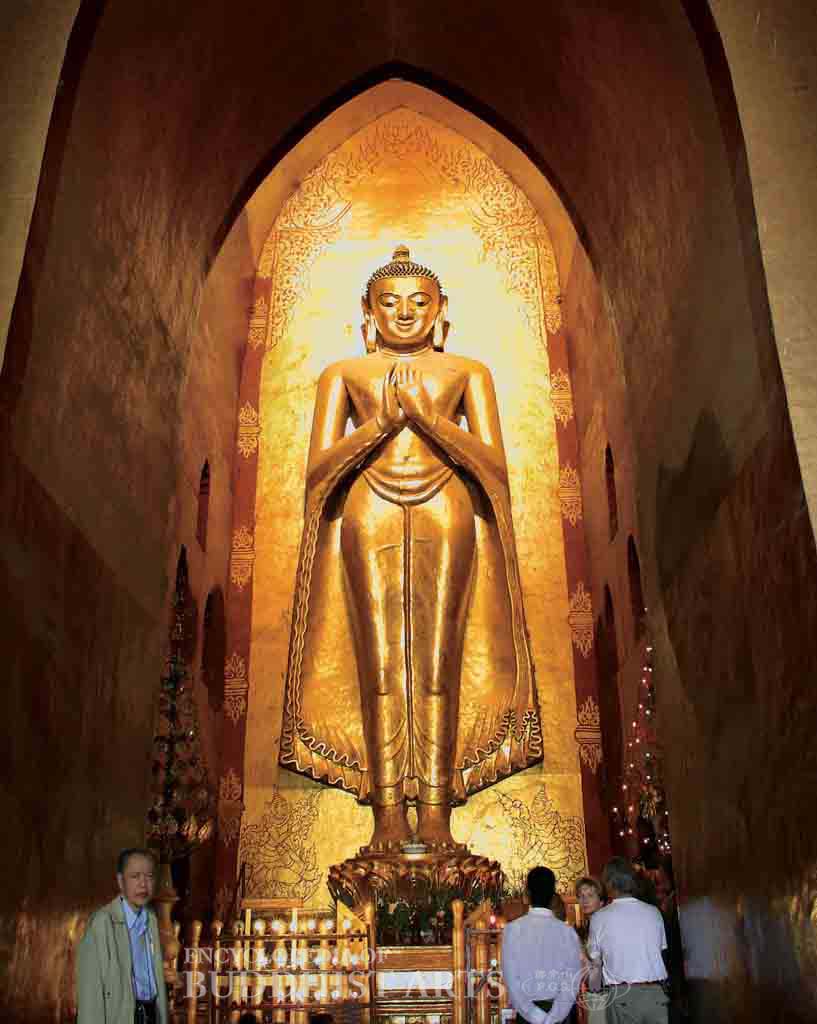
Ananda Temple: Buddhas of the Past and Present - Kasyapa Buddha (south wall)
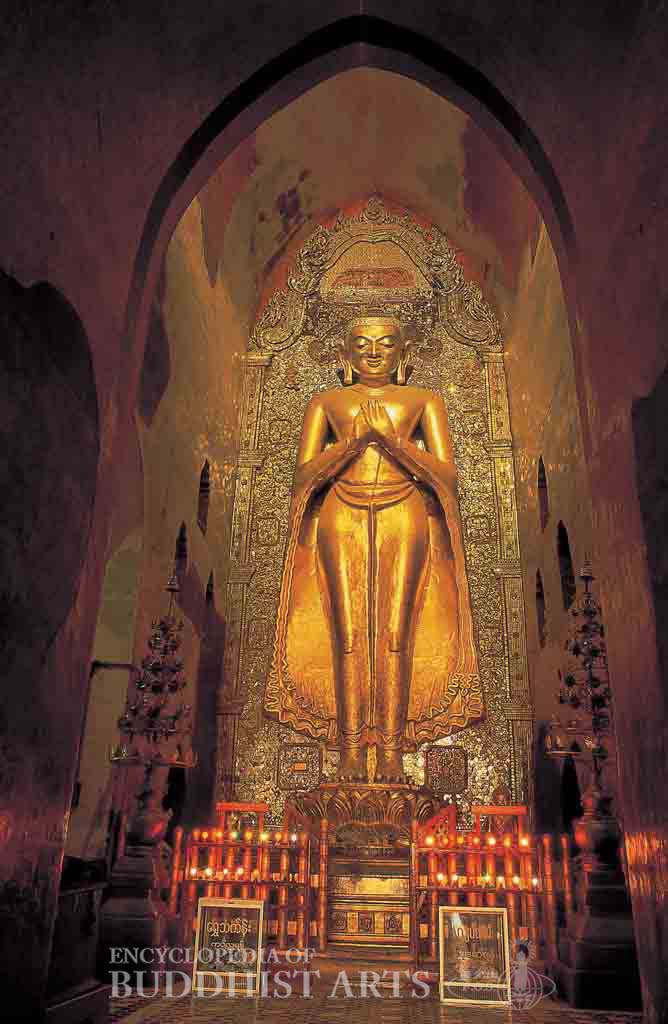
Ananda Temple: Buddhas of the Past and Present - Kanakamuni Buddha (north wall)
Ananda Temple: Buddhas of the Past and Present
MYANMAR, Mandalay, Bagan
The gilt statues are located within four niches that face each other in a cross-like formation within the temple. Krakucchanda Buddha is to the north and Kasyapa Buddha to the south; Kanakamuni Buddha is on the east, and Sakyamuni Buddha is on the west. The statues to the north and south were placed during the Bagan Empire (circa 849–1287) when the temple was completed. The remaining two were renovated in the late 18th century.
All four statues have features reflecting the Bagan style; rounded face with slightly upturned eyes, lotus pedestals and closely fitted monastic robes. The Kanakamuni Buddha on the east has both arms extended downwards, one of which forms a mudra while the other gently grasps the robe.
The Kasyapa Buddha, on the south, is reportedly the most special since at different angles the figure seems to be wearing a different expression. Up close for example, the statue seems to have a solemn expression but when viewed from afar, he seems to be smiling. This special visual effect is achieved through superb sculptural techniques combined with the clever use of light.
For more details, go to the Encyclopedia of Buddhist Arts: Sculpture A-F, page 42.
Cite this article:
author = Hsingyun and Youheng and Lovelock, Yann and Chou, Yuan and Huntington, Susan and Edson, Gary and Neather, Robert,
booktitle = {Encyclopedia of Buddhist Arts: Sculpture A-F},
pages = 42,
title = {{Ananda Temple: Buddhas of the Past and Present}},
volume = 10,
year = {2016}}