
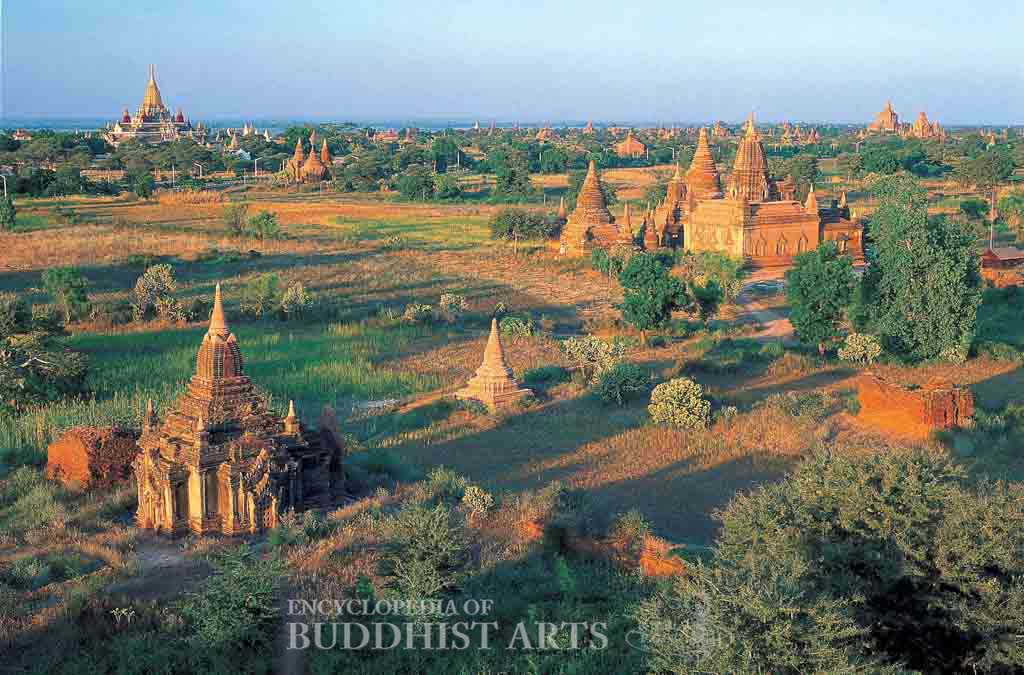
Bagan (aerial view)
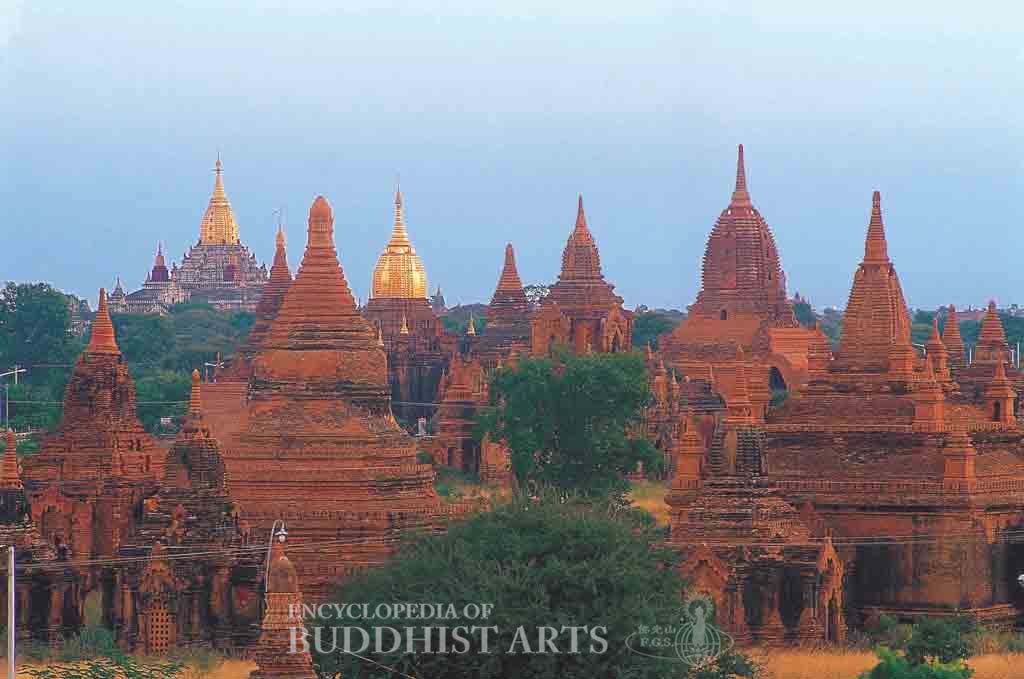
Bagan
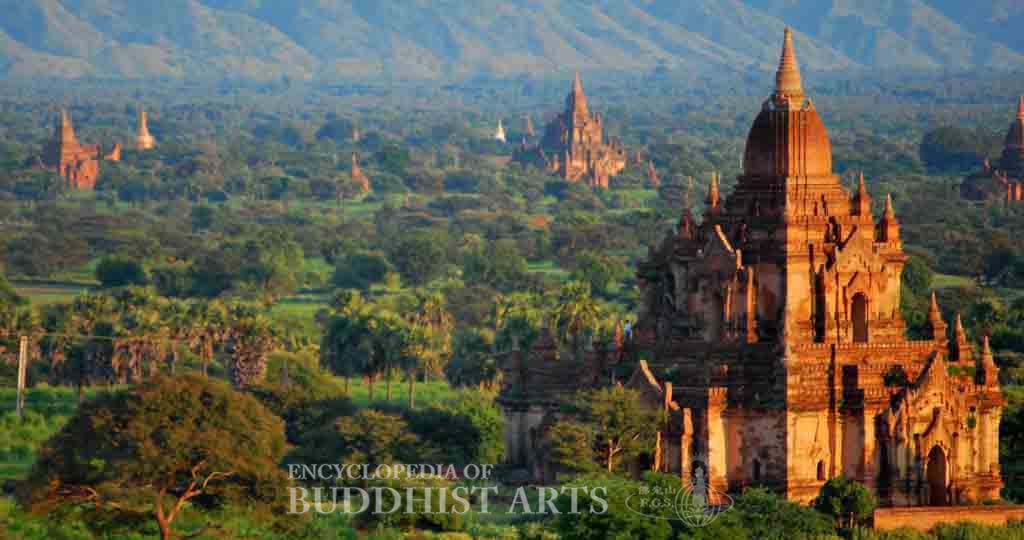
Bagan
Bagan
MYANMAR, Mandalay
Located on the east bank of the Ayeyarwady River, approximately 150 km southwest of Mandalay, Bagan was the capital as well as cultural and religious center of the first unified empire in the history of Myanmar. Bagan first became a settlement in 849 and consisted of just 19 villages. In 1044, King Anawrahta (reigned 1044–1077) established the Bagan Empire and conquered Thaton to the south. The king brought back three hundred monks, numerous craftsmen and Buddhist scriptures from Thaton, and built pagodas on a large scale in Bagan. Therefore it is known as the City of Thousand Pagodas. In 1287 the Bagan Empire was overrun by the Mongols, and Bagan went into decline. A major earthquake in 1975 severely damaged Bagan. In 1994, the Myanmar government established the Myanmar Cultural Heritage Preservation and Protection Central Committee, and divided Bagan into zones for architecture, tombs, conservation, and hotels.
Bagan covers an area of approximately 42 sq km. More than 10,000 temples and pagodas of various sizes and styles were built during the two hundred years when Bagan served as the capital. There are now over 1,000 surviving Buddhist monuments, of which fewer than one hundred are well preserved. The notable sites include the large-scale Ananda Temple, Dhammayangyi Temple, Gawdawpalin Temple, Thatbyinnyu Temple, the earliest Bupaya Pagoda, and the latest Mingalar Zedi, as well as the Mahabodhi Temple, based on the temple of that name in Bodhgaya in India. Some of these sites have preserved the original red color of the brick, while others have been covered with plaster or gilded. There are many statues of Sakyamuni Buddha in the standing, seated, or reclining positions. A large number of excavated Buddhist artifacts and steles are housed in Bagan Archaeological Museum.
For more details, go to the Encyclopedia of Buddhist Arts: Architecture A-F, page 33.
Cite this article:
author = Hsingyun and Youheng and Johnson, Peter and Mankuang and Lancaster, Lewis,
booktitle = {Encyclopedia of Buddhist Arts: Architecture A-F},
pages = 33,
title = {{Bagan}},
volume = 1,
year = {2016}}