
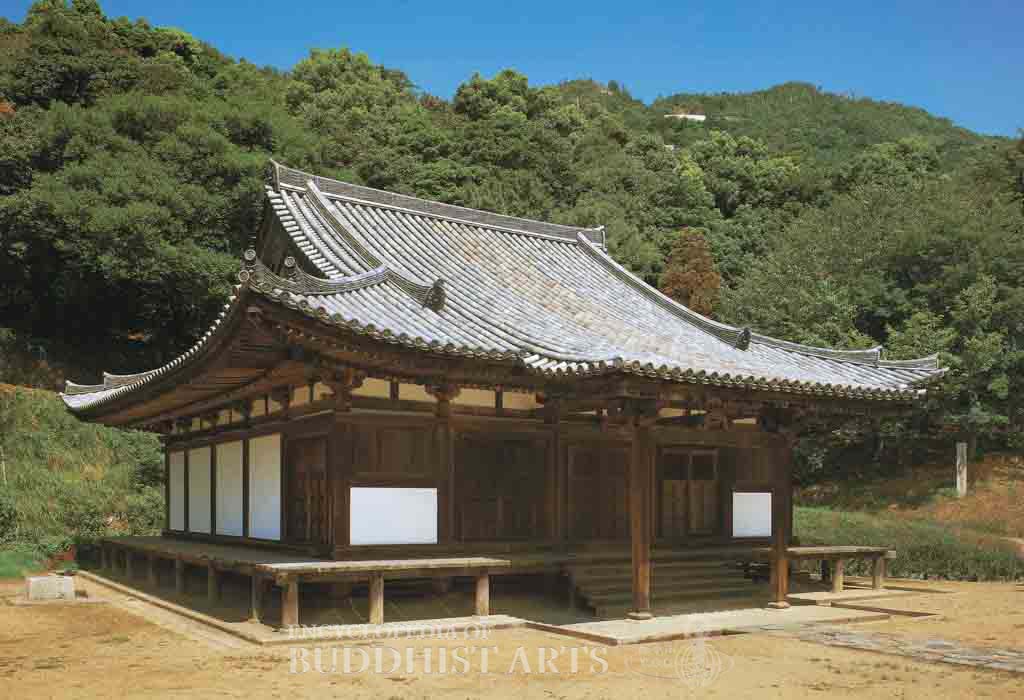
Chohoji Temple: Main Hall
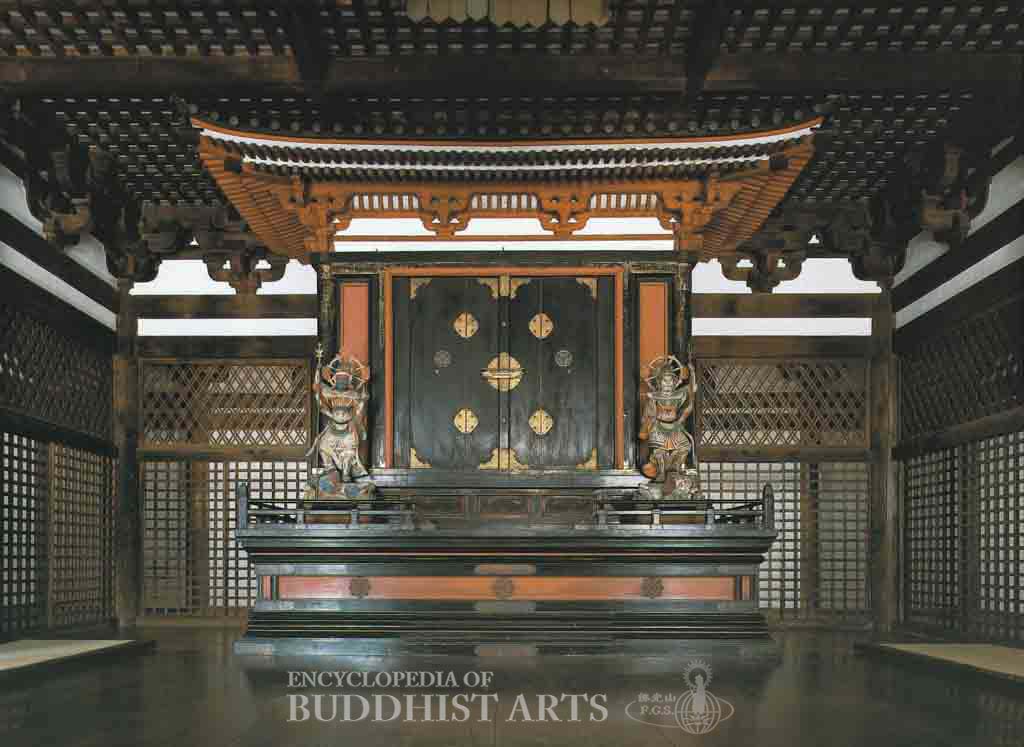
Chohoji Temple: Main Hall (interior)
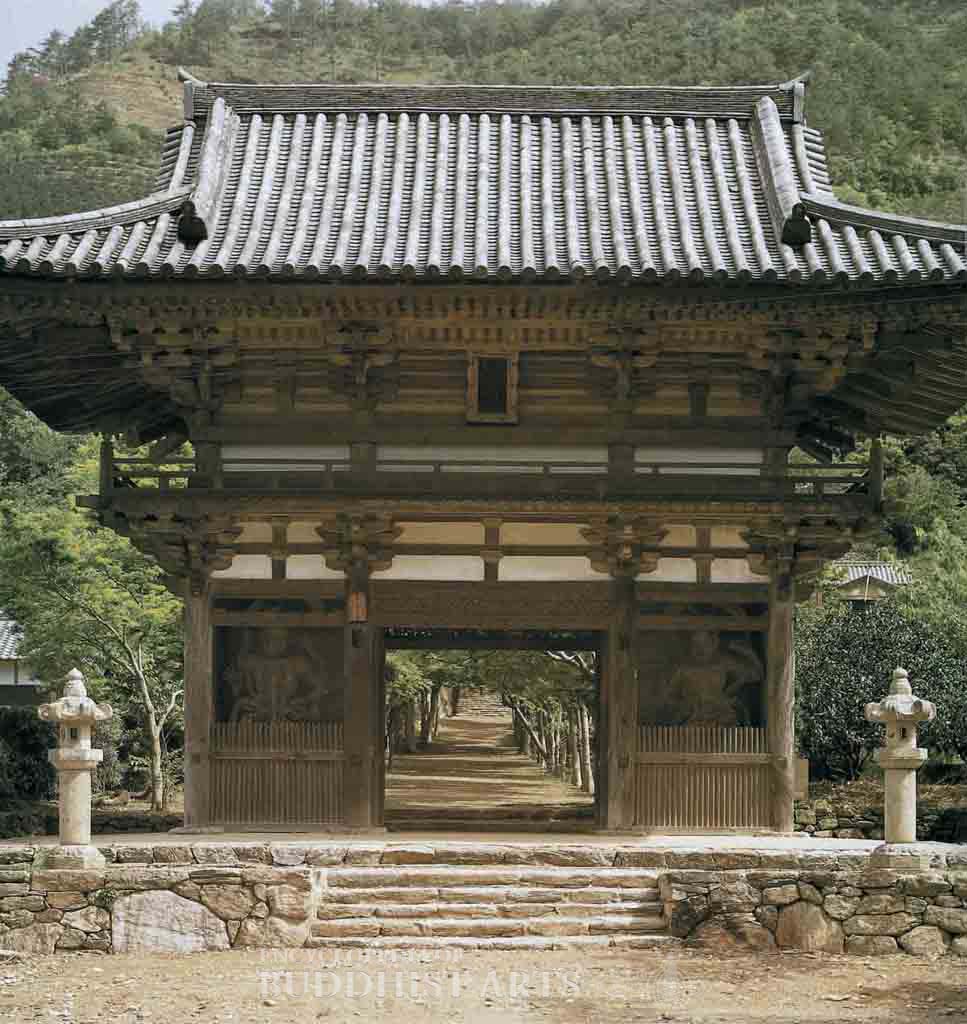
Chohoji Temple: Main Gate
Chohoji Temple
JAPAN, Wakayama, Kainan
The temple belongs to the Tendai school. The temple records state that it was established in 1000 by Shoku Jonin on the orders of Emperor Ichijo (reigned 986–1011) of the Heian period. The temple was named Chohoji after the era in which it was founded. It had a substantial number of monastics by 1017, and was relocated to its present site in 1242. During the Edo period (1615–1868) it was regarded as the Tokugawa family temple in Wakayama.
The temple consists of the main gate, main hall, and Prabhutaratna pagoda, all of which were listed as National Treasures in 1953. The main gate was built in 1388 during the Nanbokucho period. It has a single-eave hip-and-gable roof covered in cylindrical tiles. The gate is three bays wide and there are statues of the two guardian kings in the side bays. The eaves are supported by three-tier bracket sets.
The five-by-five bay main hall, built in 1311 during the Kamakura period, has a single-eave hip-and-gable roof. The central bay in the front is extended. The hall integrates different styles of the Kamakura period (1185–1333) with a wayo-style exterior and a Zen-style interior. There is a large cabinet within the hall. The three-by-three bay Prabhutaratna pagoda was rebuilt during the Kamakura period. The gently sloping roof has extended eaves.
For more details, go to the Encyclopedia of Buddhist Arts: Architecture A-F, page 151.
Cite this article:
author = Hsingyun and Youheng and Johnson, Peter and Mankuang and Lancaster, Lewis,
booktitle = {Encyclopedia of Buddhist Arts: Architecture A-F},
pages = 151,
title = {{Chohoji Temple}},
volume = 1,
year = {2016}}