
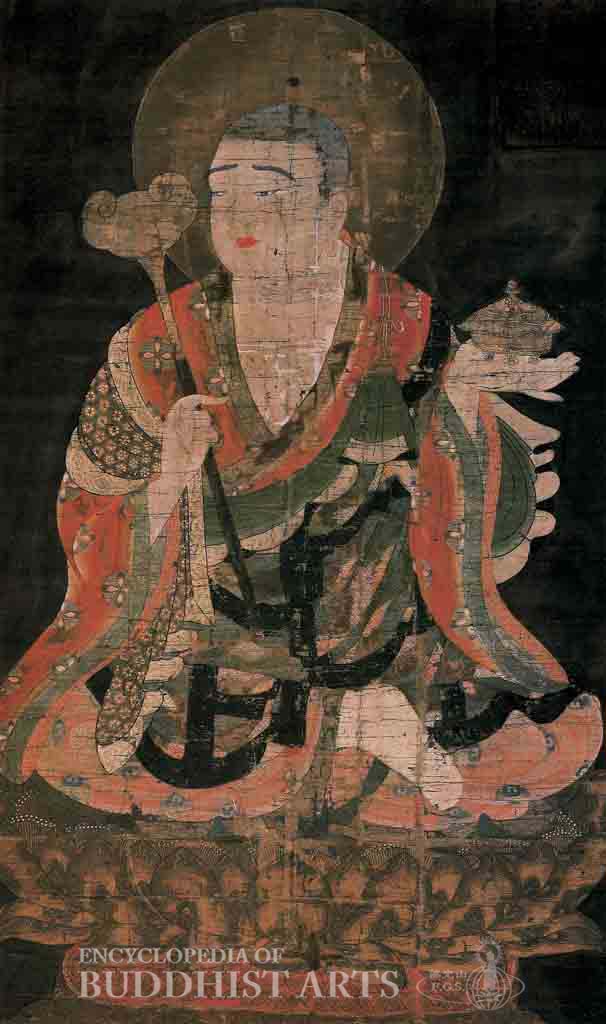
Ichijoji Temple: Eminent Masters of the Tendai School - Nagarjuna
Ink and color on silk
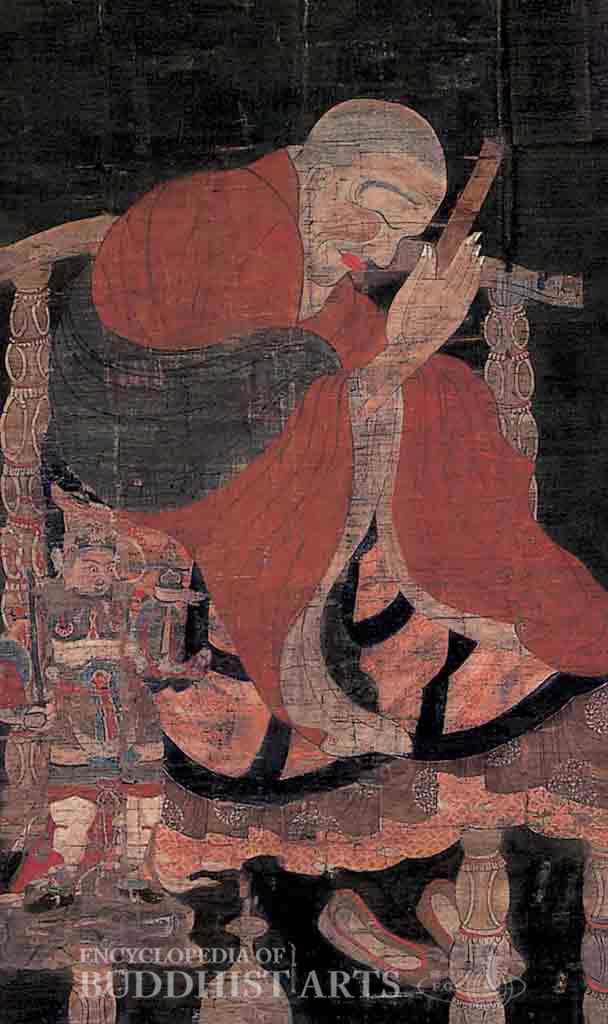
Ichijoji Temple: Eminent Masters of the Tendai School - Subhakarasimha
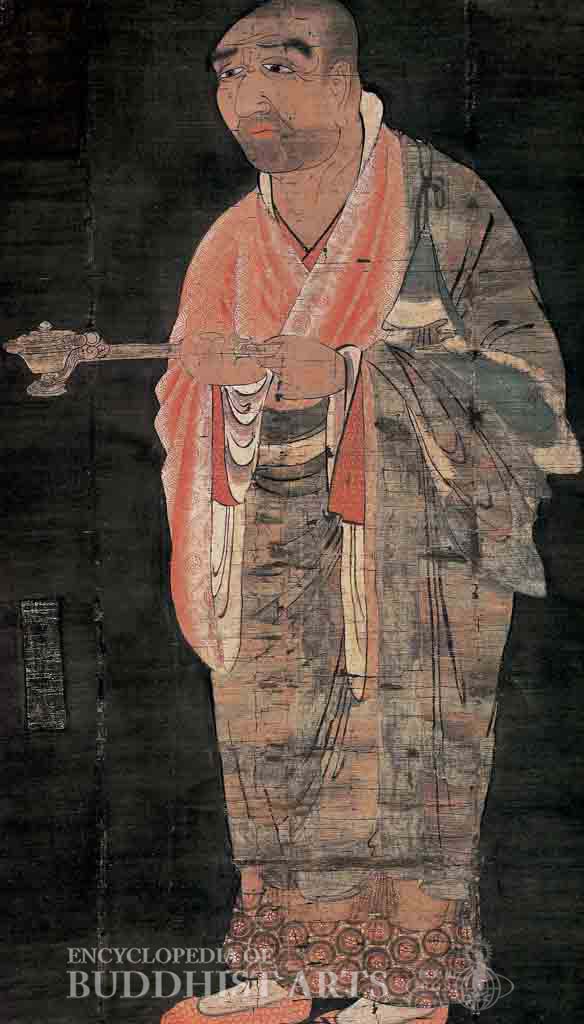
Ichijoji Temple: Eminent Masters of the Tendai School - Huiwen
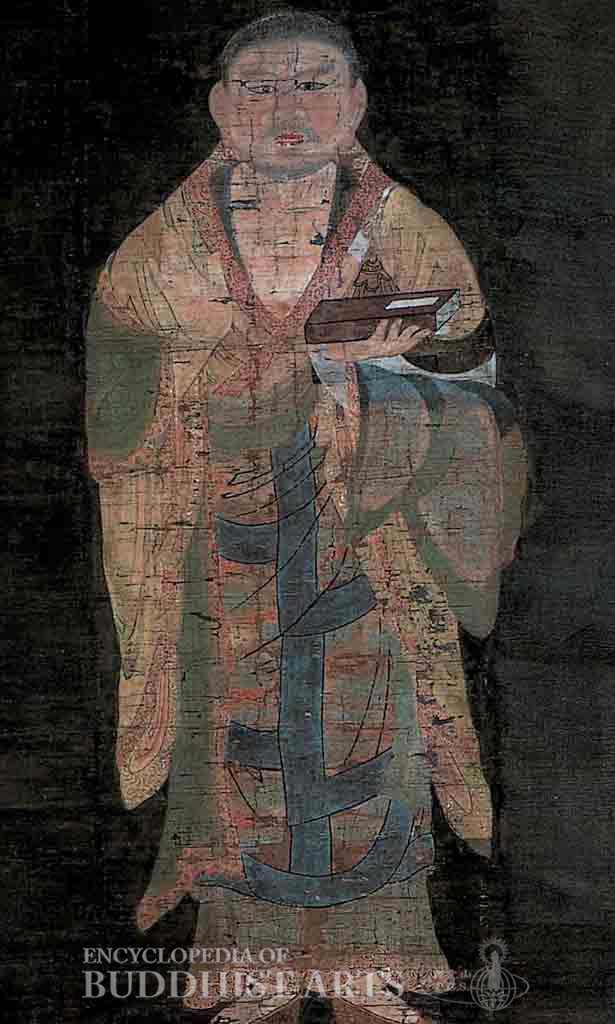
Ichijoji Temple: Eminent Masters of the Tendai School - Huisi
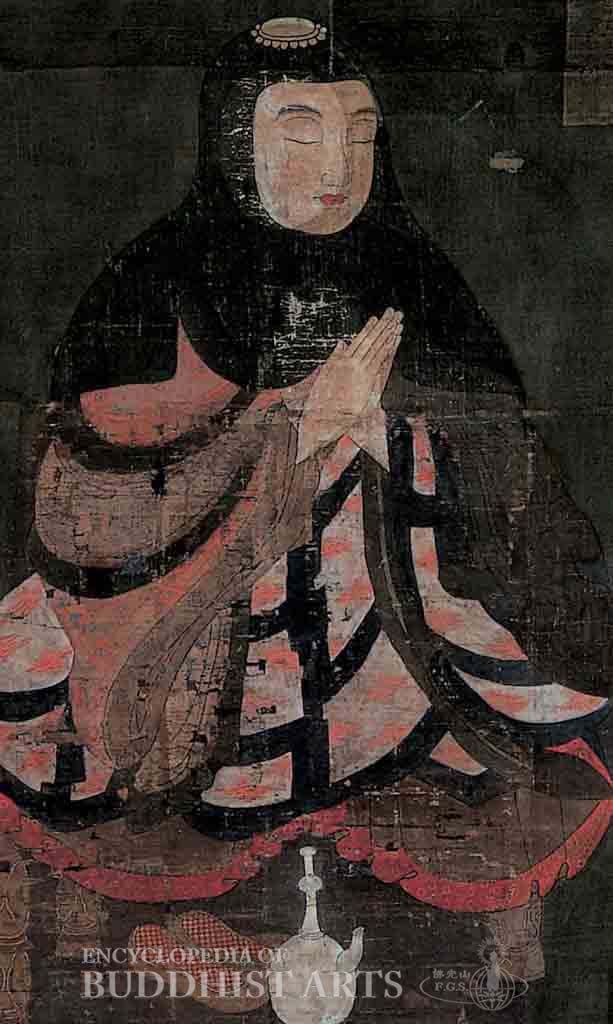
Ichijoji Temple: Eminent Masters of the Tendai School - Zhiyi
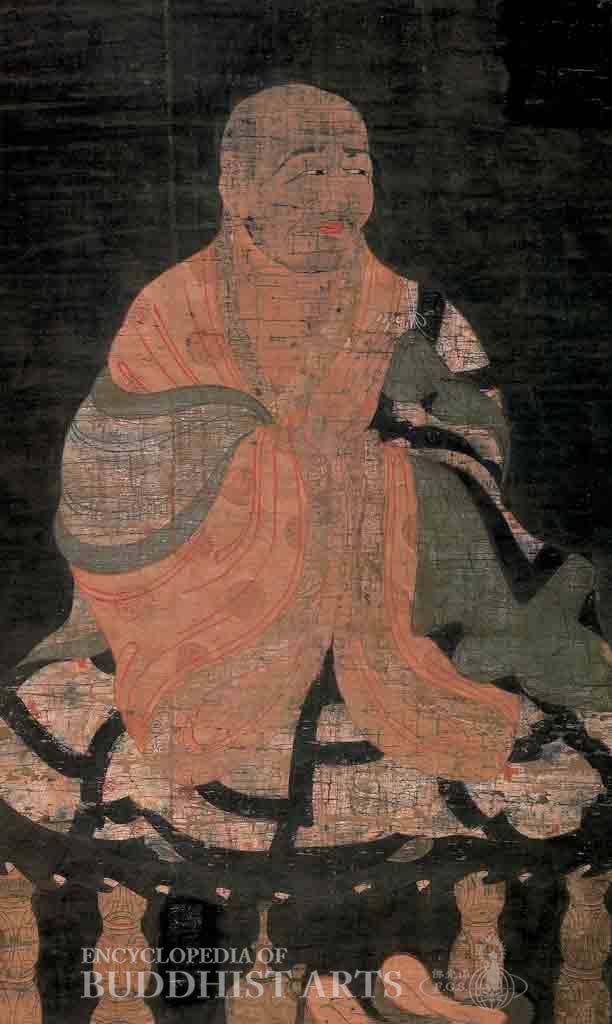
Ichijoji Temple: Eminent Masters of the Tendai School - Zhanran

Ichijoji Temple: Eminent Masters of the Tendai School - Prince Shotoku
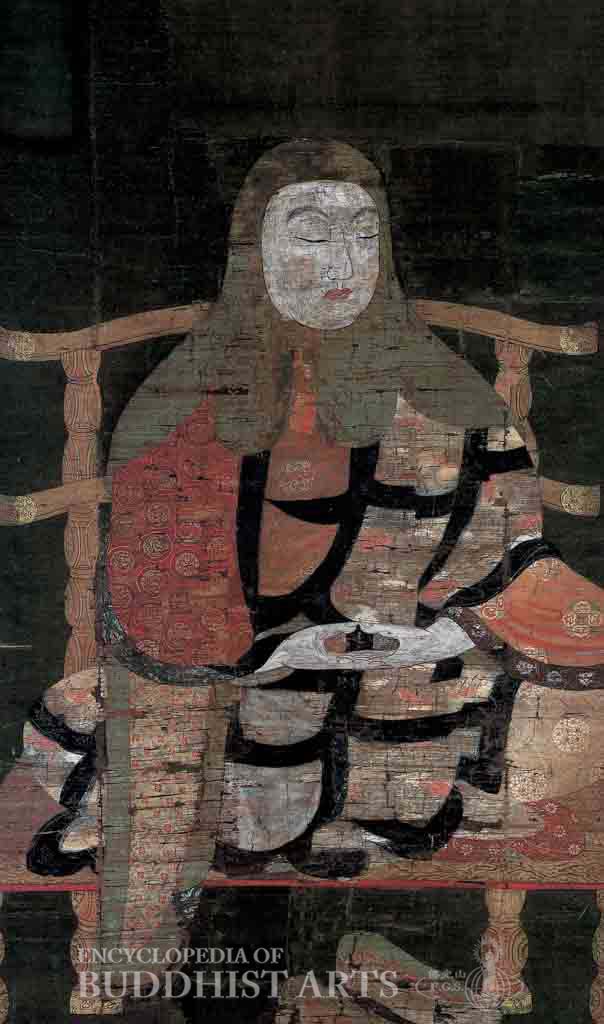
Ichijoji Temple: Eminent Masters of the Tendai School - Saicho
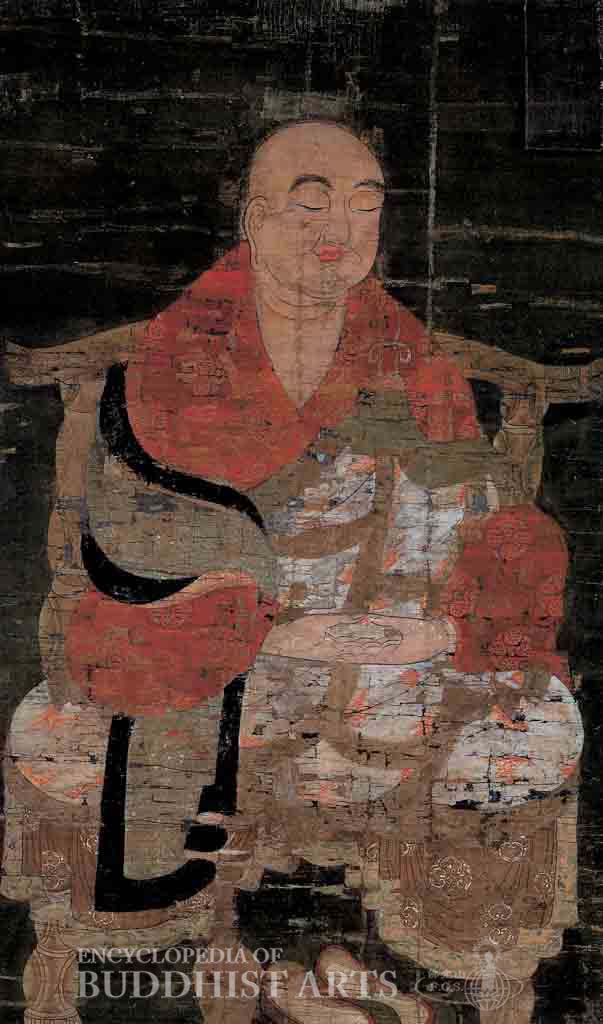
Ichijoji Temple: Eminent Masters of the Tendai School - Ennin
Ichijoji Temple: Eminent Masters of the Tendai School
JAPAN, Hyogo, Kasai; Heian period
These ten paintings, each depicting an eminent master of the Tendai school, date from the 11th century, making them the oldest surviving portraits of Tendai masters in Japan. These portraits include Nagarjuna and Subhakarasimha of India, Huiwen, Huisi, Zhiyi, Guanding, and Zhanran of China, and Prince Shotoku, Saicho, and Ennin of Japan. Prince Shotoku is included in the group of ten because of his exceptional commentaries on the Lotus Sutra. Though the composition of each image is distinct, with the figures depicted from different angles, standing or sitting in different postures, the paintings share many common characteristics and are thought to be the work of the same artist or group of artists. The set was listed as a National Treasure in 1953.
Nagarjuna sits on a lotus throne in full lotus position, holding a ruyi (wish-fulfilling talisman) in his right hand and an incense burner in his left hand. Subhakarasimha clasps a sutra scroll devoutly with joined palms, and is protected by a Heavenly King who stands in the lower left corner of the painting. Huiwen stands holding the handle of an incense burner with both hands. Huisi appears to be teaching the Dharma, supporting a book with his left hand and raising his right hand. Zhiyi is deep in meditation, with closed eyes and joined palms.
Zhanran sits with joined palms, looking sideways. Accompanied by ten youths, Prince Shotoku sits facing to the right, holding the handle of an incense burner with both hands. His hair is tied into buns, and he has a serious expression. Wearing a hood and a monastic robe, and with his eyes closed in meditation, Saicho sits in full lotus position on a chair. His hands form the dhyana (meditation) mudra. This depiction is considered to be a model example of the Great Calming and Contemplation of the Tendai school. Ennin also sits in full lotus position with his hands forming the dhyana mudra, and has a peaceful expression. The use of red, white, and mixed colors, and gold leaf on items such as the incense burners, reflect a common color scheme. The smooth lines and intricate patterns in the paintings are a common feature of Japanese Buddhist art from the late Heian period (794–1185).
For more details, go to the Encyclopedia of Buddhist Arts: Painting I-O, page 349.
Cite this article:
author = Hsingyun and Youheng and Youlu and Wilson, Graham and Manho and Mankuang and Huntington, Susan,
booktitle = {Encyclopedia of Buddhist Arts: Painting I-O},
pages = 349,
title = {{Ichijoji Temple: Eminent Masters of the Tendai School}},
volume = 15,
year = {2016}}