
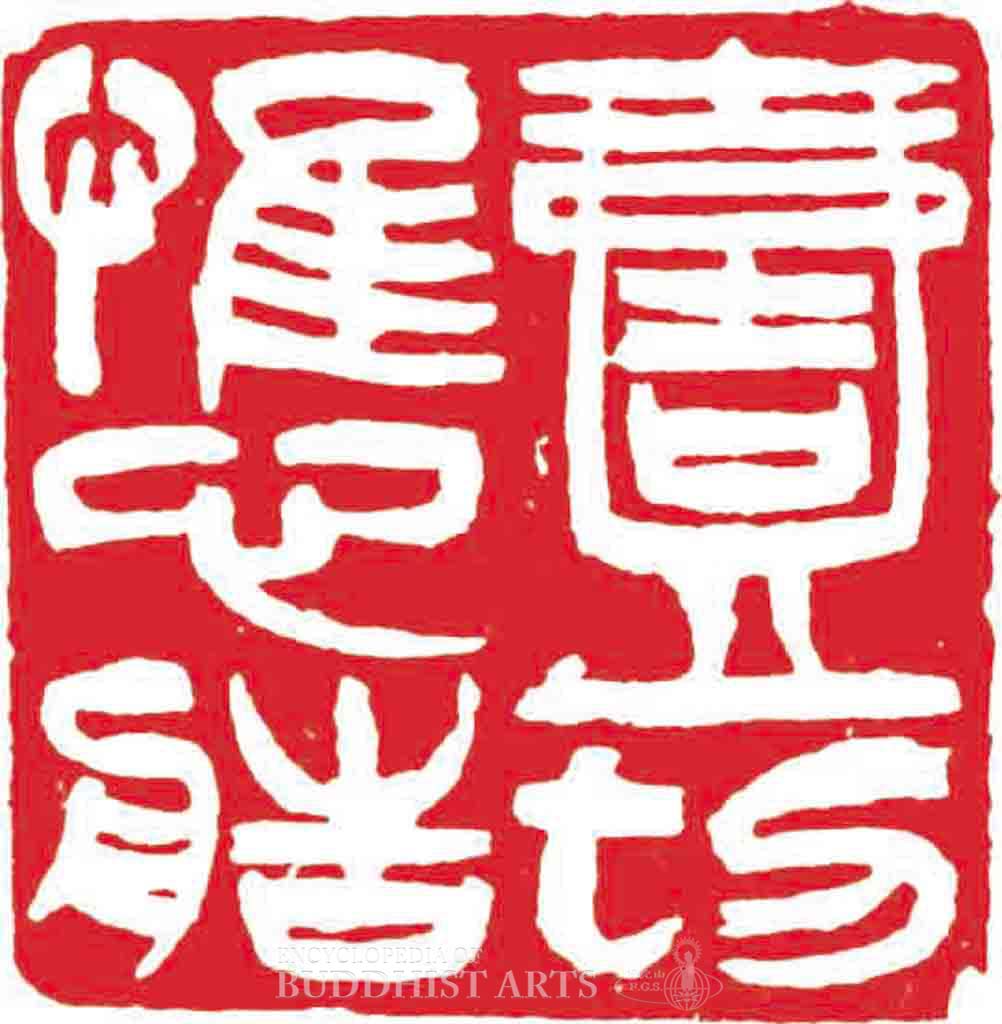
All is Created in the Mind
White-character square seal
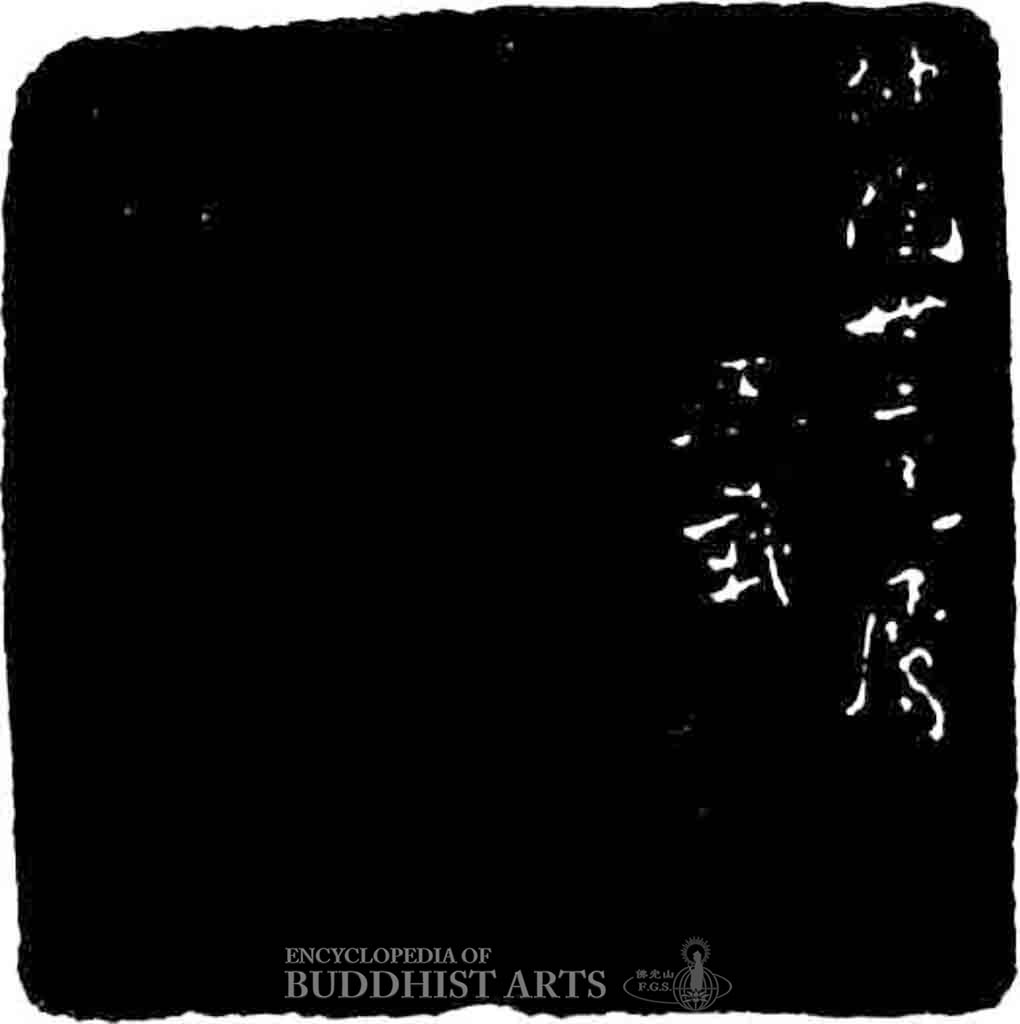
All is Created in the Mind (side colophon)
All is Created in the Mind
CHINA; Qing dynasty
It is implied through the notion “All is Created in the Mind” that all experiences and occurrences in the world are created by the consciousness of thought. When the mind arises, all phenomena arise; when the mind ceases, all phenomena cease.
Both the carving method and script of this seal have breached traditional standards, offering no visible signs of Qin and Han styles. Instead, a more calligraphic style was employed to give depth and emulate the rhythm of a brush on the seal design, resulting in a look quite reminiscent to Anhui school works. The piece is both refreshing and natural in style.
Wu Xizai was originally named Tingyang and was also known as Rangzhi. A late Qing dynasty (1644–1911) seal engraver, calligrapher, and painter from Yizheng, Jiangsu, his calligraphy was influenced by Bao Shichen and Deng Shiru. Wu’s carving is steady, strong, and creative. His achievements were significant and had a profound impact on seal engraving during the late Qing dynasty.
For more details, go to the Encyclopedia of Buddhist Arts: Calligraphy, page 285.
Cite this article:
author = Hsingyun and Youheng and Youlu and Pokorski, Stefanie and Mankuang and Edson, Gary,
booktitle = {Encyclopedia of Buddhist Arts: Calligraphy },
pages = 285,
title = {{All is Created in the Mind}},
volume = 17,
year = {2016}}