
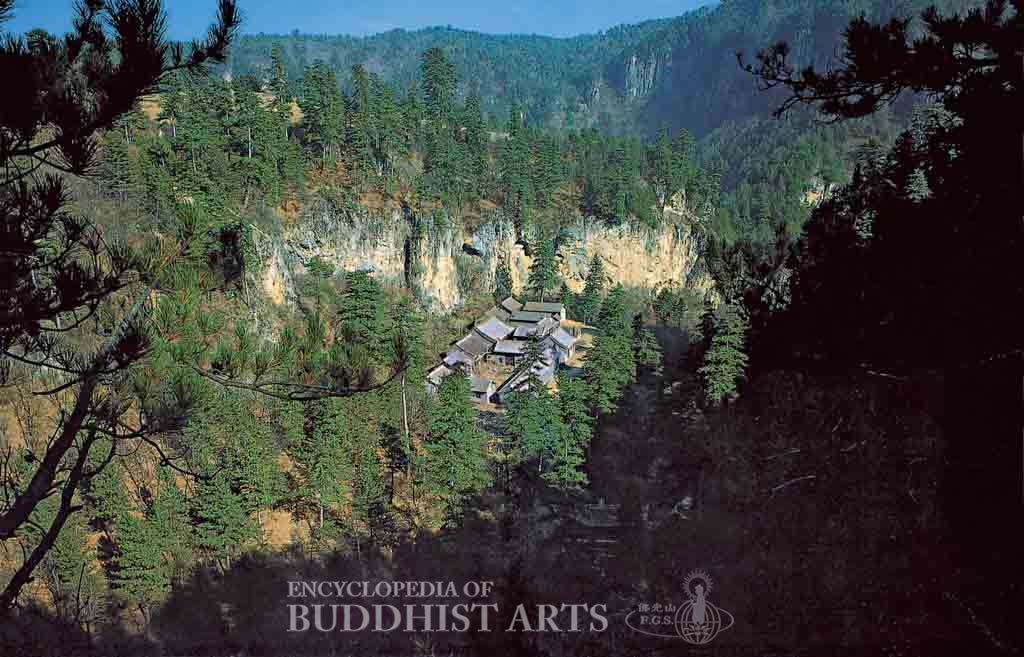
Shengshou Temple (aerial view)
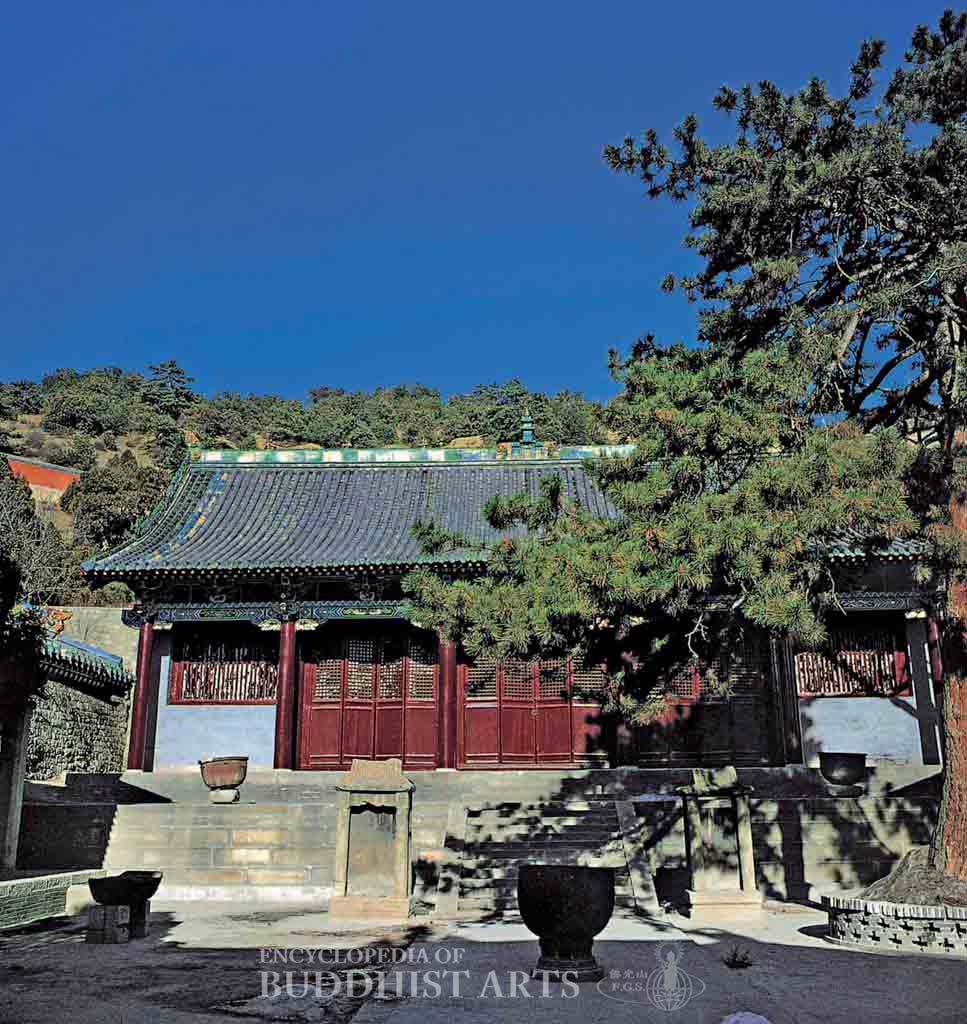
Shengshou Temple: Great Buddha Hall
Shengshou Temple
CHINA, Shanxi, Changzhi
Shengshou means Sacred Lifespan. In order to avoid the Huang Chao Rebellion (875–884), Li Kan, the fourth son of Emperor Yizong (reigned 859–873) of the Tang dynasty, renounce in 879 and built a temple here in 893. He was posthumously bestowed the title Xianshi Bodhisattva, and therefore this temple is also known as Xianshi Chan Monastery. It was repaired in 989 during the Northern Song dynasty and renovated during the Ming (1368–1644) and Qing (1644–1911) dynasties.
The five compounds within the temple are arranged horizontally because of the surrounding cliffs. The Buddha Hall Compound is located in the center, while the others are known as the Xianshi Bodhisattva Compound, Sutra Repository Compound, Abbot’s Quarters Compound, and the Meditation Hall Compound. Each compound has its own main gate but they are connected with one another. Within the Buddha Hall Compound, the Great Buddha Hall is five bays wide and contains wooden statues in the Qing style. The Heavenly King Hall is located at the front of the compound with the bell and drum towers and various other buildings acting as the side halls.
For more details, go to the Encyclopedia of Buddhist Arts: Architecture M-S, page 982.
Cite this article:
author = Hsingyun and Youheng and Johnson, Peter and Mankuang and Lancaster, Lewis,
booktitle = {Encyclopedia of Buddhist Arts: Architecture M-S},
pages = 982,
title = {{Shengshou Temple}},
volume = 3,
year = {2016}}