
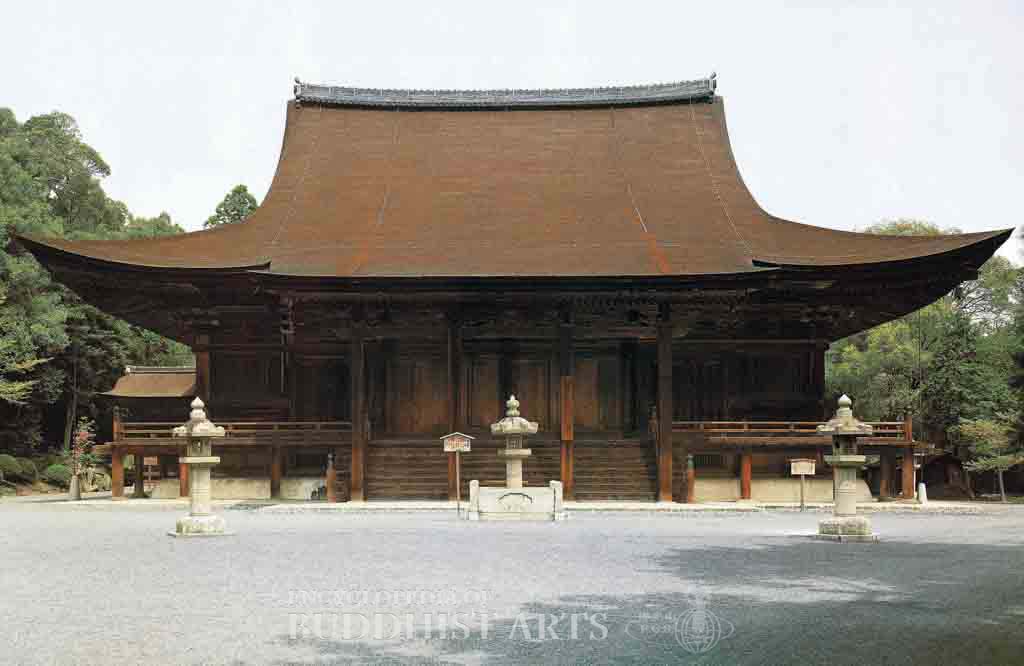
Onjoji Temple: Golden Hall
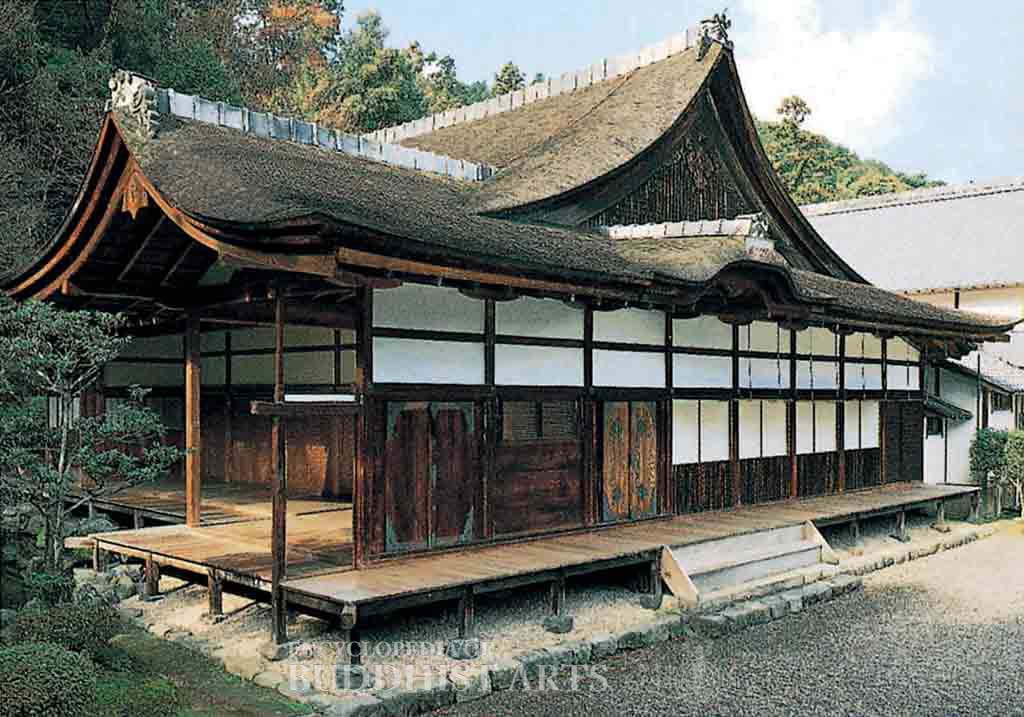
Onjoji Temple: Kojoin Guest Hall
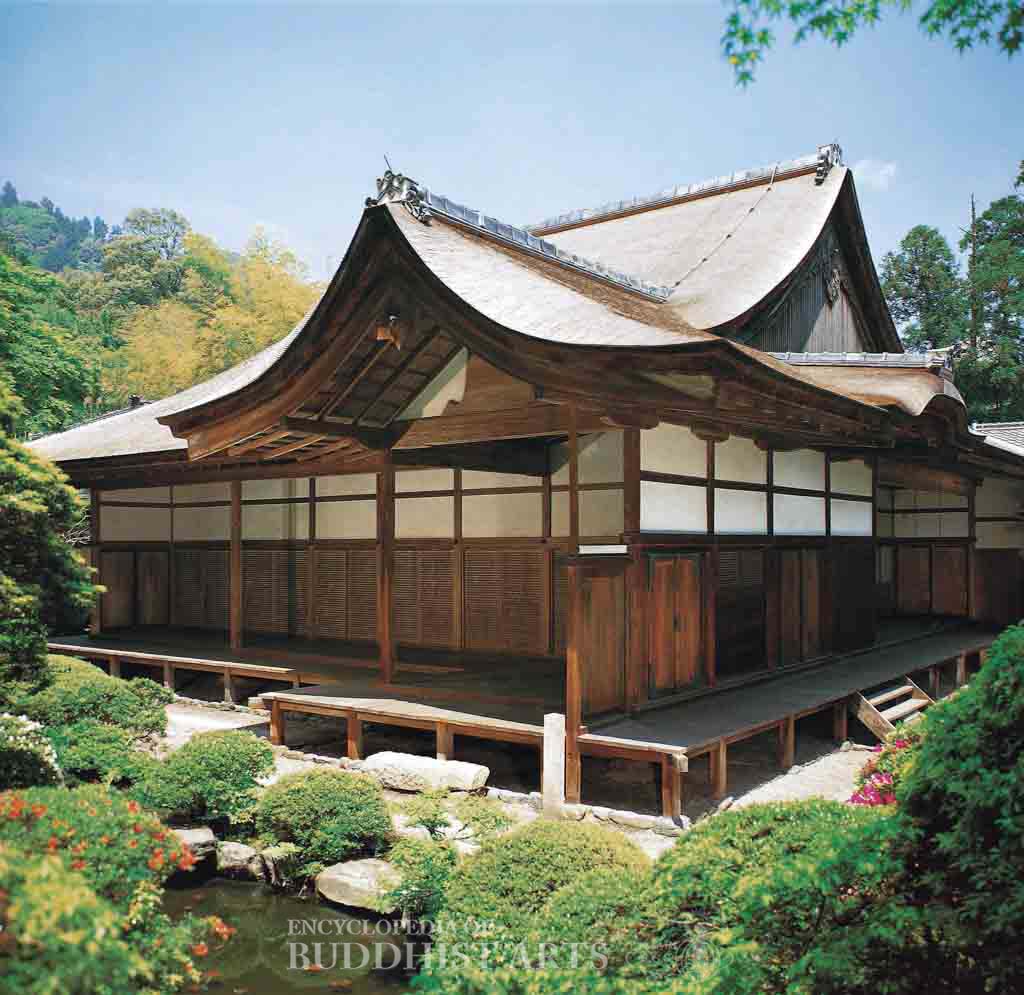
Onjoji Temple: Kangakuin Guest Hall
Onjoji Temple
JAPAN, Shiga, Otsu
Onjoji Temple is the head temple of the Tendai school of Buddhism. It was founded in the 7th century by Emperor Temmu (reigned 673–686) in honor and memory of his brother. The temple has been destroyed and reconstructed a number of times throughout its history. The main structures of the temple include the Chinese gate, Great Master Hall, Golden Hall, bell tower, and three-story pagoda, as well as Kangakuin and Kojoin guest halls. The latter two structures and the Golden Hall were listed as National Treasures in 1952 and 1953 respectively.
The seven-by-seven bay Golden Hall was rebuilt between 1598 and 1600, during the Momoyama period. It has a single-eave hip-and-gable roof covered with cypress bark. The roof is supported by two-tier bracket sets. There are doors in the three central bays and mullioned windows in the two end bays. The Kangakuin and Kojoin guest halls are representative of the Momoyama period (1573–1603). The Kojoin guest hall, built in 1601, has a single-eave hip-and-gable roof covered with cypress bark shingles. The gable faces the front and there is an undulating bargeboard above the entrance. The interior has an alcove, a desk, and a tatami in the style of a Japanese study room of the late Muromachi period (1392–1573).
For more details, go to the Encyclopedia of Buddhist Arts: Architecture M-S, page 803.
Cite this article:
author = Hsingyun and Youheng and Johnson, Peter and Mankuang and Lancaster, Lewis,
booktitle = {Encyclopedia of Buddhist Arts: Architecture M-S},
pages = 803,
title = {{Onjoji Temple}},
volume = 3,
year = {2016}}