
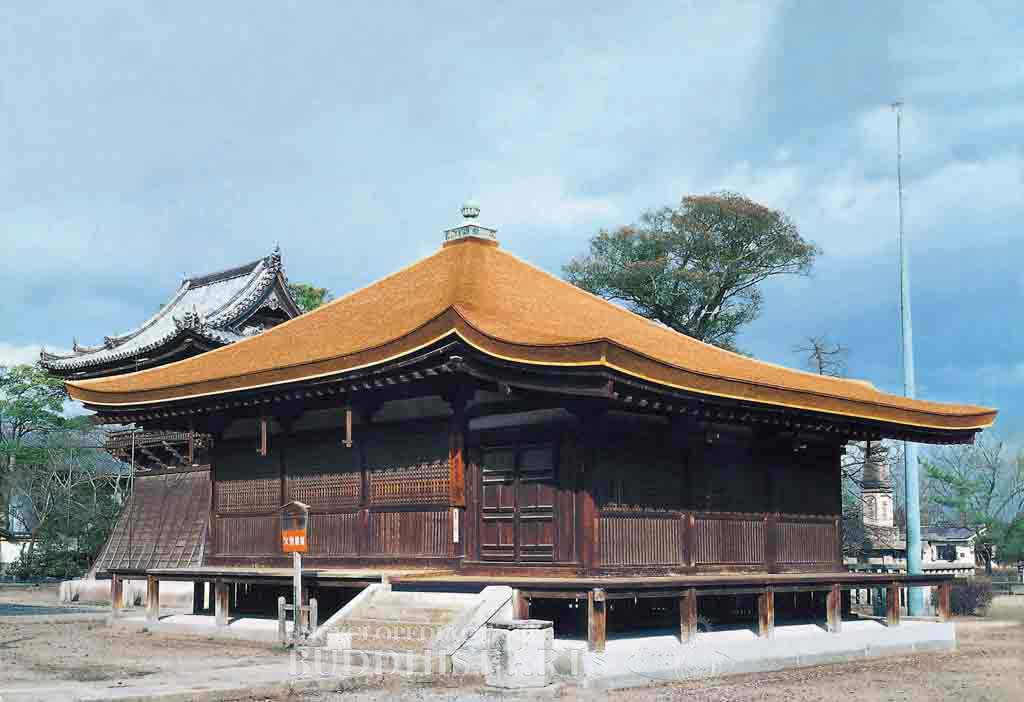
Kakurinji Temple: Prince Shotoku Hall
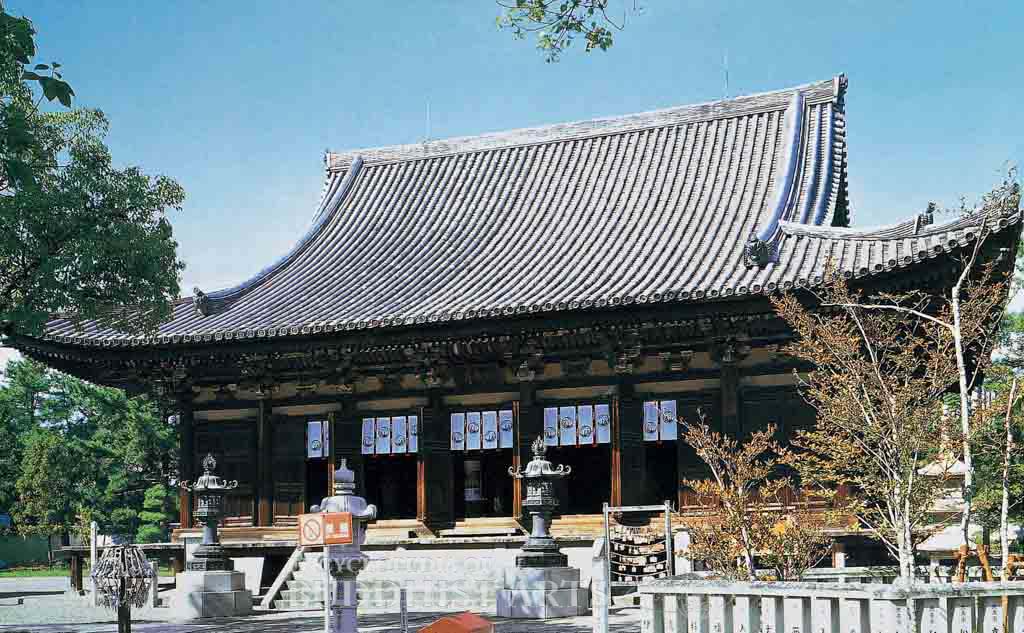
Kakurinji Temple: Main Hall
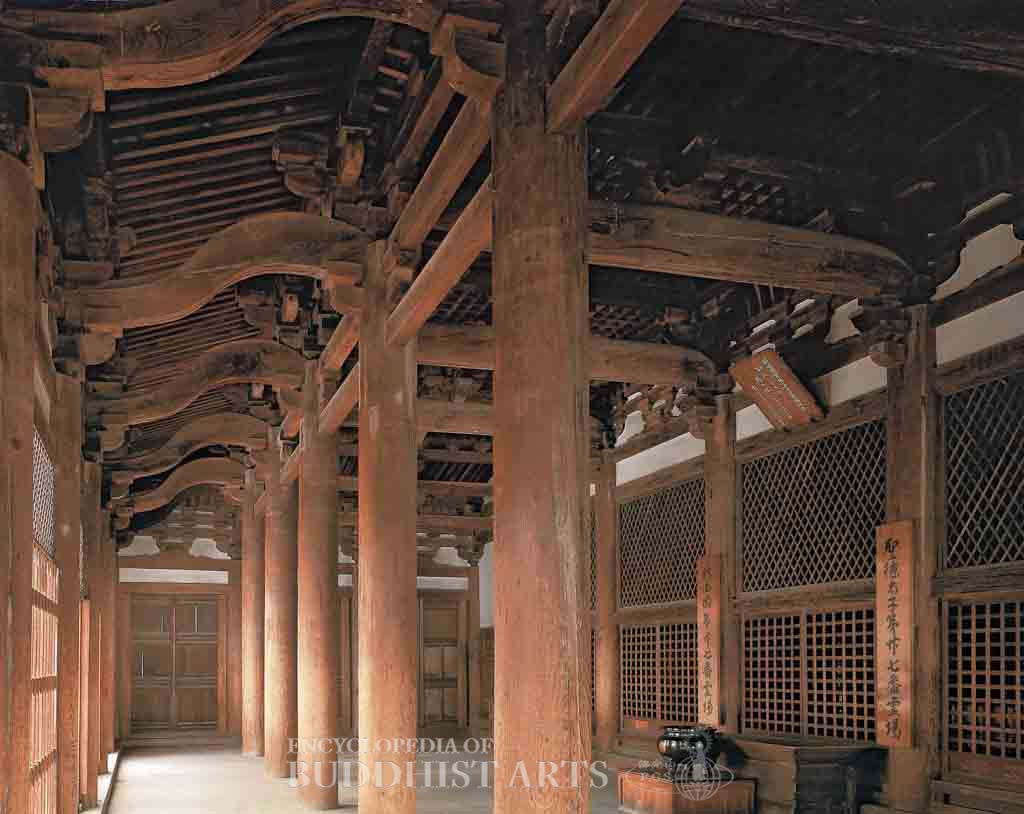
Kakurinji Temple: Main Hall (interior)
Kakurinji Temple
JAPAN, Hyogo, Kakogawa
Kakurinji means Crane Forest Temple. It is also known as Harima Horyuji, and belongs to the Tendai school of Buddhism. It is the 22nd of the 49 Medicine Buddha temples of the Yakushi Pilgrimage of southern-central Japan. According to the temple records, Prince Shotoku asked Hata no Kawakatsu to build the temple in 589 during the Asuka period, and shrines and halls were added by the monk Ennin in 852. In 1112 during the Heian period, it became Emperor Toba’s temple and was renamed Kokurinji.
The principal buildings of the temple include the Gate of Benevolent Kings, main hall, Prince Shotoku Hall, Amitabha Hall, bell tower, and three-story pagoda. The main hall and Prince Shotoku Hall were listed as National Treasures in 1952. The seven-by-six bay main hall, built in 1397 during the Muromachi period, has a single-eave hip-and-gable roof covered with cylindrical tiles. The roof has a steep slope and the eaves are slightly upturned at the corners. There are lattice doors on all sides of the hall. A statue of the Medicine Buddha is enshrined within the hall.
Prince Shotoku Hall, which was originally called the Lotus Hall, has a portrait of Prince Shotoku displayed within. The three-by-three bay hall has a pyramidal roof covered with cypress bark. In the center of the roof there is a harmika and a jewel. In the front of the building the eaves extend to form a covered area. There is a veranda surrounding the building. The south and west sides of the hall have wooden grid windows. It has a simple, elegant appearance. The back wall has murals entitled Amitabha Welcoming the Deceased and the Parinirvana of Sakyamuni Buddha, and the wall between the columns also displays various Buddhist paintings, all of which were created during the 12th century. The three-by-four bay Amitabha Hall was built in the late Heian period (794–1185). It has a single-eave hip roof covered with cylindrical tiles. The hall is devoted to the practice of Lotus Sutra and was listed as an Important Cultural Property. The temple also houses Important Cultural Properties, such as the bronze statue of Avalokitesvara, the wooden Eleven-Headed Avalokitesvara Bodhisattva, and the wooden Sakyamuni Buddha Triad.
For more details, go to the Encyclopedia of Buddhist Arts: Architecture G-L, page 587.
Cite this article:
author = Hsingyun and Youheng and Johnson, Peter and Mankuang and Lancaster, Lewis,
booktitle = {Encyclopedia of Buddhist Arts: Architecture G-L},
pages = 587,
title = {{Kakurinji Temple}},
volume = 2,
year = {2016}}