
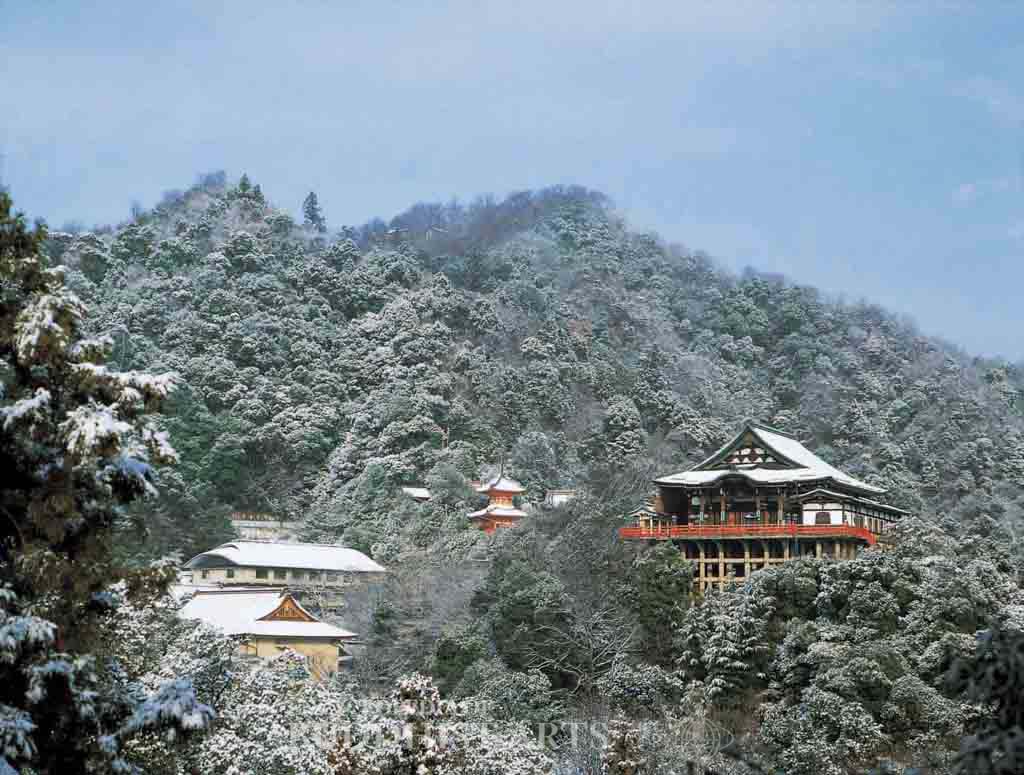
Shigisan Chogosonshiji Temple
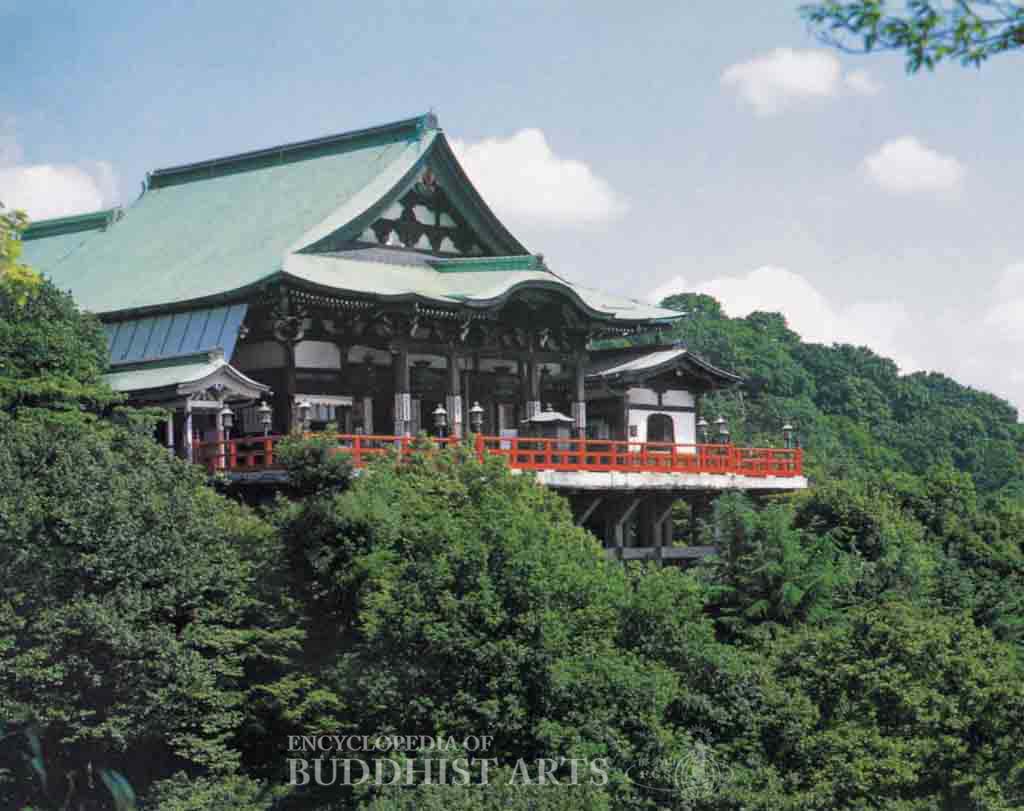
Shigisan Chogosonshiji Temple: Main Hall
Shigisan Chogosonshiji Temple
JAPAN, Nara, Ikoma
This is the head temple of the Shingon school of Japanese Buddhism. According to legend, in 587 during the Asuka period, Prince Shotoku was fighting Mononobe no Moriya when he climbed a mountain to pray for victory. Miraculously, Vaisravana, the Heavenly King of the North, appeared before him at the time that represented the tiger, and Prince Shotoku won his battle. The tiger became the symbol of the temple. Prince Shotoku carved an image of Vaisravana and named the mountain Shigisan.
During the Heian period (794–1185), a monk named Myoren devoted his efforts to developing Chogosonshiji Temple, which became the temple of prayer for Emperor Daigo (reigned 897–930) and Emperor Murakami (reigned 946–967). In 1577, during wartime in the Azuchi-Momoyama period, the temple was destroyed by fire. In 1602 it was reconstructed by Toyotomi Hideyori.
The principal structures of the temple include the Gate of Benevolent Kings, main hall, founder’s hall, three-story pagoda, Homa Hall, and a museum. There are also three subsidiary temples nearby, which are Wenjyuin, Jyofukuin, and Gyokuzoin.
The main hall was rebuilt in 1958. It is constructed on the side of the mountain. It has a hip-and-gable roof with extended eaves at the front. There is a wide veranda which is surrounded by red balustrades. Inside the main hall there is a statue of Vaisravana and statues of the 28 attendants. A scroll painting entitled the Tales of Shigisan, is kept in the hall. The painting was listed as a National Treasure.
For more details, go to the Encyclopedia of Buddhist Arts: Architecture M-S, page 992.
Cite this article:
author = Hsingyun and Youheng and Johnson, Peter and Mankuang and Lancaster, Lewis,
booktitle = {Encyclopedia of Buddhist Arts: Architecture M-S},
pages = 992,
title = {{Shigisan Chogosonshiji Temple}},
volume = 3,
year = {2016}}