
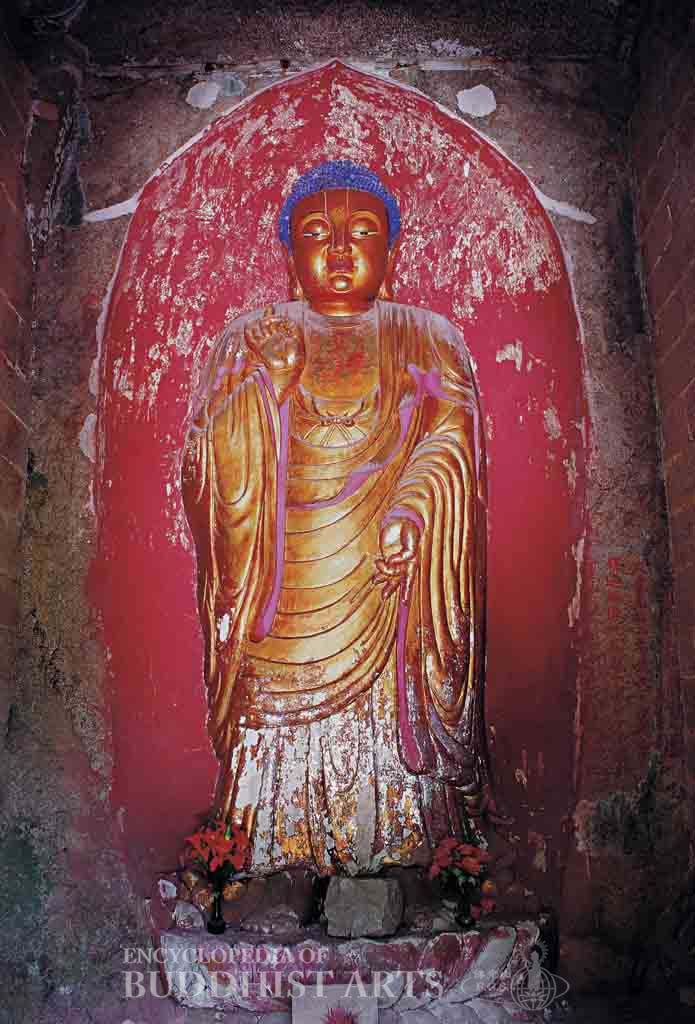
Qingyuanshan Rock Carvings: Ruixiangyan - Sakyamuni Buddha; Northern Song dynasty, dated 1087
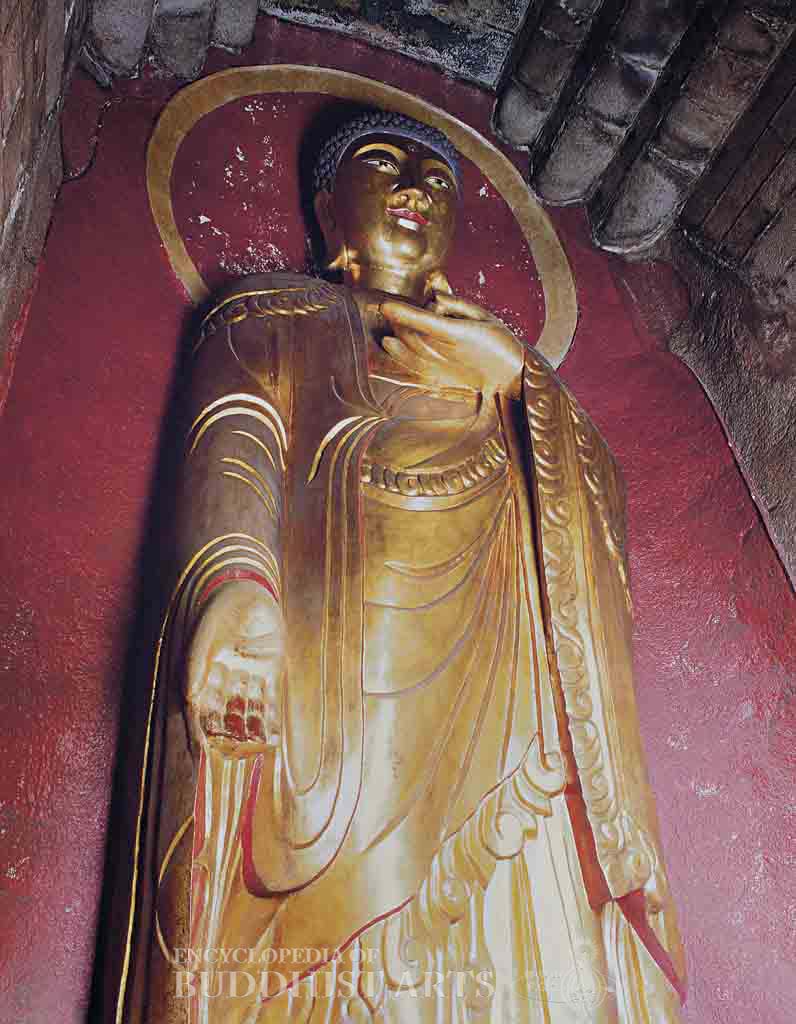
Qingyuanshan Rock Carvings: Mituoyan - Amitabha Buddha; Song dynasty
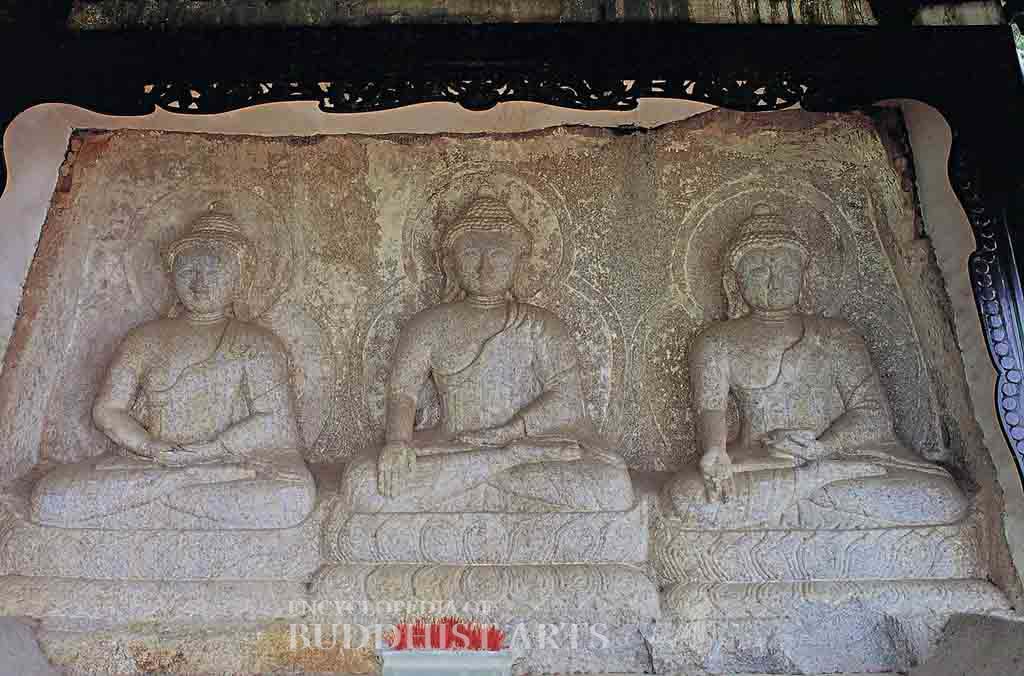
Qingyuanshan Rock Carvings: Bixiaoyan - Three Buddhas; Yuan dynasty, dated 1292
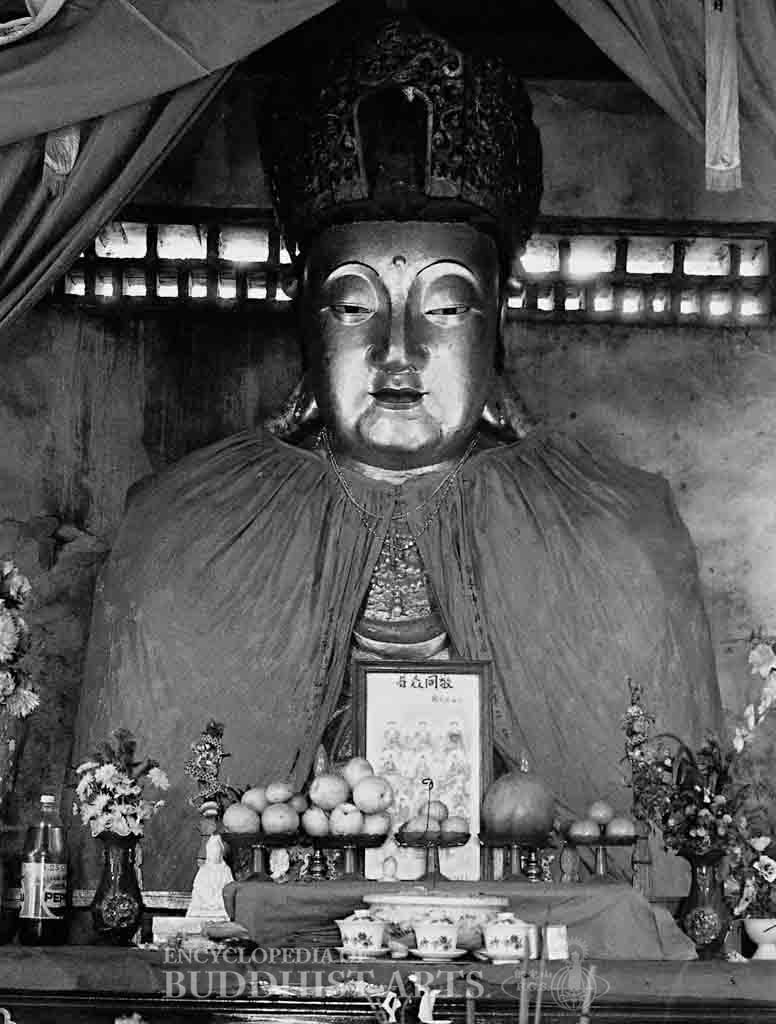
Qingyuanshan Rock Carvings: Ci’enyan - Avalokitesvara Bodhisattva; Northern Song dynasty
Stone
Qingyuanshan Rock Carvings
CHINA, Fujian, Quanzhou
These statues are found on Qingyuanshan (Pure Source Mountain) in Fengze, Quanzhou. The sculptures were carved during the Song (960–1279) and Yuan (1271–1368) dynasties. There are nine statues scattered over seven locations: Sakyamuni at Ruixiangyan (Auspicious Figure Cliff), Avalokitesvara at Ci’enyan (Bestow Kindness Cliff), Amitabha at Mituoyan (Amitabha Cliff), the Three Buddhas at Bixiaoyan (Blue Sky Cliff), Sakyamuni at Xifengyan (West Peak Cliff), another Sakyamuni at Qianshouyan (Thousand Arm Cliff), and carvings at Laojunyan (Laojun Cliff). All of the statues are carved in accordance with the shapes of the rocks, displaying extraordinary creativity. Except for the statues at Laojunyan, which are Daoist, all of the other statues are Buddhist. The site was listed as a National Cultural Heritage Site in 2001.
The standing Sakyamuni Buddha at Ruixiangyan is located north of Tianzhu (Heavenly Column) Peak and was carved from natural rock. Originally the statue was housed in a wooden hall. The current stone structure was constructed in 1483 during the Ming dynasty and resembles a wooden pavilion. The Buddha has a low usnisa, curly blue hair, and a well-rounded face. The figure stands on a lotus pedestal, wearing a monastic robe with dense folds. A nimbus in the shape of a lotus is depicted behind the Buddha. An inscription to the left of the statue states that it was constructed in 1087. This is one of the finest Song dynasty statues with inscriptions in the province of Fujian.
The seated Avalokitesvara at Ci’enyan is on the left peak of Qingyuanshan. This statue was also carved out of natural rock. Avalokitesvara sits on a lotus throne and has a rounded face with a kind expression. It was described as being “newly constructed and extravagantly decorated” during the time of Emperor Shaoxing (reigned 1131–1162). The stone columns in the hall display a couplet composed by Li Zhi, a philosopher from the Ming dynasty.
The statue of Amitabha Buddha on the Mituoyan is under Qingzhu (Hold up Jewel) Peak. According to researchers, the statue was constructed during the Song dynasty. A stone shelter that resembles a wooden structure was built in 1364 to protect the statue. The Buddha, standing on a lotus pedestal, has curly blue hair, an elegant expression, and wears a monastic robe. The right hand of the Buddha forms the varada (wish-granting) mudra and the left hand is positioned in front of the chest with the palm facing up. An inscription chronicling the construction of the rock carving in the Yuan dynasty is carved on the west wall.
The Bixiaoyan is 3 m high and 6.5 m wide. The Three Buddhas are carved on the cliff. Sakyamuni is in the center and forms the bhumisparsa (earth-touching) mudra. Medicine Buddha is on the right, holding a bowl in the left hand. Amitabha is located on the left with hands forming the dhyana (meditation) mudra. All three Buddhas are seated in full lotus position upon lotus thrones. Each of them has curled hair and an usnisa, a gem on the head, and wears monastic robes baring the right shoulder. Overall, the statues are proportionally and elegantly sculpted. They are the earliest and best preserved examples of the Three Buddhas in the southeast region of China. A tablet located beside the Buddhas chronicles the commissioning of the statues by General Asha of Lingwu from the Western Xia.
For more details, go to the Encyclopedia of Buddhist Arts: Caves Mo-S, page 1328.
Cite this article:
author = Hsingyun and Youheng and Johnson, Peter and Mankuang and Huntington, Susan and Edson, Gary and Neather, Robert,
booktitle = {Encyclopedia of Buddhist Arts: Caves Mo-S},
pages = 1328,
title = {{Qingyuanshan Rock Carvings}},
volume = 8,
year = {2016}}