
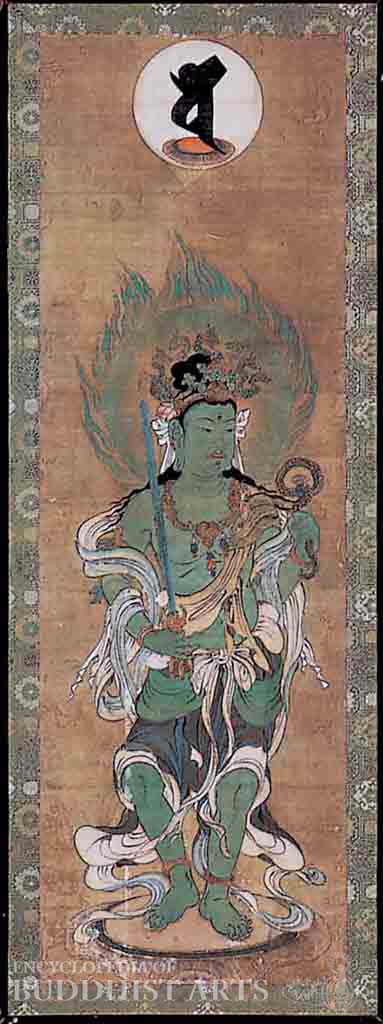
Toji Temple: Twelve Heavenly Beings - Varuna
Ink and color on silk
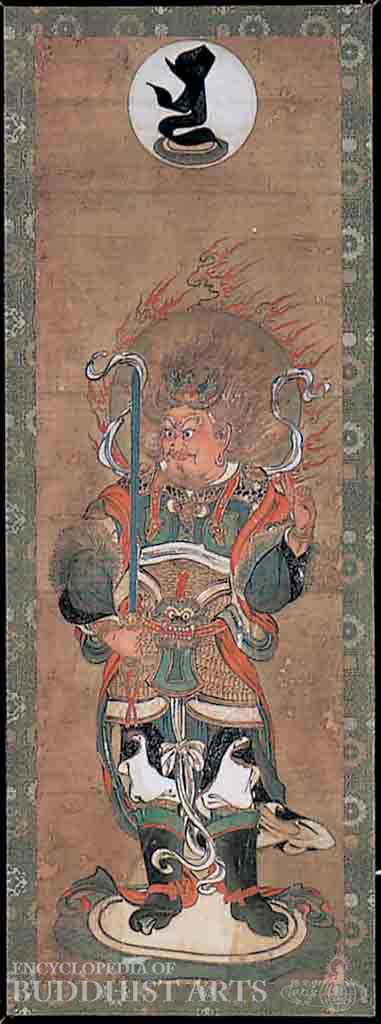
Toji Temple: Twelve Heavenly Beings - Raksasa
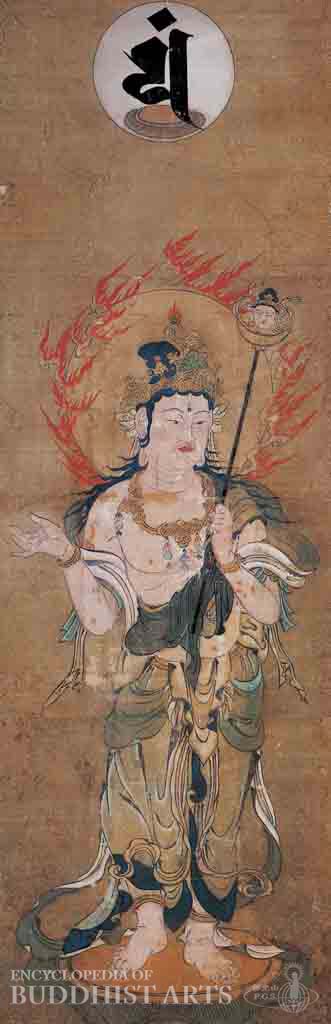
Toji Temple: Twelve Heavenly Beings - Yama
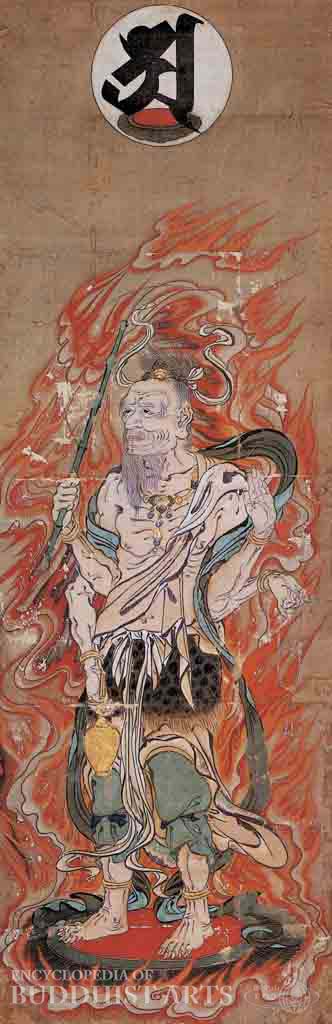
Toji Temple: Twelve Heavenly Beings - Agni
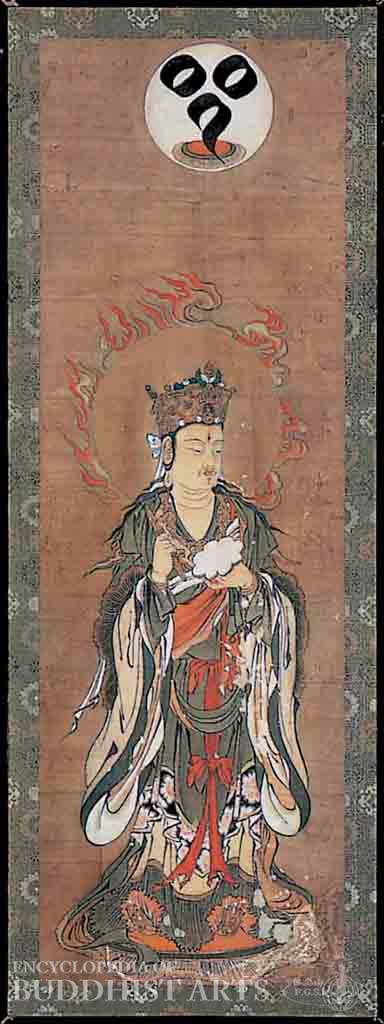
Toji Temple: Twelve Heavenly Beings - Sakra
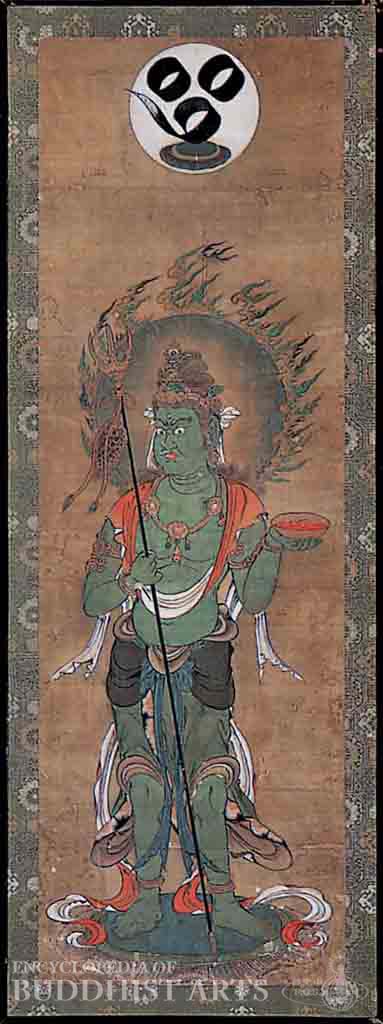
Toji Temple: Twelve Heavenly Beings - Isana
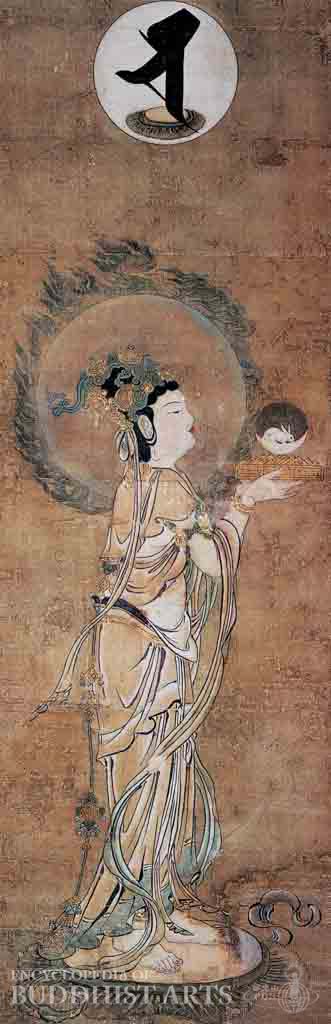
Toji Temple: Twelve Heavenly Beings - Candra
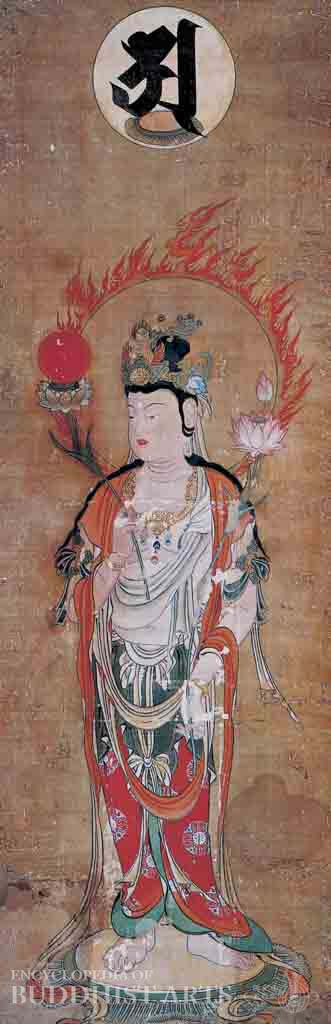
Toji Temple: Twelve Heavenly Beings - Surya
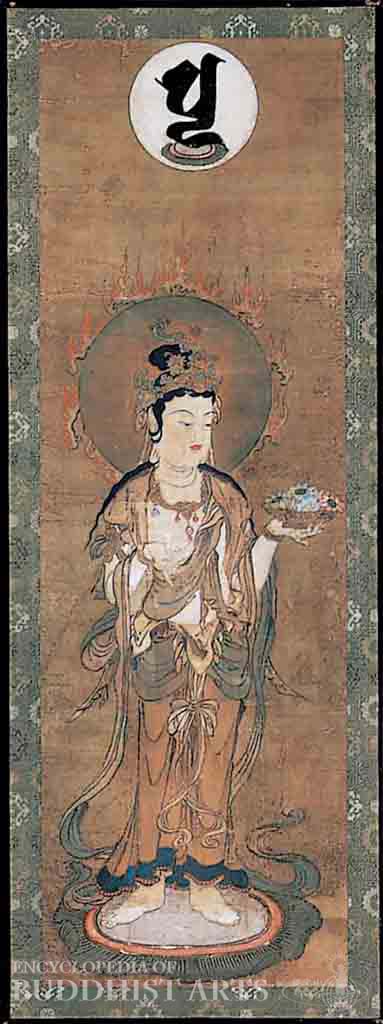
Toji Temple: Twelve Heavenly Beings - Prthivi
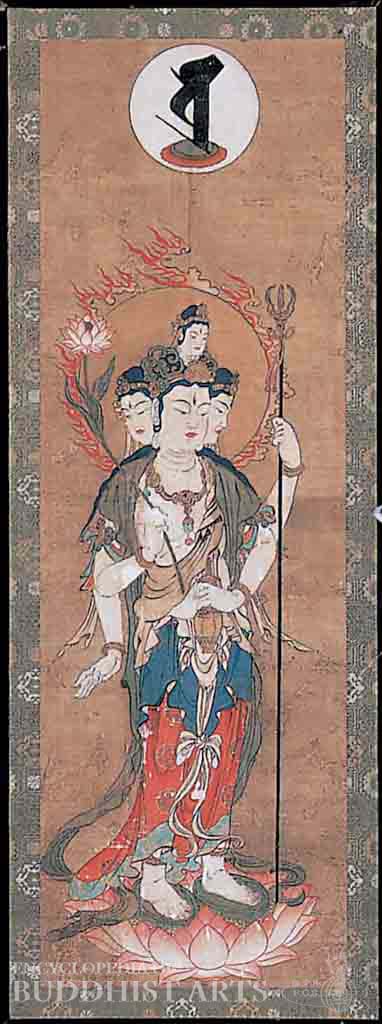
Toji Temple: Twelve Heavenly Beings - Brahma
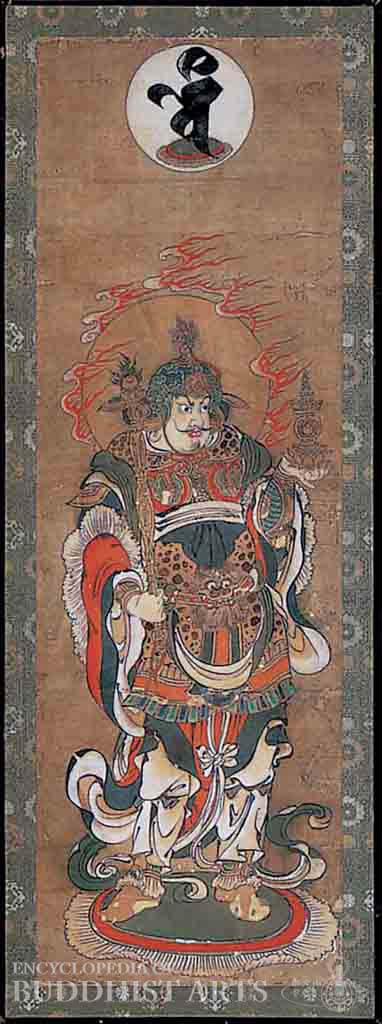
Toji Temple: Twelve Heavenly Beings - Vaisravana
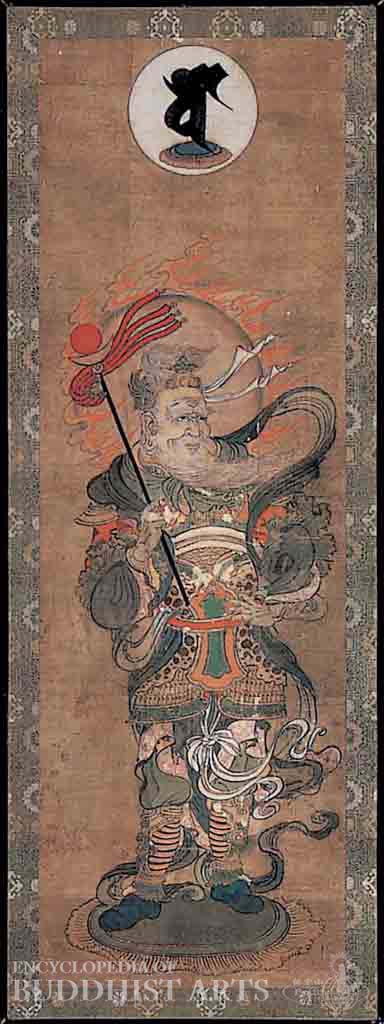
Toji Temple: Twelve Heavenly Beings - Vayu
Toji Temple: Twelve Heavenly Beings
JAPAN, Kyoto; Kamakura period
The Twelve Heavenly Beings are Dharma protectors in Mahayana and Vajrayana Buddhism. The group originally consisted of the eight beings that guard the four cardinal and four intermediary directions. Brahma, Prthivi, Candra, and Surya were later added to form the group of twelve. They serve the same role as the Four Heavenly Kings in protecting Buddhism and subduing evil demons. Representations of the Twelve Heavenly Beings have been used in empowerment ceremonies since the Heian period (794–1185). Beginning in the 12th century, they were often depicted on six-paneled folding screens. In this set of illustrations made by Takuma Shoga in 1191, the heavenly beings are painted on six two-sided screens. The Sanskrit syllables above the figures were written by Prince Shukaku. The set was listed as a National Treasure in 1953.
The Twelve Heavenly Beings, namely Varuna, Raksasa, Yama, Agni, Sakra, Isana, Candra, Surya, Prthivi, Brahma, Vaisravana, and Vayu, all stand in different poses. Brahma has multiple heads and some of the beings have three eyes. Each figure has a flaming nimbus; Agni is surrounded by flames. The beings wear armor, robes, or a stole. Some have a headdress, some wear ornate crowns, and Vaisravana wears a helmet. They all stand on circular pedestals except for Brahma, who stands upon a lotus.
The paintings feature precise, flowing lines, with the clothing depicted using strokes of varying thickness. The detailed facial expressions were drawn directly on the silk without prior drafting. The colorful appearance and the elegant style of these paintings seems to show the influence of Chinese Song dynasty art.
For more details, go to the Encyclopedia of Buddhist Arts: Painting P-Z, page 922.
Cite this article:
author = Hsingyun and Youheng and Youlu and Wilson, Graham and Manho and Mankuang and Huntington, Susan,
booktitle = {Encyclopedia of Buddhist Arts: Painting P-Z},
pages = 922,
title = {{Toji Temple: Twelve Heavenly Beings}},
volume = 16,
year = {2016}}