
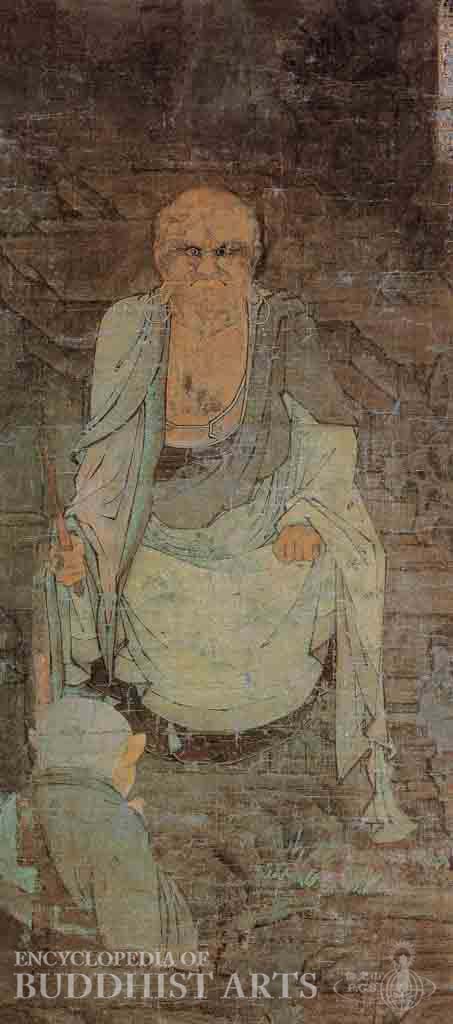
Sixteen Arhats - Pindolabharadraja
Ink and color on silk

Sixteen Arhats - Pindolabharadraja (detail)
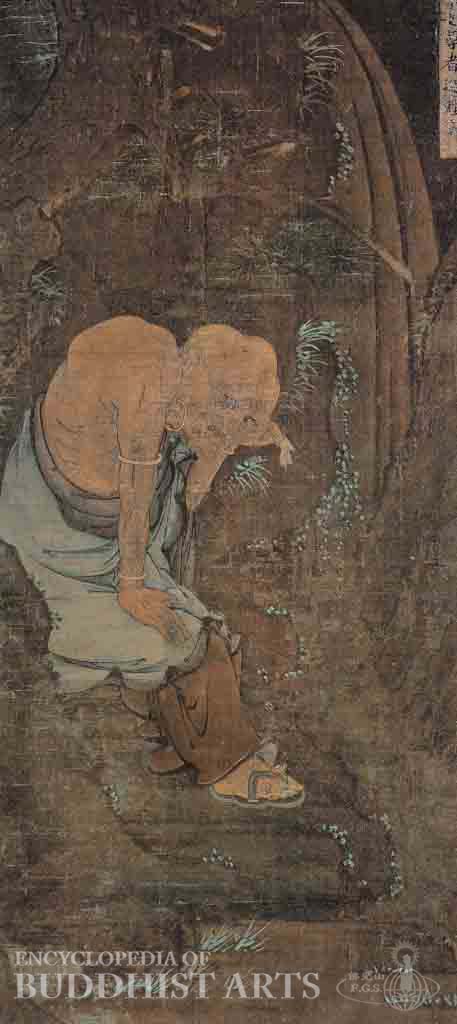
Sixteen Arhats - Kalika
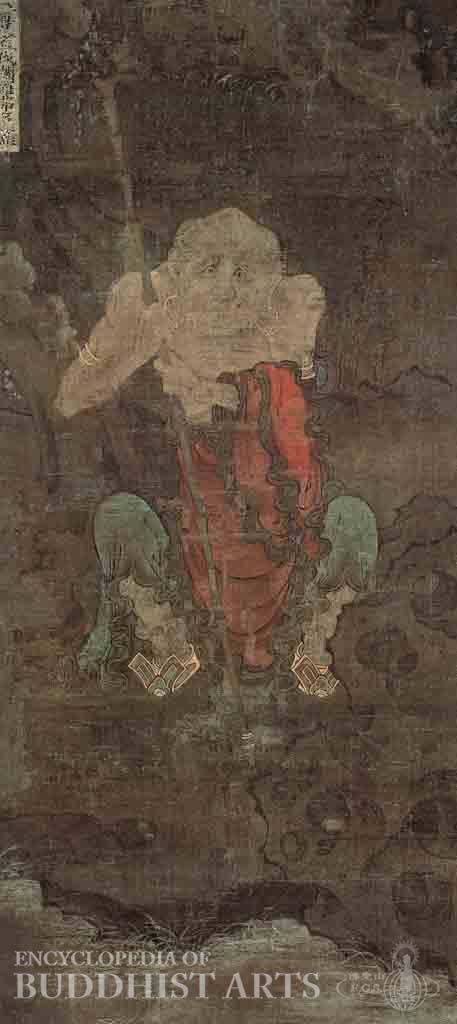
Sixteen Arhats - Vajraputra
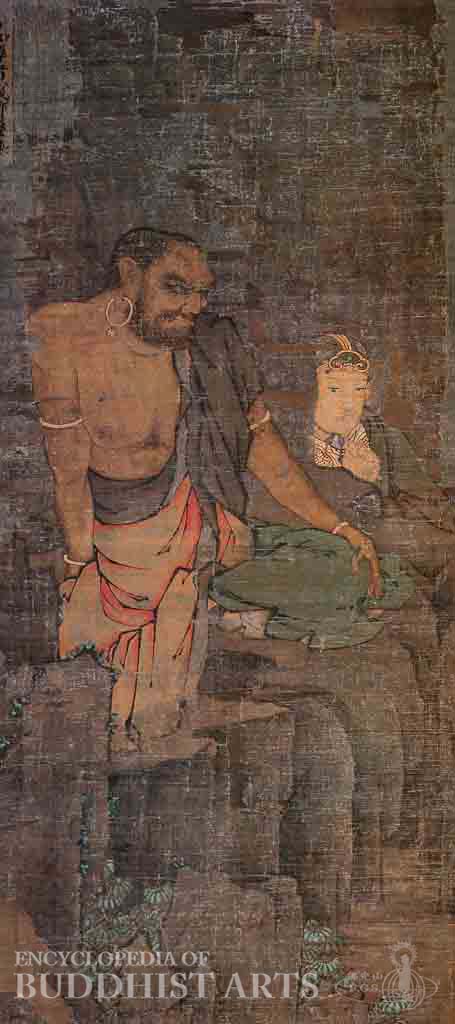
Sixteen Arhats - Vanavasin
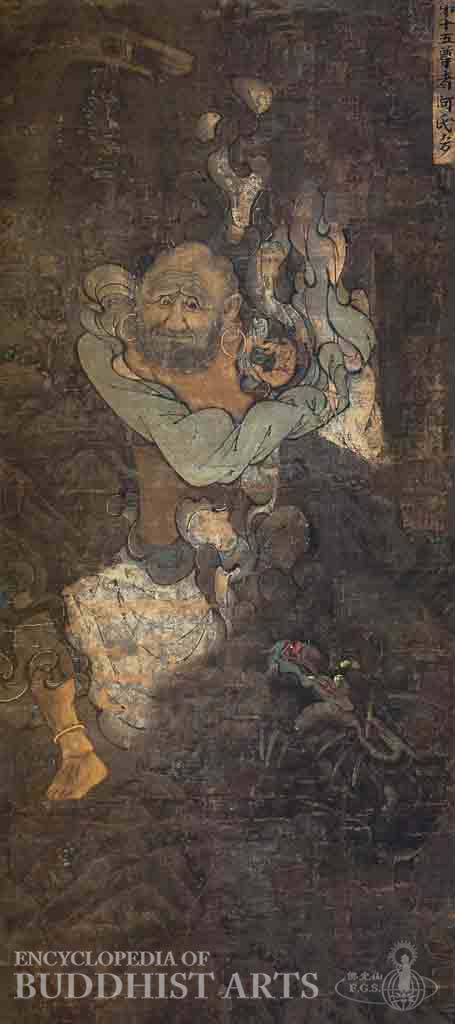
Sixteen Arhats - Ajita
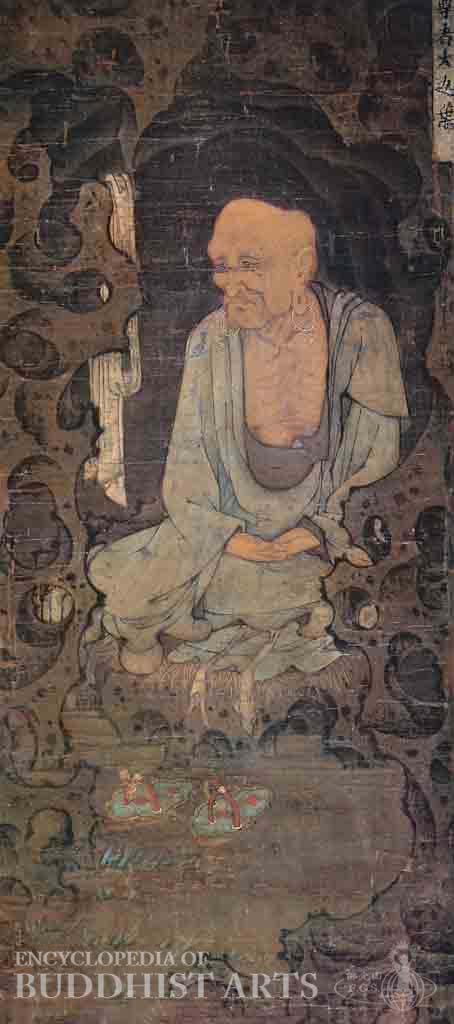
Sixteen Arhats - Mahakasyapa

Sixteen Arhats - Ajita (detail)
Sixteen Arhats
CHINA; Northern Song dynasty
According to ancient texts such as the Chronicles of Japan, these paintings of the Sixteen Arhats were brought to Japan by Chonen, a monk from Todaiji Temple, in 987. The painting style suggests they date from early Northern Song dynasty (960–1127). As the oldest depictions of the Sixteen Arhats, and most highly regarded depictions of the Arhats from the Northern Song dynasty, they were listed as a National Treasure in 1955.
Each painting is 82.1 cm high and 36.4 cm wide. The paintings of the first fifteen Arhats are numbered chronologically, and the name of the Arhat depicted is written on the side. Only the painting of Mahakasyapa is not numbered. Unlike the other figures, Mahakasyapa is not listed as one of the Sixteen Arhats in the Records of Nandimitra’s Discourse on Abiding Dharma. It is possible that this picture is a replacement for a missing painting of Cudapanthaka. Alternatively, the set could be a depiction of the Eighteen Arhats, and the last two pictures might have been lost.
The Arhats are painted within dark, rocky landscapes. They have expressive eyes and exaggerated facial features that bring to mind the paintings of Guanxiu. Dressed in a light blue robe, Pindolabharadraja stares straight at the viewer with a stern expression. An attendant stands in the bottom left corner, facing the Arhat and joining his palms in reverence. Kalika is hunched over, resting his right hand on his leg. Vajraputra holds a staff and looks straight ahead with mournful eyes.
The bearded Vanavasin sits facing sideways and has an expression of fierce concentration. He is accompanied by the Dharma protector Skanda, who stands peacefully with joined palms behind a rock on the right. Surrounded by a fluttering stole, Ajita has a wrinkled brow and wide eyes. The blue-eyed Mahakasyapa sits in full lotus position meditating in a cave.
Each Arhat has a distinct appearance that reflects their personality. They are painted with intricate lines and bright colors that make them stand out from the dark backgrounds. Delicate shading gives the faces a rough, realistic appearance. Some of the robes are painted with jagged “iron-wire” lines, while others are depicted with more fluid strokes. The Arhats are placed in middle of the pictures, differing from the usual Song dynasty practice of placing the central figure at the bottom of the image. The carefully painted rocks in the background are more typical of Northern Song dynasty art.
For more details, go to the Encyclopedia of Buddhist Arts: Painting P-Z, page 842.
Cite this article:
author = Hsingyun and Youheng and Youlu and Wilson, Graham and Manho and Mankuang and Huntington, Susan,
booktitle = {Encyclopedia of Buddhist Arts: Painting P-Z},
pages = 842,
title = {{Sixteen Arhats}},
volume = 16,
year = {2016}}