

Saidaiji Temple: Twelve Heavenly Beings - Vaisravana
Ink and color on silk

Saidaiji Temple: Twelve Heavenly Beings - Isana
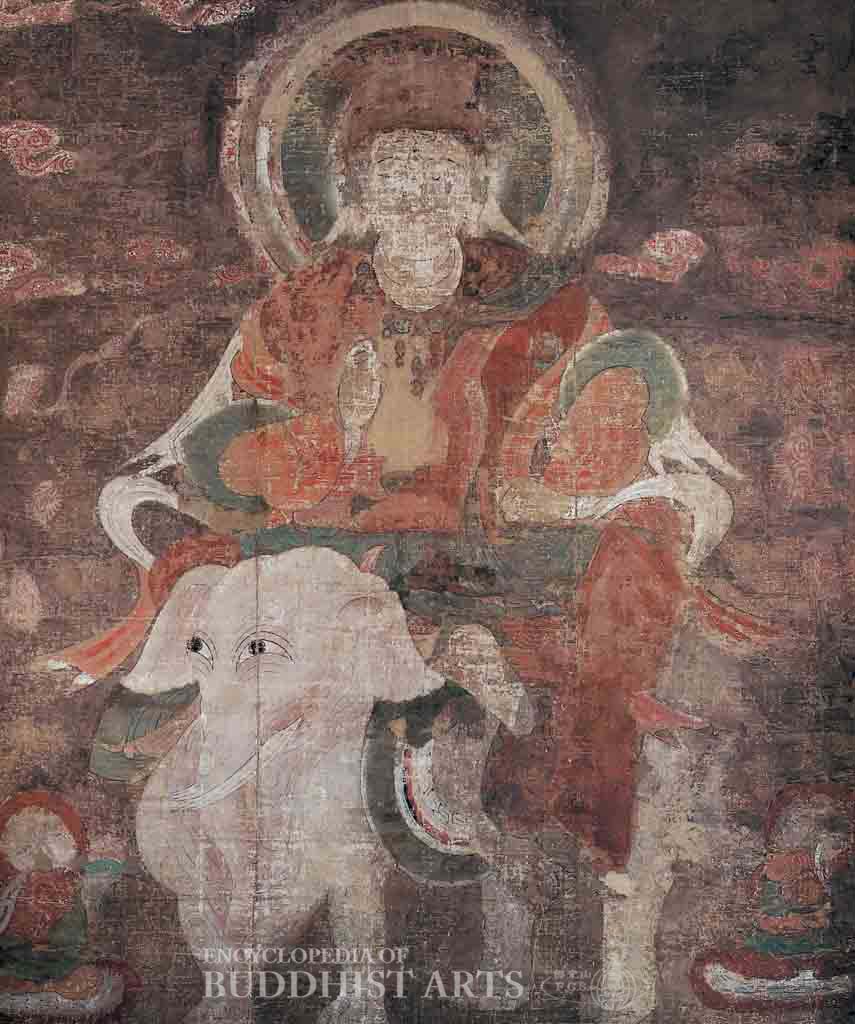
Saidaiji Temple: Twelve Heavenly Beings - Sakra

Saidaiji Temple: Twelve Heavenly Beings - Raksasa
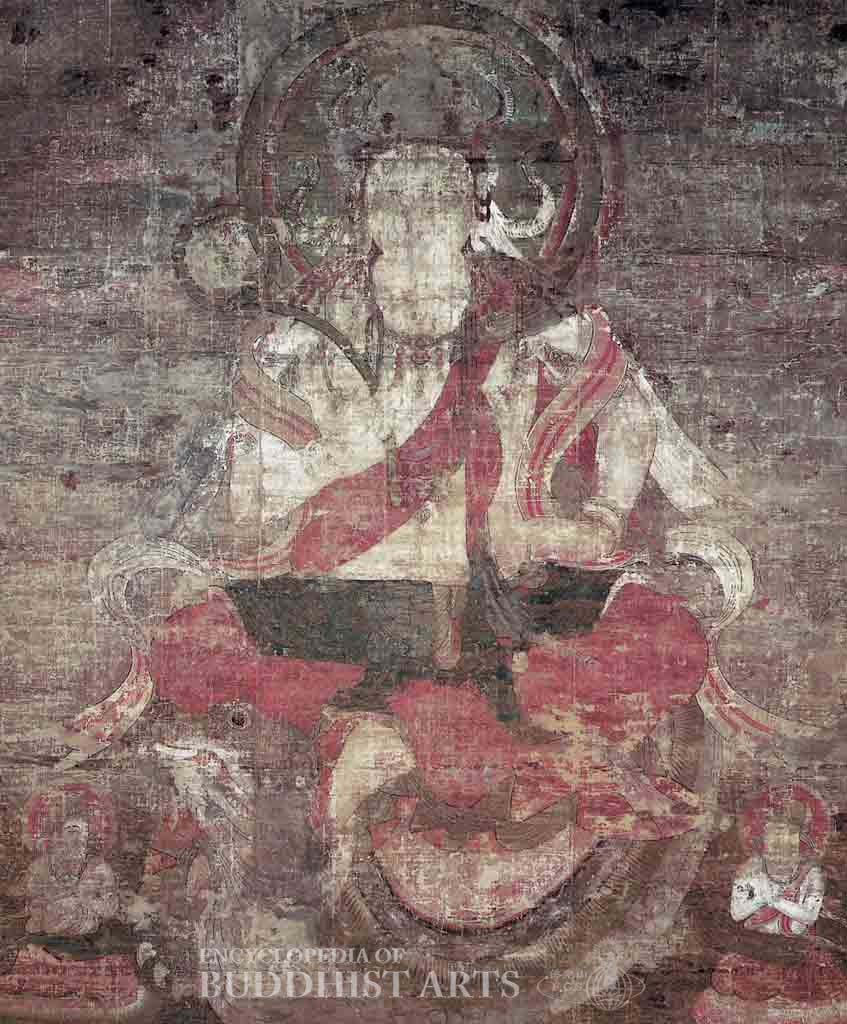
Saidaiji Temple: Twelve Heavenly Beings - Varuna

Saidaiji Temple: Twelve Heavenly Beings - Brahma

Saidaiji Temple: Twelve Heavenly Beings - Surya

Saidaiji Temple: Twelve Heavenly Beings - Candra
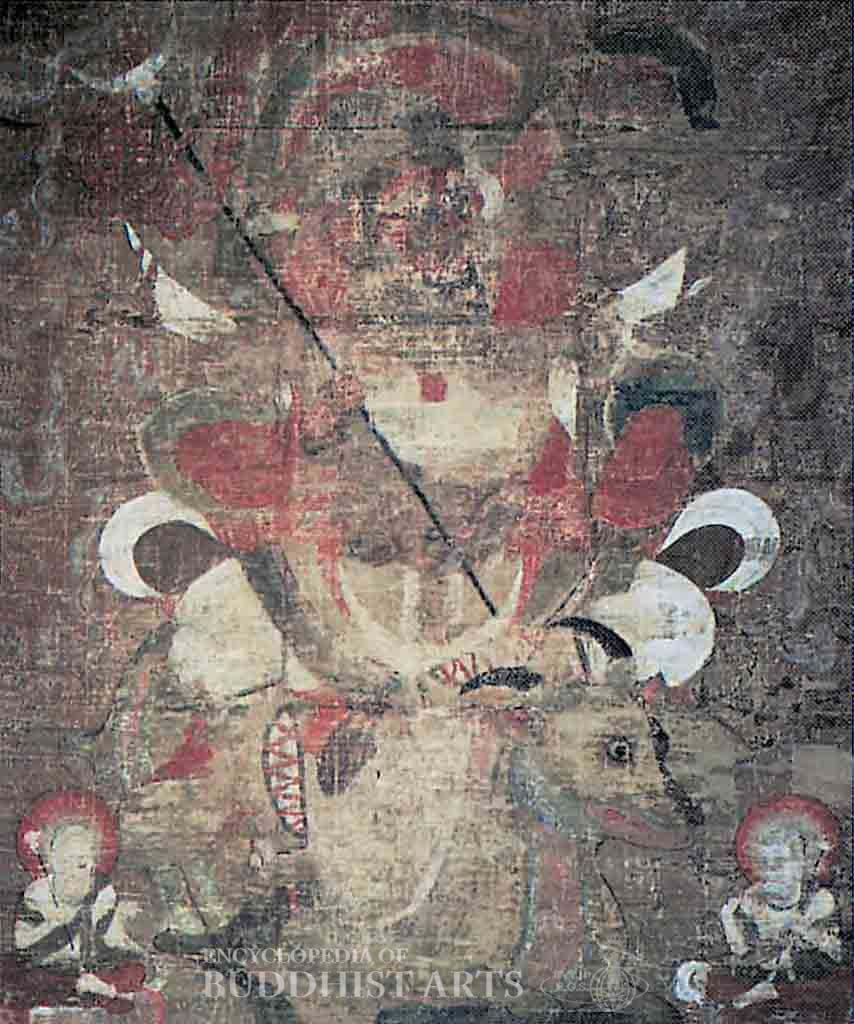
Saidaiji Temple: Twelve Heavenly Beings - Vayu
Saidaiji Temple: Twelve Heavenly Beings
JAPAN, Nara; Heian period
The Twelve Heavenly Beings, ancient Indian gods integrated into Buddhism as Dharma protectors, are each associated with a certain direction or realm. They are Vaisravana of the north, Isana of the northeast, Sakra of the east, Agni of the southeast, Yama of the south, Raksasa of the southwest, Varuna of the west, Vayu of the northwest, as well as Brahma, Prthivi, Surya, and Candra, who guards the heaven, earth, sun, and moon respectively. These 12 paintings dating from mid-9th century are based on descriptions in the Vajrasekhara Yogahoma Liturgy. They are the oldest existing depictions of the Twelve Heavenly Beings and an excellent example of early Heian period art. In 1952, the set was listed as a National Treasure.
The Twelve Heavenly Beings have nimbuses, ride on animals, and appear as Bodhisattvas, warriors, or sages. Each figure is accompanied by two attendants in smaller sizes and has a circular nimbus in light color, set against the floating clouds. Although the images have worn out, the contrasting colors of red and green remain apparent. The robustness of the figures is depicted using the wash technique, and the delicate outlines and gentle colors are characteristic of Nara period (710–794) paintings.
For more details, go to the Encyclopedia of Buddhist Arts: Painting P-Z, page 775.
Cite this article:
author = Hsingyun and Youheng and Youlu and Wilson, Graham and Manho and Mankuang and Huntington, Susan,
booktitle = {Encyclopedia of Buddhist Arts: Painting P-Z},
pages = 775,
title = {{Saidaiji Temple: Twelve Heavenly Beings}},
volume = 16,
year = {2016}}