
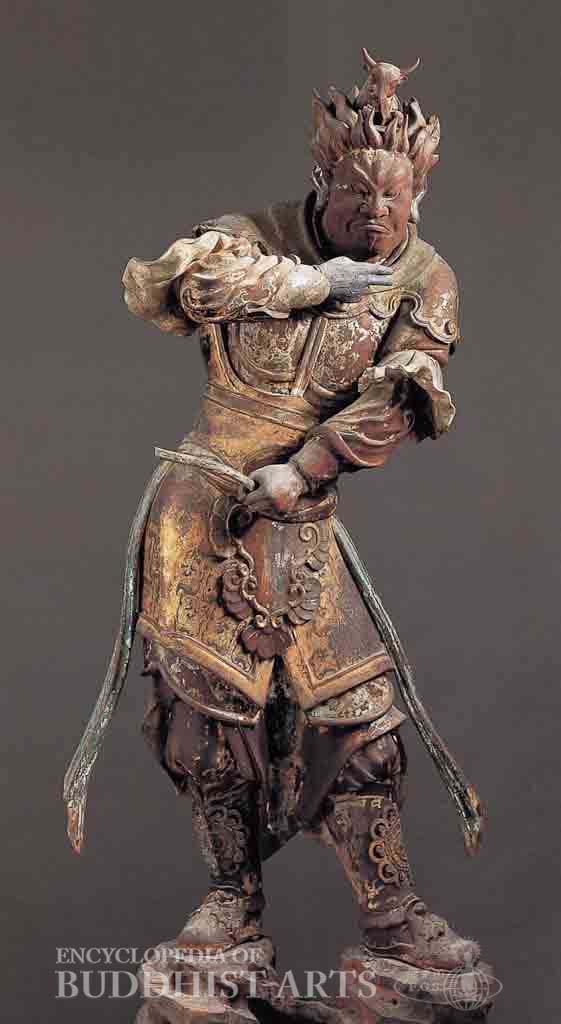
Kofukuji Temple East Golden Hall: Twelve Yaksa Generals - Catura
Cypress wood
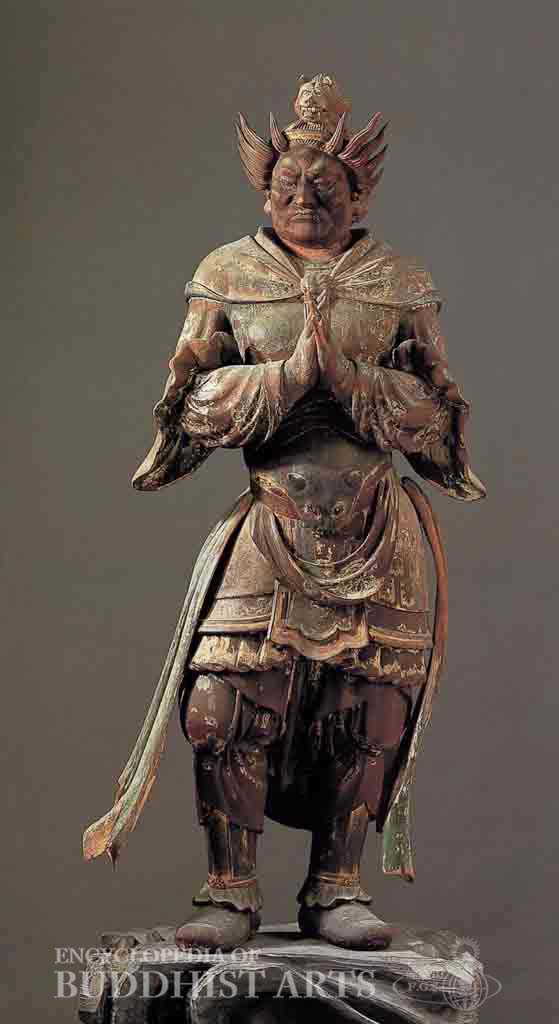
Kofukuji Temple East Golden Hall: Twelve Yaksa Generals - Kinnara
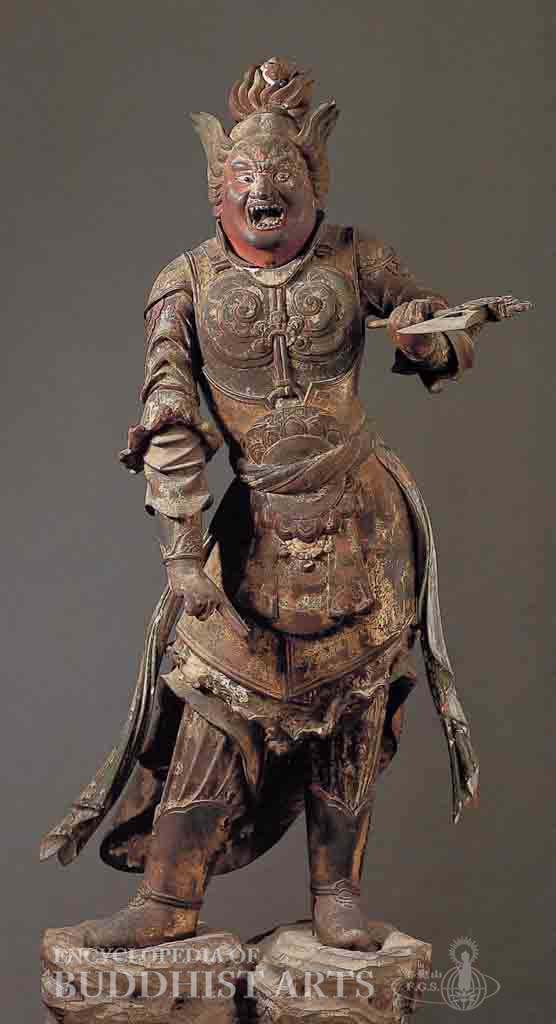
Kofukuji Temple East Golden Hall: Twelve Yaksa Generals - Mahoraga
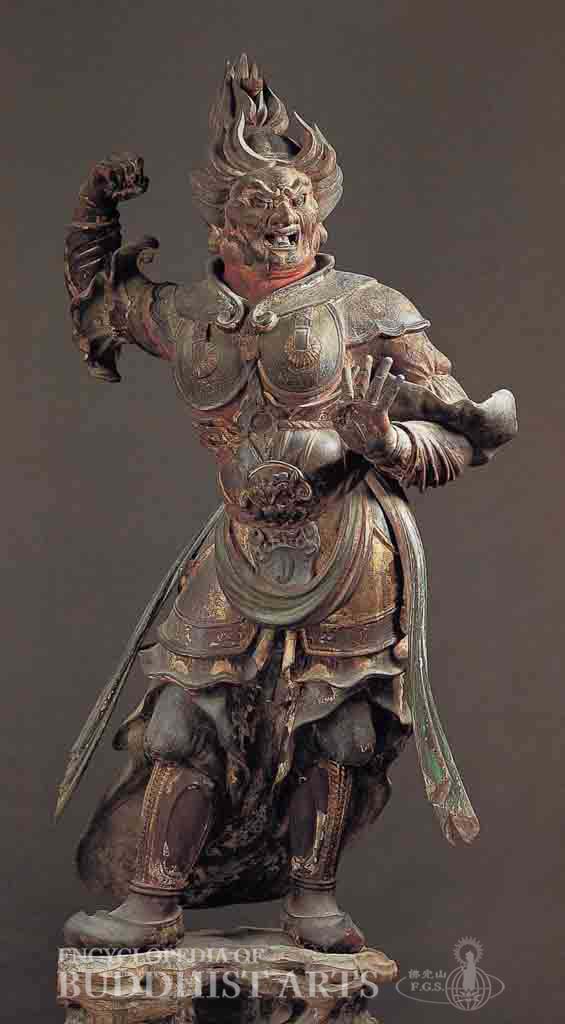
Kofukuji Temple East Golden Hall: Twelve Yaksa Generals - Sandila
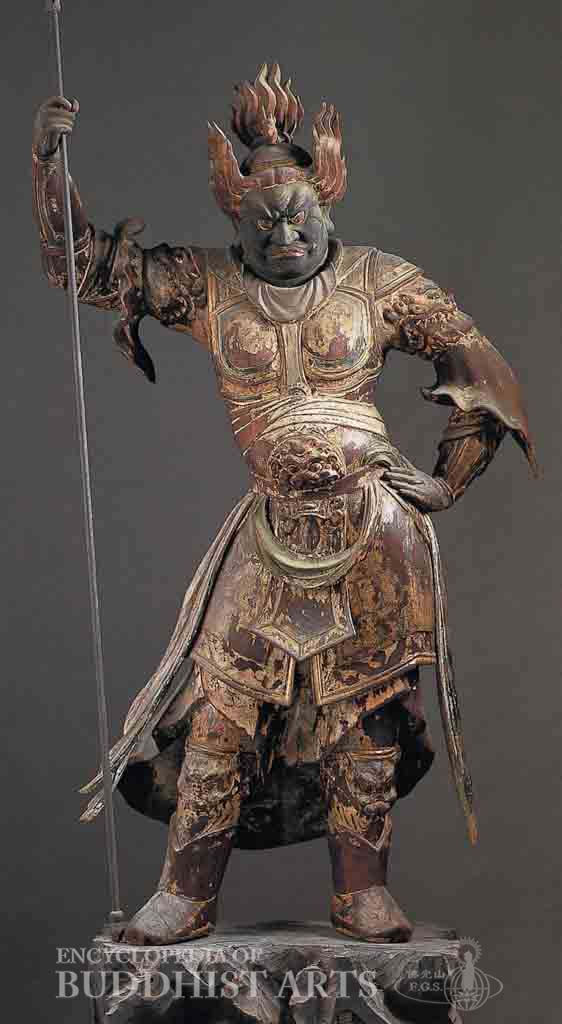
Kofukuji Temple East Golden Hall: Twelve Yaksa Generals - Anila
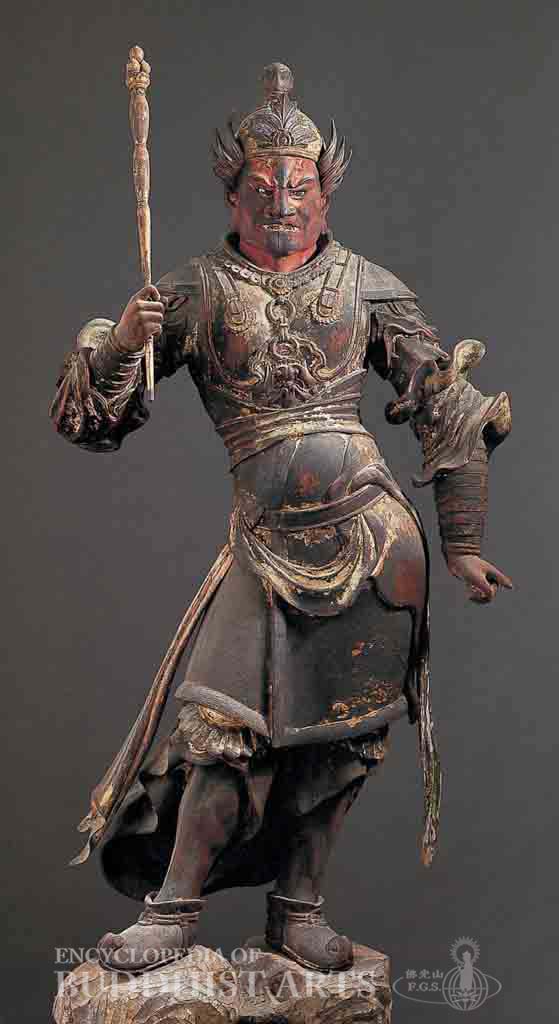
Kofukuji Temple East Golden Hall: Twelve Yaksa Generals - Andira
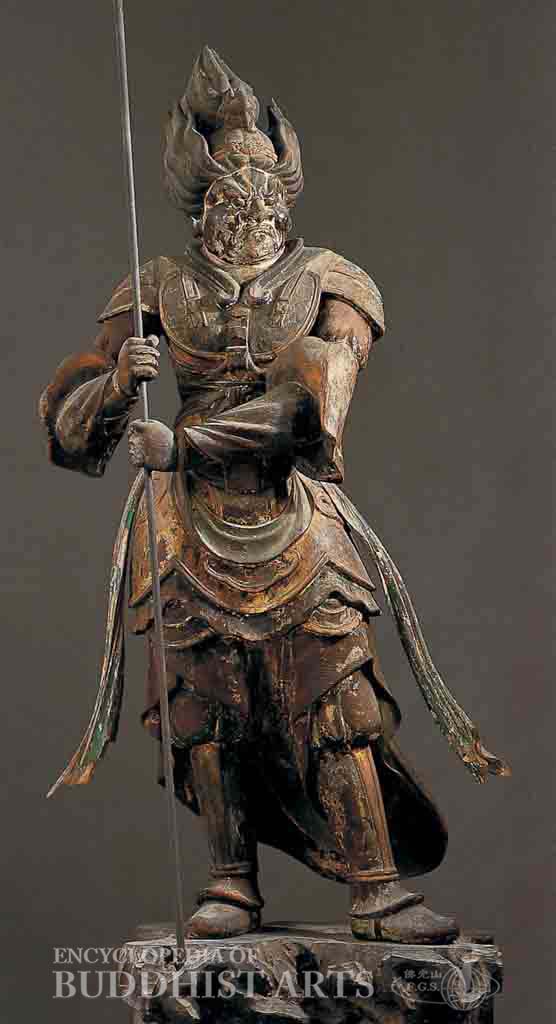
Kofukuji Temple East Golden Hall: Twelve Yaksa Generals - Mihira
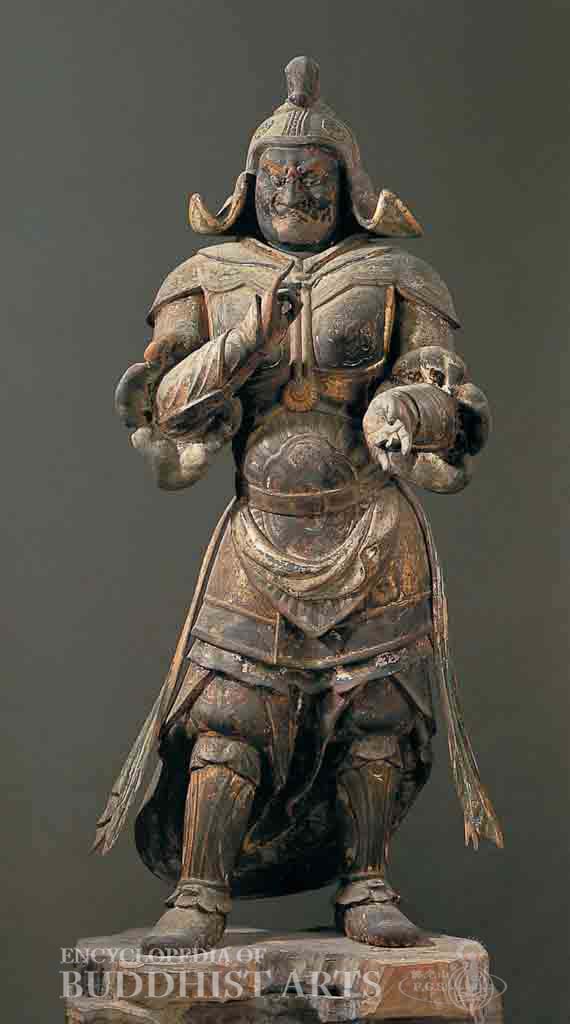
Kofukuji Temple East Golden Hall: Twelve Yaksa Generals - Kumbhira
Kofukuji Temple East Golden Hall: Twelve Yaksa Generals
JAPAN, Nara; Kamakura period
The Generals flank the seated Medicine Buddha, six on each side, to act as his guardians. An inked inscription beneath the foot of General Pajra reveals that the figures were painted in 1207 and may have been completed that same year. Dynamic and expressive, they are considered to be creations of the Kei school masters. The statues were listed as National Treasures in 1953.
The figures were generally formed by joining two pieces of cypress wood laterally before carving, followed by attaching other parts depending on the varying postures. On the topknot of each figure are icons of animals, representing the Chinese Zodiac with which they are associated. The sculptures have an animated expression and are individualized by such details as hair standing on their ends, uplifted eyebrows, staring eyes, and gaping or grimacing mouths. The Generals stand on rocky pedestals wearing suits of armor and wielding weapons as they pose in martial stances, characteristically embodying their protective roles. Except for General Vajra, who wears sandals, the rest are booted or shod. Decorations such as auspicious floral motifs and whirling foliage are used in conjunction with gradient coloring and gilding, to create a variety of patterns.
For more details, go to the Encyclopedia of Buddhist Arts: Sculpture G-M, page 545.
Cite this article:
author = Hsingyun and Youheng and Lovelock, Yann and Chou, Yuan and Huntington, Susan and Edson, Gary and Neather, Robert,
booktitle = {Encyclopedia of Buddhist Arts: Sculpture G-M},
pages = 545,
title = {{Kofukuji Temple East Golden Hall: Twelve Yaksa Generals}},
volume = 11,
year = {2016}}