
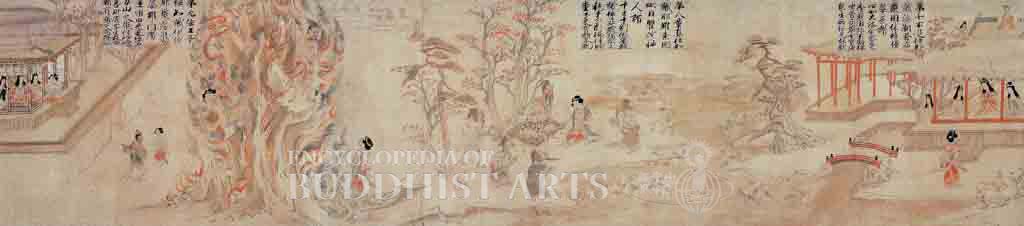
Todaiji Temple: Fifty-Five Visits of Sudhana (detail)
Ink and color on paper
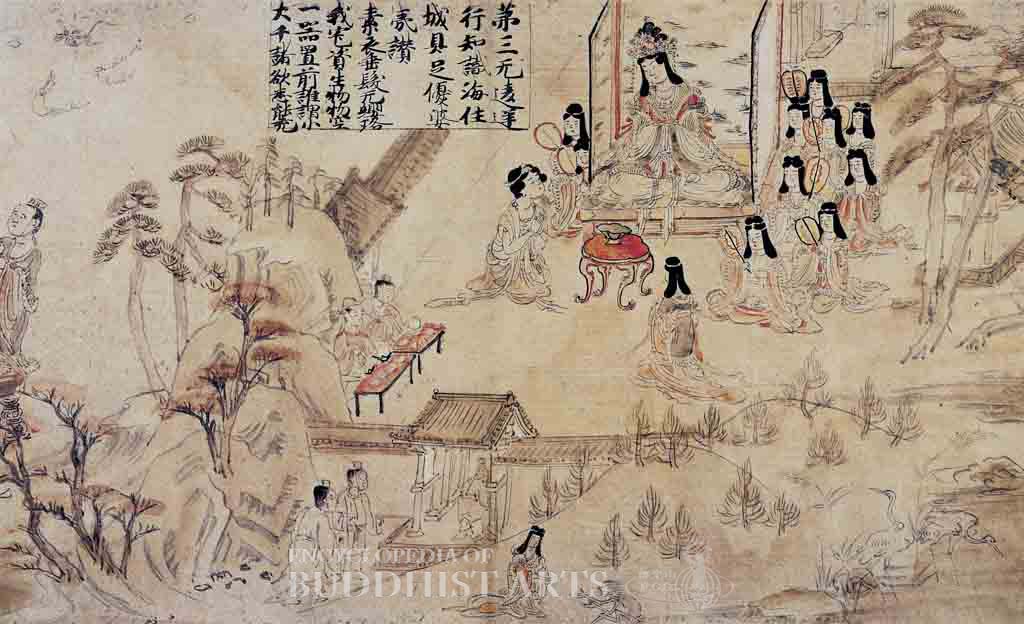
Todaiji Temple: Fifty-Five Visits of Sudhana (detail)
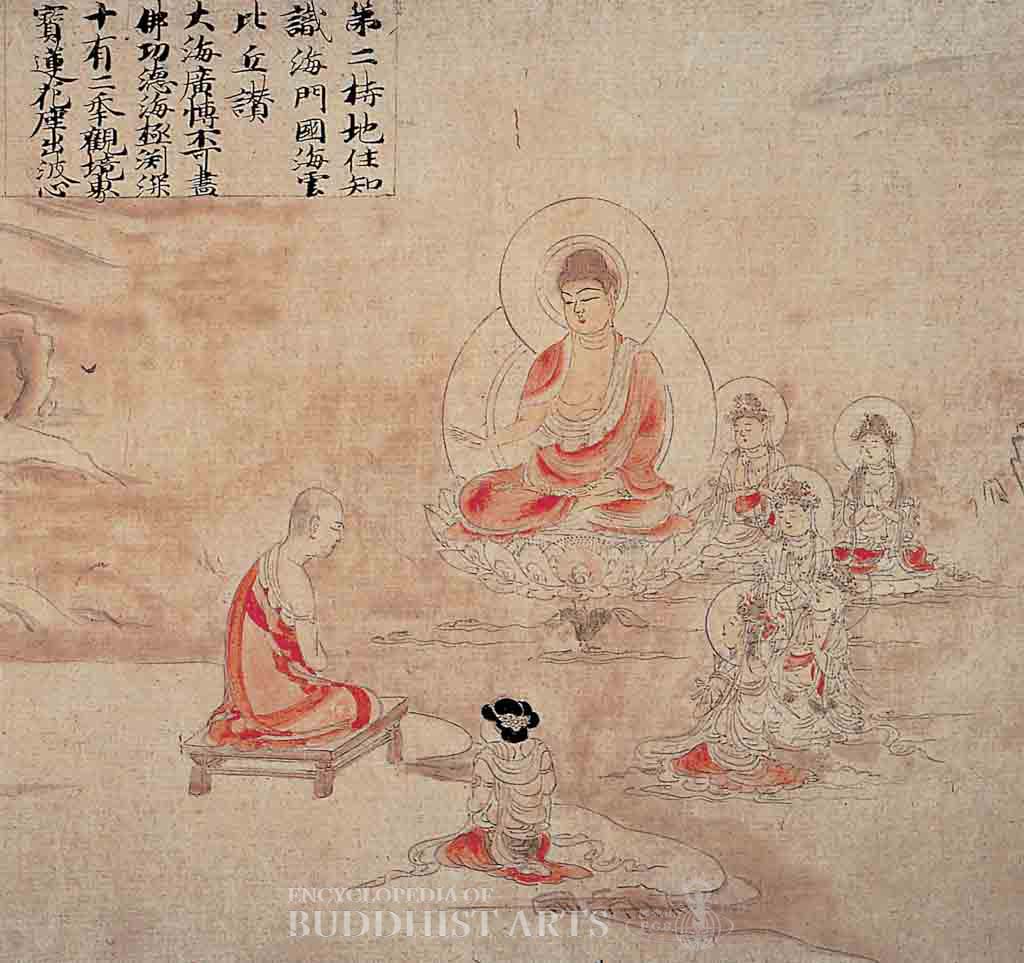
Todaiji Temple: Fifty-Five Visits of Sudhana (detail)
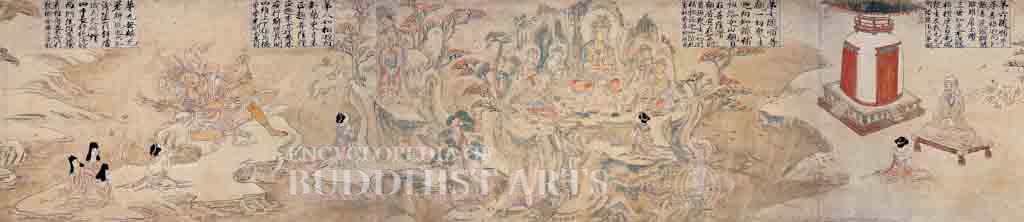
Todaiji Temple: Fifty-Five Visits of Sudhana (detail)
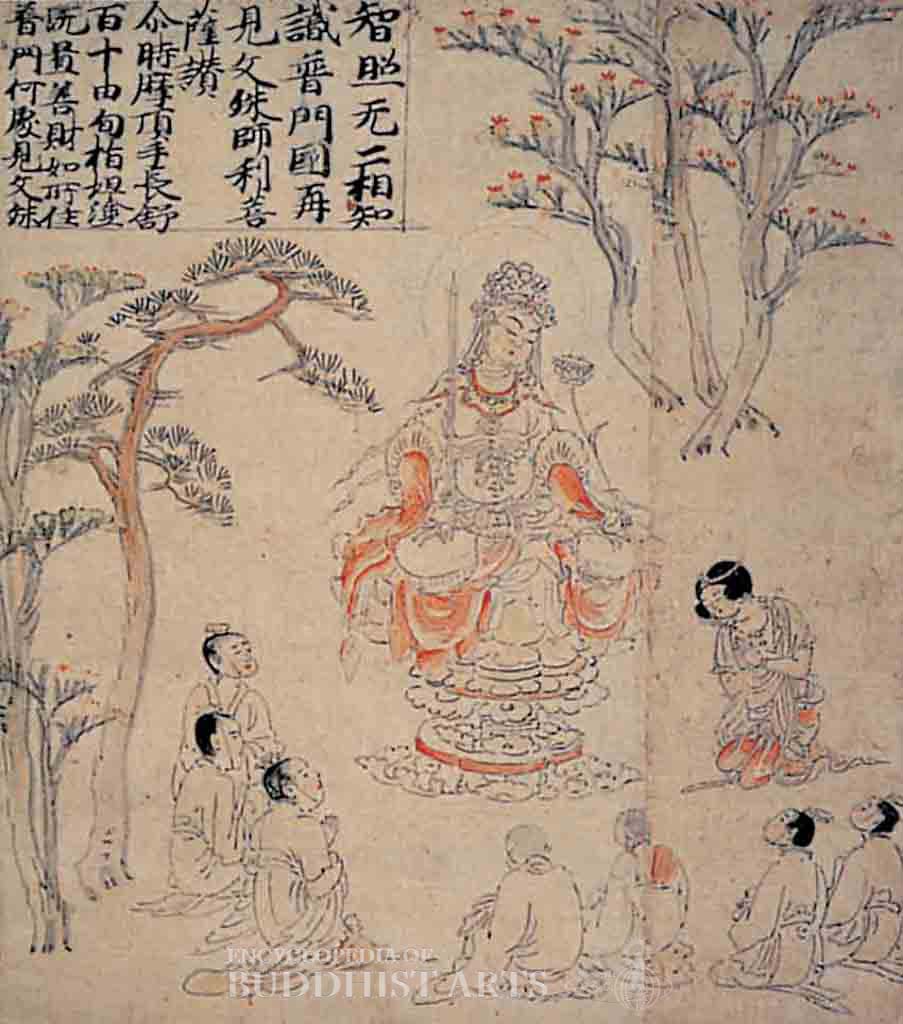
Todaiji Temple: Fifty-Five Visits of Sudhana (detail)
Todaiji Temple: Fifty-Five Visits of Sudhana
JAPAN, Nara; Heian period
The Avatamsaka Sutra was brought to Japan during the Nara period (710–794). These 12th century scrolls illustrate the Fifty-Five Visits of Sudhana to spiritual mentors described in the “Gandavyuha Chapter” of the sutra. Guided by Manjusri Bodhisattva, Sudhana learns about a different aspect of the Dharma from each mentor until he attains enlightenment during his final visit with Samantabhadra Bodhisattva. The illustrations of 37 of the 55 visits remain in Todaiji Temple and were listed as a National Treasure in 1961. The remaining scrolls are kept in different locations including the Fujita Art Museum in Osaka and the Tokyo National Museum, and have been listed as Important Cultural Properties.
The depictions of each visit are sequentially arranged without any clear delineation between them. Sudhana is portrayed as a black-haired youth wearing flowing robes and a stole. He is often shown kneeling with his palms joined in reverence before the larger, majestic figure of the spiritual mentor who teaches him the Dharma. The teachings take place within carefully painted natural landscapes or palaces. Attendants are sometimes shown standing beside the spiritual mentors. Each scene is accompanied by an inscription stating the name of the mentor, the location, the teaching, and a verse of praise. The verses are based on the Commendation of the Gandavyuha Chapter written by the Chinese scholar Yang Jie during the Northern Song dynasty (960–1127). Painted with delicate lines and pale colors, these illustrations vividly bring to life each visit described in the sutra.
For more details, go to the Encyclopedia of Buddhist Arts: Painting P-Z, page 909.
Cite this article:
author = Hsingyun and Youheng and Youlu and Wilson, Graham and Manho and Mankuang and Huntington, Susan,
booktitle = {Encyclopedia of Buddhist Arts: Painting P-Z},
pages = 909,
title = {{Todaiji Temple: Fifty-Five Visits of Sudhana}},
volume = 16,
year = {2016}}