
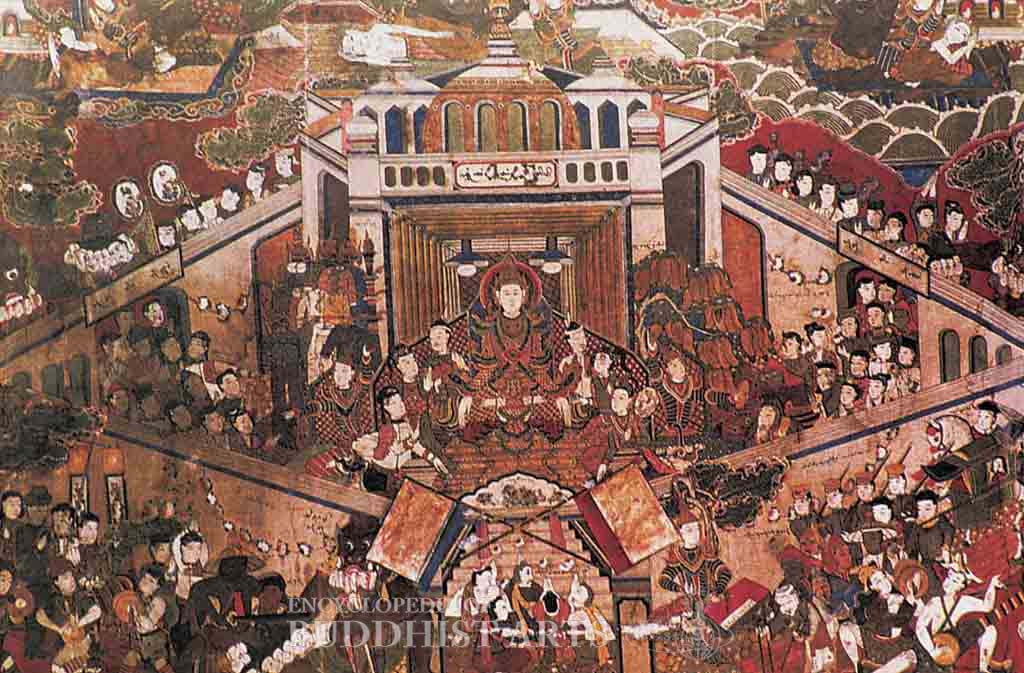
Man Jae Long Temple Murals: Offering to the Buddha
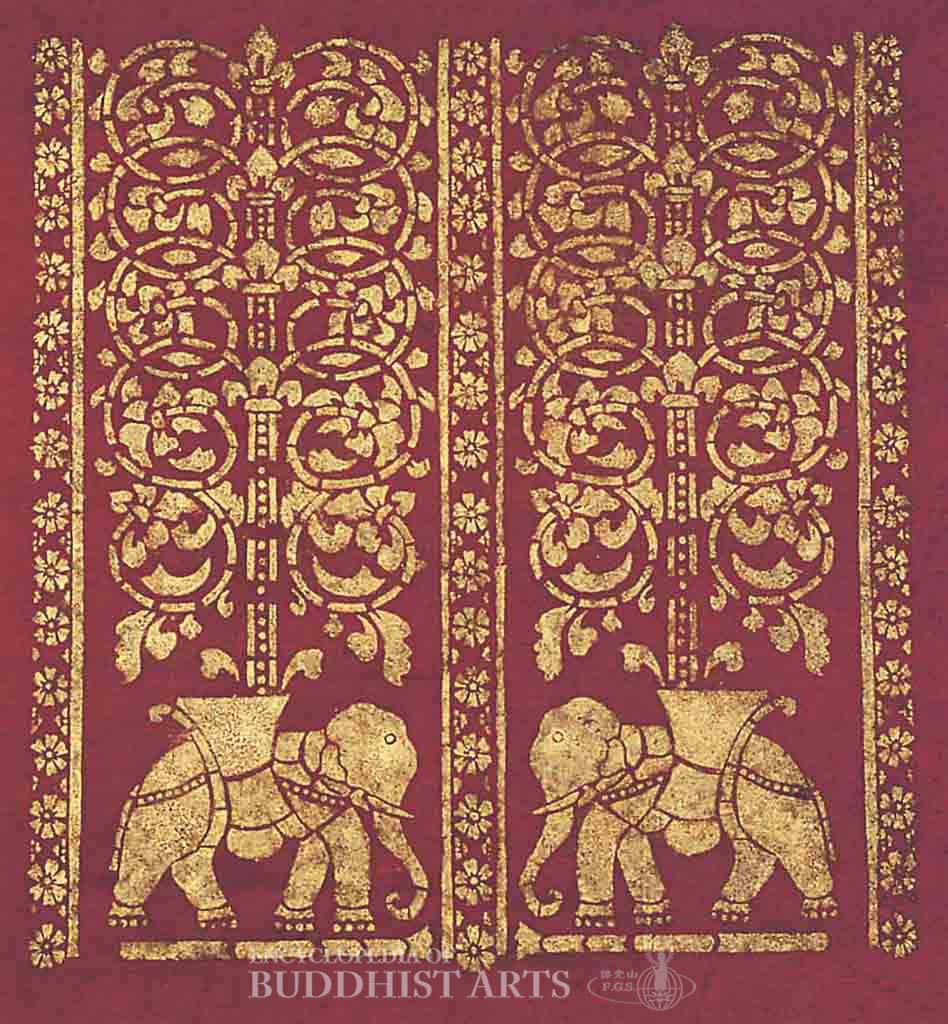
Man Jae Long Temple Murals: White Elephants
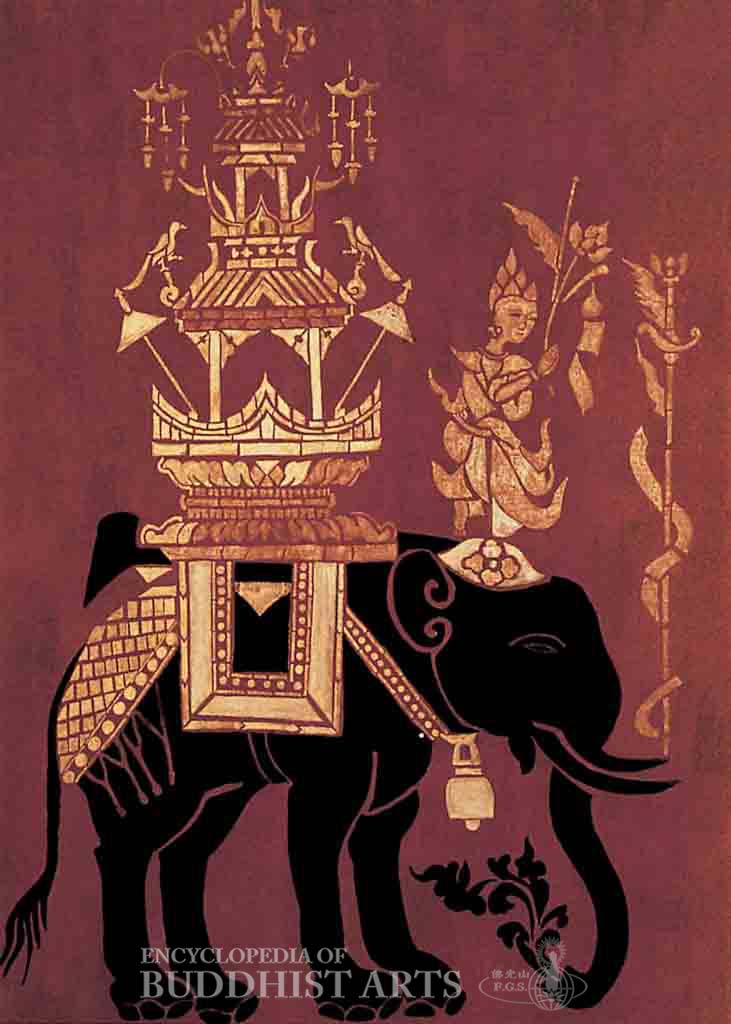
Man Jae Long Temple Murals: Black Elephant
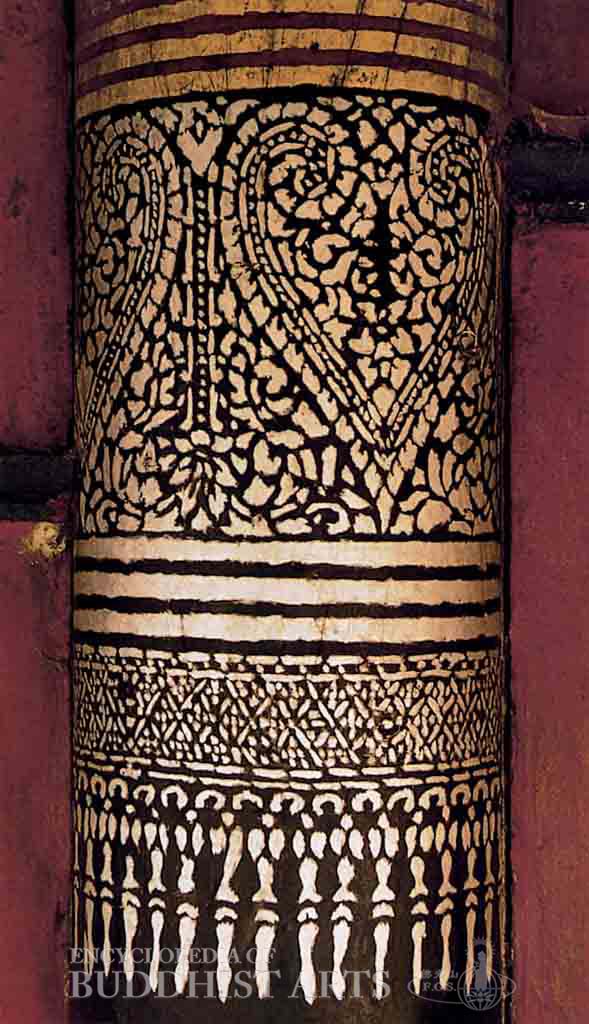
Man Jae Long Temple Murals: Pillar Painted in Liquid Gold
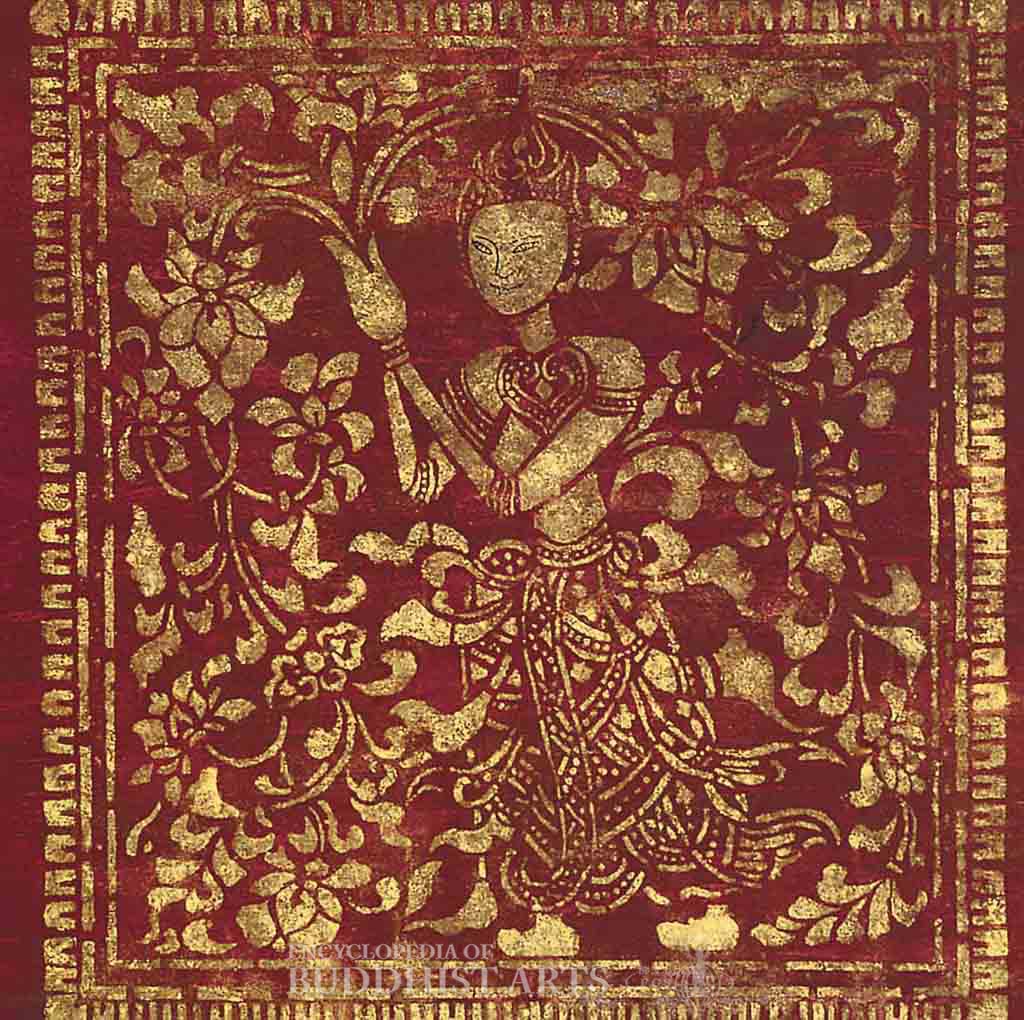
Man Jae Long Temple Murals: Flower Deity
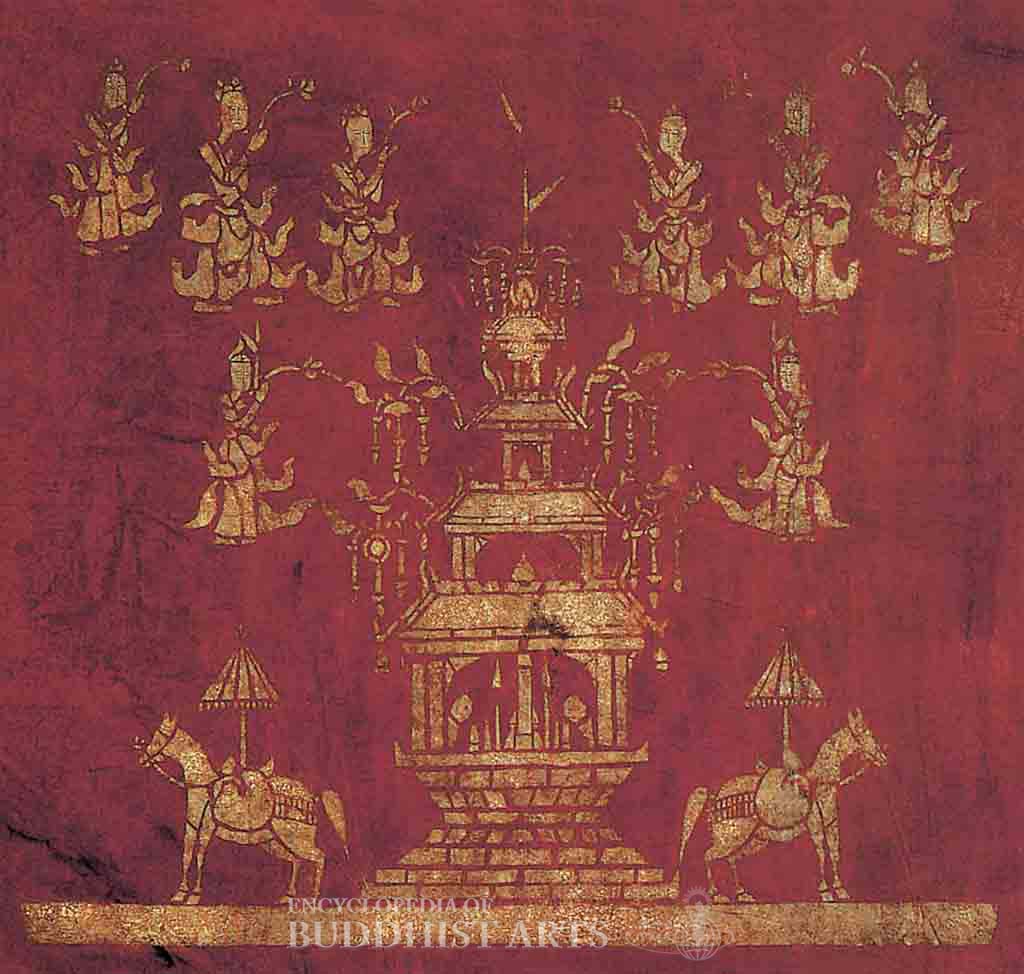
Man Jae Long Temple Murals: Pagoda
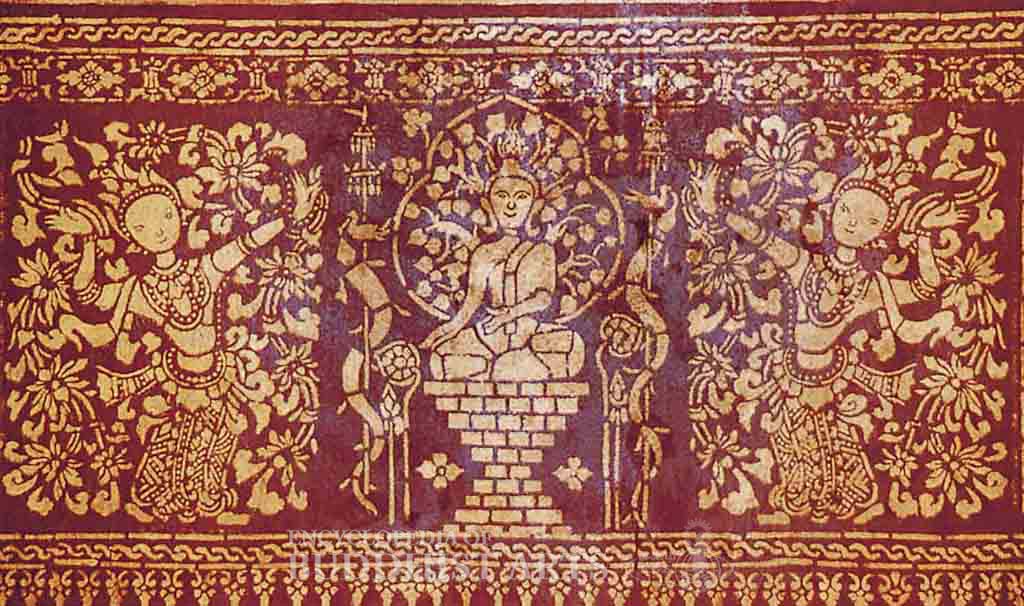
Man Jae Long Temple Murals: Buddha and Deities
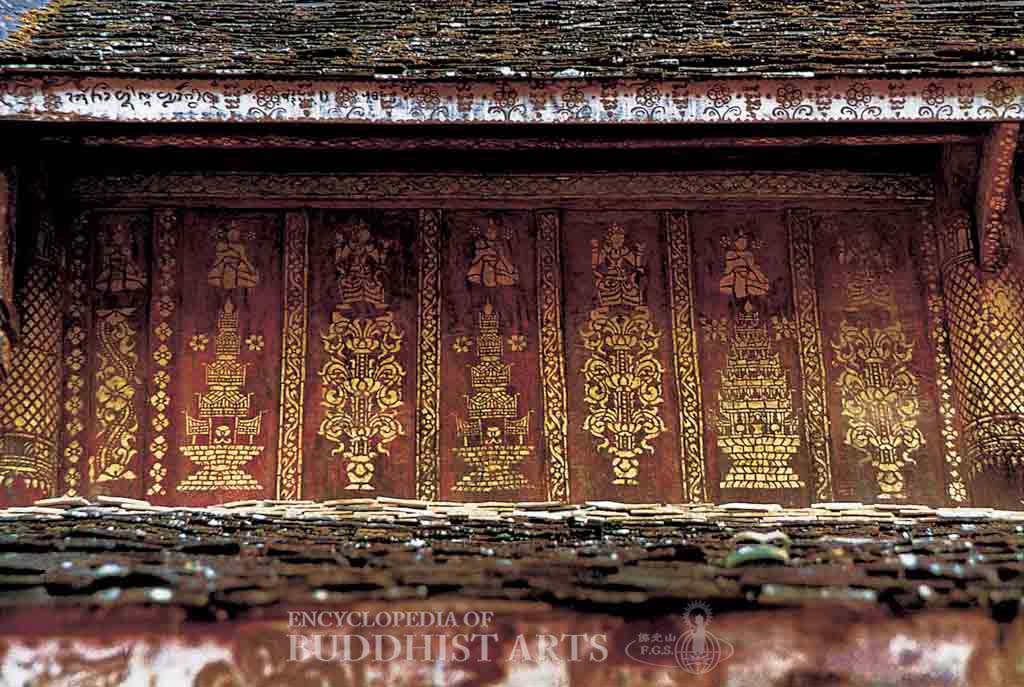
Man Jae Long Temple Murals: Paintings in Liquid Gold
Man Jae Long Temple Murals
CHINA, Yunnan, Menghai; Qing dynasty
Man Jae Long Temple is located in Menghai, a county in Xishuanbanna Dai Autonomous Prefecture of Yunnan. Most of the murals are painted on the outer walls below the eaves of the main hall. In the upper register, there are paintings of the Buddha, deities, flowers, animals, and buildings applied in liquid gold. This technique is a unique feature of murals in Dai temples. Black and red paints are first applied on the beams and wood-boards as the base. Patterns cut from paper are then used as stencils for the application of gold powder or gold foil. Some of the most notable images are the Flower Deity, a floral mandala, a white elephant, and a black elephant. According to Dai folk belief, the white elephant belongs to the Buddha, and the black elephant belongs to demons. Having black elephants painted in temples means that demons have been defeated by the Buddha. In the lower register, there are scenes from the Life of the Buddha. There are also some unique illustrations of local Buddhist practice, including a festival celebrating the completion of a pagoda. Within these murals there are depictions of Dai customs, laborers working in the fields, markets and trading, and the story of the spread of Buddhism to Mengzhe.
The Offering to the Buddha is the most famous mural in the temple. Dai Buddhists in Yunnan traditionally make offerings of money and goods to temples during Buddhist festivals. In the center of the picture, the Buddha and disciples are shown seated within a monastery. Devotees crowd into the monastery through two gates. Outside the walls, more devotees play cymbals and dance. Considered to be some of the finest Buddhist artworks in Xishuanbanna, the murals in the temple depict grand scenes and detailed narratives with many figures. The compositions do not follow any set rules, and the layout of the images can be freely altered to suit the theme. This flexibility reflects the easy-going, creative nature of Dai artists.
For more details, go to the Encyclopedia of Buddhist Arts: Painting I-O, page 501.
Cite this article:
author = Hsingyun and Youheng and Youlu and Wilson, Graham and Manho and Mankuang and Huntington, Susan,
booktitle = {Encyclopedia of Buddhist Arts: Painting I-O},
pages = 501,
title = {{Man Jae Long Temple Murals}},
volume = 15,
year = {2016}}