
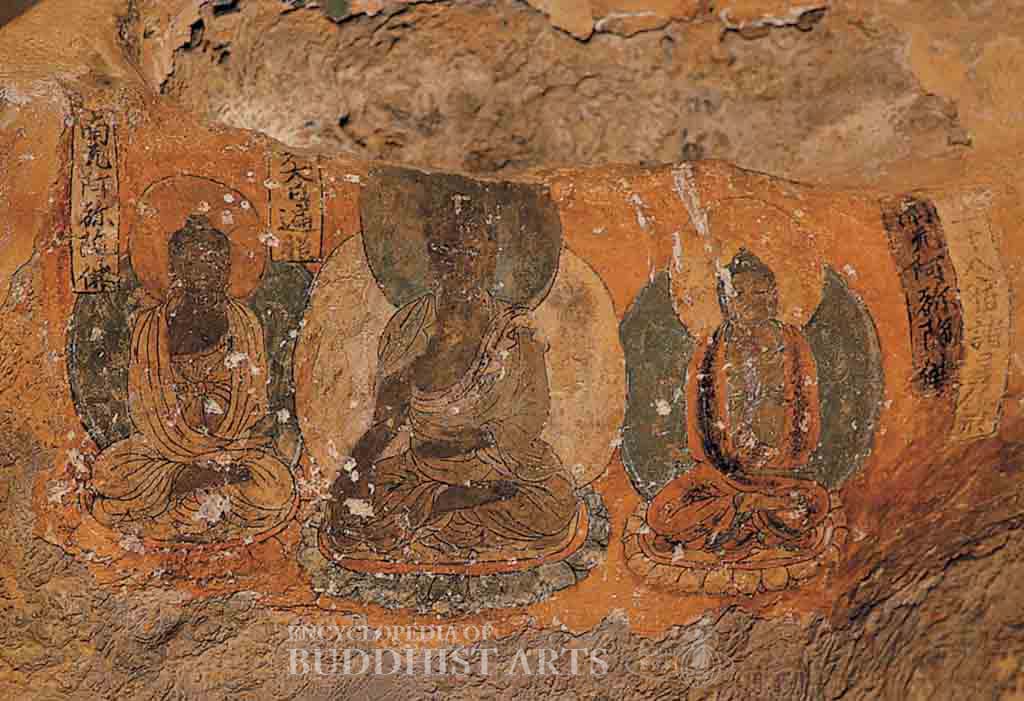
Guanyin Cave: Murals - Seated Buddhas
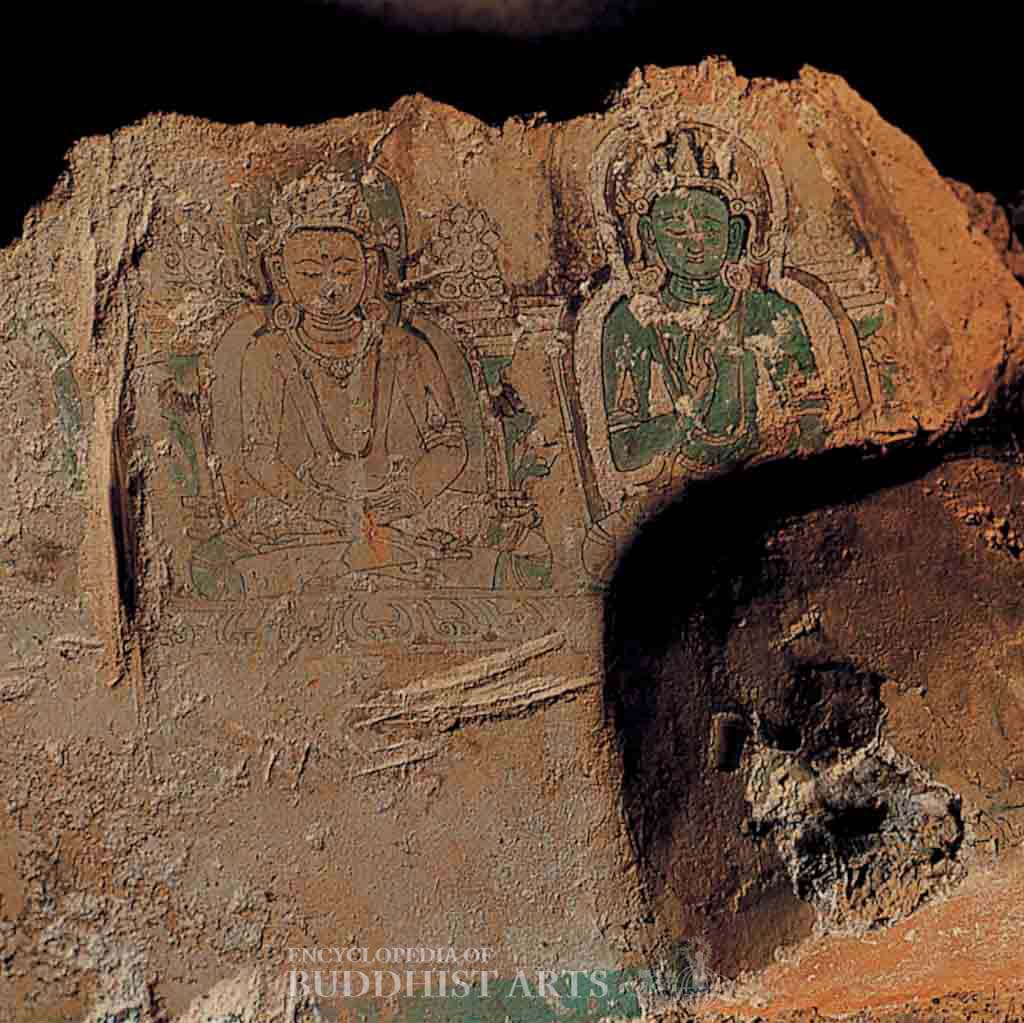
Guanyin Cave: Murals - Green Tara and White Tara
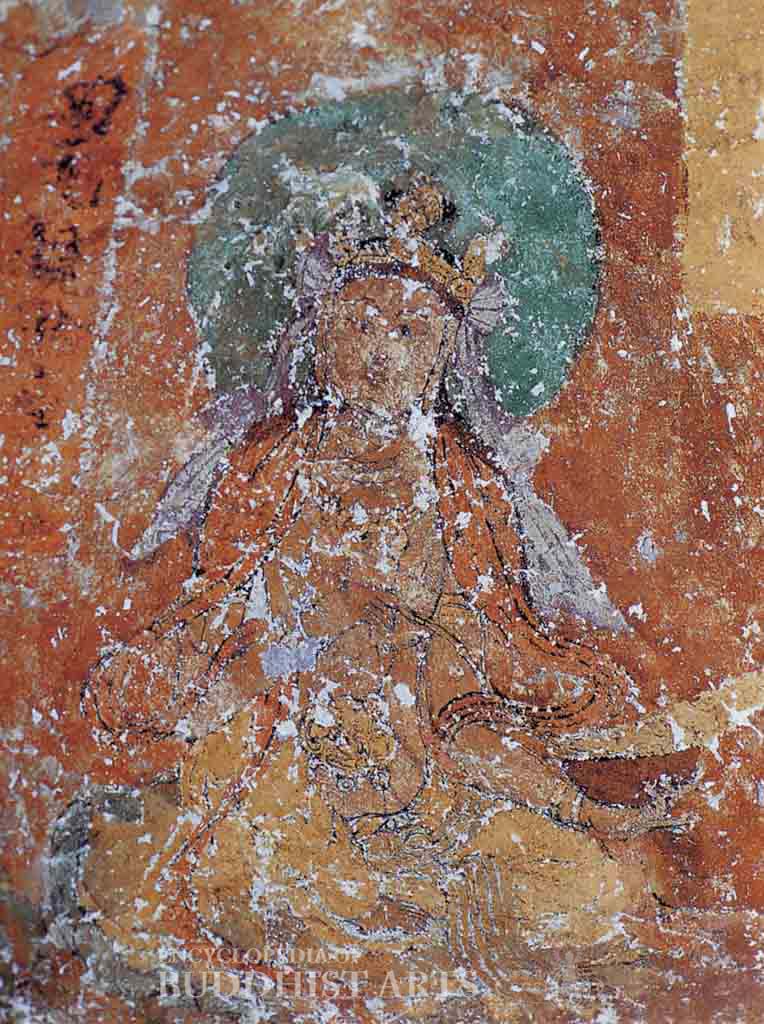
Guanyin Cave: Murals - Avalokitesvara Bodhisattva
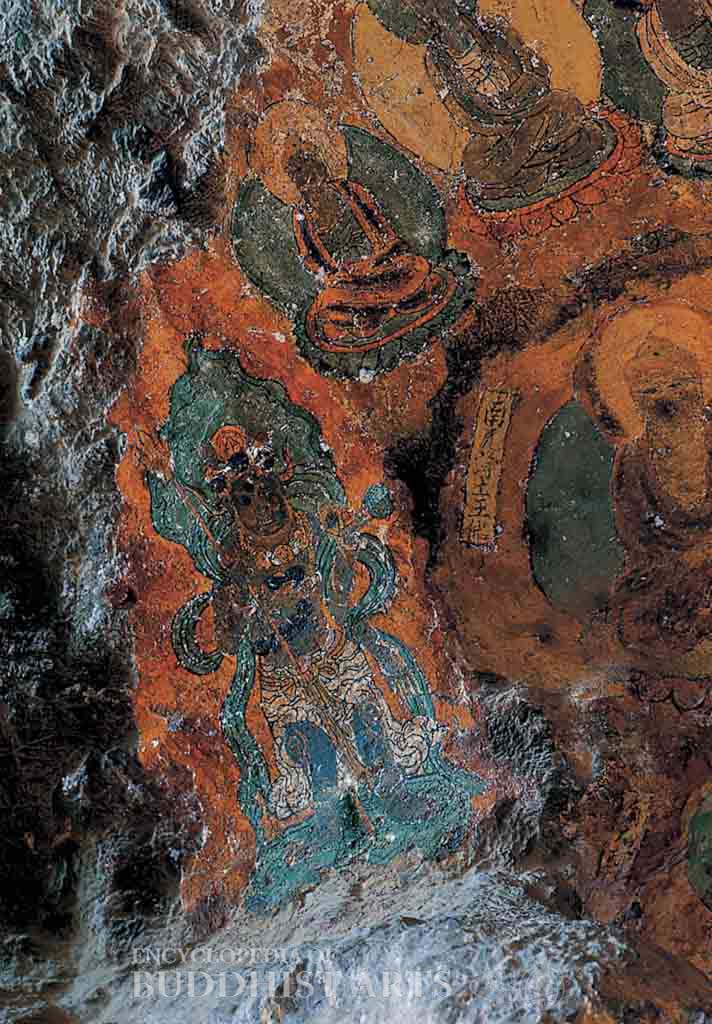
Guanyin Cave: Murals - Mahakala
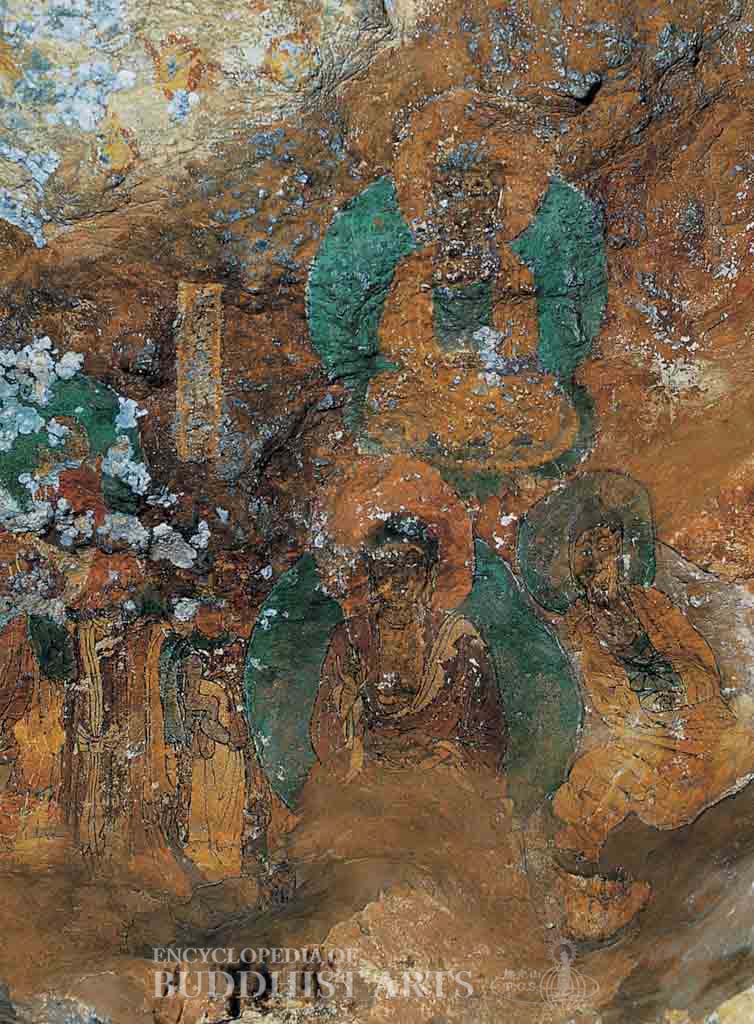
Guanyin Cave: Murals - Buddhas
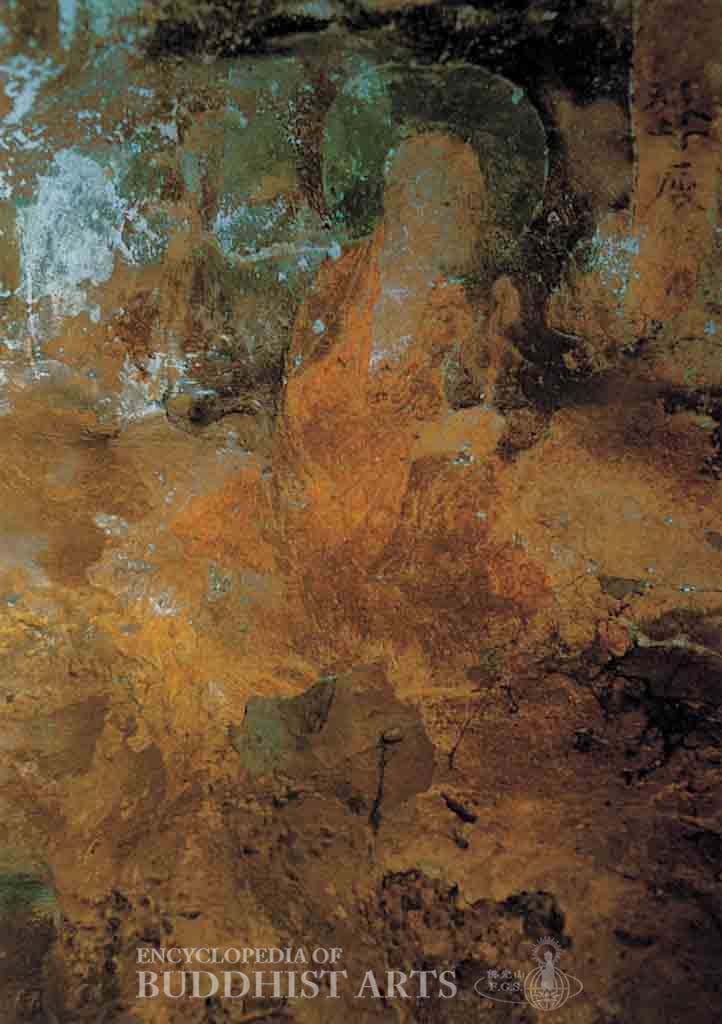
Guanyin Cave: Murals - Arhat
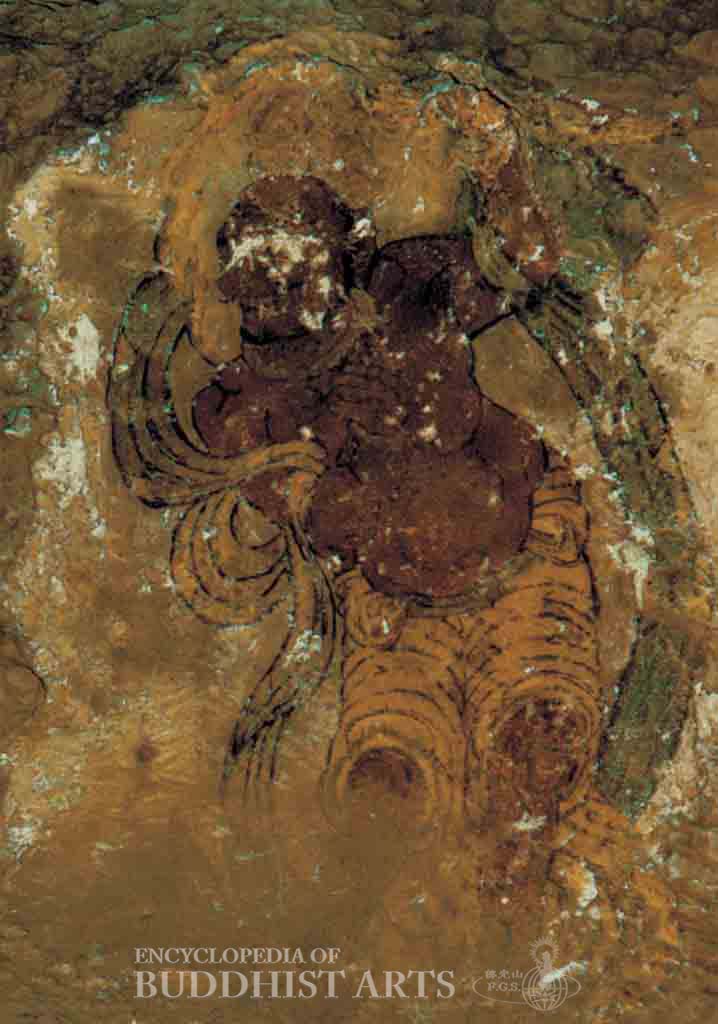
Guanyin Cave: Murals - Warrior
Guanyin Cave: Murals
CHINA, Yunnan, Kunming; Yuan dynasty
The Guanyin Cave is located on Guanyinshan (Avalokitesvara Mountain), 3 km south of Shangsuan town in Kunming. The majority of the artwork within the cave dates from between the Dali Kingdom (937–1253) and the Yuan dynasty (1271–1368), although work continued at the site up until the 1950s. The cave contains 223 images which range in height from less than 30 cm to 100 cm; in total, the murals cover an area of over 300 sq m. The murals were created by placing a layer of lime on the wall, drawing an outline, and adding mineral coloring with a soft brush. The cave also contains inscriptions from the Dali Kingdom to the Yuan dynasty.
Many of the original paintings in the cave have been damaged due to weathering or covered over by subsequent images. The Twenty-Eight Mansions are painted on the ceiling, while on the cave walls there are depictions of a variety of figures including two warriors guarding the cave entrance, Amitabha Buddha, Sughosa Buddha, Amoghasiddhi Buddha, Pure Land King Buddha, Vairocana Buddha, the Medicine Buddha, the Four Heavenly Kings, Mahakala, the Sixteen Arhats, White Tara, Green Tara, and the Six Patriarchs of the Chan school. The names of the Buddhas and homages to them are inscribed beside the images. Among the recognizable inscriptions are over ten reading “Homage to Amitabha Buddha.”
The mural in the southwest corner of the cave is particularly notable. It depicts King Longshun (reigned 877–897) of Nanzhao who was a strong supporter of Buddhism and even called his reign name “Ajaya,” referring to Ajaya Avalokitesvara Bodhisattva. The king wears a dhoti and earrings; the upper body is left bare. He is seated on a tiger, with two attendants standing to the sides holding a bottle and a box. Dating from the Yuan dynasty, this mural is highly regarded due to its unique subject matter and high quality.
For more details, go to the Encyclopedia of Buddhist Arts: Caves R-L, page 413.
Cite this article:
author = Hsingyun and Youheng and Johnson, Peter and Mankuang and Huntington, Susan and Edson, Gary and Neather, Robert,
booktitle = {Encyclopedia of Buddhist Arts: Caves R-L},
pages = 413,
title = {{Guanyin Cave: Murals}},
volume = 6,
year = {2016}}