
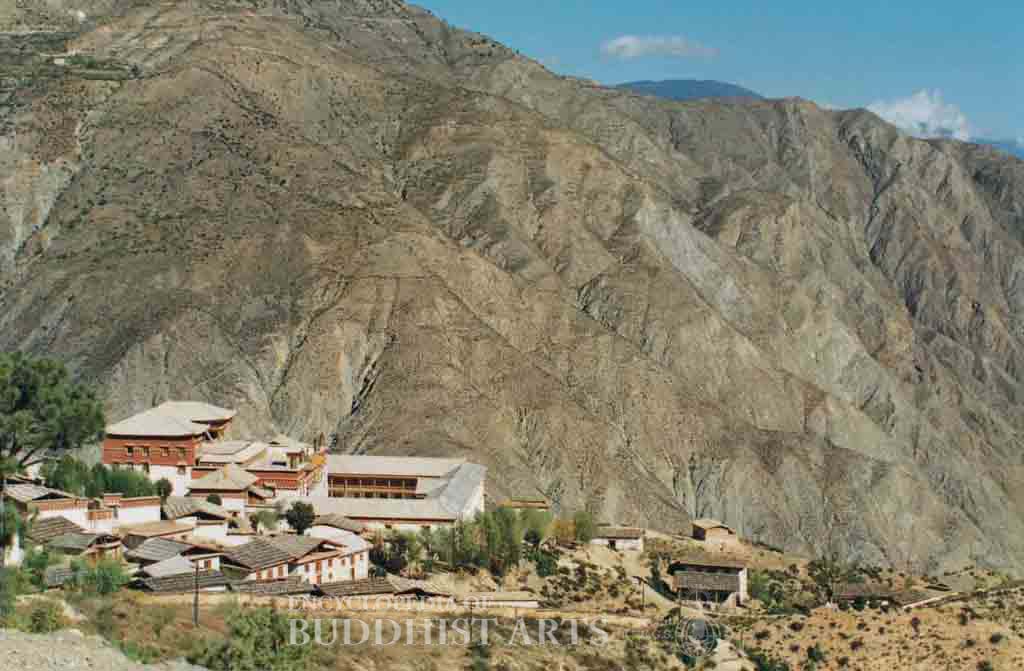
Dondrubling Monastery
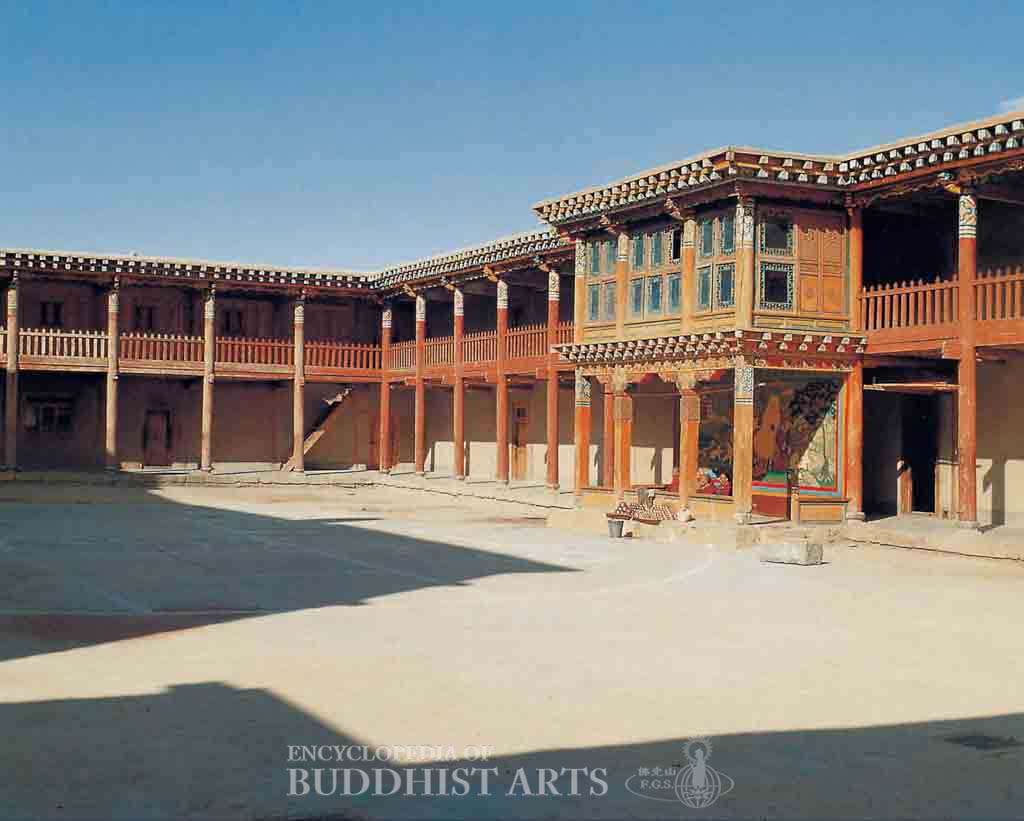
Dondrubling Monastery: Courtyard
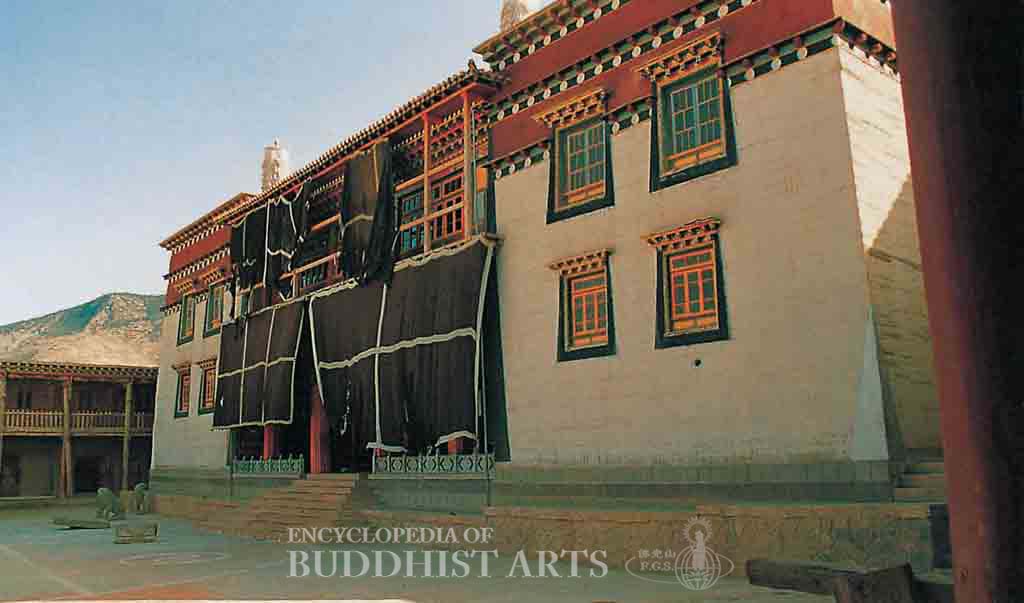
Dondrubling Monastery: Central Hall
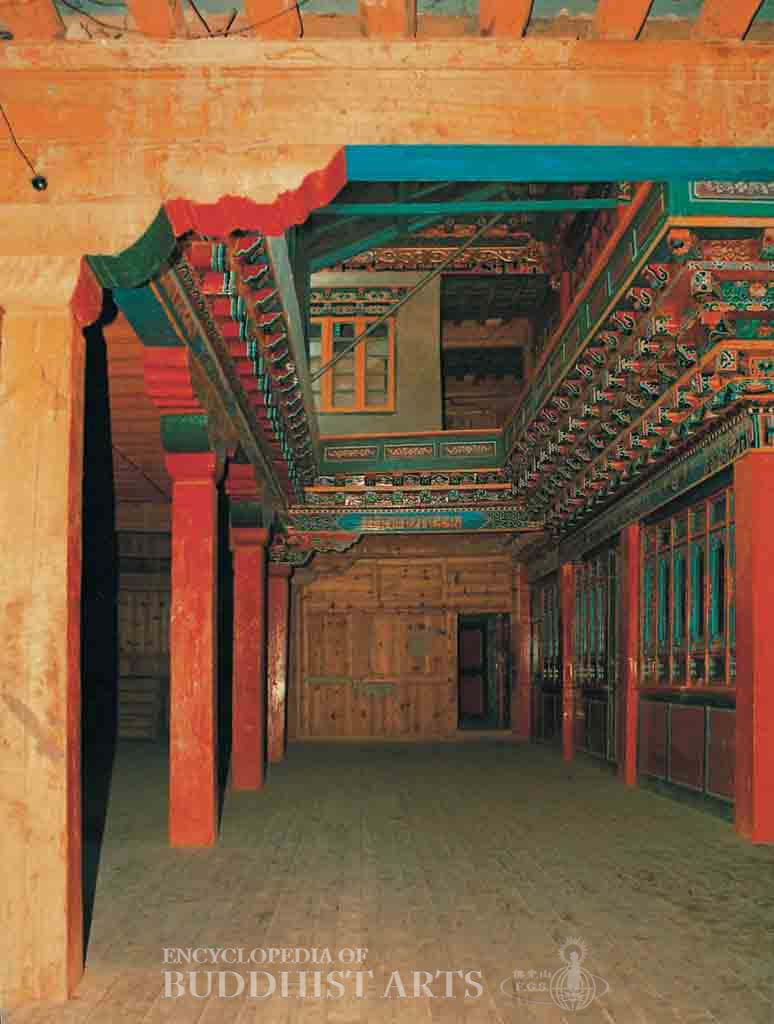
Dondrubling Monastery: Central Hall - Second Story
Dondrubling Monastery
CHINA, Yunnan, Deqin
It is the second largest Tibetan Buddhist monastery in Yunnan. The monastery was constructed during the Song dynasty (960–1279) and originally followed the Kagyu school of Tibetan Buddhism. In 1676, during the Qing dynasty, it was renamed by the Fifth Dalai Lama and converted to follow the Gelug school. It was destroyed during the Cultural Revolution in 1967 and was not rebuilt until 1982, when it was moved to its current site. It was listed as a Yunnan Cultural Heritage Site in 1987.
The center of the monastery is a courtyard enclosed by the central hall and other buildings such as galleries and balconies. The central hall is four stories high and has copper tiles on the roof. The assembly hall is on the first story of the central hall and can hold more than 1,000 people. Surrounding the assembly hall are the Maitreya Shrine, Protector Shrine, Tara Shrine, Tathagata Shrine, Stupa Shrine, sutra repository, sutra printing house, and the ordination hall. The courtyard is used for Dharma ceremonies and can hold more than 2,000 people. Around the monastery, there are seven large residences, each with a number of monastic quarters.
A variety of sculptures, thangkas, and Dharma instruments are housed here, including a gilt copper white Tara, a painting of the Sixteen Arhats, and a huge bronze statue of Maitreya Buddha, which was cast in 1943.
For more details, go to the Encyclopedia of Buddhist Arts: Architecture A-F, page 246.
Cite this article:
author = Hsingyun and Youheng and Johnson, Peter and Mankuang and Lancaster, Lewis,
booktitle = {Encyclopedia of Buddhist Arts: Architecture A-F},
pages = 246,
title = {{Dondrubling Monastery}},
volume = 1,
year = {2016}}