
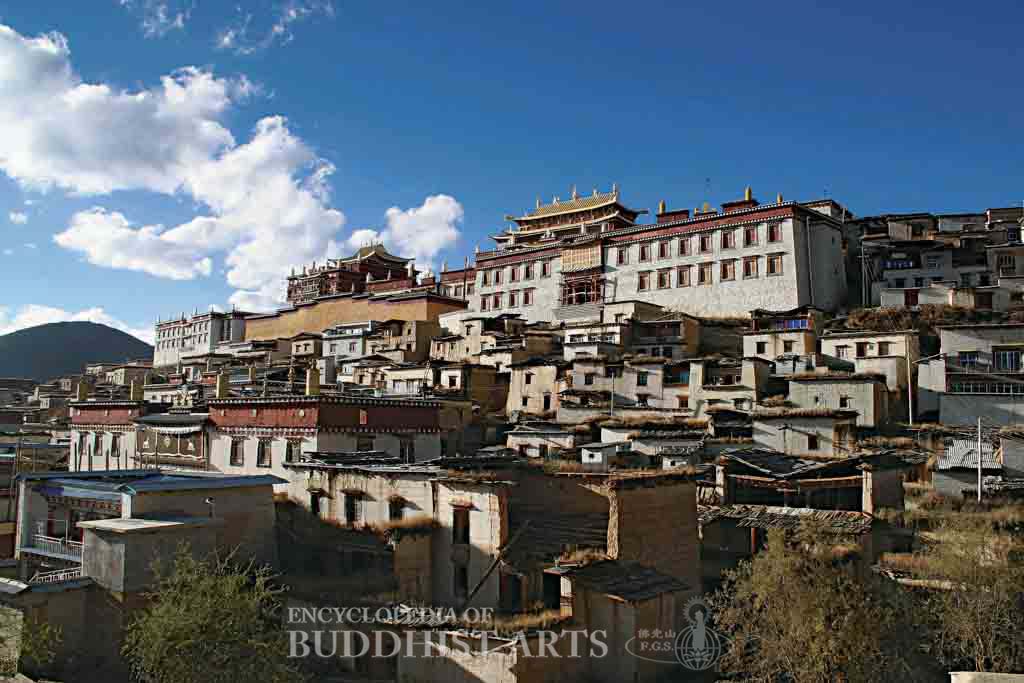
Sumtseling Monastery
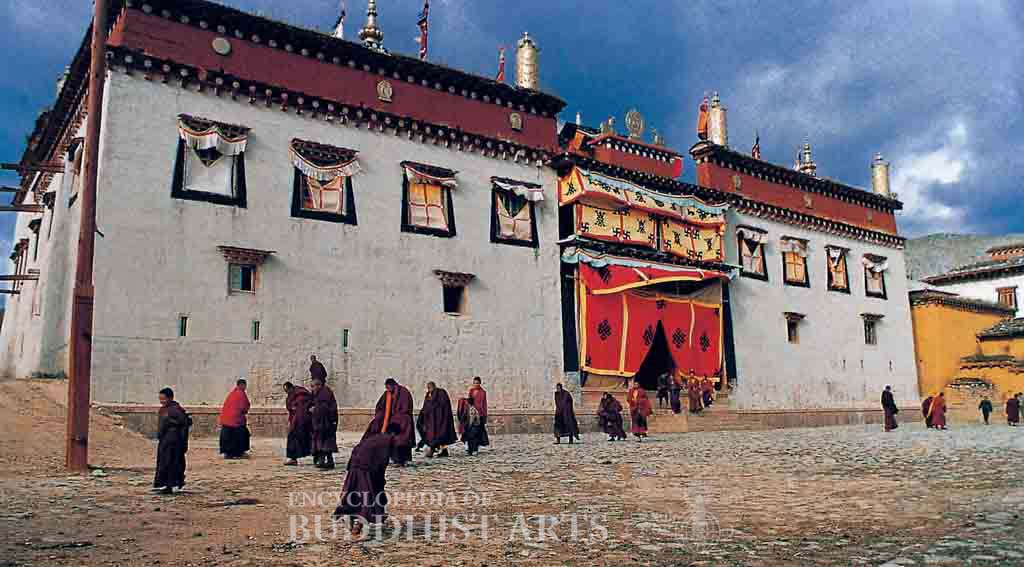
Sumtseling Monastery: Central Hall
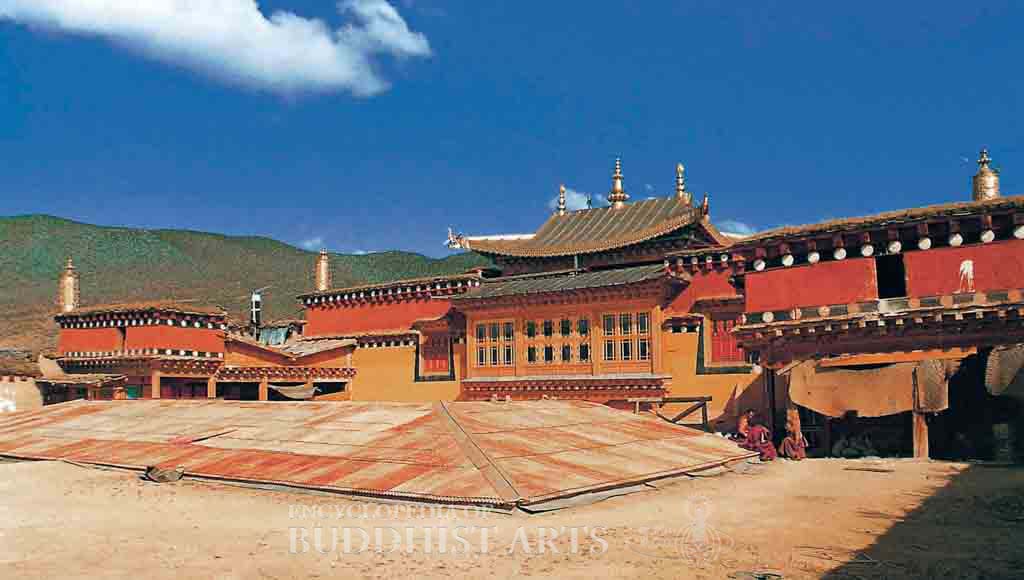
Sumtseling Monastery: Central Hall - Highest Shrine
Sumtseling Monastery
CHINA, Yunnan, Shangrila
This monastery is also known as the Little Potala Palace. It is the leading Tibetan Buddhist monastery in Yunnan and the most important of the 13 most influential monasteries of Kham. It was built during the Ming dynasty (1368–1644). It was originally a small monastery of the Nyingma school of Tibetan Buddhism, but now belongs to the Gelug school. In 1679 during the Qing dynasty, the Fifth Dalai Lama asked the emperor to rebuild it. Between 1736 and 1795, the monastery was greatly expanded and 1,225 monks were approved by imperial order. During the 1950s, the number of monks had reached 1,329. By 1996 there were only 290 monks and 4 incarnate lamas left. The monastery is listed as a Provincial Cultural Heritage Site.
The architectural layout is based on that of the Potala Palace. The central hall is situated on the summit of the mountain. On the mountainside there are hundreds of chambers and monastic quarters. The central hall is in the style of a fortress. It has a flat roof and is four stories high. The highest shrine here has a double-eave hip-and-gable gilded roof. The central hall contains 108 columns and can hold 1,600 monks. The center of the hall is elevated by the use of tall columns, and the clerestories on the second story provide natural light. Around the second story of the central hall there are eight halls, which include Deities Shrine, Dharma Protector Shrine, quiet chamber, and dining hall. Four of the halls house cabinets that contain Buddhist texts and Dharma instruments. Of the eight dormitories, the Longba Dormitory is the most magnificent. It is similar in scale to the central hall but without a gilded roof.
The number of artifacts found within the monastery and their exceptional beauty accounts for the appellation Museum of Buddhist Arts. Some of the more famous examples include the 3 m high, gilt copper statue of Sakyamuni Buddha; eight small gilt copper statues of Sakyamuni Buddha donated by the Fifth and Seventh Dalai Lamas; 16 colored and gold paintings of Buddhas; ten volumes of the Kangyur; and 300 volumes of the Tengyur.
For more details, go to the Encyclopedia of Buddhist Arts: Architecture M-S, page 1067.
Cite this article:
author = Hsingyun and Youheng and Johnson, Peter and Mankuang and Lancaster, Lewis,
booktitle = {Encyclopedia of Buddhist Arts: Architecture M-S},
pages = 1067,
title = {{Sumtseling Monastery}},
volume = 3,
year = {2016}}