
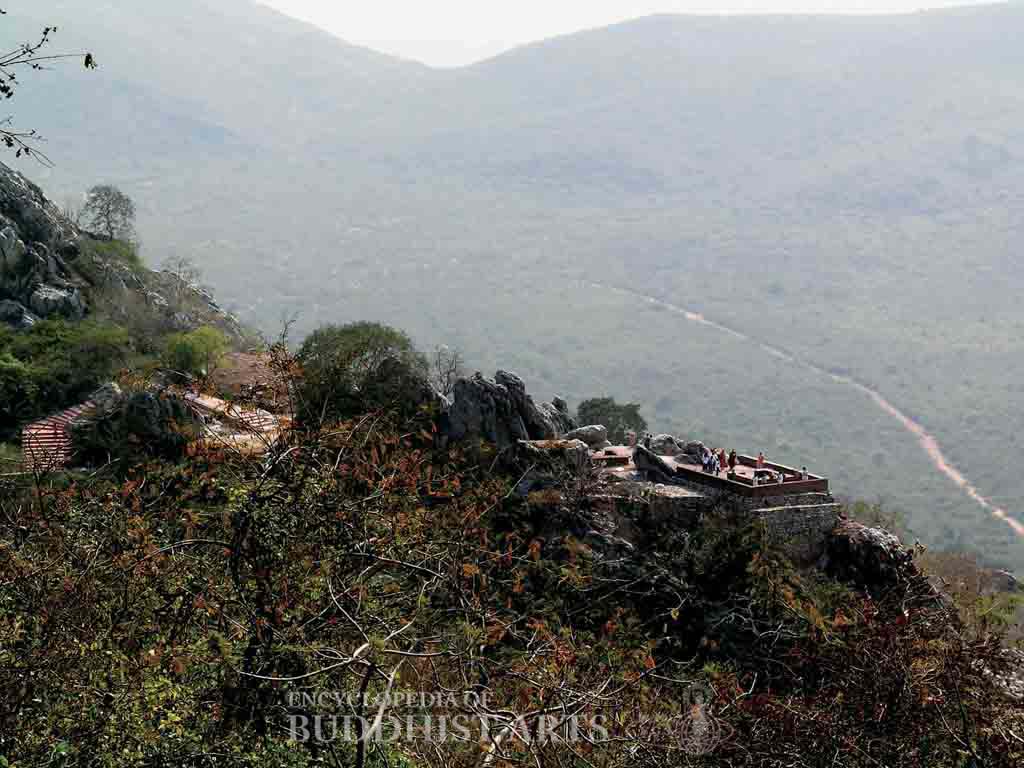
Gridhakuta
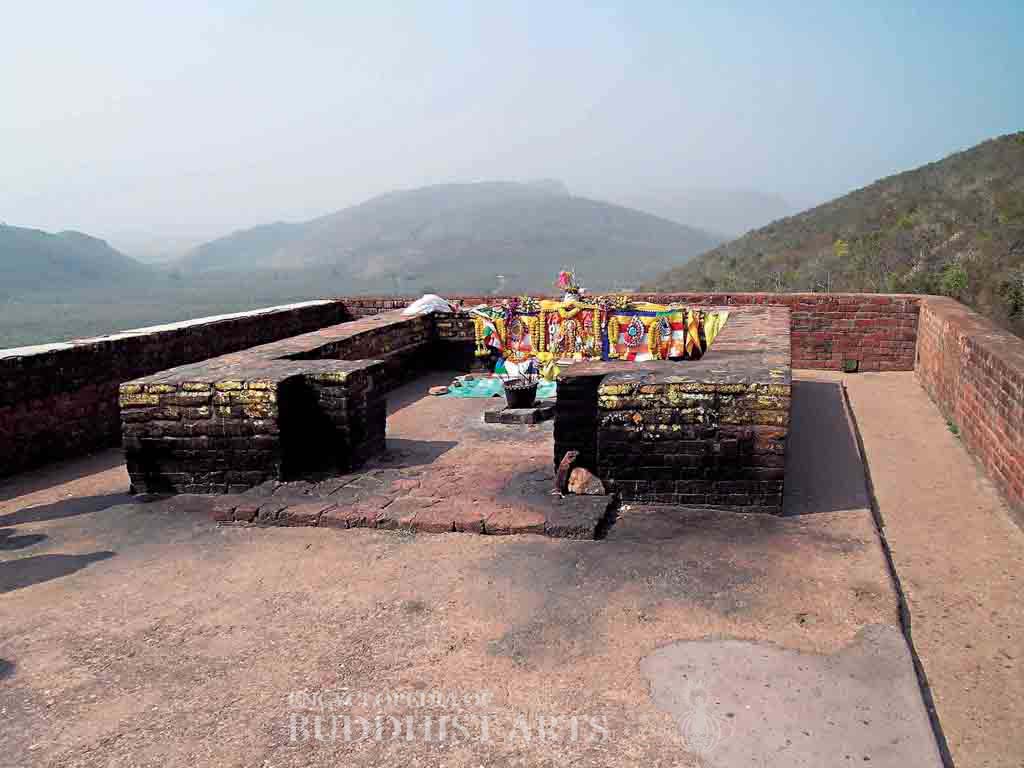
Gridhakuta: Platform on the Summit
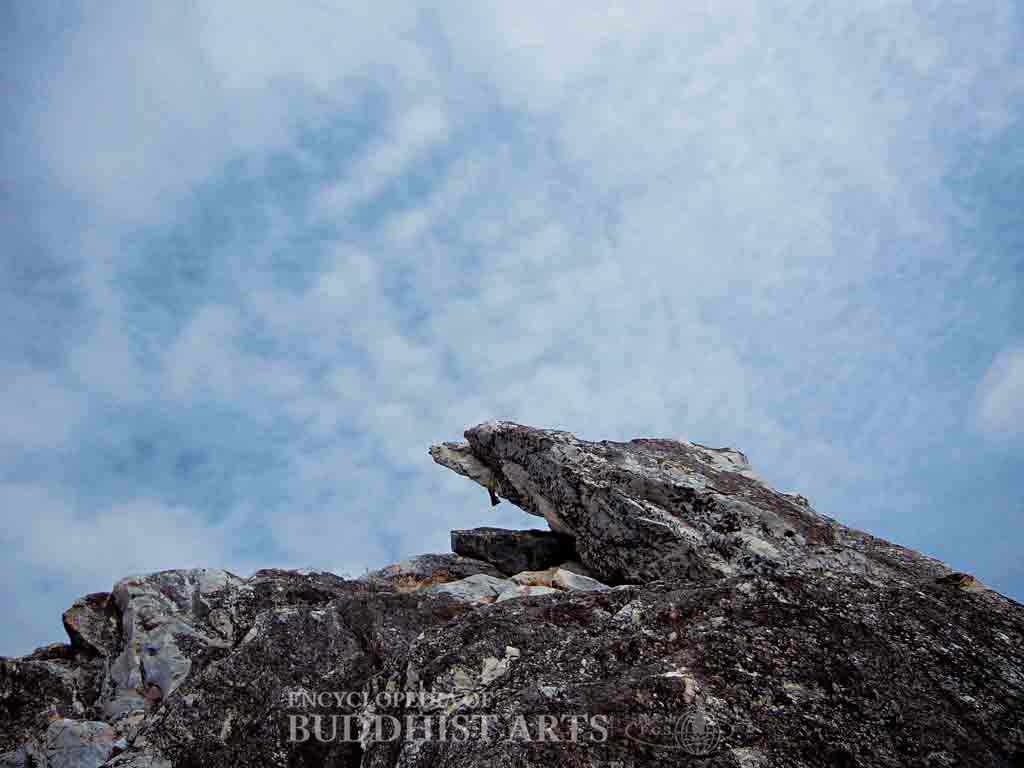
Gridhakuta
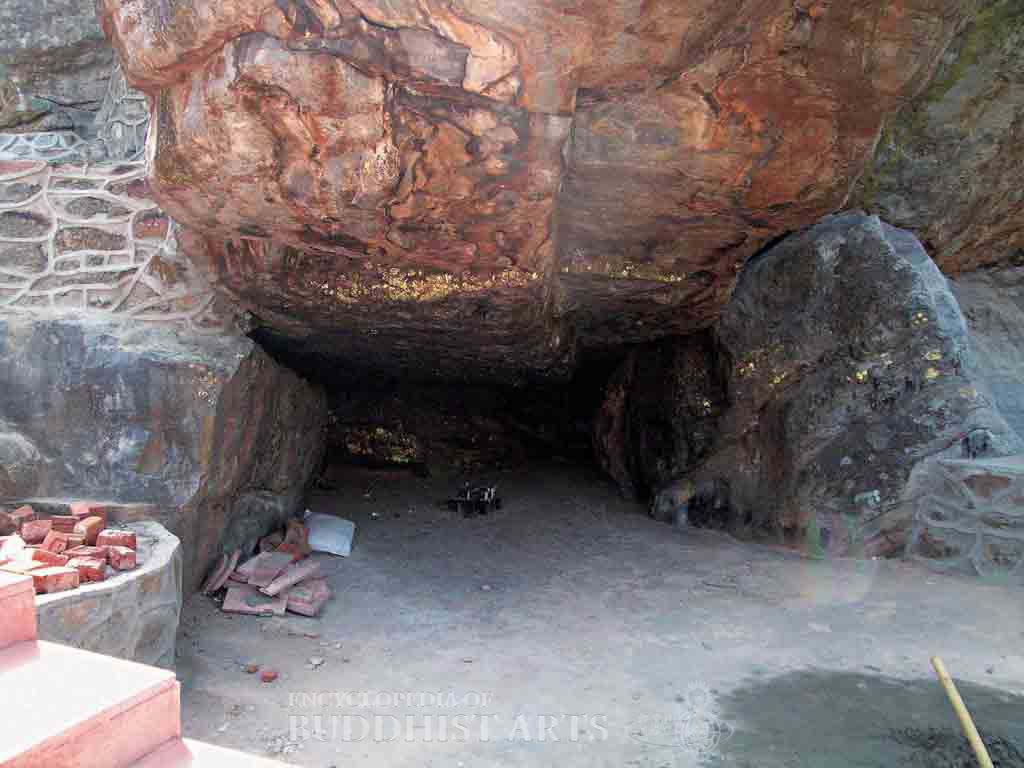
Gridhakuta: Cave
Gridhakuta
INDIA, Bihar
Gridhakuta means Vulture Peak. It is spelled Grdhrakuta in Sanskrit and Gijjhakuta in Pali, and it is also called Griddhkuta or Griddhraj Parvat. It is a hill just outside the ancient city of Rajagriha, the capital of the Magadha Kingdom. It is now called Chhatagiri Hill near the modern city of Rajgir. The hill was given its name because it was either shaped like the head of a vulture or was inhabited by vultures. According to Buddhist texts, the Buddha delivered many teachings at Gridhakuta, including the Lotus Sutra, Prajnaparamita Sutra, and Agama Sutra.
According to the Great Tang Records on the Western Regions recorded by Chinese Master Xuanzang in the 7th century, King Bimbisara (reigned circa 543–491 BCE) built a flight of stone steps that extends from the bottom to the top of the hill, so that the Buddha could walk easily up the hill to deliver his teachings. There were two small stupas partway up the hill: the first indicated the place where the king dismounted from his chariot and continued on foot; the second marked the spot where ordinary people had to turn back, since they were not allowed to proceed with the king. There was also a brick monastery enshrined with a life-size Buddha statue, as well as many rock shelters and caves where the Buddha’s disciples used to meditate. In the late 19th century British historian Alexander Broadley identified Chhatagiri Hill as Gridhakuta, and this was confirmed by archaeologist John Marshall in 1905.
Gridhakuta has a flattened top and is orientated in the east-west direction. The steps, said to have been built by King Bimbisara, remain today and are known as the Bimbisara Road. Halfway up the hill, there are the two rectangular foundations made of brick and stone, which are said to be the remnants of the two marker stupas mentioned by Master Xuanzang. There are many natural caves on the hill, some of which have been identified as the dwelling places of the Buddha and his disciples, such as Sariputra, Mahakasyapa, and Ananda. In addition, there are also the remains of a monastery. A rectangular platform made of brick and stone can be found on the summit, and it is possibly the remains of a stupa built during the Gupta Empire (circa 320–550).
For more details, go to the Encyclopedia of Buddhist Arts: Architecture G-L, page 382.
Cite this article:
author = Hsingyun and Youheng and Johnson, Peter and Mankuang and Lancaster, Lewis,
booktitle = {Encyclopedia of Buddhist Arts: Architecture G-L},
pages = 382,
title = {{Gridhakuta}},
volume = 2,
year = {2016}}