
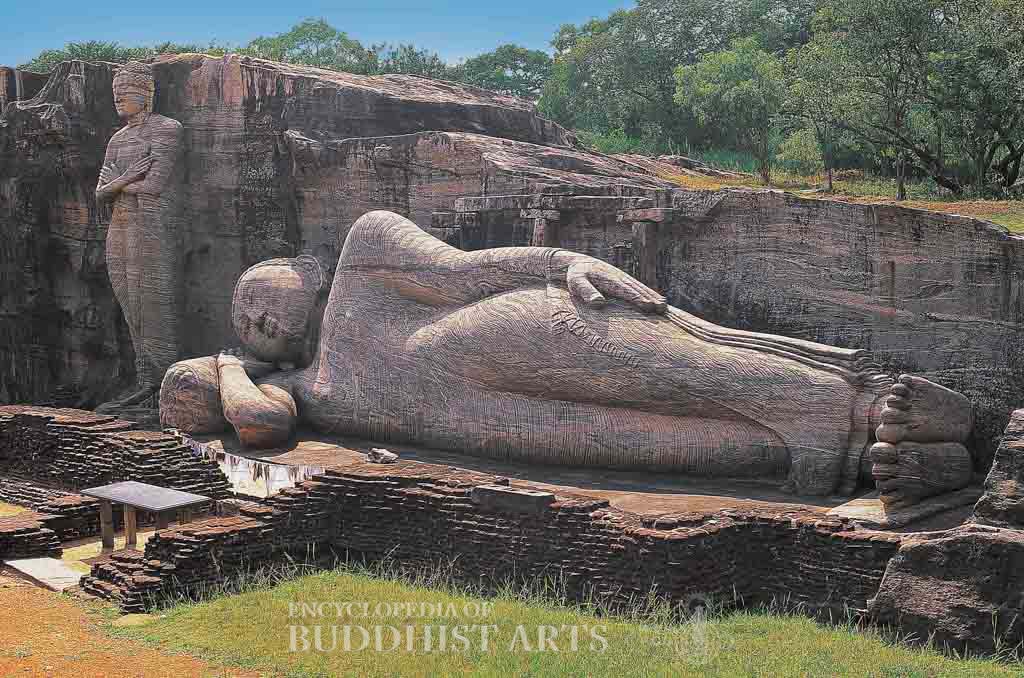
Gal Vihara Rock Carvings: Reclining Buddha
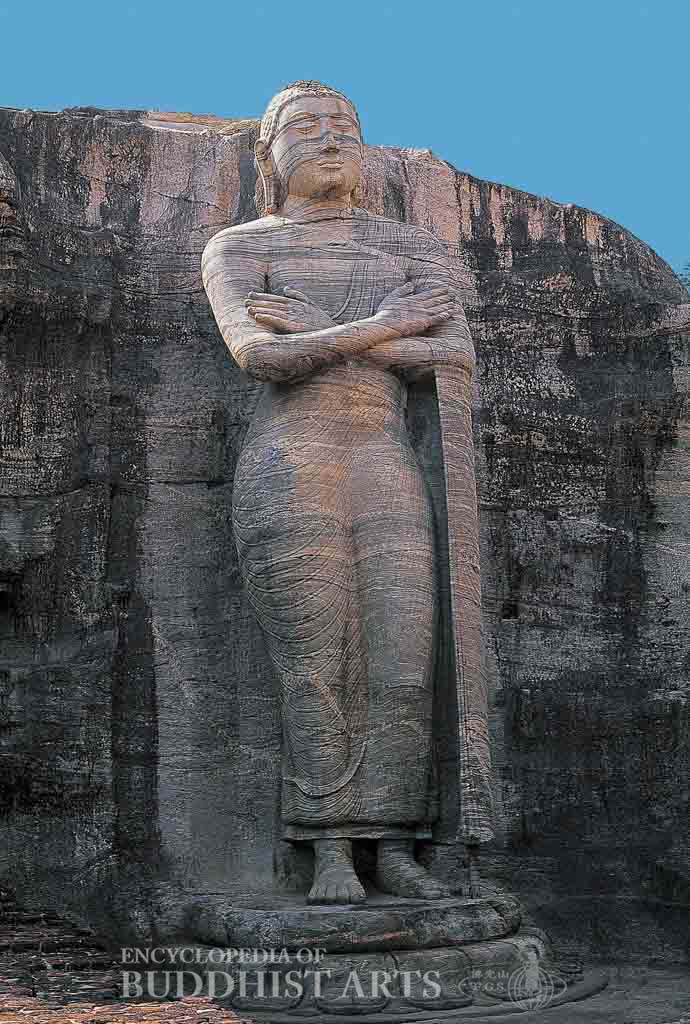
Gal Vihara Rock Carvings: Standing Buddha
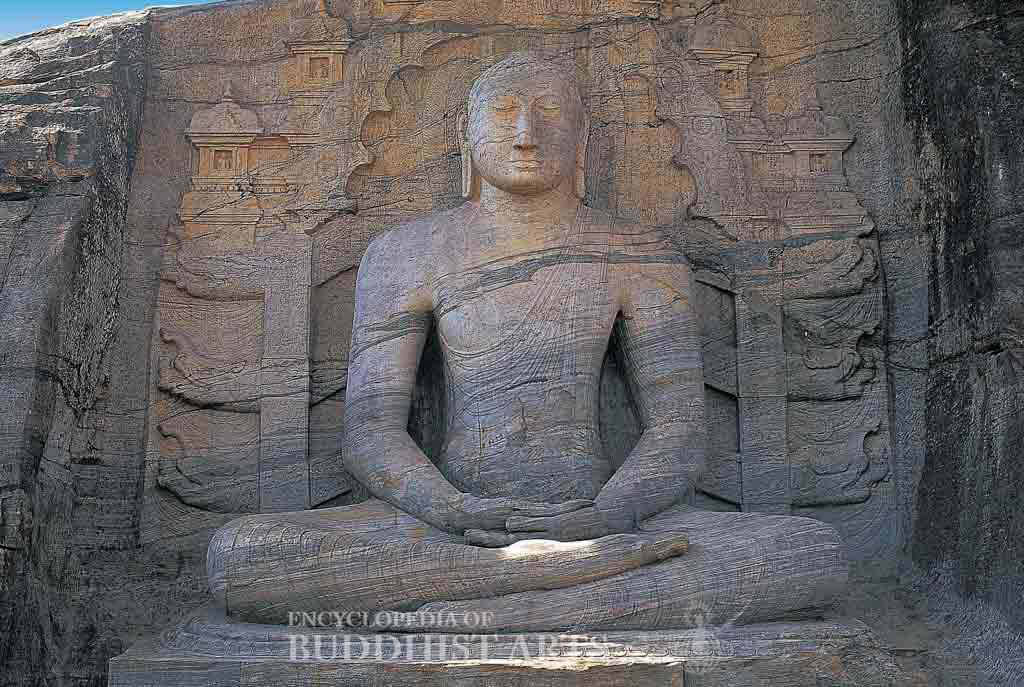
Gal Vihara Rock Carvings: Seated Buddha
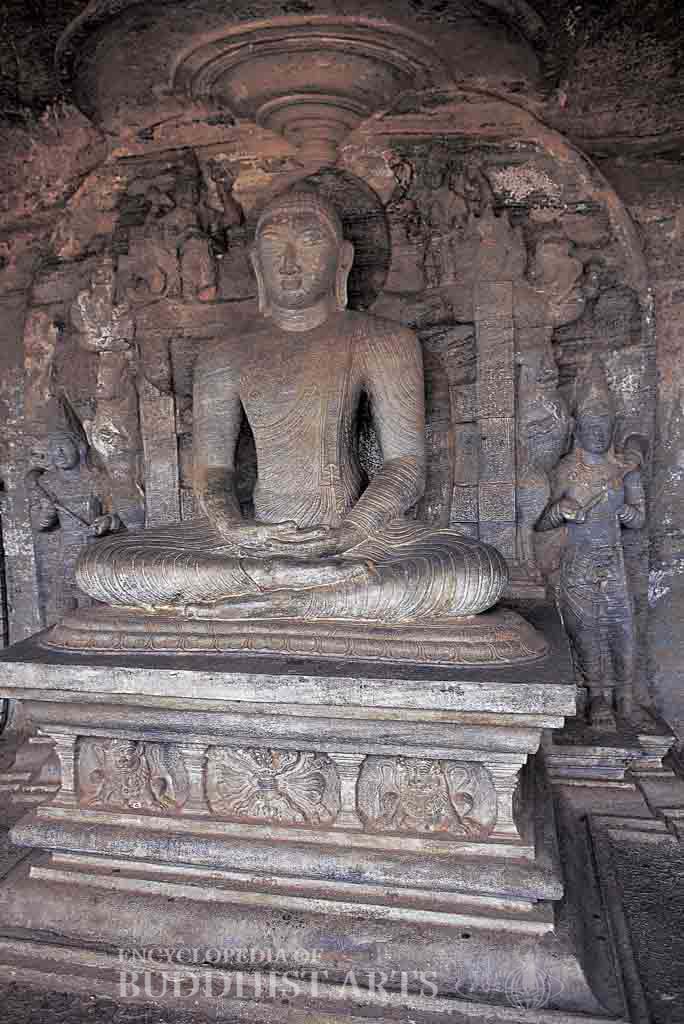
Gal Vihara Rock Carvings: Seated Buddha Niche
Gal Vihara Rock Carvings
SRI LANKA, North Central, Polonnaruwa
One of the most unforgettable collections of Buddha sculptures from ancient Sri Lanka, these works were carved from a single piece of granite measuring more than 50 m in length. The Gal Vihara was overrun by forest around the 14th century, and it was not until 1820 that British archaeologists discovered it. The temple was built along the cliff, but most of it had already collapsed by the time it was discovered. Only a few sculptures remain: a reclining Buddha, a standing Buddha, and two seated Buddhas with one enshrined inside a niche.
The reclining Buddha measures 13.4 m in length. Near the head of the reclining Buddha is the standing Buddha, leaning slightly forward, with arms crossed at the chest. For some time, the standing figure was thought to be Ananda, but recent discoveries by archaeologists suggest that the statue is meant to represent the Buddha.
The first seated Buddha is in the half lotus position and forms the dhyana (meditation) mudra. Surrounding the figure are remnants of palace architecture. This, along with the Buddha’s monastic robes, are characteristics of the carvings of the Polonnaruwa Kingdom (circa 11th–13th century).
The second seated Buddha is found within a niche, sitting on a throne with a canopy overhead. Carvings of Brahma and apsaras surround the Buddha as if listening to the Dharma. An inscription outside the niche describes the origins of the Buddhist Council and the establishment of the rules and regulations for the monastic community.
For more details, go to the Encyclopedia of Buddhist Arts: Caves R-L, page 374.
Cite this article:
author = Hsingyun and Youheng and Johnson, Peter and Mankuang and Huntington, Susan and Edson, Gary and Neather, Robert,
booktitle = {Encyclopedia of Buddhist Arts: Caves R-L},
pages = 374,
title = {{Gal Vihara Rock Carvings}},
volume = 6,
year = {2016}}