
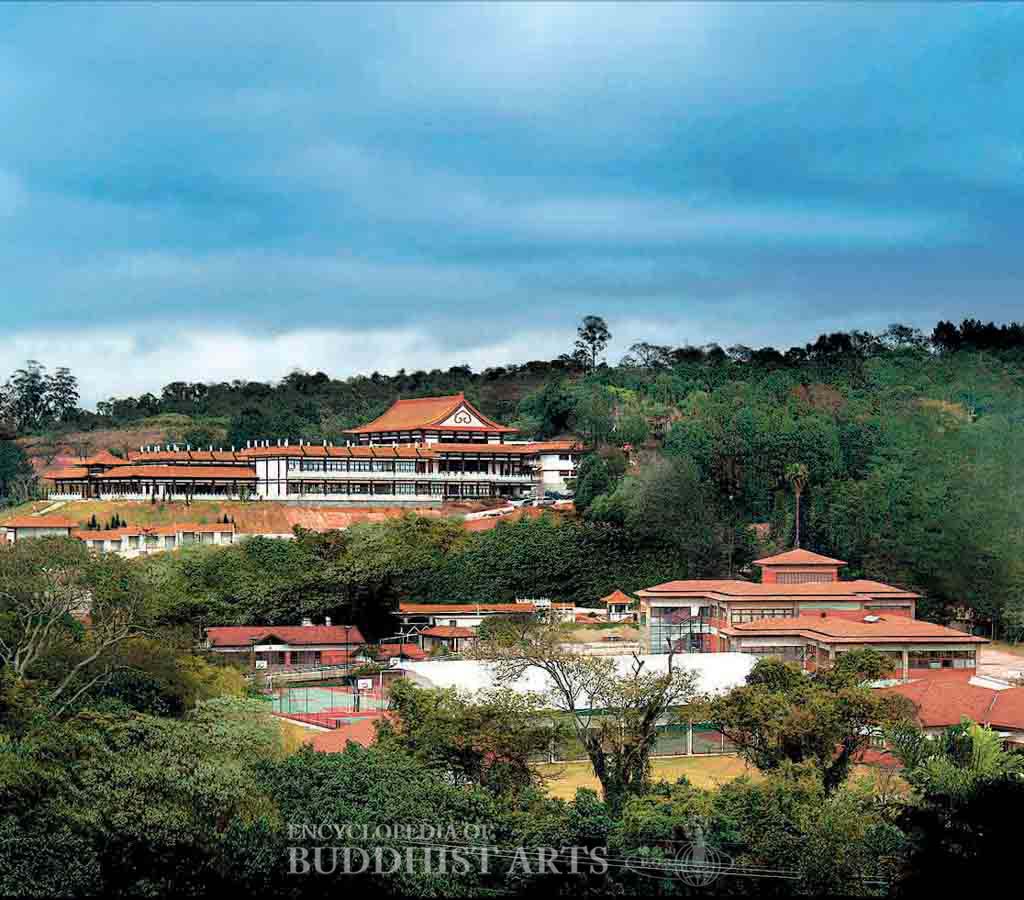
Fo Guang Shan Templo Zu Lai
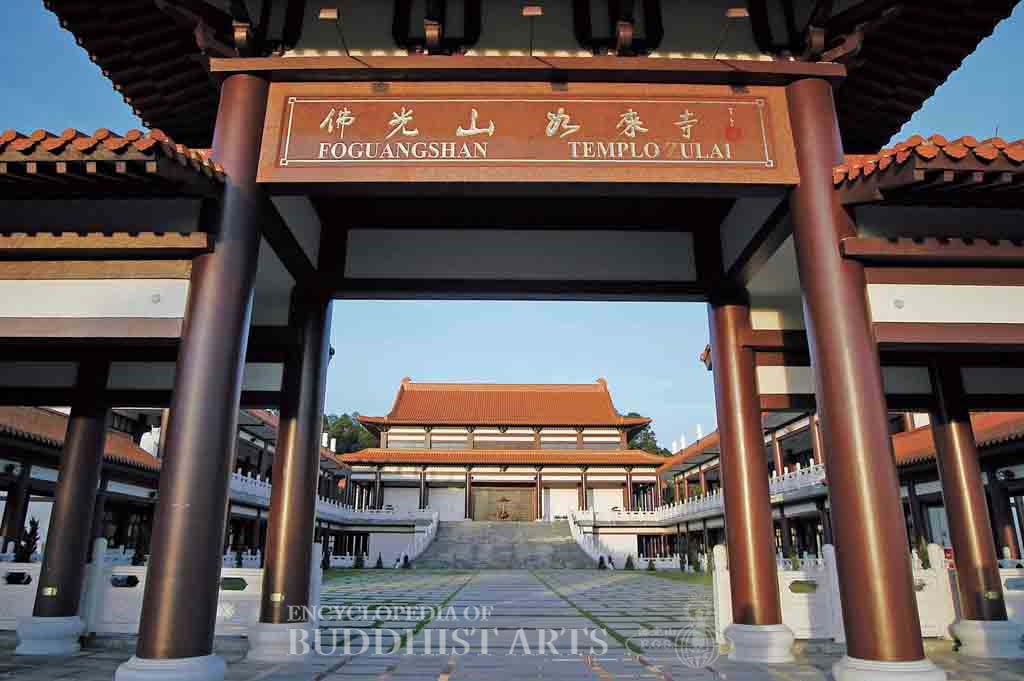
Fo Guang Shan Templo Zu Lai: Main Temple Gate
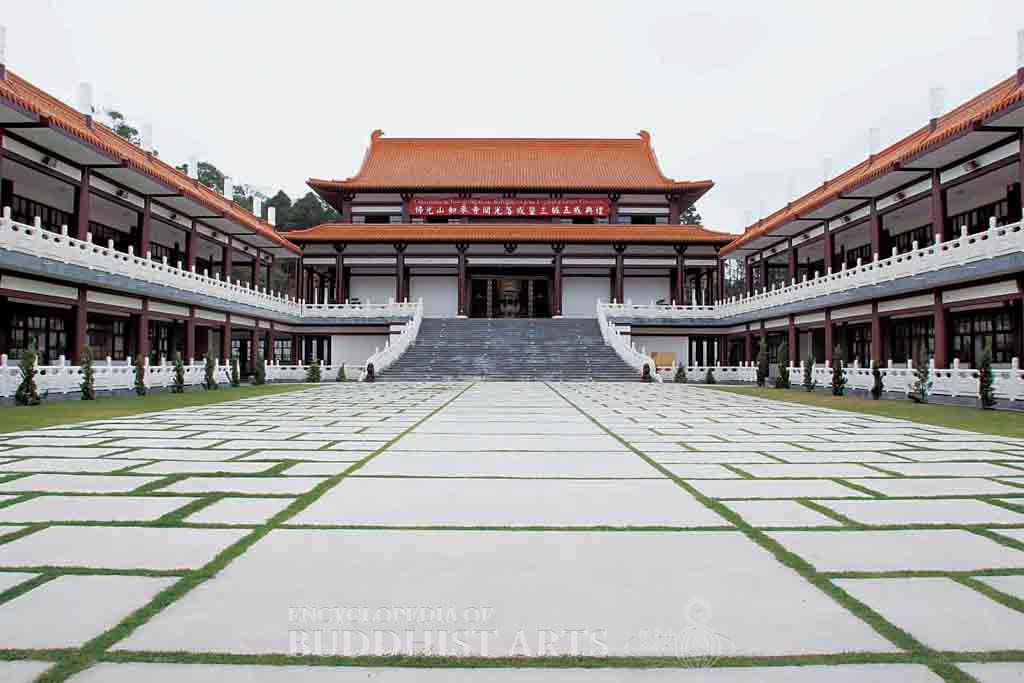
Fo Guang Shan Templo Zu Lai: Great Hero Hall
Fo Guang Shan Templo Zu Lai
BRAZIL, Sao Paulo, Cotia
Zu Lai means Tathagata or Buddha. It is the largest Buddhist temple in South America. In 1992, Master Hsing Yun, founder of Fo Guang Shan, was invited by local Chinese devotees to attend the opening ceremony of Templo Budista Kuan Yin in Sao Paulo. The Buddha’s Light International Association Brazil Chapter was founded at the same time, followed by Fo Guang Shan monastics taking up residence there. Devotees Zhang Shengkai and Chen Shuli donated their villa to be converted to a temple. As the number of devotees grew, an additional piece of land was acquired by devotees such as Si Zilin and Hong Cihe. Construction of the temple started in 2000 and was completed in 2003.
The temple complex occupies 19 ha, with 5 ha being taken up by buildings, which include the main temple gate, Great Hero Hall, East Chan Building, West Pure Building, and Cultivation Center. The five-bay wide Great Hero Hall has a single-eave hip-and-gable roof. It houses a white jade seated Sakyamuni Buddha statue, which weighs 4 t. The statue is surrounded by over 8,000 small Buddha niches. The two-story East Chan Building houses classrooms, a library, and the Zu Lai Translation Center. In the two-story West Pure Building there are the Ksitigarbha Hall, meditation hall, museum, tea house, and audio center. The temple started the Children of the Buddha project in 2003 to assist in the education of young people. Zu Lai Buddhist Institute was founded in 2004 to support local people in their study of Buddhism. In 2006, the Cultivation Center was built at the rear of the temple. It houses classrooms and a meditation hall.
The Zu Lai Translation Center has published a number of Buddhist sutras and related literature in Portuguese, promoting cultural interchange among local schools and religions. Over the ten years since it was established the temple has developed a foundation for the development and localization of Buddhism in Brazil.
For more details, go to the Encyclopedia of Buddhist Arts: Architecture A-F, page 336.
Cite this article:
author = Hsingyun and Youheng and Johnson, Peter and Mankuang and Lancaster, Lewis,
booktitle = {Encyclopedia of Buddhist Arts: Architecture A-F},
pages = 336,
title = {{Fo Guang Shan Templo Zu Lai}},
volume = 1,
year = {2016}}