
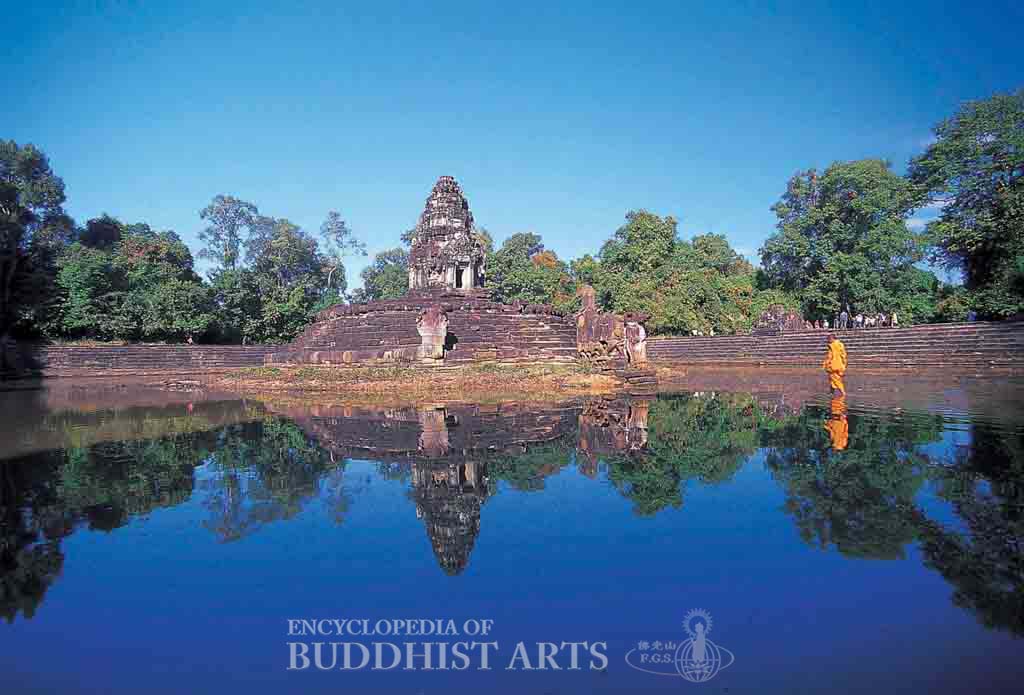
Neak Pean Temple
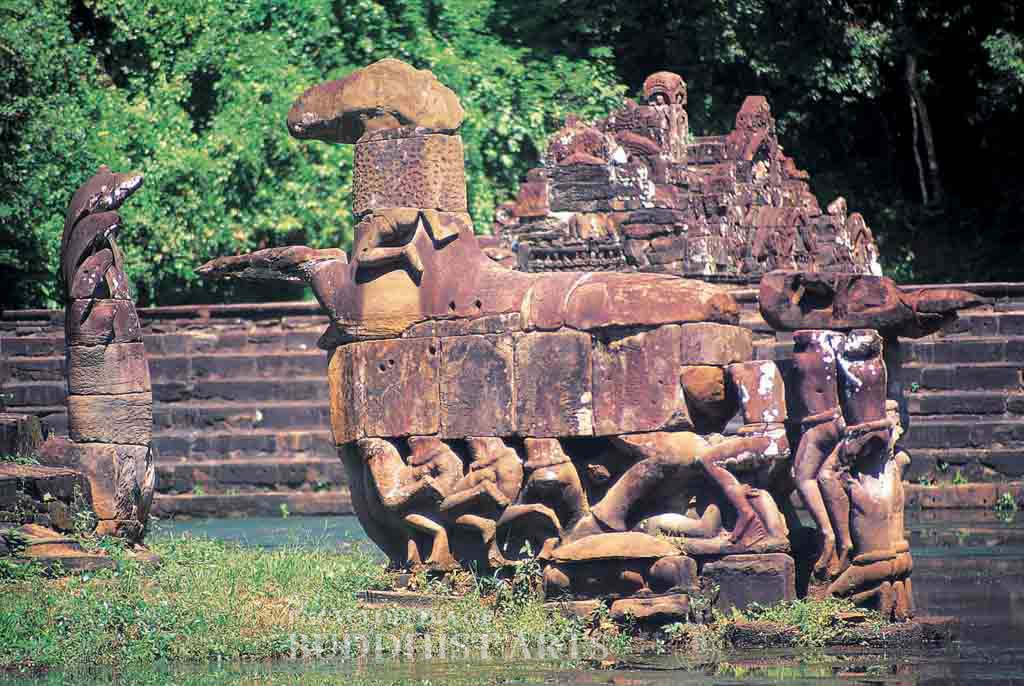
Neak Pean Temple: Sculpture of a Horse
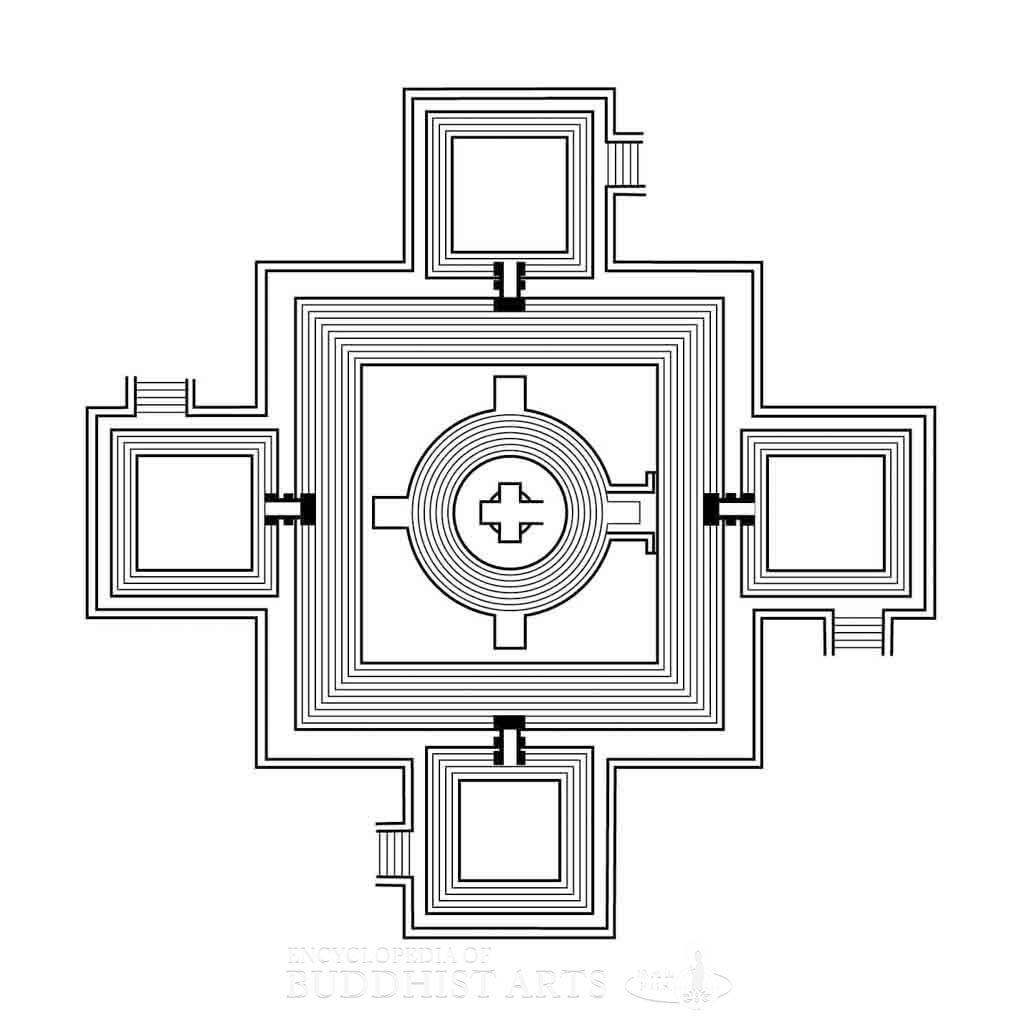
Neak Pean Temple (plan)
Neak Pean Temple
CAMBODIA, Siem Reap
Neak Pean means Coiled Serpents. It is located in the center of the Preah Khan Baray or Jayatataka, northeast of Angkor Wat. It was built by King Jayavarman VII (reigned 1181–1220) in the late 12th century.
The Neak Pean Temple is in the center of the main pond, which measures 70 m on each side. The base is a seven-tier circular stone platform carved with two naga kings guarding the temple. The temple and the main pond represent the highest mountains of the Jambudvipa, the Himalayas, and the holy lake Anavatapta respectively. The temple entrance is located in the east, with a statue of a horse, a manifestation of Avalokitesvara Bodhisattva, as a symbol of saving people from drowning.
The main pond is surrounded by four smaller ponds, one at each cardinal point. They represent the four oceans. Between the main pond and the four smaller ponds there are sculptures of a lion, horse, elephant, and man. These four sculptures have water outlets through which water from the main pond flows out to the smaller ponds, symbolizing the distribution of the holy lake Anavatapta to the four oceans via the four sacred rivers. According to legend, these ponds are able to cure different kinds of illnesses.
Fragments of a sculpture were discovered on the site. After they were pieced together, it was thought to be a statue of King Jayavarman VII, in recognition of his merit in protecting the Dharma and promoting Buddhism.
For more details, go to the Encyclopedia of Buddhist Arts: Architecture M-S, page 789.
Cite this article:
author = Hsingyun and Youheng and Johnson, Peter and Mankuang and Lancaster, Lewis,
booktitle = {Encyclopedia of Buddhist Arts: Architecture M-S},
pages = 789,
title = {{Neak Pean Temple}},
volume = 3,
year = {2016}}