
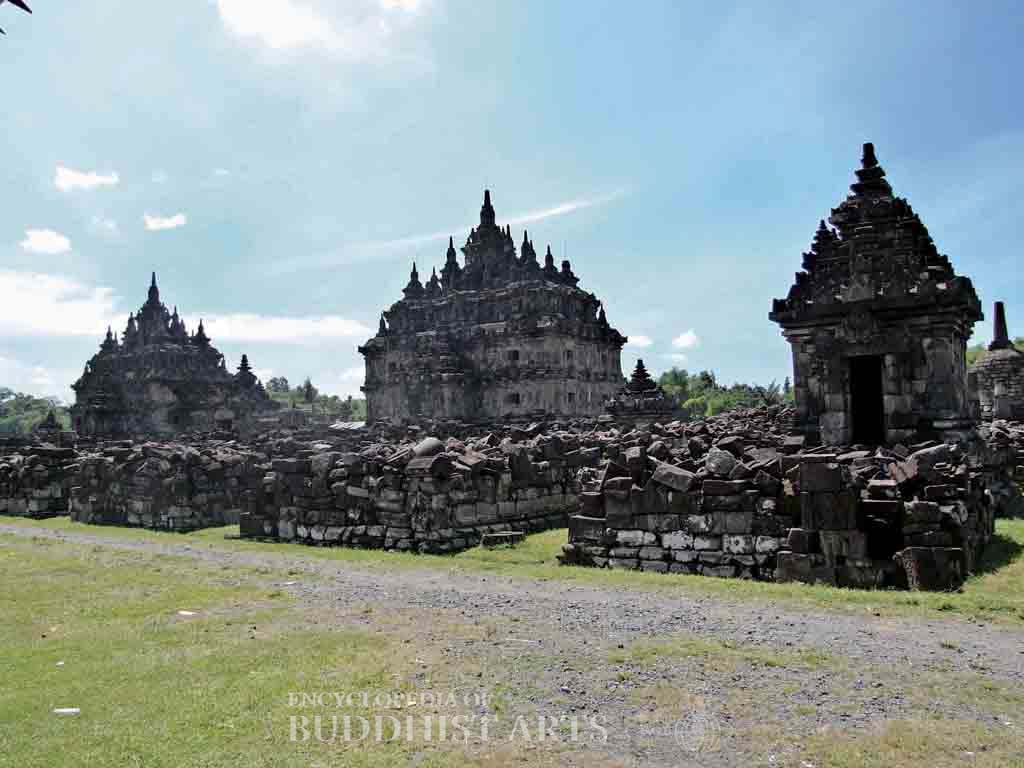
Plaosan North Temple
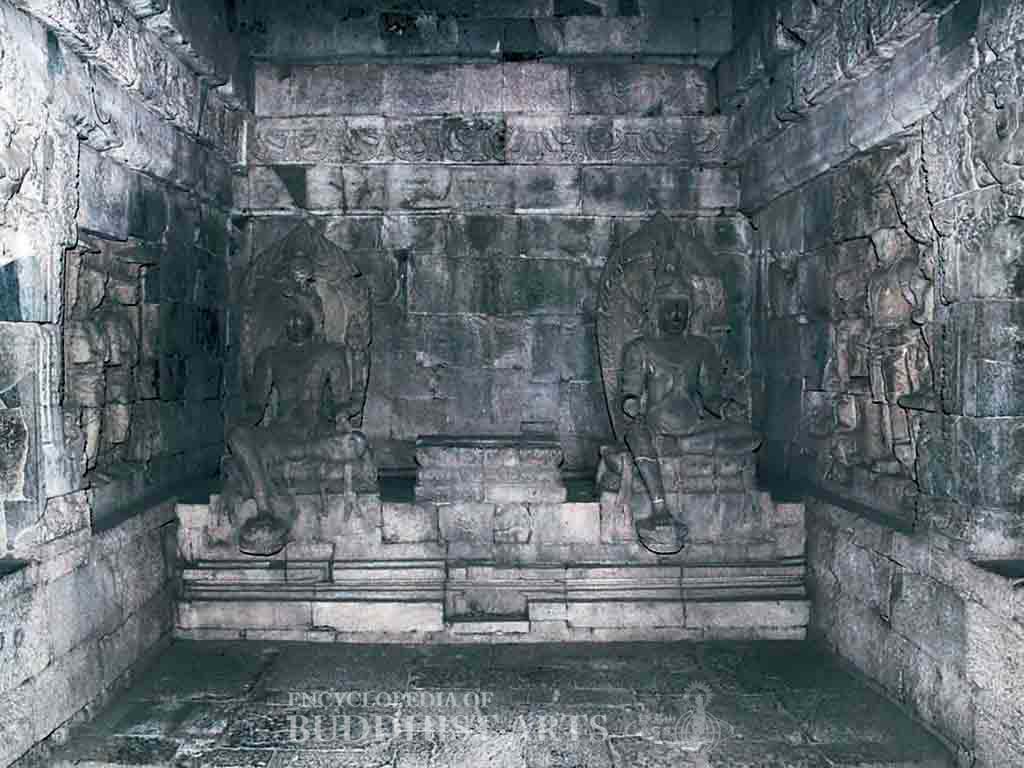
Plaosan North Temple: Main Hall (interior)
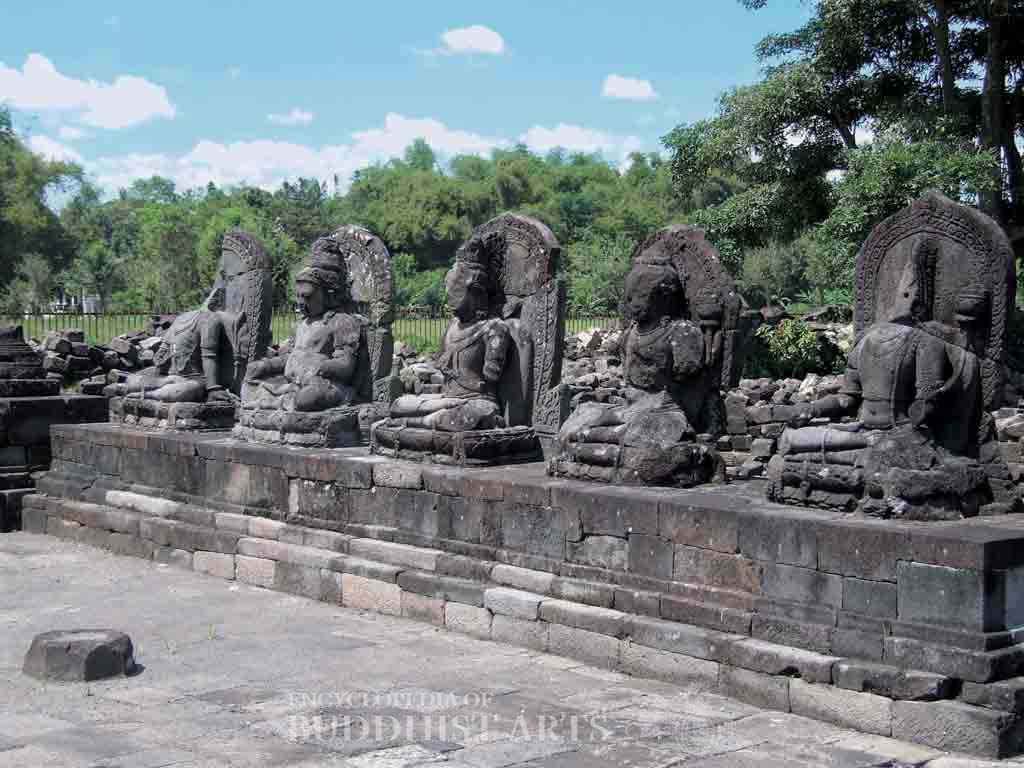
Plaosan North Temple: Buddhist Sculptures
Plaosan North Temple
INDONESIA, Central Java, Prambanan
The Plaosan North Temple, also called Plaosan Lor (North), is the northern portion of the Plaosan Temple complex. The complex was built in the middle of the 9th century during the Mataram Kingdom period. It was said to have been constructed by Hindu king Rakai Pikatan (reigned 835–850) for his queen, who was a devout Buddhist. Another version is that the temple complex was built by the queen herself. The complex can be divided into northern, central, and southern groups. The northern and central groups are collectively known as the Plaosan North Temple.
The Plaosan North Temple faces west. It is built mainly of andesite and is enclosed by walls. The entire site measures 219 m from south to north and 87.5 m from east to west.
The central group is the largest and best preserved among the three groups. With a rectangular plan, it consists of two main halls at the center, surrounded by 58 ancillary shrines and 116 small stupas. The main halls have identical layouts and each is enclosed by walls. There are delicate reliefs on both the interior and exterior of the halls, as well as along the stairs of the entrances. On the pyramidal roofs there are stupas of various sizes, forming a three-dimensional mandala. Each floor of the two-story halls is divided into three chambers. The first story contains several statues of Bodhisattvas seated in half lotus posture with mandorlas with a flaming border. The second story has a wooden floor and it is assumed that it was either a dormitory for monastics or a sutra repository. The difference between the two halls is that the southern hall contains bas-reliefs mainly of male figures, while the northern hall contains those of female figures.
The northern group has a rectangular plan and consists of a walled courtyard surrounded by 78 ancillary stupas. A rectangular platform is located at the center. Around the edges of this platform there are 24 square stone bases, which may have been used to support timber columns. It is believed that a wooden building once stood on this rectangular platform. Rectangular plinths with statues of Buddhas and Bodhisattvas can be found on the west, northwest, and southwest sides of the platform. There are 21 extant statues, but most of them are damaged or have missing parts. Since King Pikatan was a Hindu and his queen was a Buddhist, both Buddhist and Hindu influences can be seen in the architecture and sculptures of the Plaosan North Temple. This exemplifies the confluence of these two significant religious traditions at that time.
For more details, go to the Encyclopedia of Buddhist Arts: Architecture M-S, page 827.
Cite this article:
author = Hsingyun and Youheng and Johnson, Peter and Mankuang and Lancaster, Lewis,
booktitle = {Encyclopedia of Buddhist Arts: Architecture M-S},
pages = 827,
title = {{Plaosan North Temple}},
volume = 3,
year = {2016}}