
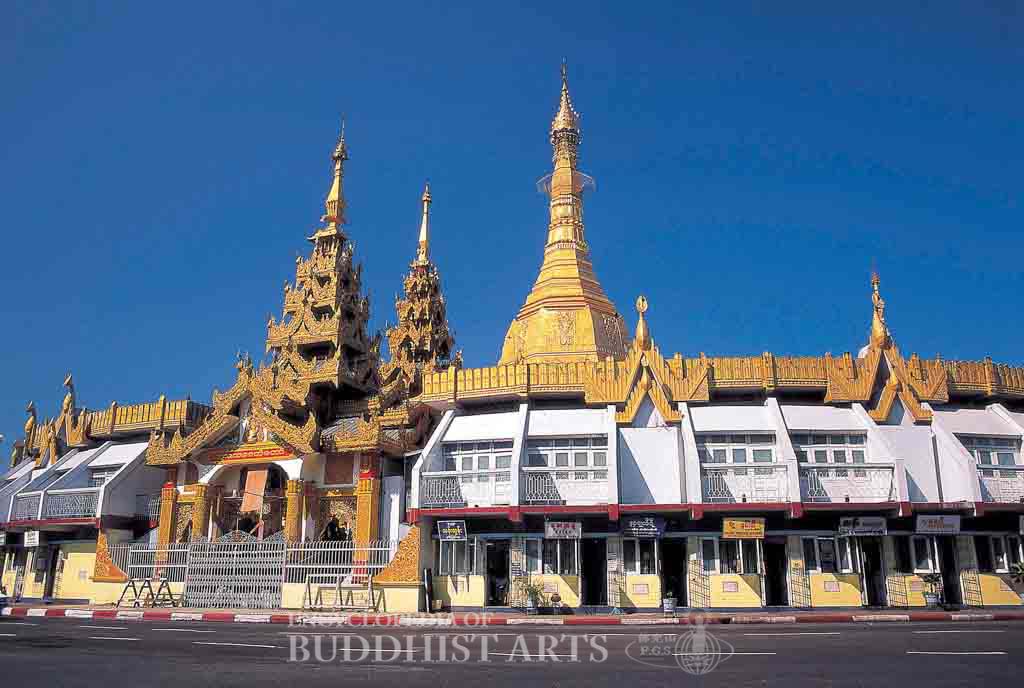
Sule Pagoda
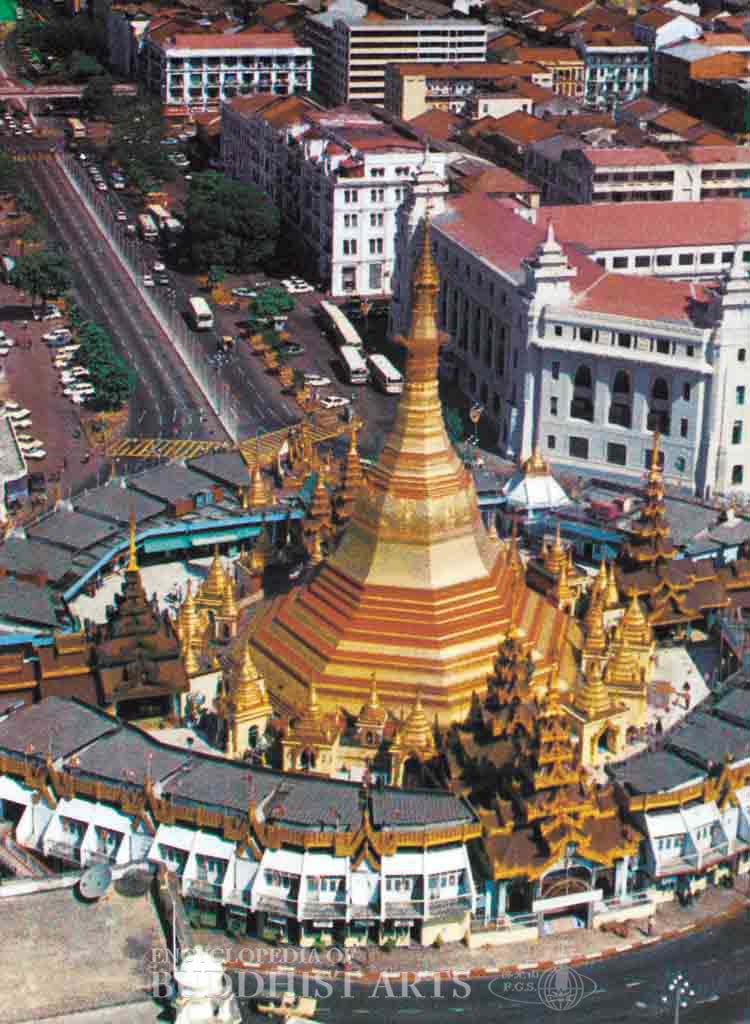
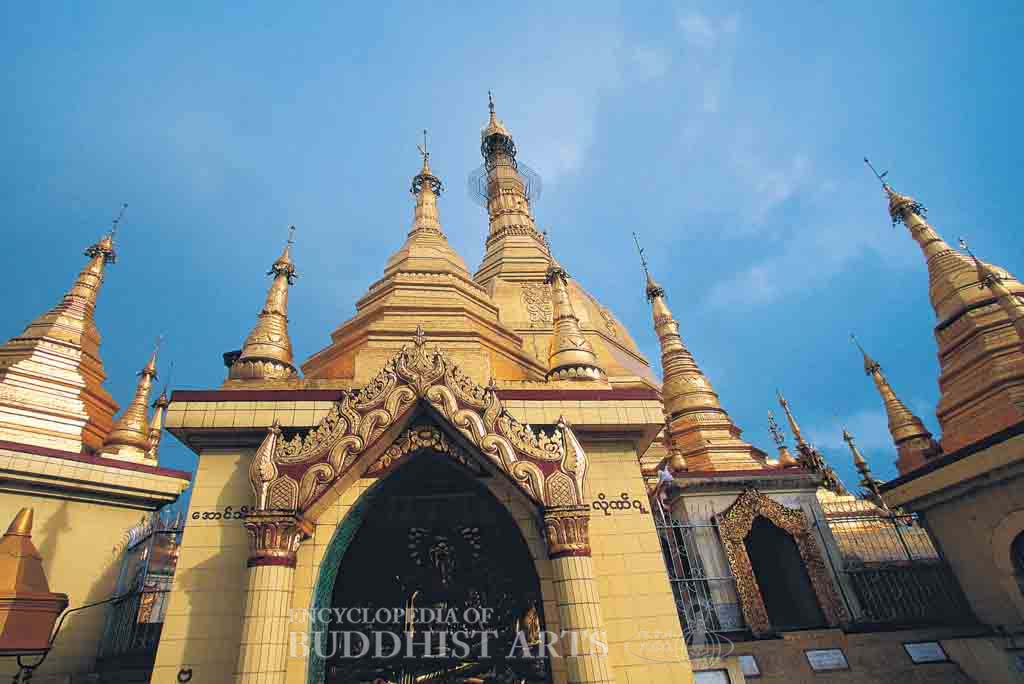
Sule Pagoda
MYANMAR, Yangon
Sule derives from the Burmese words Suwei, meaning assembly. It is believed that Sule Pagoda was built by monks Sona and Uttara, who were sent to Suvannabhumi as missionaries by King Asoka (reigned circa 269–232 BCE) after the Third Buddhist Council. The pagoda was built to enshrine the hair relics of the Buddha that were brought from India. The pagoda marks the center of Yangon city, which was laid out on a grid pattern in the 19th century.
The 51 m high octagonal pagoda occupies an area of just over 1 ha. The compound is entered through four gateways with multiple eaves. The pagoda is surrounded by a 6 m wide terrace where there are a number of smaller pagodas. The pagoda is unusual in that its octagonal shape is maintained from its base until the top of the bell-shaped body and the first section of the spire.
For more details, go to the Encyclopedia of Buddhist Arts: Architecture M-S, page 1063.
Cite this article:
author = Hsingyun and Youheng and Johnson, Peter and Mankuang and Lancaster, Lewis,
booktitle = {Encyclopedia of Buddhist Arts: Architecture M-S},
pages = 1063,
title = {{Sule Pagoda}},
volume = 3,
year = {2016}}