
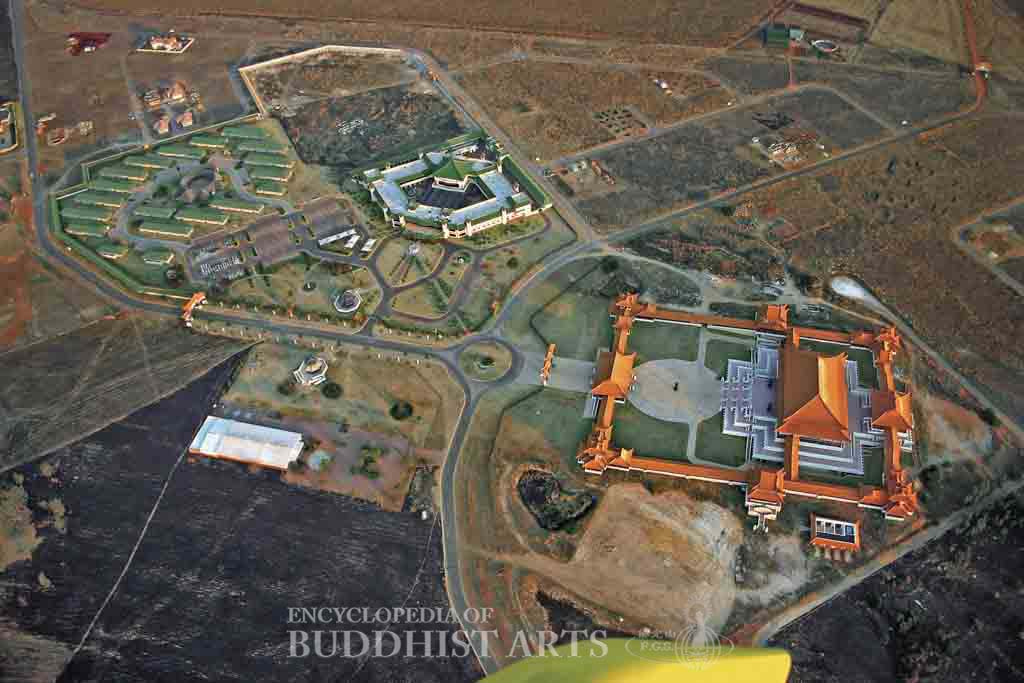
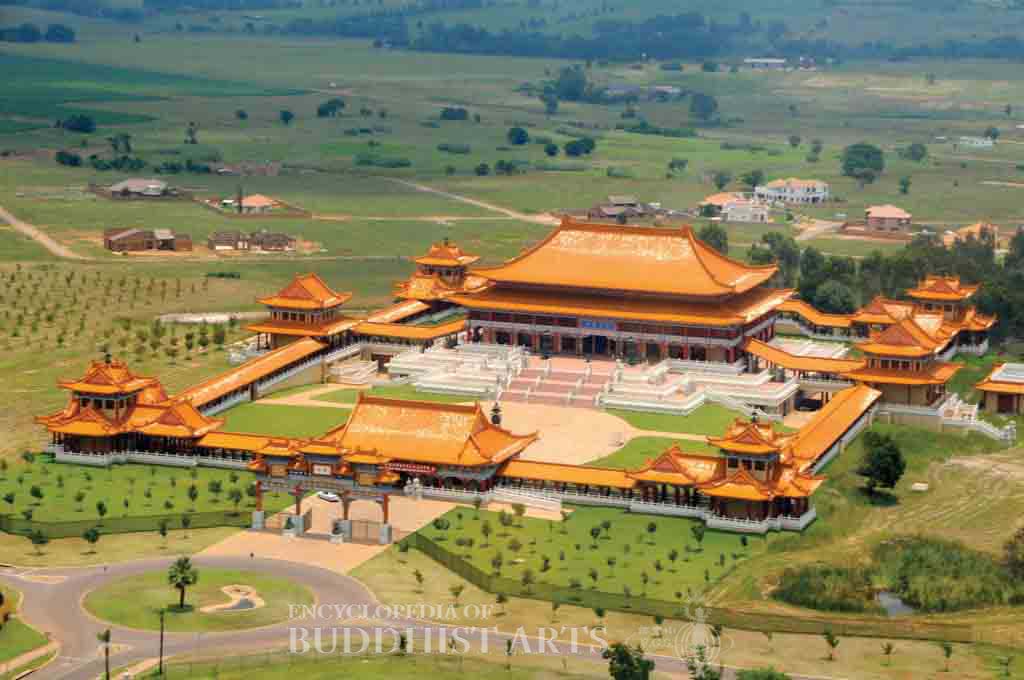
Fo Guang Shan Nan Hua Temple (aerial view)
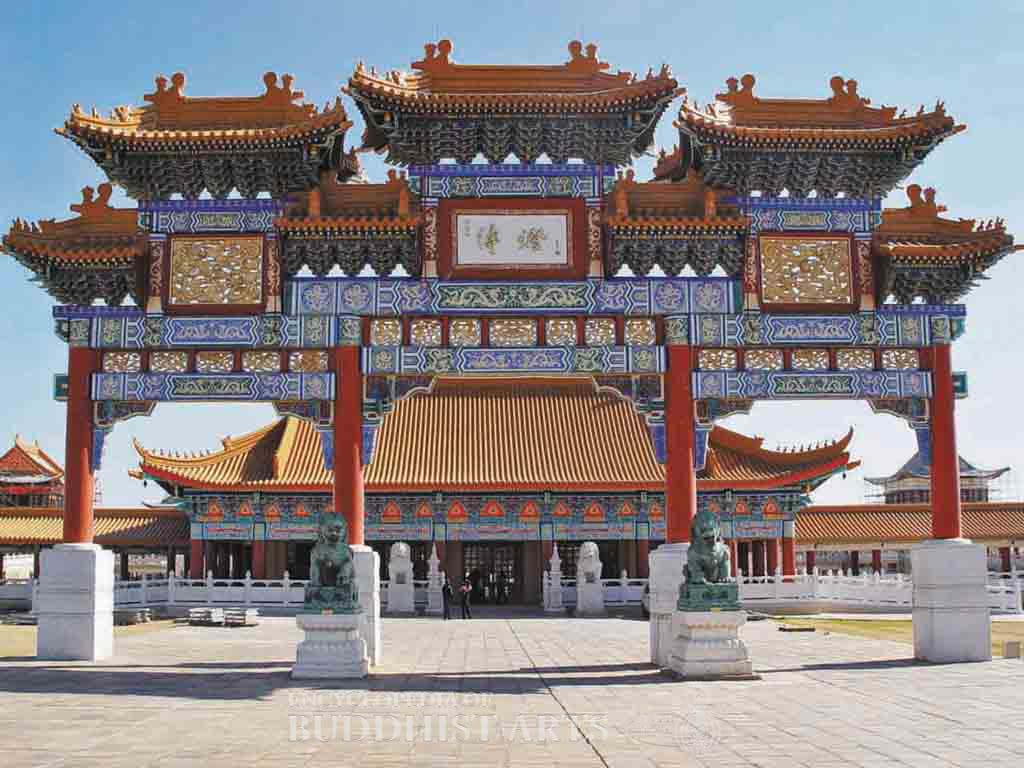
Fo Guang Shan Nan Hua Temple: Main Temple Gate
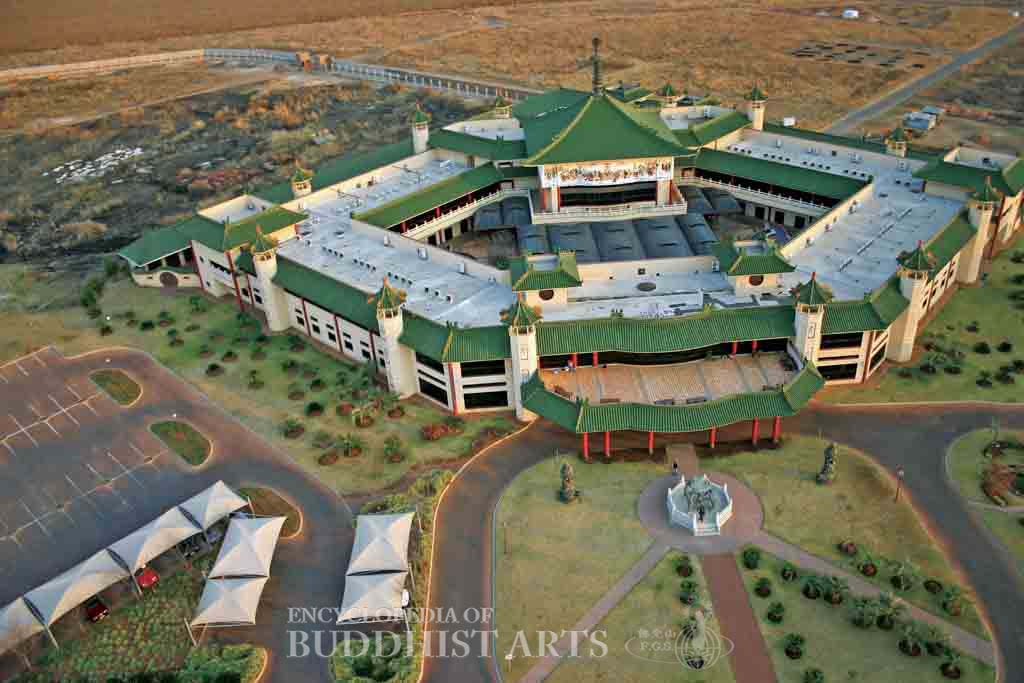
Fo Guang Shan Nan Hua Temple: Guesthouse
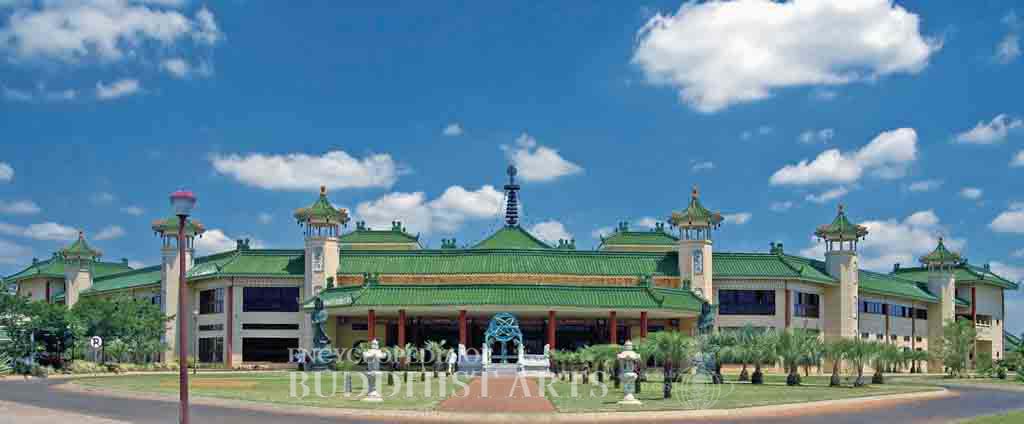
Fo Guang Shan Nan Hua Temple: Guesthouse
Fo Guang Shan Nan Hua Temple
SOUTH AFRICA, Gauteng, Bronkhorstspruit
Nan Hua means Southern Flower. The temple is located approximately 70 km from Johannesburg and is the first Chinese Buddhist temple in Africa. In 1992, the Bronkhorstspruit City Council donated 6 ha of land to Fo Guang Shan when its chief executive, Hennie Senekal, visited Fo Guang Shan Monastery in Taiwan. Construction began the same year, and the Great Hero Hall was completed in 2002. This marked an important step in the development of Buddhism in Africa.
The temple occupies 6.4 ha and consists of two major areas: the Main Temple complex and the Guesthouse area. The Main Temple complex is built in traditional Chinese palatial style with roofs covered in yellow glazed tiles. In front of the complex is the three-bay wide main temple gate. The columns are painted in plain vermilion, while the remainder of the structure is highly decorated and includes colorful architraves supported by brackets, intricate openwork relief panels, eaves supported by multiple bracket sets, and a roof comprised of seven sections with ridge decorations. Beyond the gate there is a covered walkway that surrounds the whole complex, at the center of which is the Great Hero Hall. The hall has a double-eave hip roof and is surrounded by a veranda. The interior features a high ceiling and enshrines statues of Sakyamuni Buddha, Amitabha Buddha, and the Medicine Buddha. The bell and drum towers are located on either side of the complex, and there are small shrines at the four corners. The Avalokitesvara Shrine is located at the rear.
The Guesthouse has a polygon layout and its roof is covered in green glazed tiles. It contains the Samantabhadra Hall and Repentance Hall, as well as a meditation hall, museum, conference rooms, tea house, dining hall, and kitchen. The Samantabhadra Hall has a pyramidal roof with a spire. There is a large mural of the Buddha teaching the Dharma below the eaves. The Nan Hua Village is located to the left of the Guesthouse. It consists of 50 chalets for visitors and organizations hosting activities at the temple.
The African Buddhist Seminary was founded in 1994 and has been receiving students from different parts of Africa since then. The temple regularly organizes meditation sessions and Dharma services, and has also been involved in charity work as a means of connecting with the local community. Immense effort is invested each year in localizing Buddhism through relief work, donations of wheelchairs, and adoption programs for orphan children.
For more details, go to the Encyclopedia of Buddhist Arts: Architecture A-F, page 323.
Cite this article:
author = Hsingyun and Youheng and Johnson, Peter and Mankuang and Lancaster, Lewis,
booktitle = {Encyclopedia of Buddhist Arts: Architecture A-F},
pages = 323,
title = {{Fo Guang Shan Nan Hua Temple}},
volume = 1,
year = {2016}}