
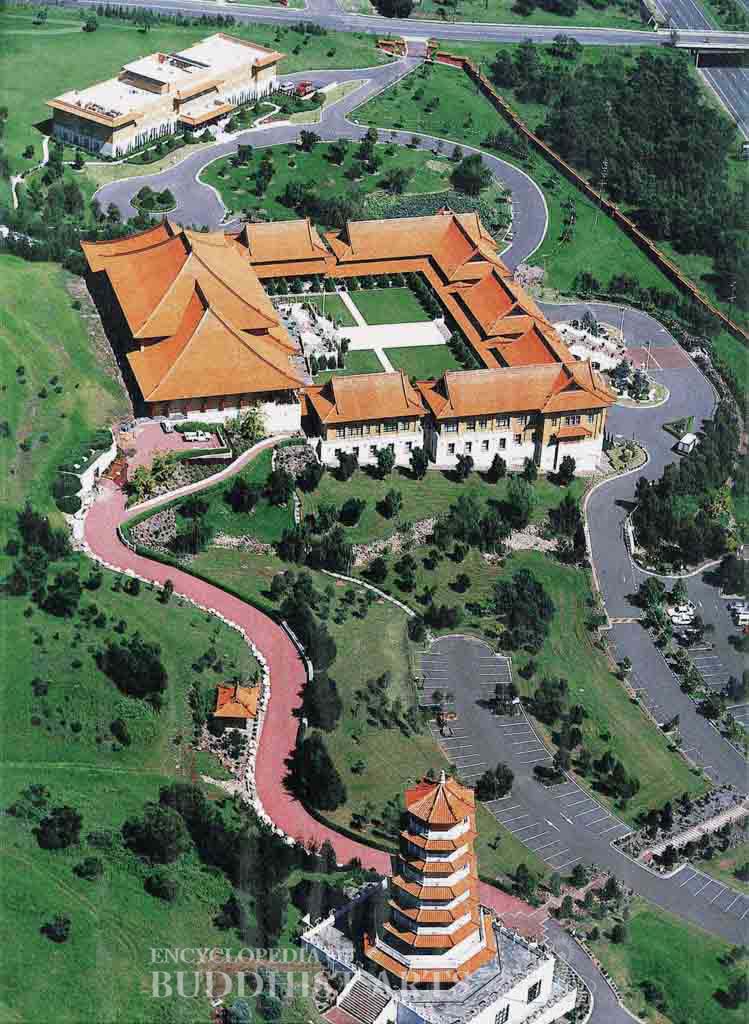
Fo Guang Shan Nan Tien Temple (aerial view)
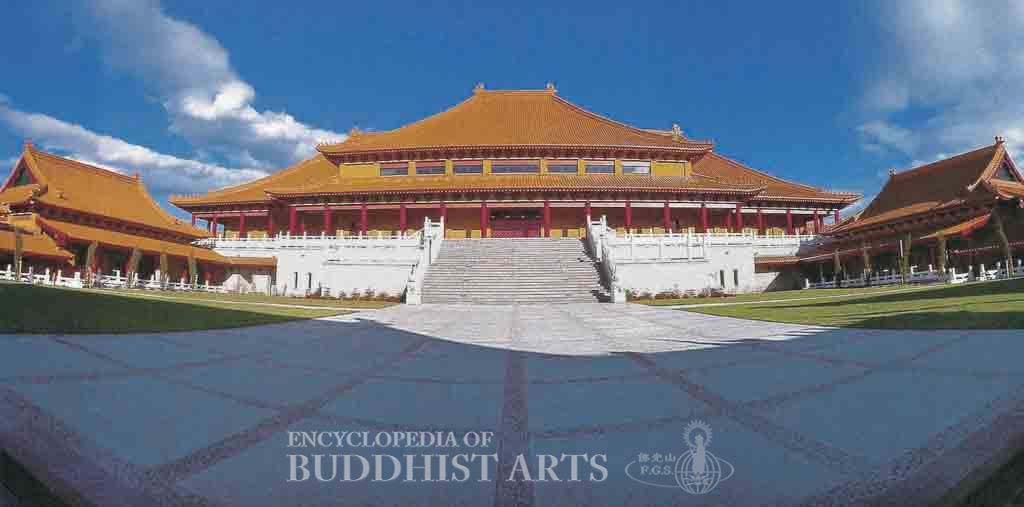
Fo Guang Shan Nan Tien Temple: Great Hero Hall
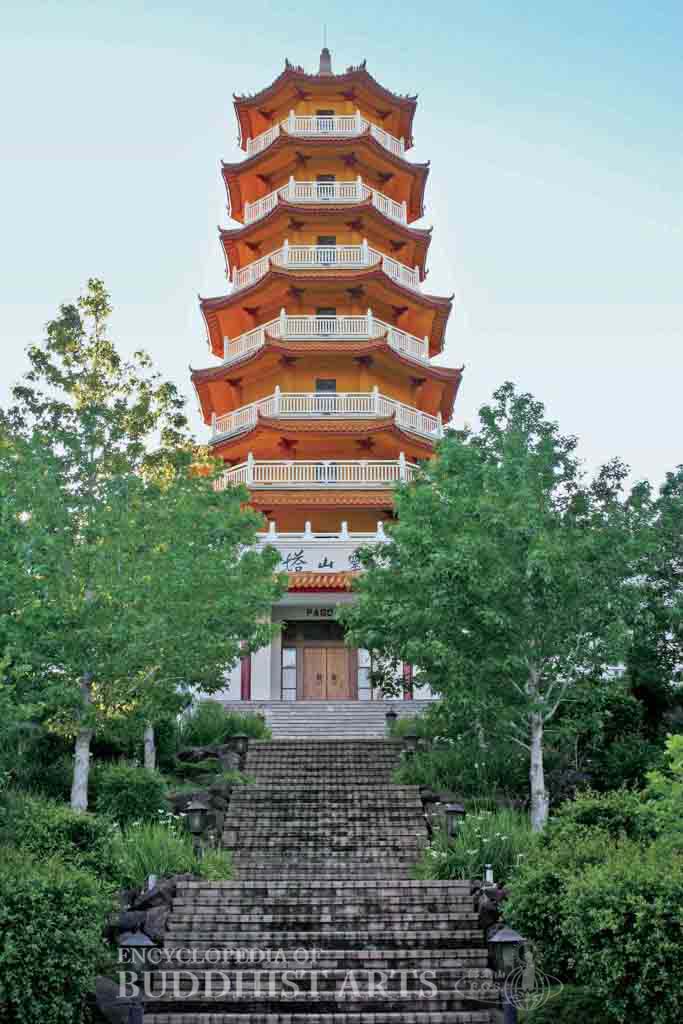
Fo Guang Shan Nan Tien Temple: Pagoda
Fo Guang Shan Nan Tien Temple
AUSTRALIA, New South Wales, Wollongong
Nan Tien means Southern Heaven. It is the largest Buddhist temple in the Southern Hemisphere and serves as the Australian headquarters for the Fo Guang Shan branch temples in Oceania Region. In 1989, the Wollongong City Council, represented by Mayor Francis Neville Arkell, donated 10.5 ha of land for the building of a temple to promote cultural exchange between Chinese and Australians, and encourage intercultural and interreligious activities. Construction of the temple started in 1992 and was completed in 1995. The temple has received an award for its architecture, garden design, and lighting design in 1999.
The temple is built in the Chinese palatial style and occupies 22.3 ha. It consists of the main temple gate, Great Compassion Hall, Great Hero Hall, pilgrim lodge, meditation hall, dining hall, a pagoda, a museum, a conference center, and an auditorium. A Buddhist College, which was founded in 1996, is also located within the temple grounds.
The nineteen-by-nine bay Great Hero Hall has a double-eave hip roof. It houses the statues of the Five Dhyani Buddhas. Niches containing Thousand Buddhas fill the walls within the hall. The museum, located below the Great Hero Hall, exhibits Buddhist artifacts from various countries. The five-bay wide Great Compassion Hall houses a Thousand-Armed, Thousand-Eyed Avalokitesvara Bodhisattva statue. The walls are decorated with over 2,000 different manifestations of Avalokitesvara. The eight-story, octagonal pagoda is 40 m high and contains a statue of Ksitigarbha Bodhisattva.
The Nan Tien Institute, a government accredited educational institution, is located across from the temple. In 2001, Wollongong City Council donated 11 ha of land to build this institute for the purpose of fostering education and diversity. Construction began in 2007 and was completed in 2014.
For more details, go to the Encyclopedia of Buddhist Arts: Architecture A-F, page 329.
Cite this article:
author = Hsingyun and Youheng and Johnson, Peter and Mankuang and Lancaster, Lewis,
booktitle = {Encyclopedia of Buddhist Arts: Architecture A-F},
pages = 329,
title = {{Fo Guang Shan Nan Tien Temple}},
volume = 1,
year = {2016}}