
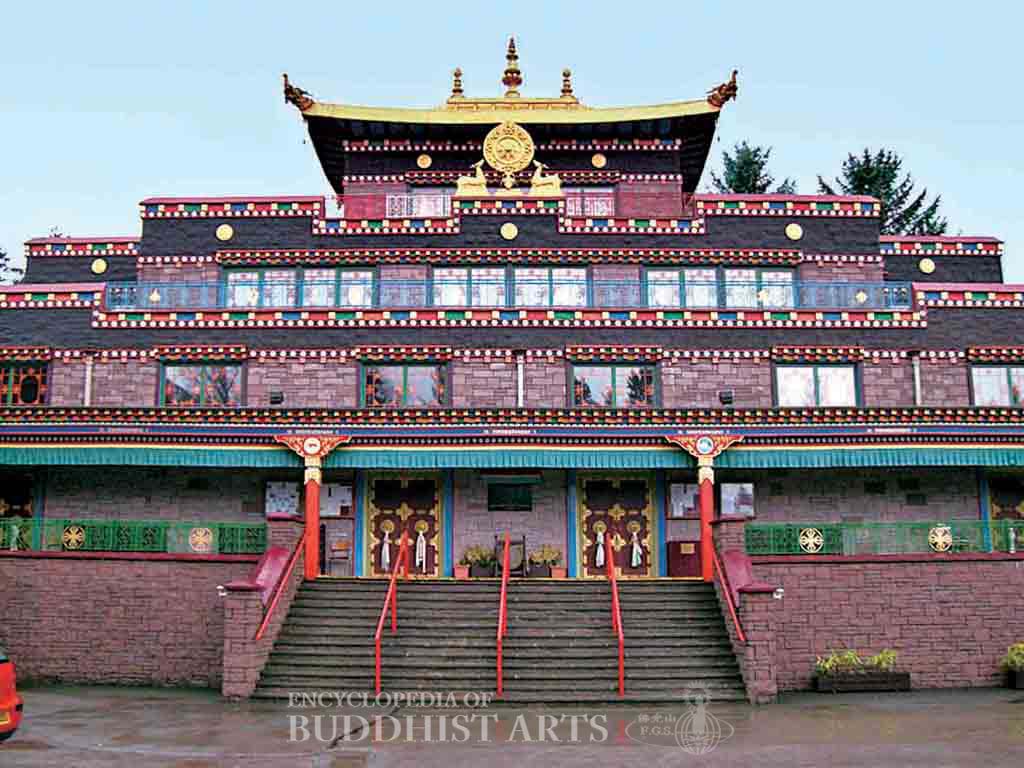
Samye Ling Monastery
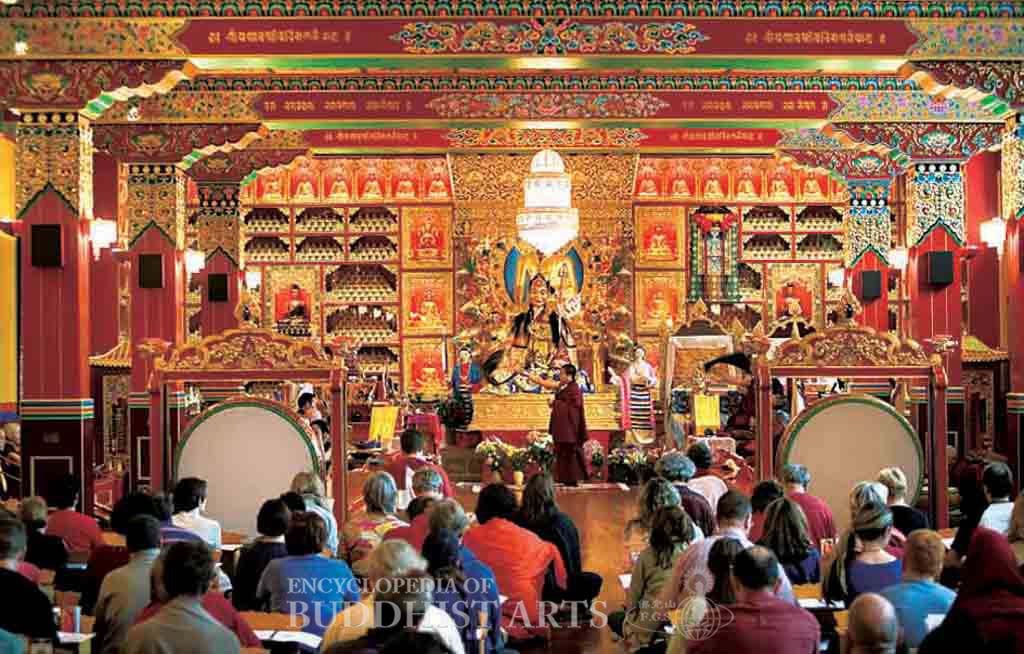
Samye Ling Monastery: Main Hall (interior)
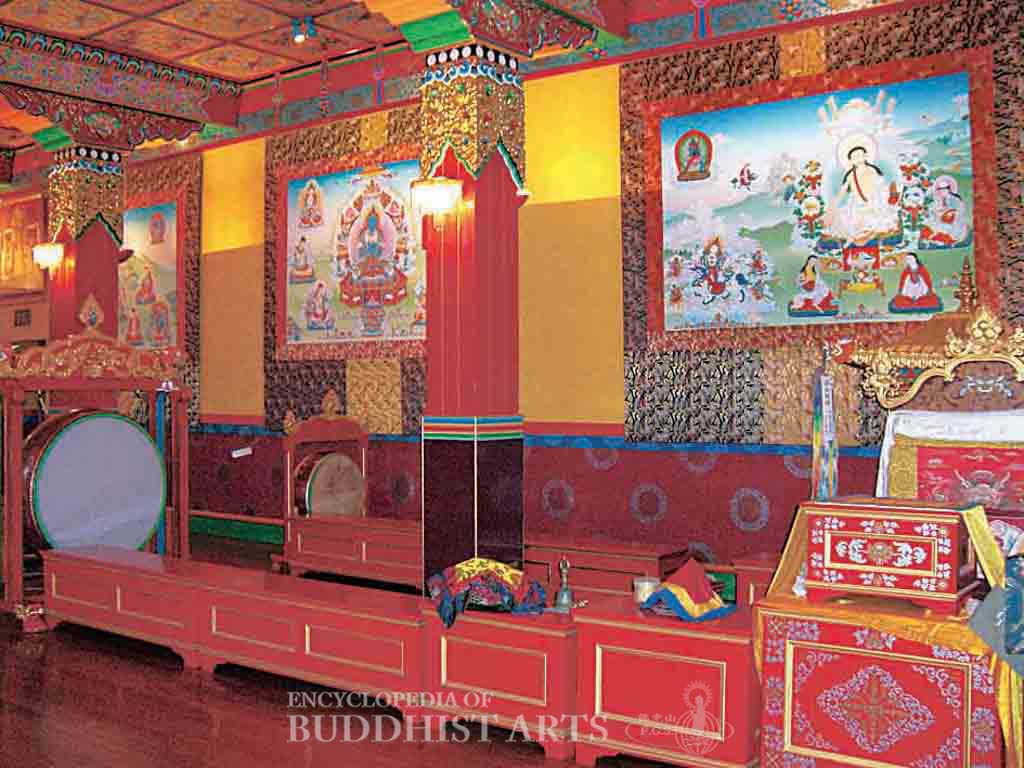
Samye Ling Monastery: Main Hall (interior)
Samye Ling Monastery
UNITED KINGDOM, Scotland, Eskdalemuir
The name Samye comes from the Sanskrit word Samaya, which means equality, vow, and purification. Ling means the Place of the Dharma Wheel, and in this case it refers to the monastery. It was founded by Akong Tulku Rinpoche and Chogyam Trungpa Rinpoche in 1967 as the Tibetan Buddhist Center. It is a center of learning for the Karma Kagyu school of Tibetan Buddhism. It is the first and one of the largest Tibetan monastery in Europe.
The monastery occupies 24.3 ha and consists of the main hall, a thangka studio, a publishing house for Buddhist texts, as well as workshops for earthenware, candles, and woodwork. The monastery is built in traditional Tibetan style using modern materials. The main hall was constructed in 1988. It consists of a rectangular hall on the first story with two rows of seven columns. The space can be reconfigured using movable partitions and can accommodate up to a few hundred people. It houses a statue of Sakyamuni Buddha, flanked by the two disciples Sariputra and Maudgalyayana. The walls are filled with 1,000 miniature gilded Buddha statues, which represent the Thousand Buddhas of the Present Kalpa. The second story is made up of residential accommodation and the third story contains a collection of sacred items.
The monastery has important sutras and commentaries written by eminent monks. Large thangkas hang on the west wall of the main hall and are illustrated with important figures in the history of Buddhism, notably the patriarchs of the Karma Kagyu lineage.
For more details, go to the Encyclopedia of Buddhist Arts: Architecture M-S, page 923.
Cite this article:
author = Hsingyun and Youheng and Johnson, Peter and Mankuang and Lancaster, Lewis,
booktitle = {Encyclopedia of Buddhist Arts: Architecture M-S},
pages = 923,
title = {{Samye Ling Monastery}},
volume = 3,
year = {2016}}