
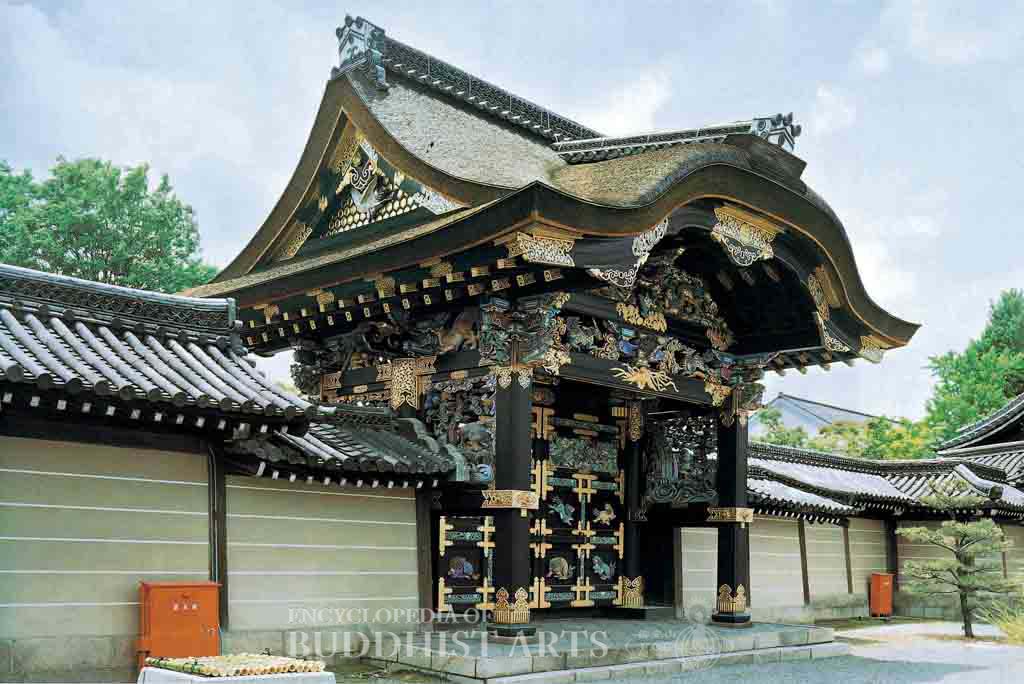
Nishi Honganji Temple: Chinese Gate
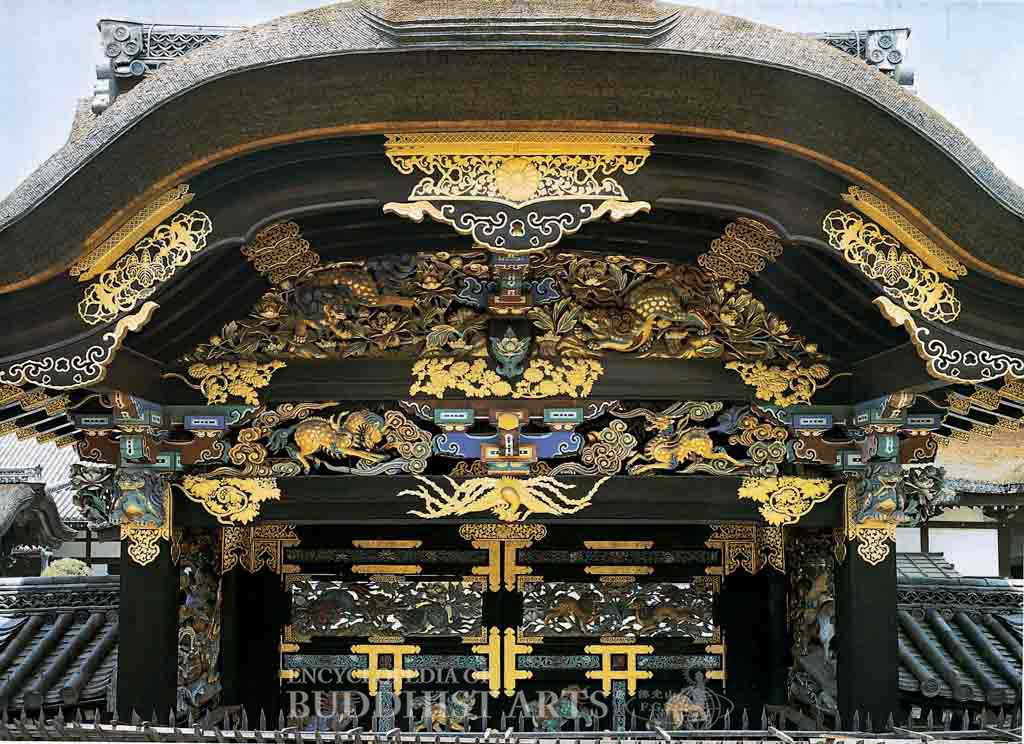
Nishi Honganji Temple: Chinese Gate (detail)
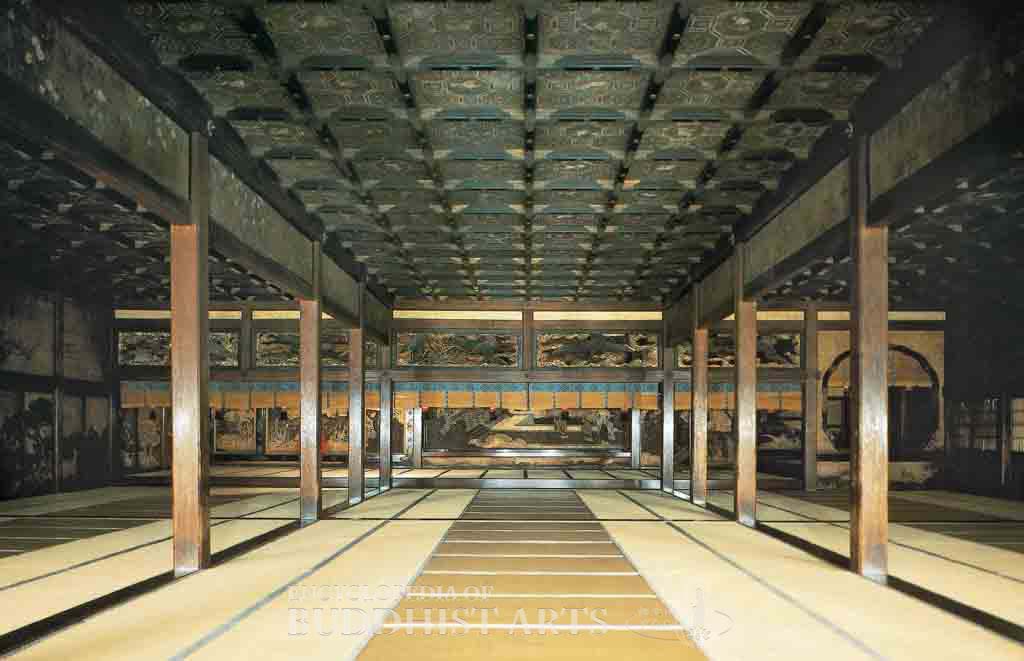
Nishi Honganji Temple: Study Hall
Nishi Honganji Temple
JAPAN, Kyoto
Nishi Honganji means Western Temple of the Original Vow; it is the head temple of the Honganji branch of the True Pure Land school of Buddhism. The construction of the temple began in 1272 during the Kamakura period, by Kakushinni, who was the daughter of Shinran, founder of the school. The first building was the founder’s hall. The temple had to relocate and was destroyed a number of times during periods of war. In 1591 during the Azuchi-Momoyama period, the temple was moved back to Kyoto when Toyotomi Hideyoshi donated a large area of land at the existing site. After the construction of Higashi Honganji (Eastern Temple of the Original Vow), the temple was renamed Nishi Honganji. As part of the Historic Monuments of Ancient Kyoto, it was listed as a UNESCO World Heritage Site in 1994.
The temple structures include the Amitabha Hall, founder’s hall, reception hall, Chinese gate, study hall, Northern Noh Stage, black study hall, Floating Cloud Pavilion, and bell tower. The Amitabha Hall was built in 1760 during the Edo period. It has a single-eave hip-and-gable roof covered in cylindrical tiles. The hall is 45 m wide, 42 m deep and 25 m high, and contains 132 columns. A statue of a standing Amitabha Buddha is enshrined within the hall. The founder’s hall was constructed in 1636 during the Edo period, and restored in 2009. The hall has a hip-and-gable roof covered in cylindrical tiles. It is 62 m wide, 48 m deep and 29 m high. It contains 227 columns and a statue of Shinran is enshrined within the hall. The Chinese gate has a single-eave hip-and-gable roof covered in cypress bark. The front and rear have curved bargeboards. The entrance is carved with Chinese Tang dynasty depictions of auspicious creatures, such as dragons, tigers, lions, and qilin. The reception hall was built in the early Edo period (1615–1868). The hall is 30 m wide and 39 m deep with a hip-and-gable roof and a flush gable roof, both covered in cylindrical tiles. The walls and paper screens are decorated with golden murals, while the ceiling is covered in colorful paintings. These works of art are in the style of the Azuchi-Momoyama period (1573–1615). The Northern Noh Stage was built in 1581, during the Azuchi-Momoyama period. It is the oldest Noh stage of its type in Japan.
The temple houses National Treasures which include a portrait of Master Shinran as well as his writings Annotation of the Amitayurdhyana Sutra and Annotation of the Amitabha Sutra.
For more details, go to the Encyclopedia of Buddhist Arts: Architecture M-S, page 797.
Cite this article:
author = Hsingyun and Youheng and Johnson, Peter and Mankuang and Lancaster, Lewis,
booktitle = {Encyclopedia of Buddhist Arts: Architecture M-S},
pages = 797,
title = {{Nishi Honganji Temple}},
volume = 3,
year = {2016}}