
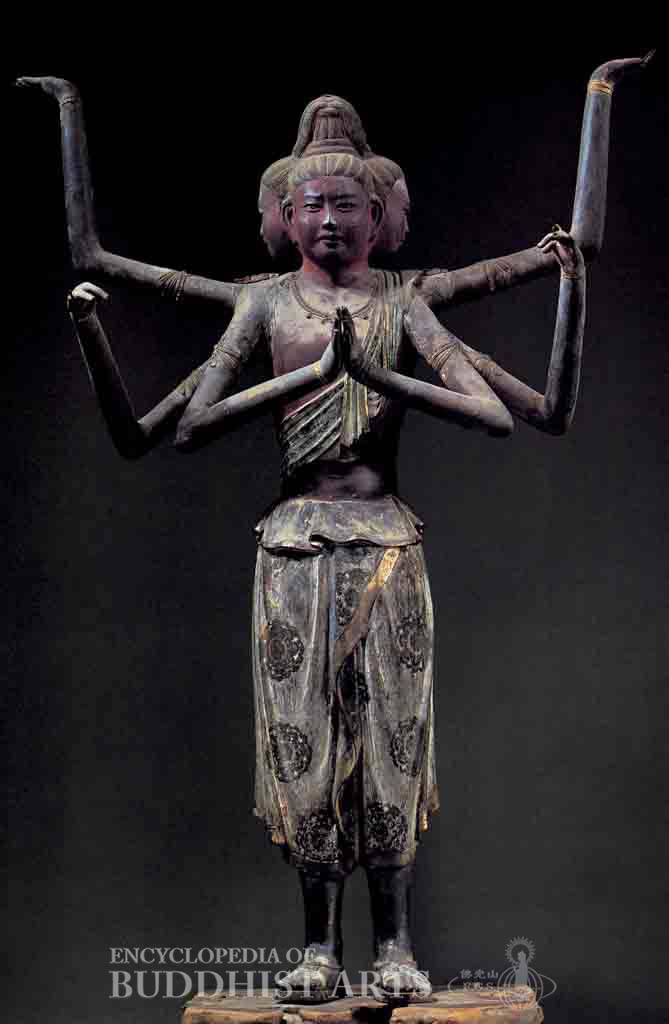
Kofukuji Temple: Eight Classes of Dharma Protectors - Asura
Dry lacquer
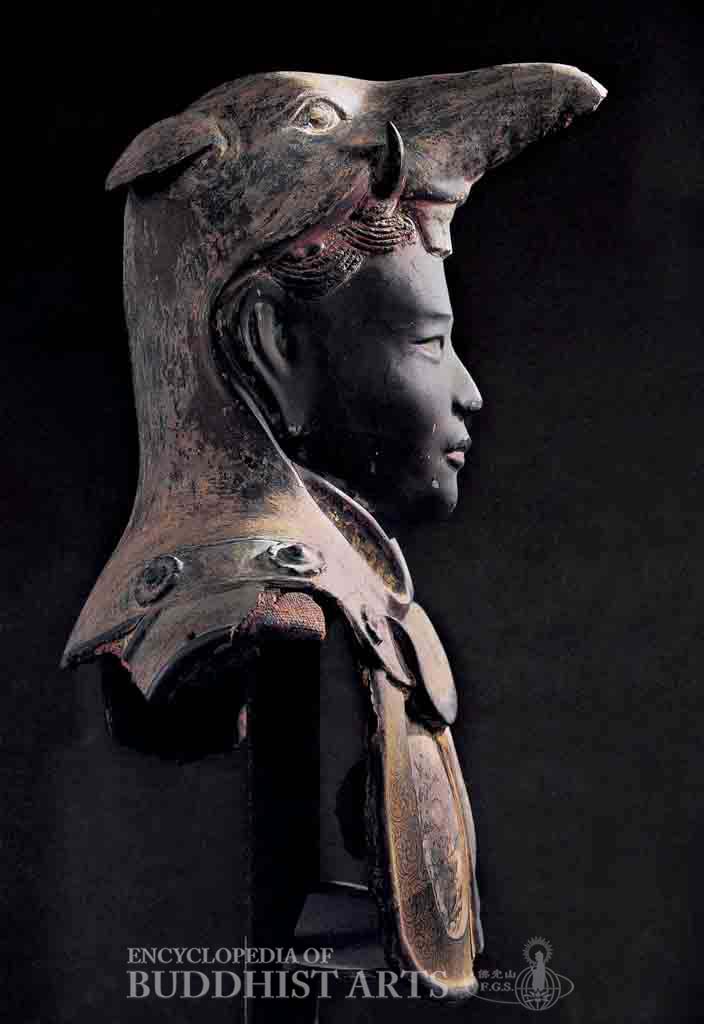
Kofukuji Temple: Eight Classes of Dharma Protectors - Heavenly Being

Kofukuji Temple: Eight Classes of Dharma Protectors - Naga

Kofukuji Temple: Eight Classes of Dharma Protectors - Yaksa

Kofukuji Temple: Eight Classes of Dharma Protectors - Gandharva

Kofukuji Temple: Eight Classes of Dharma Protectors - Garuda
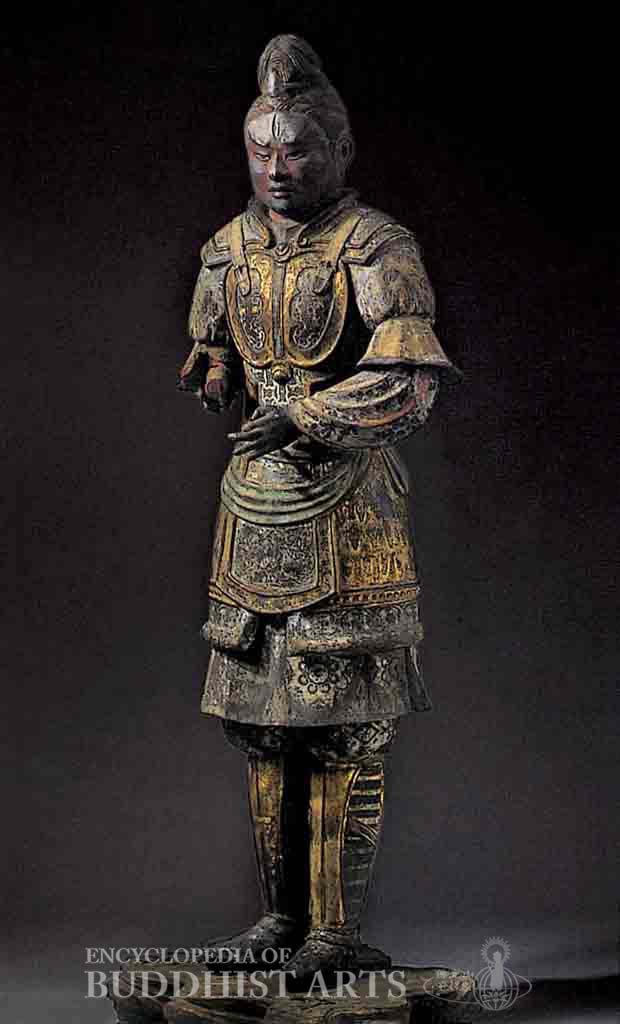
Kofukuji Temple: Eight Classes of Dharma Protectors - Kinnara
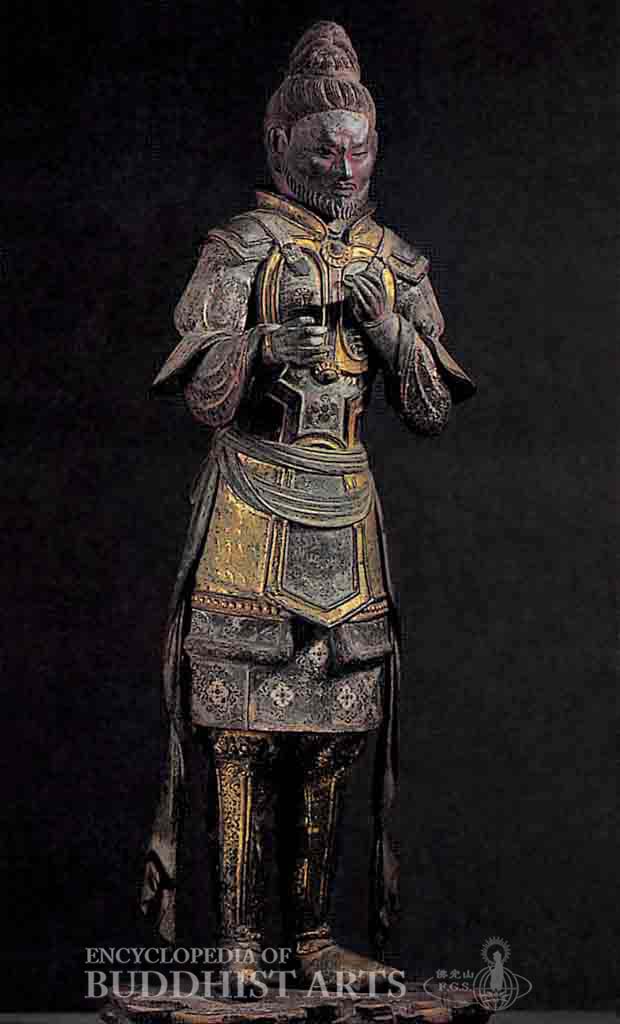
Kofukuji Temple: Eight Classes of Dharma Protectors - Mahoraga
Kofukuji Temple: Eight Classes of Dharma Protectors
JAPAN, Nara; Nara period
These sculptures represent the Eight Classes of Dharma Protectors. Apart from the Heavenly Being, of which only the head and shoulders remain, the other seven are well preserved. These statues were commissioned by Empress Komyo and sculpted by Shogun Manpuku. Originally placed in the West Golden Hall, they are now kept at the National Treasure Museum. They were listed as as National Treasures in 1951.
The eight figures include the heavenly being, asura, naga, heavenly being, asura, naga, yaksa, gandharva, mahoraga, garuda, and kinnara. The asura has three faces and six arms and is presented as a youthful figure with a frown on his face. The lower pair of arms are held in anjali (reverence) mudra and he wears only a stole and a skirt. The naga has his hands raised as if in discussion and is identified by the serpent curled about his head whose tail trails over his breastplate. The yaksa has a red-masked wrathful face and spiked topknot. The gandharva wears a lion crested helmet and looks down at the musical attributes now missing from his spread hands. The moharaga is mature and bearded; his hands are raised as if in discussion. The hybrid garuda’s falcon head glances to one side but the body is otherwise human. The kinnara has a horn on his topknot and a third eye. All the figures wear full armor apart from the asura and the heavenly being who has lost the lower part of his body and only retains his elephant-headed headdress and breast plate.
For more details, go to the Encyclopedia of Buddhist Arts: Sculpture G-M, page 538.
Cite this article:
author = Hsingyun and Youheng and Lovelock, Yann and Chou, Yuan and Huntington, Susan and Edson, Gary and Neather, Robert,
booktitle = {Encyclopedia of Buddhist Arts: Sculpture G-M},
pages = 538,
title = {{Kofukuji Temple: Eight Classes of Dharma Protectors}},
volume = 11,
year = {2016}}