
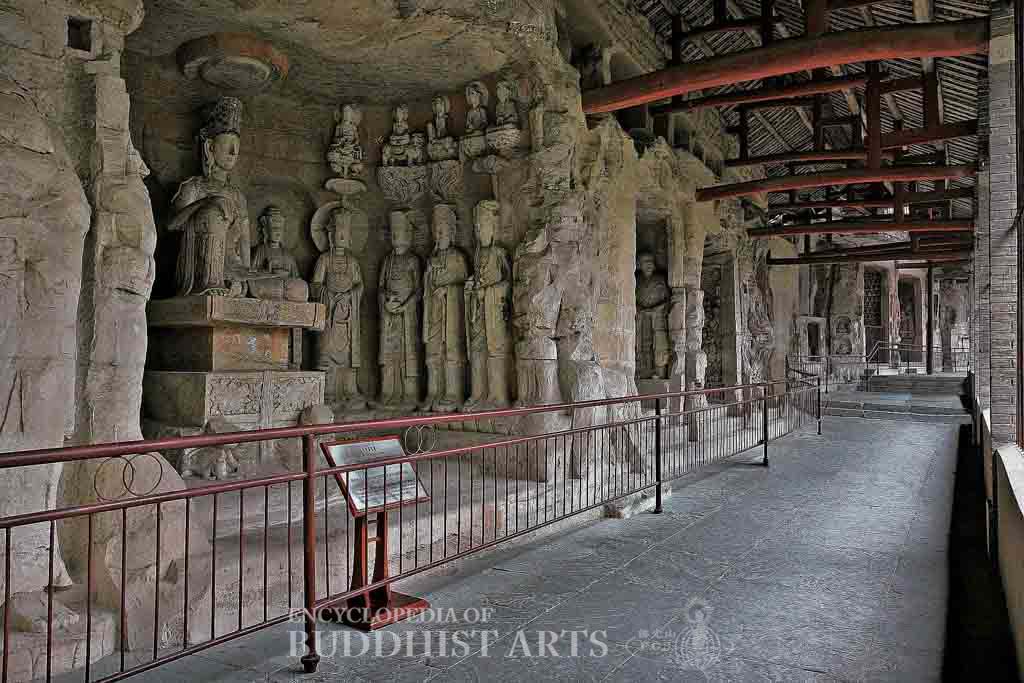
Dazu Rock Carvings Beishan: Niche 180
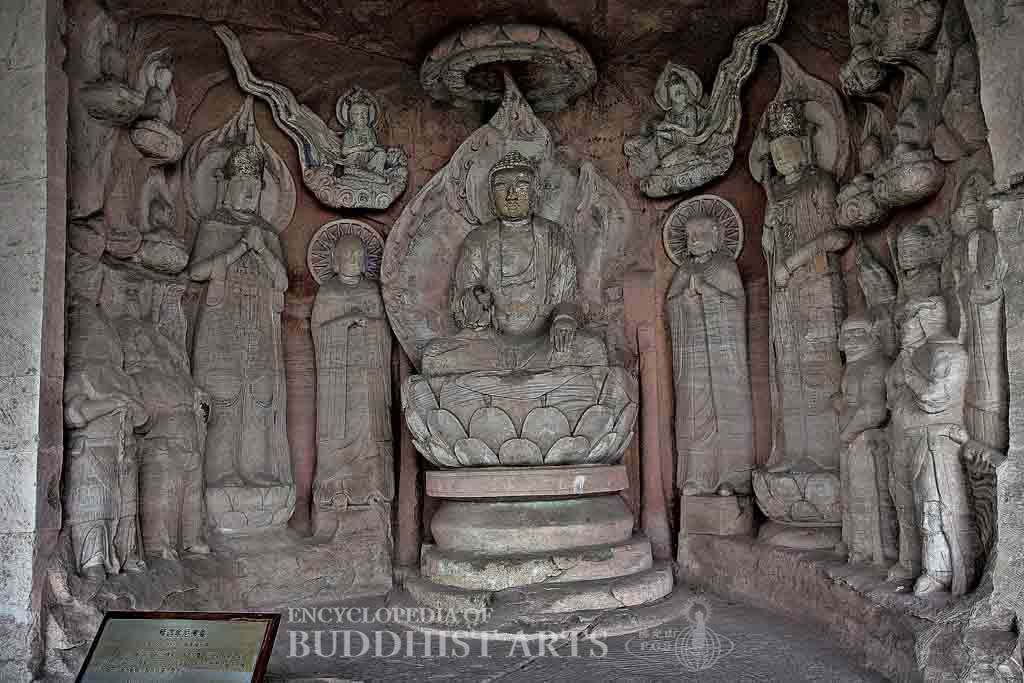
Dazu Rock Carvings Beishan: Niche 10
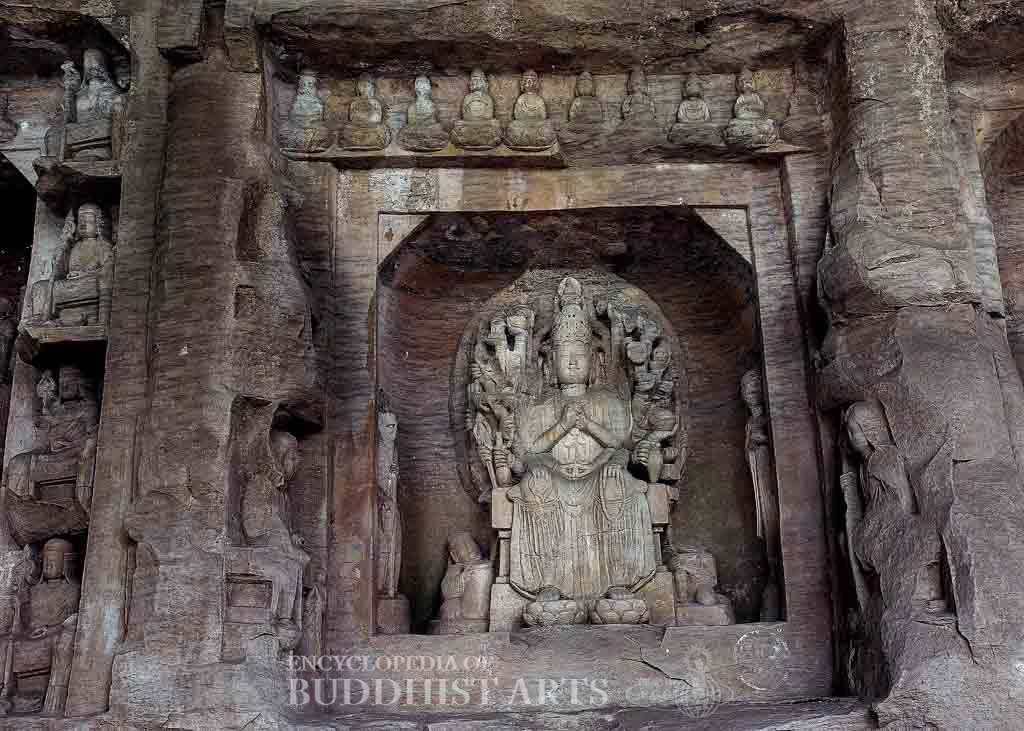
Dazu Rock Carvings Beishan: Niche 273
Dazu Rock Carvings Beishan
CHINA, Chongqing, Dazu
The Beishan (White Mountain) Rock Carvings are located 2.5 km northwest of Dazu, Chongqing. The earliest record of rock carvings on Beishan is the inscriptions on the Stele of Wei Junjing in Niche 2, which dates to 895 of the Tang dynasty. It states that Wei Junjing, the chief commander of Changzhou, Puzhou, Yuzhou and Hezhou, constructed the Yongchang Fortress in 892. Subsequent expansions and modifications took place over the next three centuries, from the Five Dynasties (907–960) to the Song dynasty (960–1279). The Beishan site is made up of numerous areas including the Buddha Bay of Beishan, which contains the most numerous carvings, as well as Yingpanpo, Baita (White Pagoda) Temple, Guanyinpo (Avalokitesvara Slope), and the Cliff of Buddha Ears. The site was listed as a National Cultural Heritage Site in 1961. As part of the Dazu Rock Carvings, it was listed as a UNESCO World Heritage Site in 1999.
The Buddha Bay at Beishan is in the shape of a crescent moon, with cliffs measuring 7 m high and 300 m long. Carved into the cliffs are 290 caves and niches, with over 4,360 sculptures. The carvings at the southern and northern sections of the site were created predominantly during the Tang dynasty (618–907) and the Five Dynasties. The middle section of the site is primarily made up of carvings from the Song dynasty.
Of the carvings dated to the Tang dynasty, the largest are Niches 3, 5, 9, and 10, and are likely the works of Wei Junjing and his subordinates. Niches 3 and 5 house statues of Vaisravana, Heavenly King of the North. Niche 5 also contains sculptures of his retinue of heavenly beings. Vaisravana was a popular figure in Sichuan during the Tang dynasty, and was regarded as a protector of armies and cities. Niche 9 contains a carving of the Thousand-Armed Avalokitesvara. Niche 10 features Sakyamuni Buddha surrounded by Mahakasyapa, Ananda, Mahasthamaprapta Bodhisattva, Avalokitesvara Bodhisattva, Heavenly Kings, and Dharma protectors. In addition, Niche 245 contains a beautiful illustration of the Amitayurdhyana Sutra, which depicts the Western Pure Land using high and low reliefs.
The caves and niches carved during the Five Dynasties are generally small to mid-sized compared with those from the Tang dynasty. These carvings showcase a style that draws on some elements of Tang works while also displaying features that would subsequently become more prominent in Song dynasty images. In particular, there was a transition from a simpler style to one that was more delicate and detailed. This transition can be observed in the portrayal of the ornaments and cloth folds. Some carvings that are particularly representative of the Five Dynasties style are found in Niches 53, 273, 279, and 281. Niche 273 features a Thousand-Armed Avalokitesvara and a male figure holding a crane and a string of prayer beads. Niches 279 and 281 both contain depictions of the Medicine Buddha’s Eastern Pure Land. In these scenes, the Medicine Buddha is flanked by Suryaprabha and Candraprabha Bodhisattvas, below whom are the Twelve Yaksa Generals.
Some of the most striking and artistically impressive sculptures in Beishan are those dating from the Song dynasty. The delicate, detailed style of these carvings contrasts starkly with the simpler style of the Tang dynasty. In particular, the Song dynasty images feature perfectly proportioned figures with long, oval faces and calm, kind expressions. The Song sculptors also appear to have been more concerned with creating realistic images. This is evident in the emphasis placed on proportionality of objects, volume, and spacing, as well as in the detailing on accessories and clothing, which are usually that of the imperial family and officials. Carvings that are representative of the Song style can be found in Caves 136, 155, and 177, as well as Niche 125.
Cave 136 is the largest and most remarkable cave in the Beishan complex. It features a revolving sutra case as the central pillar, with large statues of Buddhas and Bodhisattvas along the walls. Cave 155 contains a carving of Mahamayuri Bodhisattva with an accompanying inscription stating the date of 1126 and the names of the sculptors. This is the only Mahamayuri Bodhisattva statue in Dazu that provides such information. Cave 177 contains portrayals of Master Sengqie, the Great Sage of Sizhou, along with two other eminent monks: Master Baozhi from the Liang dynasty (502–557) and Master Wanhui from the Tang dynasty. This is the only known cave to feature all three of these figures together. Niche 125 is carved with Avalokitesvara Bodhisattva holding prayer beads; a striking aspect of this carving is the depiction of strips of fabric and ribbons that float gracefully around the figure as if lifted by a breeze.
Other noteworthy carvings in the Buddha Bay at Beishan include seven steles and six sutra pillars. These include the Stele of Wei Junjing, an important source for researching Beishan images, as well as the Stele of the Spiritual Path by Zhao Yijian and the Stele of the Classic of Filial Piety, which provide valuable information on ancient calligraphy and manuscripts.
For more details, go to the Encyclopedia of Buddhist Arts: Caves A-E, page 274.
Cite this article:
author = Hsingyun and Youheng and Johnson, Peter and Mankuang and Huntington, Susan and Edson, Gary and Neather, Robert,
booktitle = {Encyclopedia of Buddhist Arts: Caves A-E},
pages = 274,
title = {{Dazu Rock Carvings Beishan}},
volume = 5,
year = {2016}}