
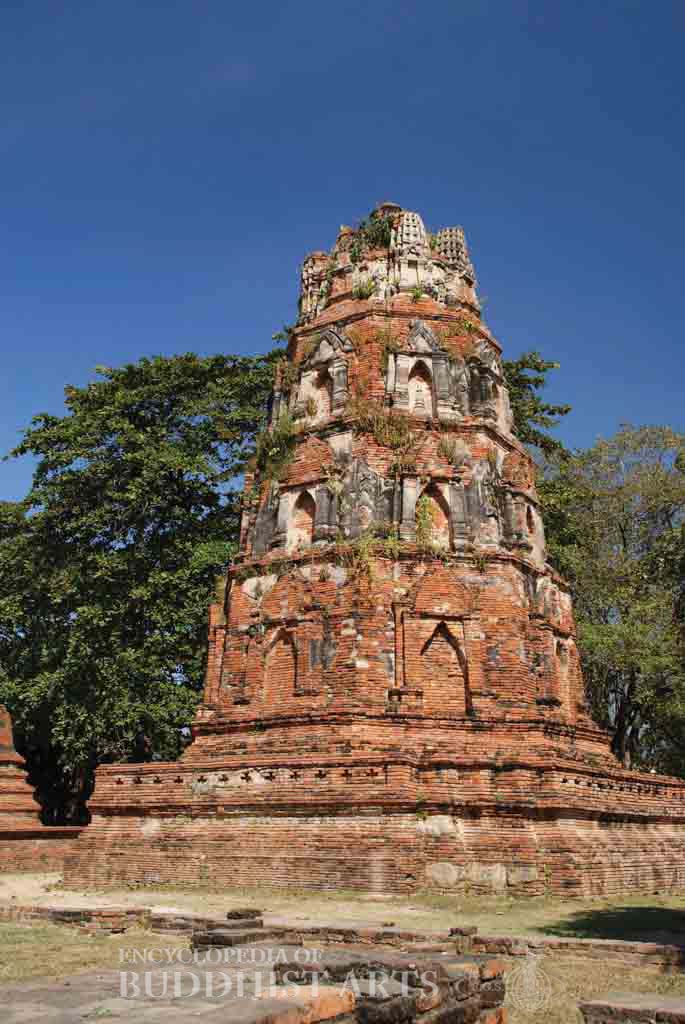
Ayutthaya: Stupa
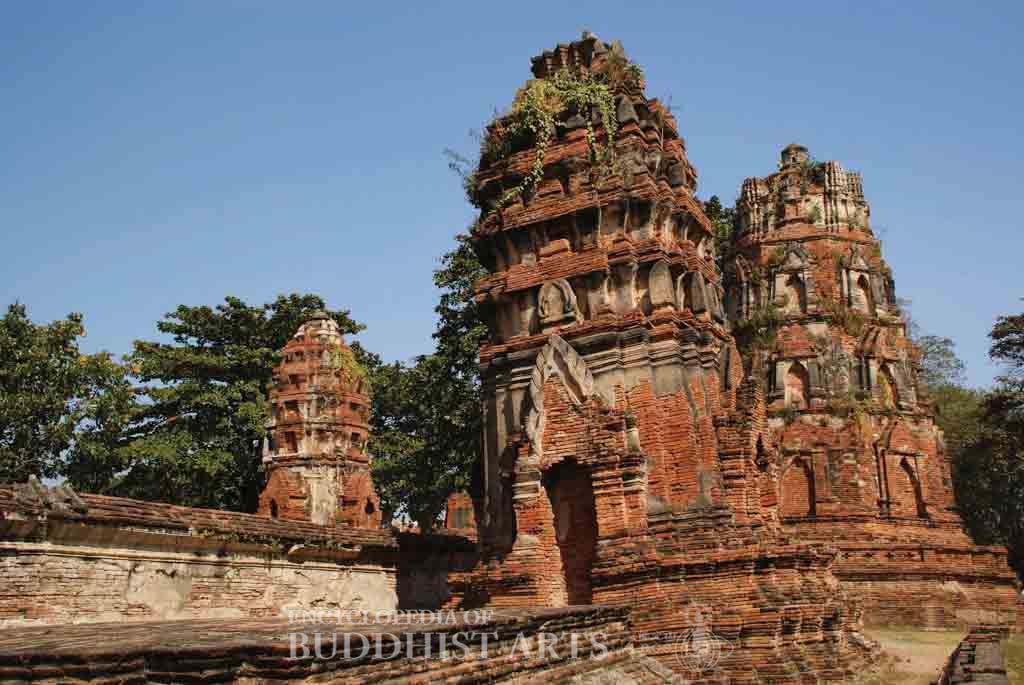
Ayutthaya: Khmer-Style Stupas

Ayutthaya
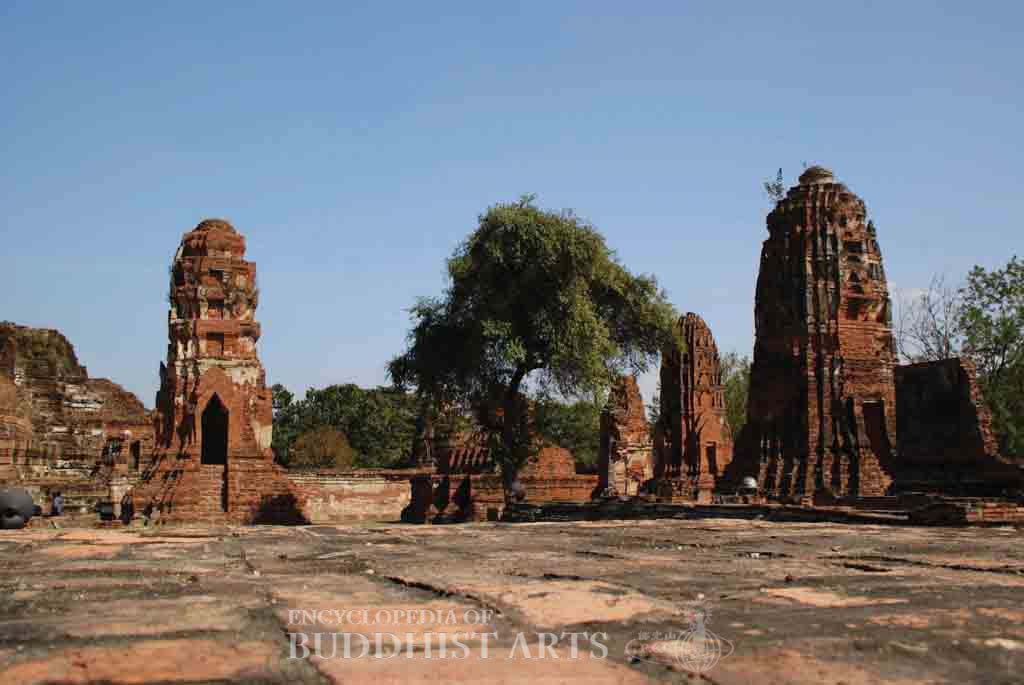
Ayutthaya: Khmer-Style Stupas

Ayutthaya: Khmer-Style Stupa
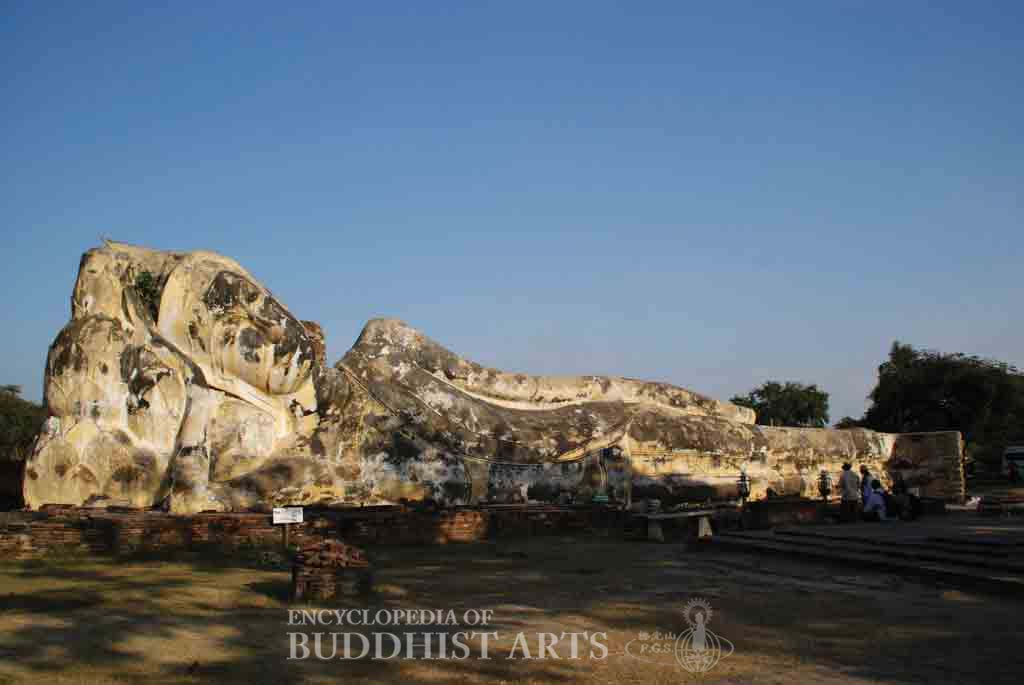
Ayutthaya: Reclining Buddha
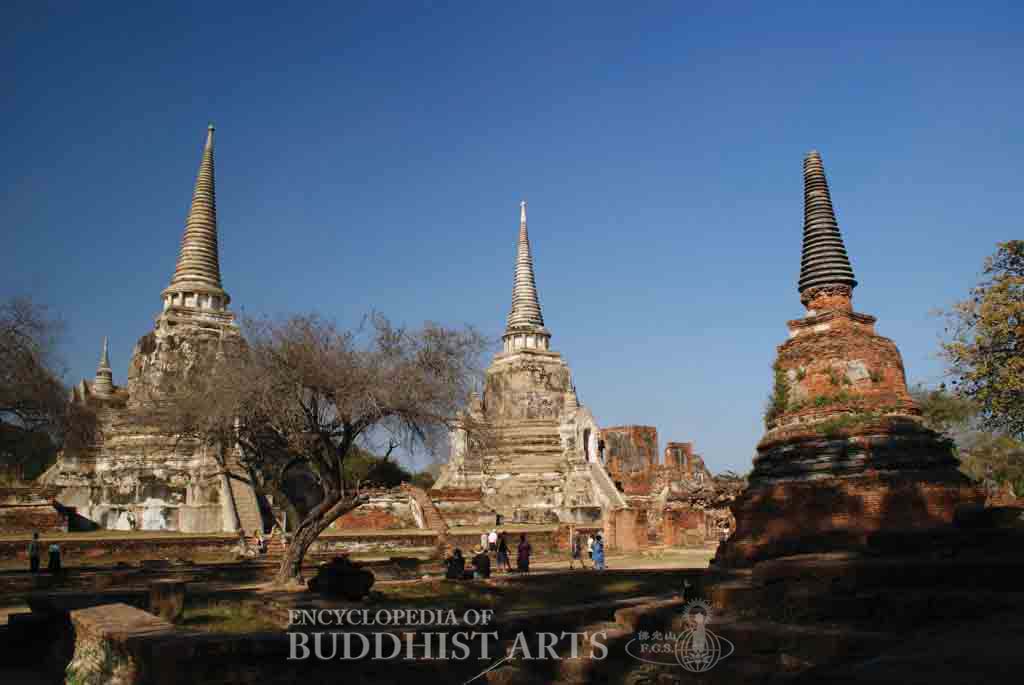
Ayutthaya: Thai-Style Stupas

Ayutthaya: Thai-Style Stupa
Ayutthaya
THAILAND, Ayutthaya
Ayutthaya means the Invincible City. It is located 76 km north of Bangkok and was founded in 807. In 1351 King Ramathibodi I (reigned 1351–1369) established the capital of his kingdom at Ayutthaya, which became the second Siamese capital after Sukhothai. It was the capital of the Ayutthaya Kingdom for more than 400 years from 1350 until 1767. Being faithful Buddhists, successive generations of kings undertook the construction of numerous temples, as a result Ayutthaya became a key Buddhist city and Buddhism became deeply embedded in Thai culture. In 1767 the Burmese army destroyed the city and practically nothing remained, except for a few ruins. The Historic City of Ayutthaya was listed as a UNESCO World Cultural Heritage Site in 1991.
The city is managed as a historical park and covers an area of approximately 32 sq km. It is surrounded by the Chao Phraya, Pa Sak, and Lop Buri Rivers. Canals are found throughout the city and the regular floods supply the plains with fertile silt for agricultural production. Its location at a river bend and junction also gave the city a geographical advantage as an important trading center, which gave rise to a prosperous economy. The city provides a glimpse of the rich environment of the old capital before it was moved to Bangkok. While most of the Buddhist temples are severely damaged, the stupas are relatively intact. The well-known temples include Wat Mahathat, Wat Phra Sri Sanphet, Wat Yai Chai Mongkon, Wat Ratburana, Wat Phra Ram, and Wat Chaiwatthanaram.
For more details, go to the Encyclopedia of Buddhist Arts: Architecture A-F, page 25.
Cite this article:
author = Hsingyun and Youheng and Johnson, Peter and Mankuang and Lancaster, Lewis,
booktitle = {Encyclopedia of Buddhist Arts: Architecture A-F},
pages = 25,
title = {{Ayutthaya}},
volume = 1,
year = {2016}}