
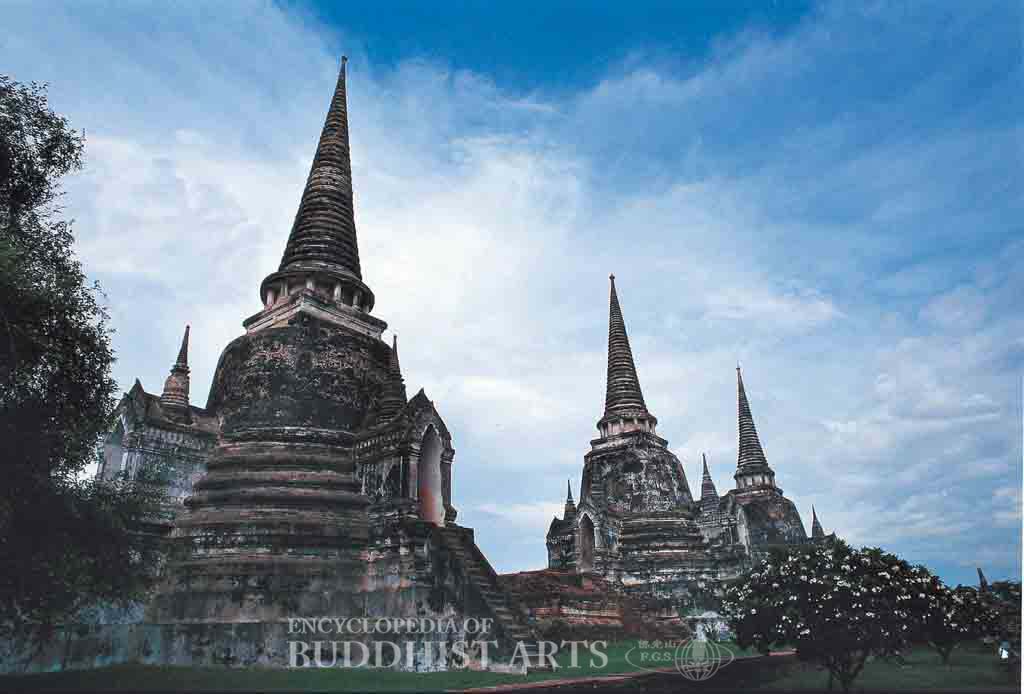
Wat Phra Sri Sanphet
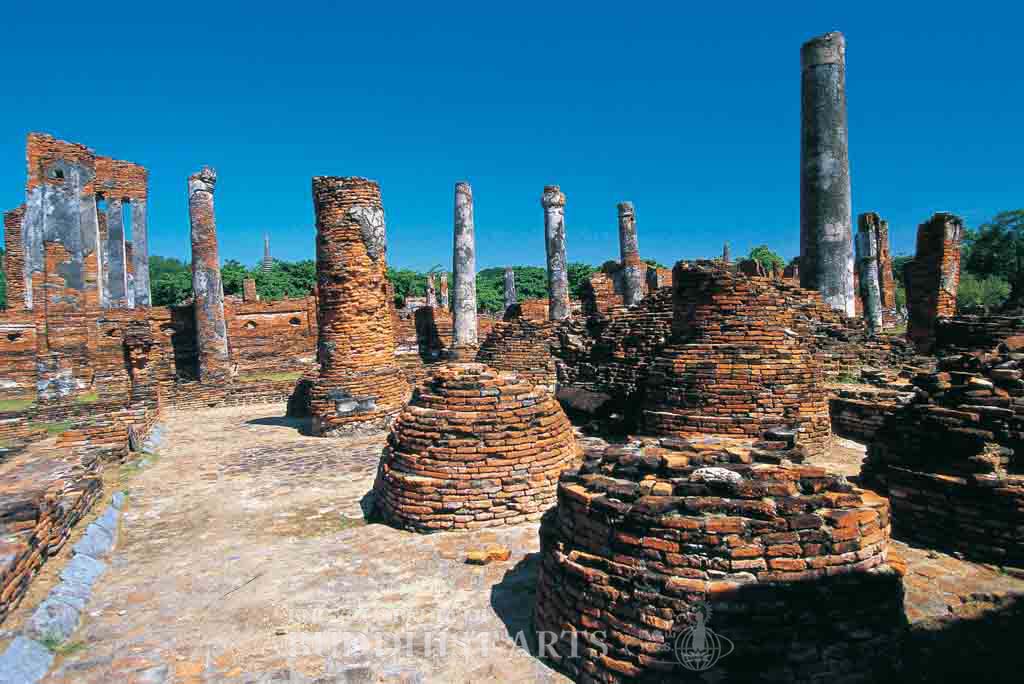
Wat Phra Sri Sanphet
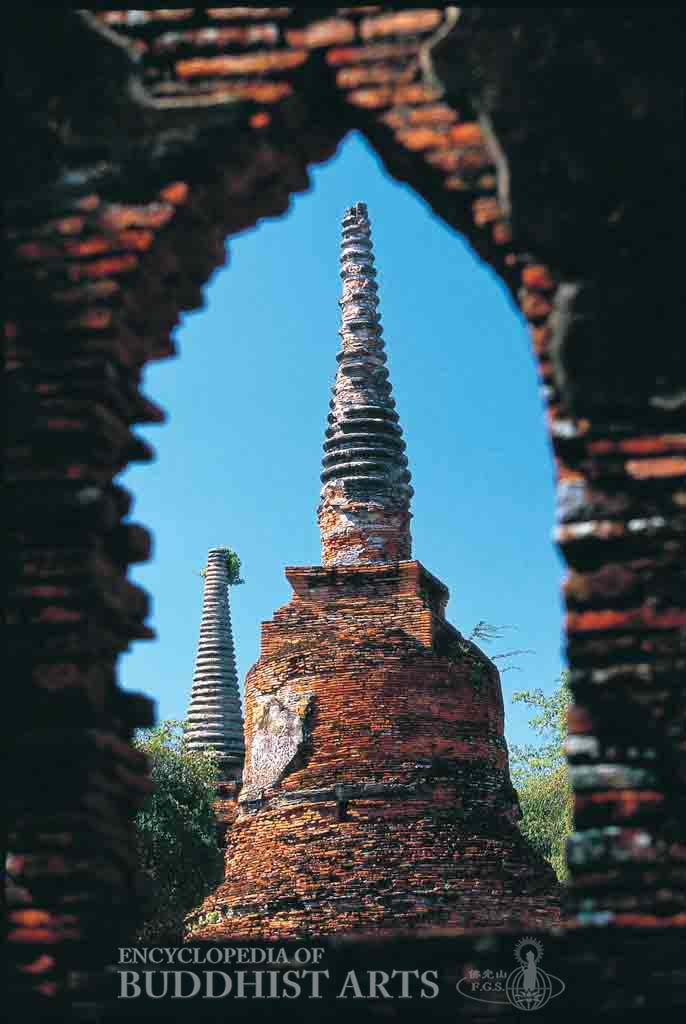
Wat Phra Sri Sanphet
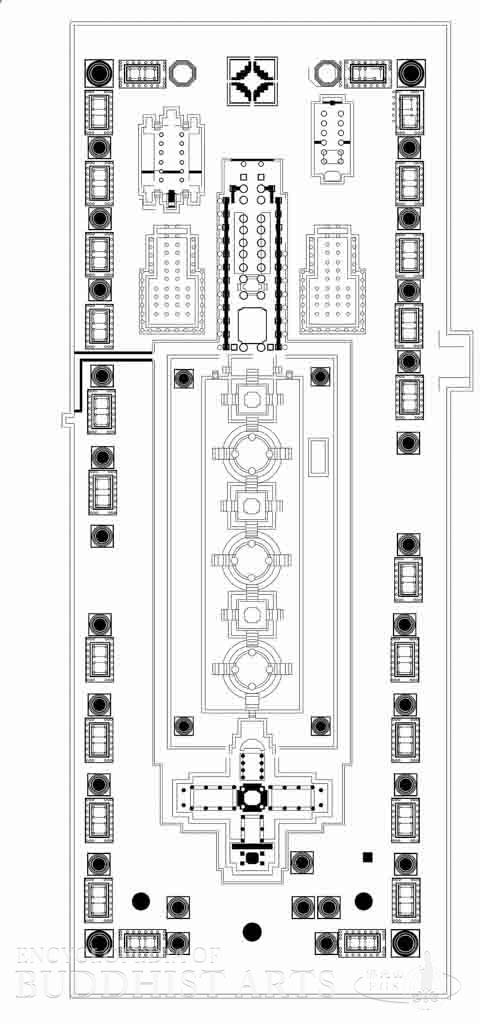
Wat Phra Sri Sanphet (site layout)
Wat Phra Sri Sanphet
THAILAND, Ayutthaya
Wat Phra Sri Sanphet means the Temple of the Sri Sanphet Buddha. It was built on the site of a royal palace and is one of the most important temples of the Ayutthaya period (circa 1350–1767). The temple was constructed by King Ramathibodi I (reigned 1351–1369) in the middle of the 14th century. It was expanded by King Ramathibodi II (1491–1529) by building two large Thai-style stupas and the Buddha hall, which housed a 16 m high gilded standing Buddha statue called the Sri Sanphet Buddha. After the statue was consecrated, its reputation spread far and wide, as a consequence of which the name of the temple was changed to Wat Phra Sri Sanphet. A third large Thai-style stupa was built during the reign of King Borommaracha IV (reigned 1529 –1534). When the Burmese army invaded Ayutthaya in 1767, the temple was severely damaged. Together with the Historic City of Ayutthaya, it was listed as a UNESCO World Heritage Site in 1991.
The principal buildings in this temple included the three main stupas and pavilions, Buddha hall, three ancillary halls, and ordination hall. The three stupas, interspersed with three pavilions, were aligned in a row from east to west housing the remains of King Ramathibodi II’s father, of his brother, and of King Ramathibodi II himself. The stupas and pavilions were enclosed by a gallery. To the east of the stupas there was the Buddha hall with the ordination hall and two other halls on each side. One more cruciform-shaped hall was located to the west side of the main stupas.
The three main stupas were restored in 1957. They stand on a round, multi-layer base. Their bodies are divided into two sections: the lower part consists of circular moldings, while the upper part is in the shape of a bell. There are projecting porticos at the four cardinal points. On top of the square harmika there is a ring of small columns surrounding the base of the spire. The spire is very high and consists of a series of stacked rings rising steeply towards the finial.
A number of smaller stupas are extant and the remains of many other buildings are visible on this large temple complex.
For more details, go to the Encyclopedia of Buddhist Arts: Architecture T-Z, page 1237.
Cite this article:
author = Hsingyun and Youheng and Johnson, Peter and Mankuang and Lancaster, Lewis,
booktitle = {Encyclopedia of Buddhist Arts: Architecture T-Z},
pages = 1237,
title = {{Wat Phra Sri Sanphet}},
volume = 4,
year = {2016}}