
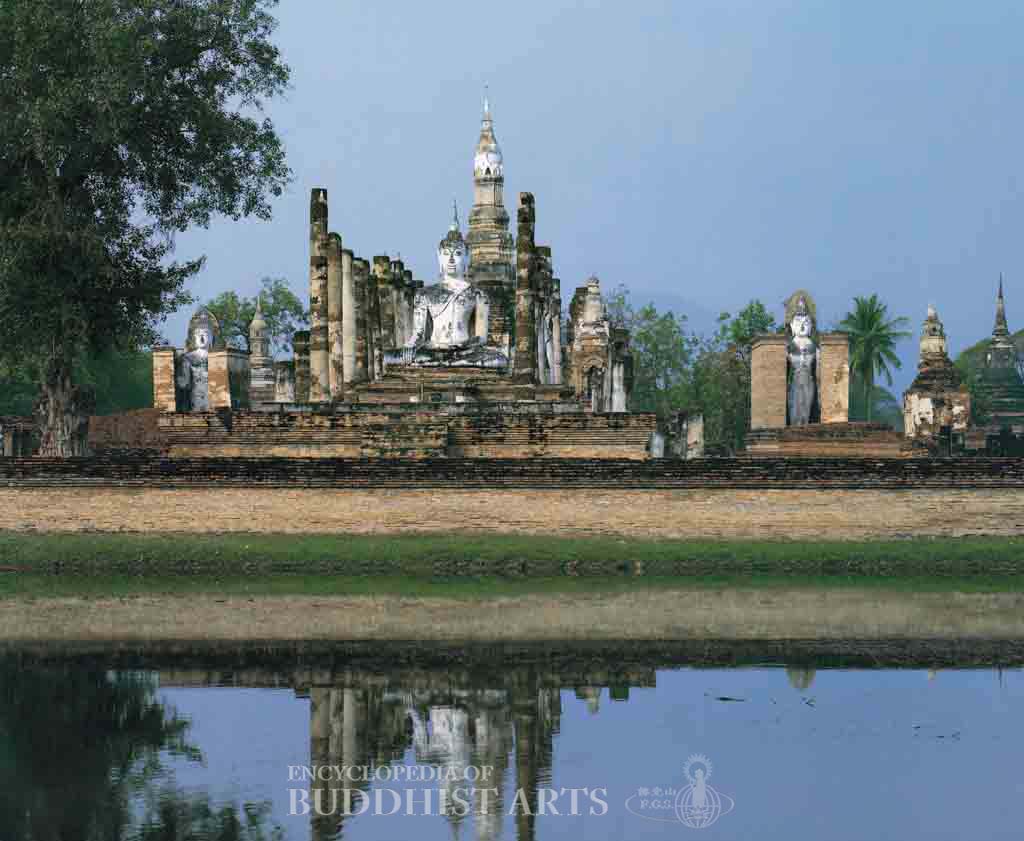
Sukhothai
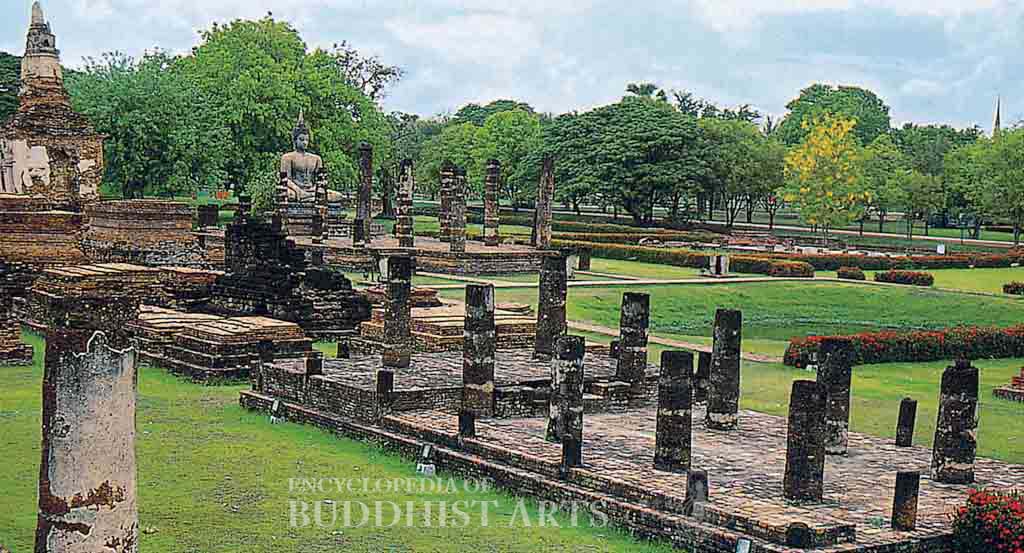
Sukhothai
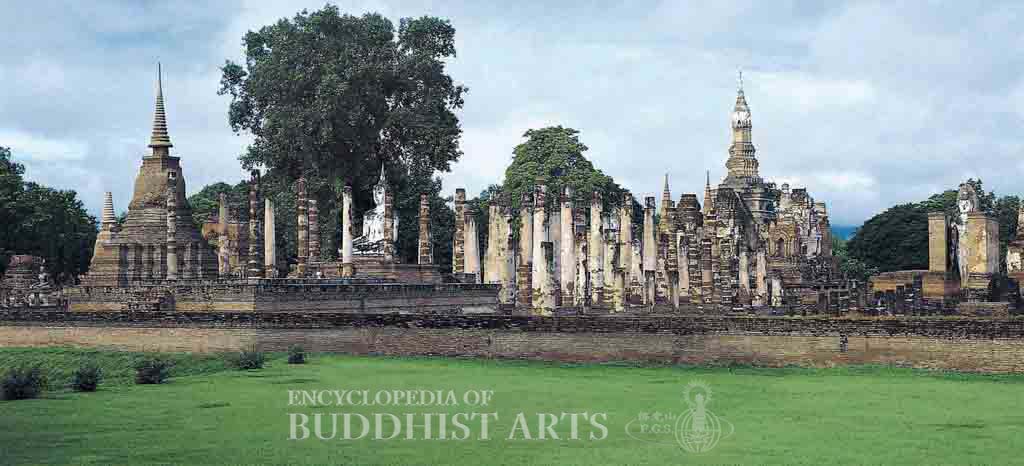
Sukhothai

Sukhothai: Reliefs
Sukhothai
THAILAND, Sukhothai
Sukhothai means Dawn of Happiness. The site is located approximately 440 km north of Bangkok, on the banks of the Yom River. It was the first Thai capital, a place which witnessed the birth of Thai art, script, and the legal system. It is the oldest and one of the most historically and culturally significant cities in Thailand.
In the 11th and 12th centuries, the Khmer Empire (circa 9th–15th century) was extensive and covered present day northern Thailand, including Sukhothai, which was a colony and northern fort. In the first half of the 13th century, two allied Thai leaders overthrew Khmer rule and established the first independent Thai kingdom of Sukhothai (circa 1238–1438), with the city of Sukhothai as its capital. The third king, Ram Khamhaeng (reigned circa 1279–1298), was a devoted Buddhist who established a place for the ordination of monastics in the city. He sent devotees to Sri Lanka and they subsequently returned to teach the Dharma, setting examples themselves by taking the precepts and upholding the practice.
In 1347, King Lithai (reigned circa 1346–1368) ascended the throne. He requested to be ordained by a senior monk from Sri Lanka and became the first Thai king to renounce. His work Traiphuum Phra Ruang is Thailand’s oldest Buddhist literary work. During his reign he built many public temples, the scale of which can be seen in the remains of the ancient city. In 1438 the Sukhothai Kingdom was annexed by the Ayutthaya Kingdom (circa 1350–1767) and the city gradually declined. In 1977 the Thai government, with funding and professional help from UNESCO, gradually restored the ancient city of Sukhothai and revived its former glory. It was listed as a UNESCO World Heritage Site in 1991.
The historic park has an area of 70 sq km, which includes the ancient city as well as a 5 km periphery. There are close to a hundred religious buildings and over a thousand Buddha statues on the site. The best known temples include Wat Mahathat, Wat Phra Phai Luang, Wat Sri Sawai, and Wat Sri Chum. The inner city of Sukhothai, measuring 1.8 km by 1.4 km, is enclosed by three concentric earth ramparts and separated by two moats. Within the walls, there are four large ponds and over 20 temples. The most significant architectural features in Sukhothai are the stupas crowned with lotus bud spires. In sculpture, the most distinctive figure is that of the walking Buddha with a flame-like usnisa.
For more details, go to the Encyclopedia of Buddhist Arts: Architecture M-S, page 1060.
Cite this article:
author = Hsingyun and Youheng and Johnson, Peter and Mankuang and Lancaster, Lewis,
booktitle = {Encyclopedia of Buddhist Arts: Architecture M-S},
pages = 1060,
title = {{Sukhothai}},
volume = 3,
year = {2016}}