
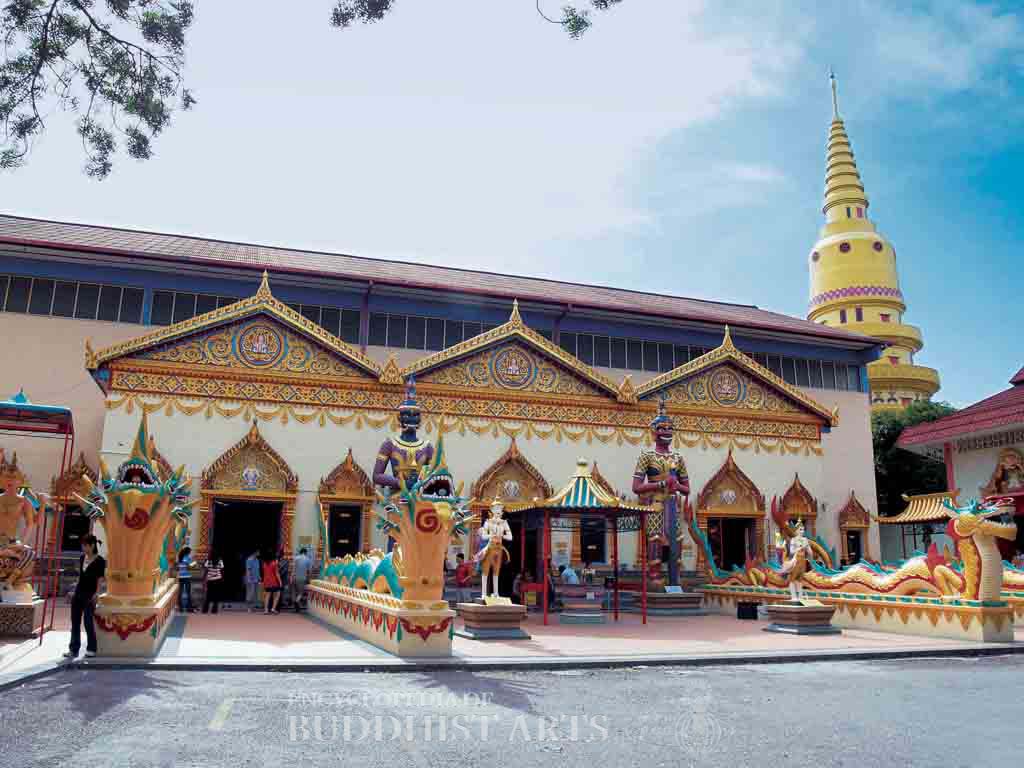
Wat Chaiyamangkalaram
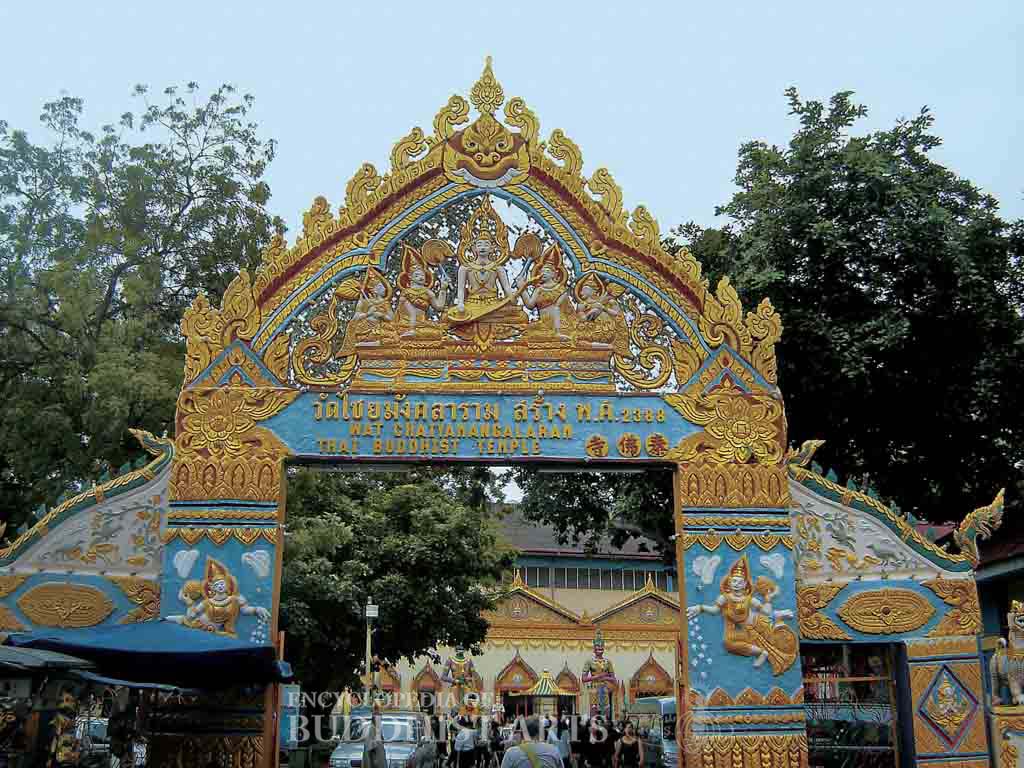
Wat Chaiyamangkalaram: Main Temple Gate
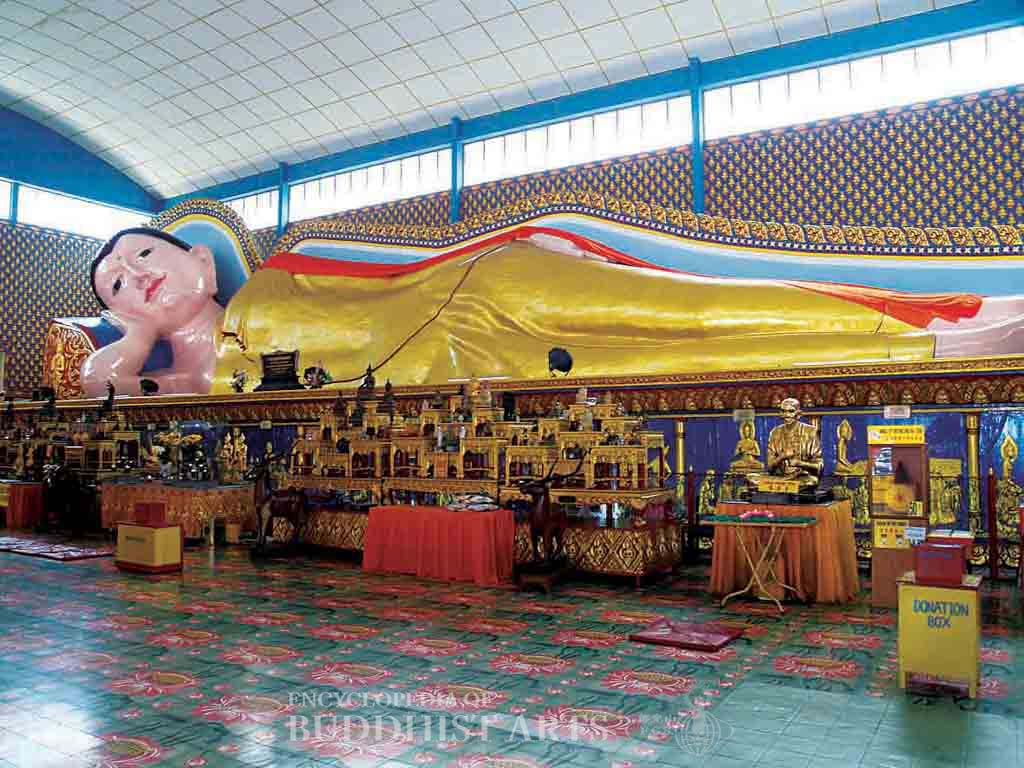
Wat Chaiyamangkalaram: Main Hall - Reclining Buddha
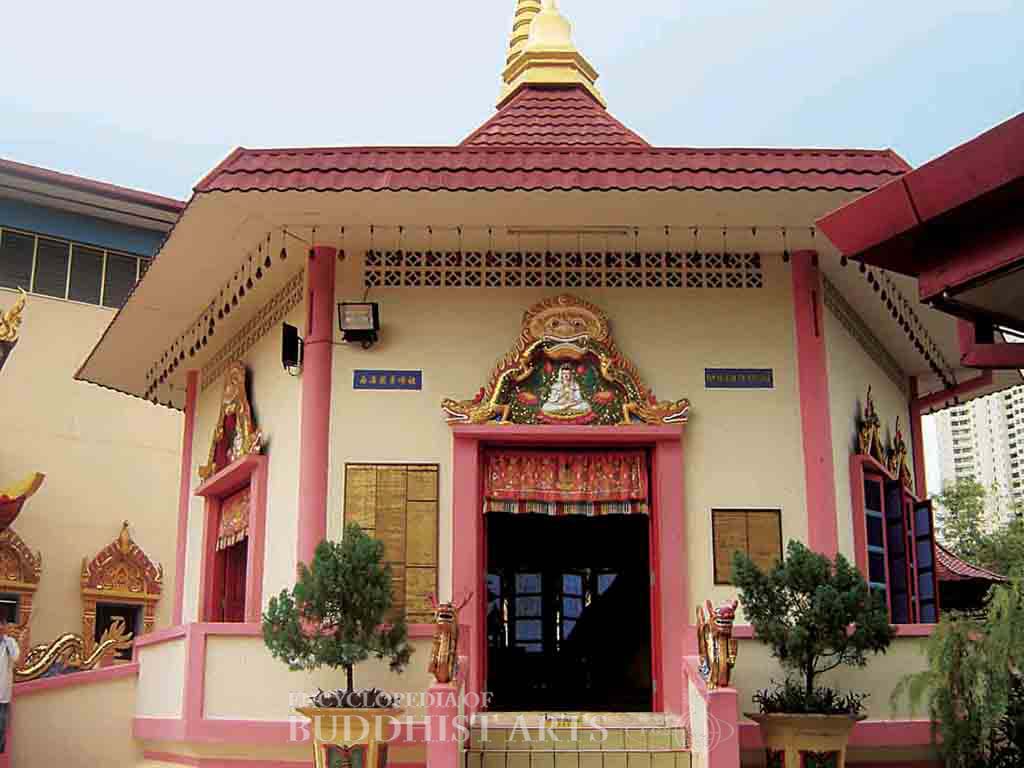
Wat Chaiyamangkalaram: Avalokitesvara Hall
Wat Chaiyamangkalaram
MALAYSIA, Penang, George Town
The temple stands opposite Dharmikarama Burmese Buddhist Temple and was built in 1845 on a 2 ha plot granted by British Queen Victoria (reigned 1837–1901). In 1967, King Rama IX (reigned 1946–present) of Thailand made a pilgrimage to the temple and expressed his wish that a statue of the reclining Buddha be enshrined there. The 33 m long reclining Buddha statue was constructed in the main hall and inaugurated in 1971. Wat Chaiyamangkalaram is thus also called the Temple of the Reclining Buddha.
The principal buildings are largely in Thai style and include the main temple gate, main hall, Avalokitesvara Hall, meditation hall, and stupa. The columns of the main temple gate are sculpted with flowers and apsaras. The lintel of the gate is inscribed in Thai, English, and Chinese. The intricately carved triangular tympanum features a group of heavenly musicians sitting on a Sumeru platform and framed by leafy decorations, with a kirtimukha at the apex. The main hall, also known as Reclining Buddha Hall, is narrow and rectangular. On its facade there are three highly decorated pediments, at the center of which there is a relief of the Buddha with palms joined. On each side of the entrance to the main hall there is a Dharma protector and two highly stylized nagas with heads held high. The Avalokitesvara Hall is a hexagonal, single-story pavilion with a spire painted in gold. Pairs of stylized nagas line the tympanum with a kirtimukha at the apex and a seated Buddha in the center. Nagas also run down the walls lining the steps. Such nagas are common features of traditional Thai Buddhist temples. A statue of Avalokitesvara Bodhisattva in traditional Chinese style is enshrined within the hall. The gold-painted stupa is approximately 50 m high and is located at the back of the temple. The temple’s buildings and artwork are predominantly Thai but are also influenced by Chinese and Burmese art and architecture.
For more details, go to the Encyclopedia of Buddhist Arts: Architecture T-Z, page 1189.
Cite this article:
author = Hsingyun and Youheng and Johnson, Peter and Mankuang and Lancaster, Lewis,
booktitle = {Encyclopedia of Buddhist Arts: Architecture T-Z},
pages = 1189,
title = {{Wat Chaiyamangkalaram}},
volume = 4,
year = {2016}}