
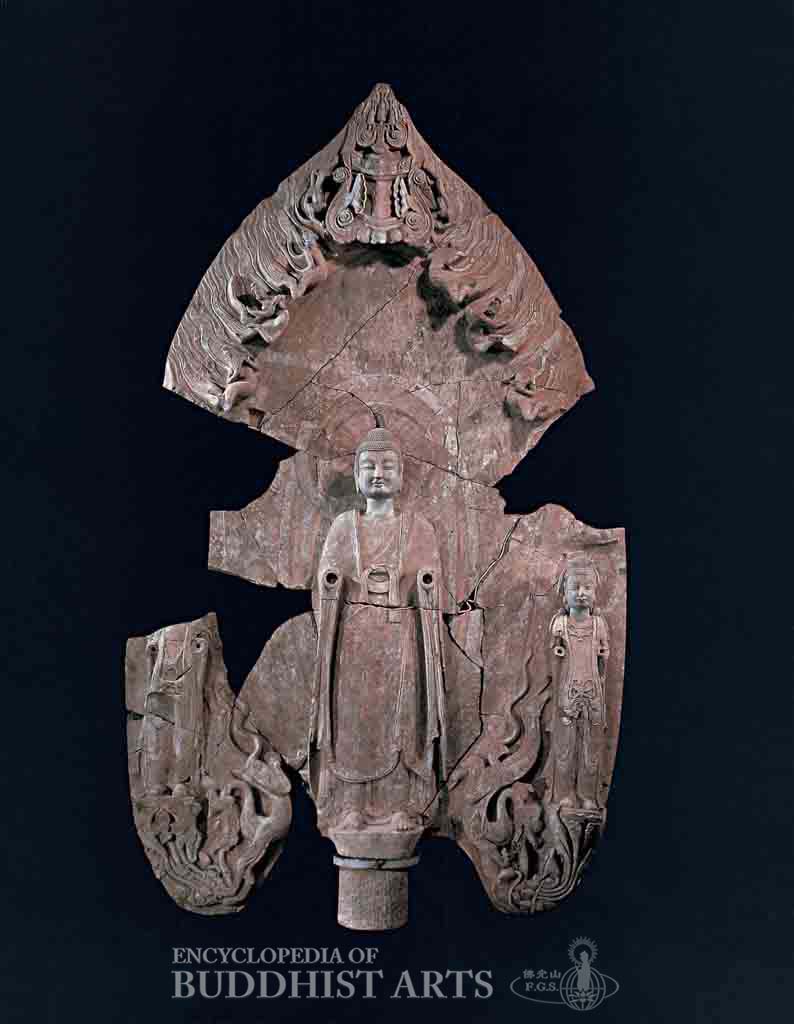
Longxing Temple Sculptures: Buddha Triad; Eastern Wei dynasty; Limestone
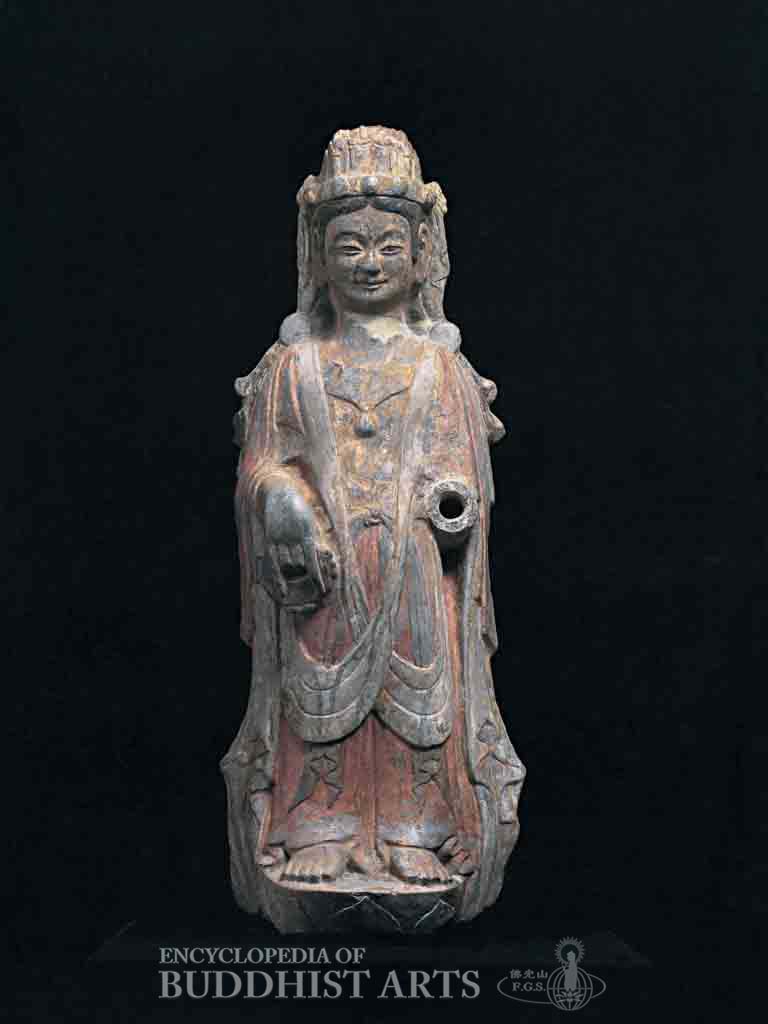
Longxing Temple Sculptures: Standing Bodhisattva; Northern Wei to Eastern Wei dynasty; Limestone
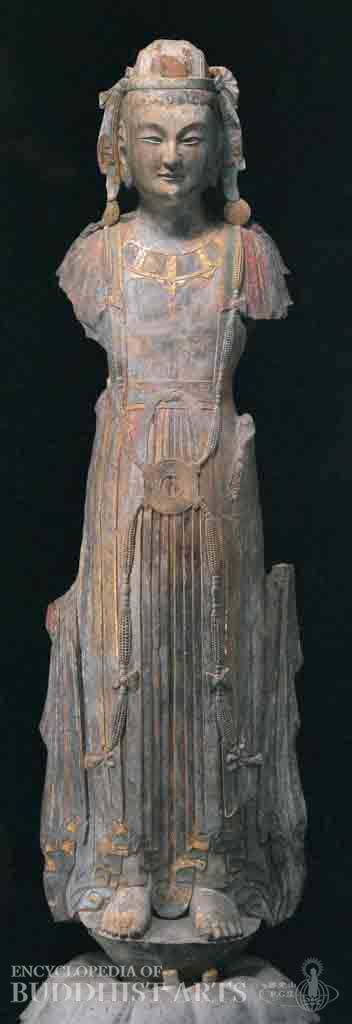
Longxing Temple Sculptures: Standing Bodhisattva; Eastern Wei dynasty; Limestone
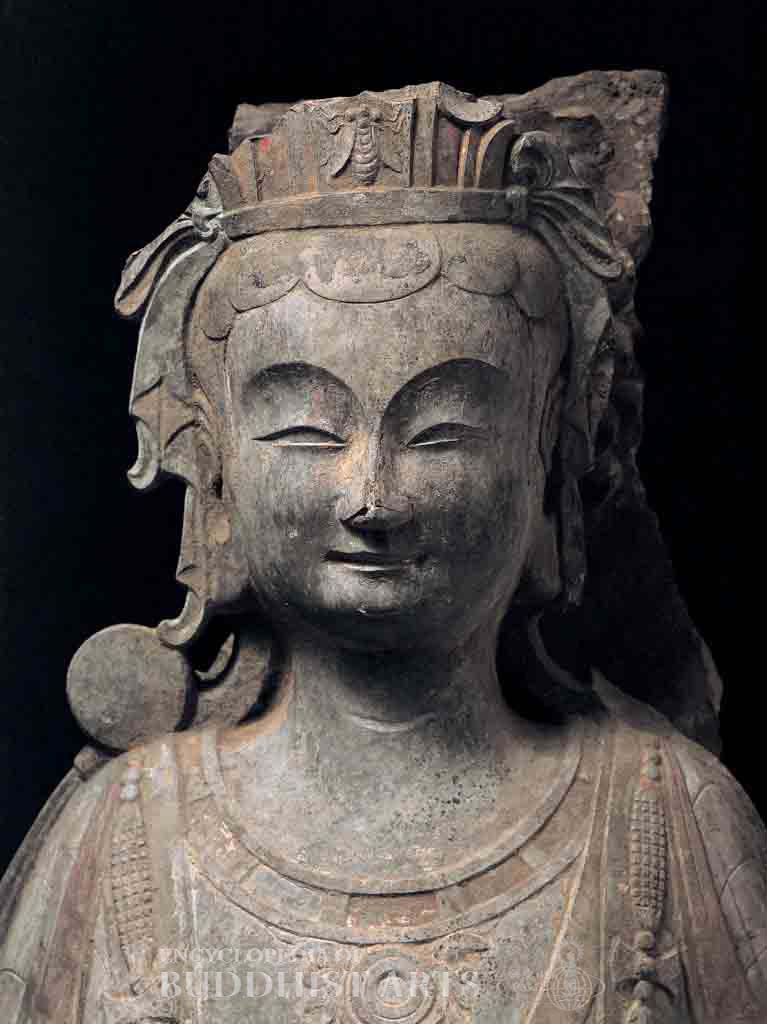
Longxing Temple Sculptures: Standing Bodhisattva (detail); Northern Wei to Eastern Wei dynasty; Limestone
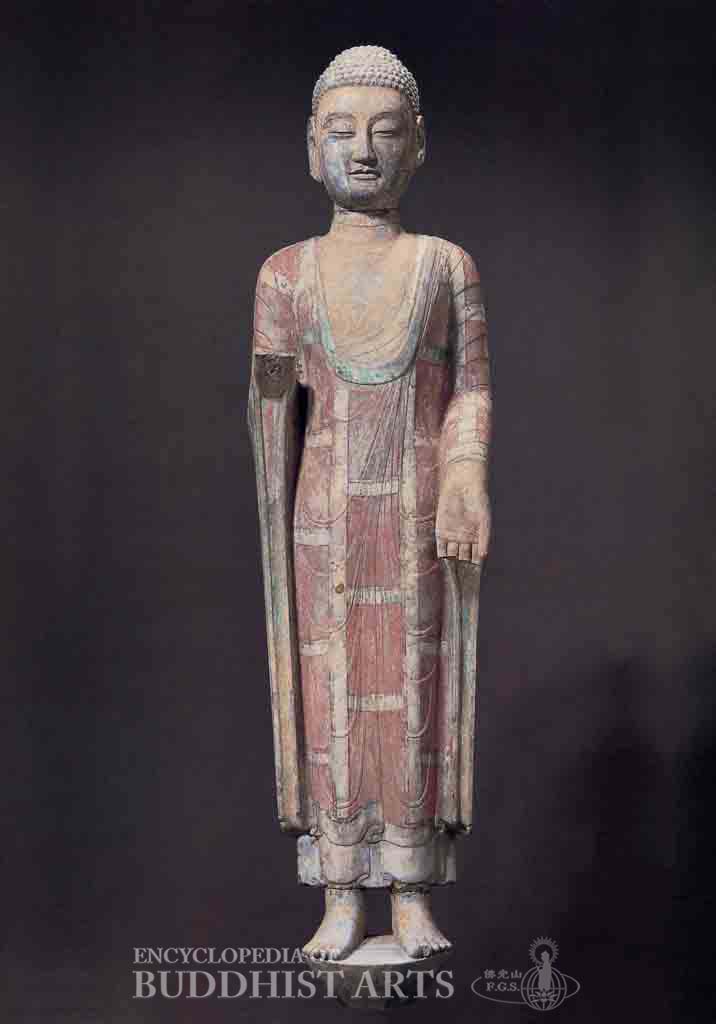
Longxing Temple Sculptures: Standing Buddha; Northern Qi dynasty; Limestone
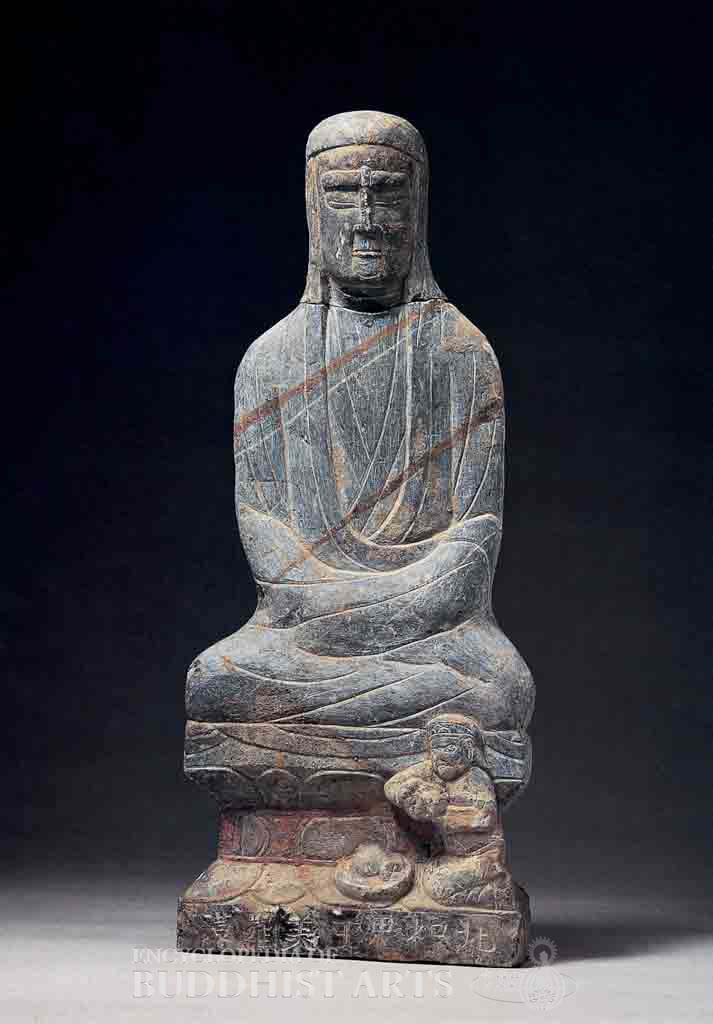
Longxing Temple Sculptures: Arhat; Northern Song dynasty; Limestone
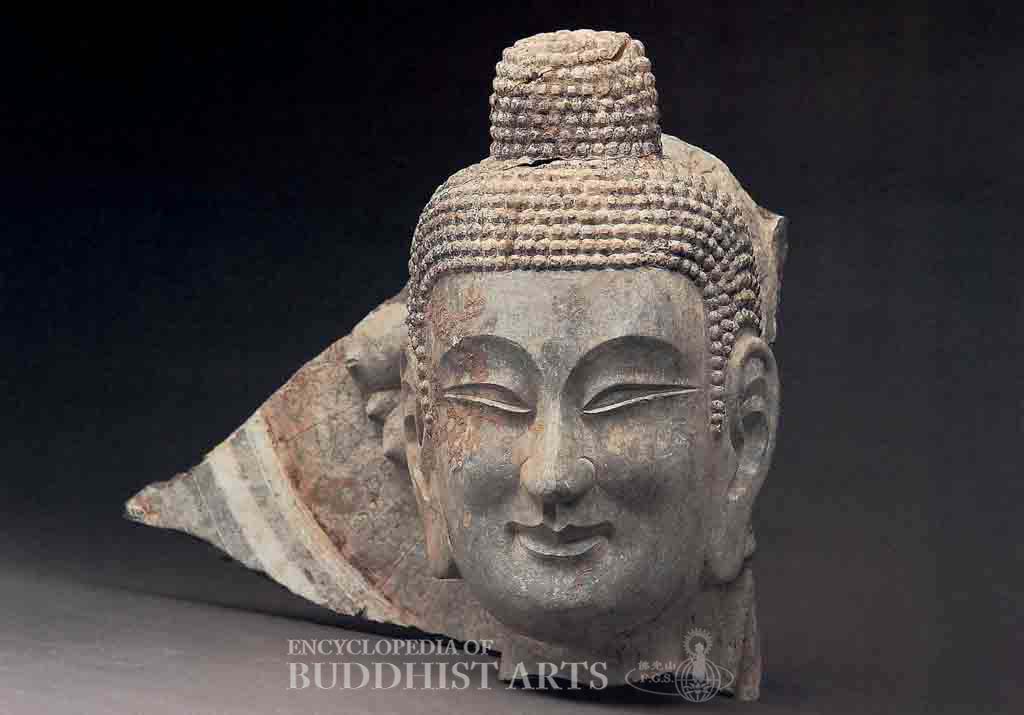
Longxing Temple Sculptures: Head of a Buddha; Northern Wei to Eastern Wei dynasty; Limestone
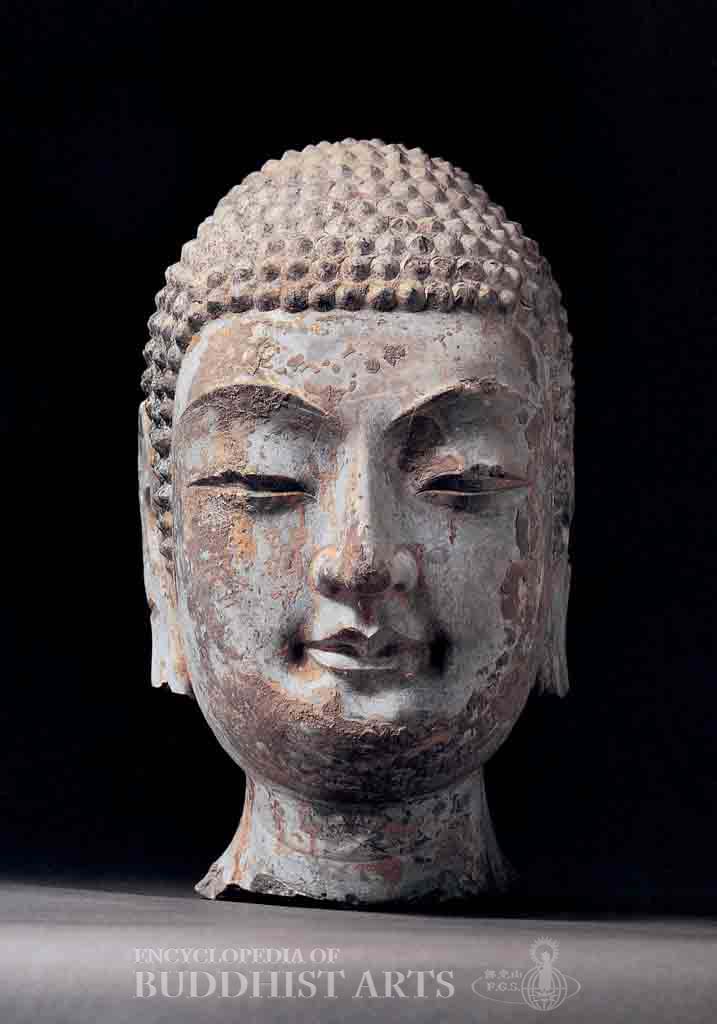
Longxing Temple Sculptures: Head of a Buddha; Northern Qi dynasty; Limestone
Longxing Temple Sculptures
CHINA, Shandong, Qingzhou
A large number of sculptures were unearthed from a pit at the ruins of Longxing Temple in Qingzhou in 1996. The finds were deposited in a particular order, mainly in three rows, with the more complete figures in the middle. Single heads were placed against the walls, of which there were 144 Buddha heads, 46 Bodhisattva heads, 36 heads with partially remaining bodies, and 10 other heads. There were over 200 damaged body parts, many of them clearly dated with inscriptions. The earliest pieces were three Maitreya figures dated to 529 of the Northern Wei dynasty, while the latest was 1026 of the Northern Song dynasty, a span of almost 500 years. Most came from the Northern Wei (386–534) and Northern Qi (550–577) dynasties, and were made from limestone, marble, and granite, with a few of earthernware, metal, clay, or wood.
Most sculptures are of Buddhas and Bodhisattvas, with a few Arhats, Heavenly Kings and donors. The sculptures are in difference forms, with back screens, on steles, with the majority being standalone figures. Those with back screens vary greatly in height, often with inclusions such as Buddha insets, apsaras, or pagodas. Mandorlas are usually decorated with flame-like patterns, with a bottom that includes dragons with lotus stems, lotus leaves, and lotus flowers extending from their mouths. Some Vairocana Buddhas from the Northern Qi dynasty have images of people on their monastic robes. The majority of the sculptures retain some paint or gilding.
Most statues from the Northern Wei are slim in figure and garbed in thick monastic robes that cover both shoulders, paired with inner garments that are tied at the chest. Between the late Northern Wei and Eastern Wei (534–550) periods, the same style remains, albeit with thinner-looking garments on fuller bodies. The Buddha sculptures of the Northern Qi show figures wearing light and close-fitting monastic robes that left the right shoulder bare. Bodhisattva statues from the Northern Wei to Eastern Wei dynasty were dressed plainly compared to the more elaborate adornments of the Northern Qi dynasty.
For more details, go to the Encyclopedia of Buddhist Arts: Sculpture G-M, page 624.
Cite this article:
author = Hsingyun and Youheng and Lovelock, Yann and Chou, Yuan and Huntington, Susan and Edson, Gary and Neather, Robert,
booktitle = {Encyclopedia of Buddhist Arts: Sculpture G-M},
pages = 624,
title = {{Longxing Temple Sculptures}},
volume = 11,
year = {2016}}