
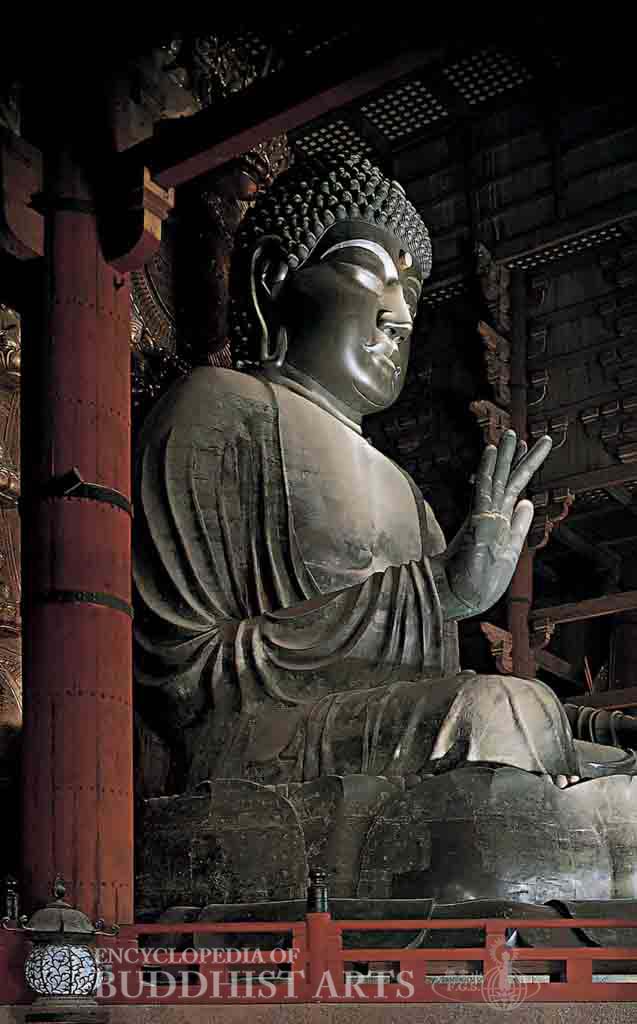
Todaiji Temple Golden Hall: Vairocana Buddha
Gilt bronze
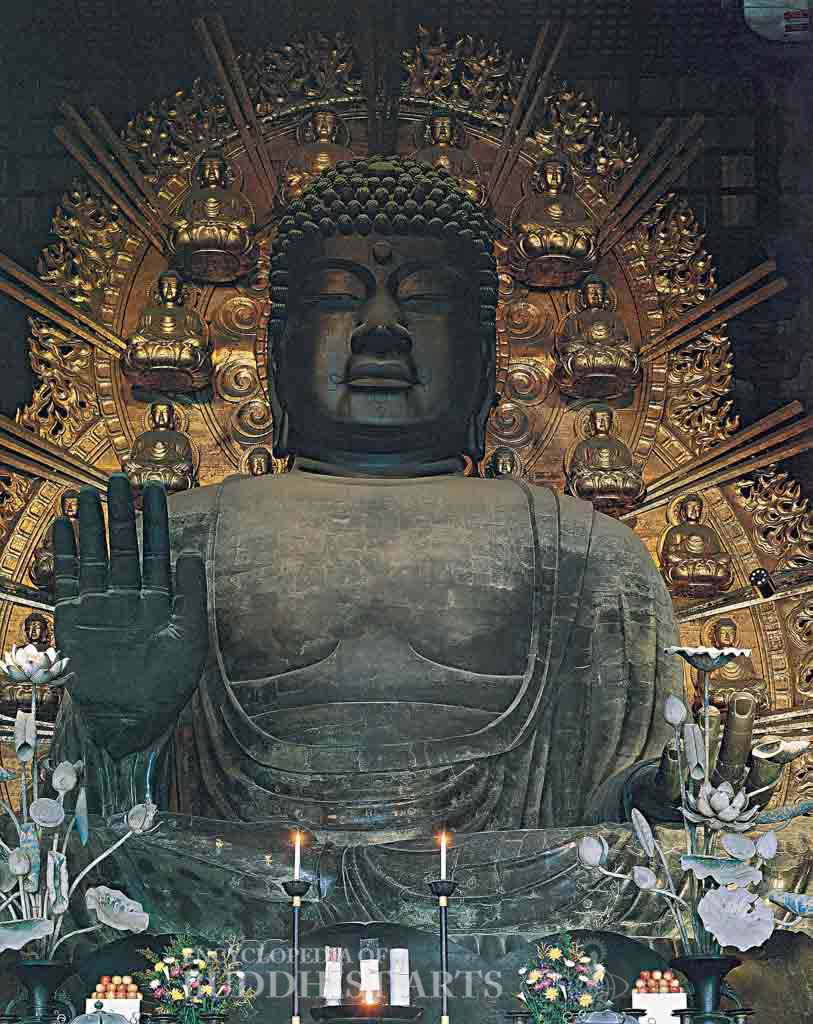
Todaiji Temple Golden Hall: Vairocana Buddha
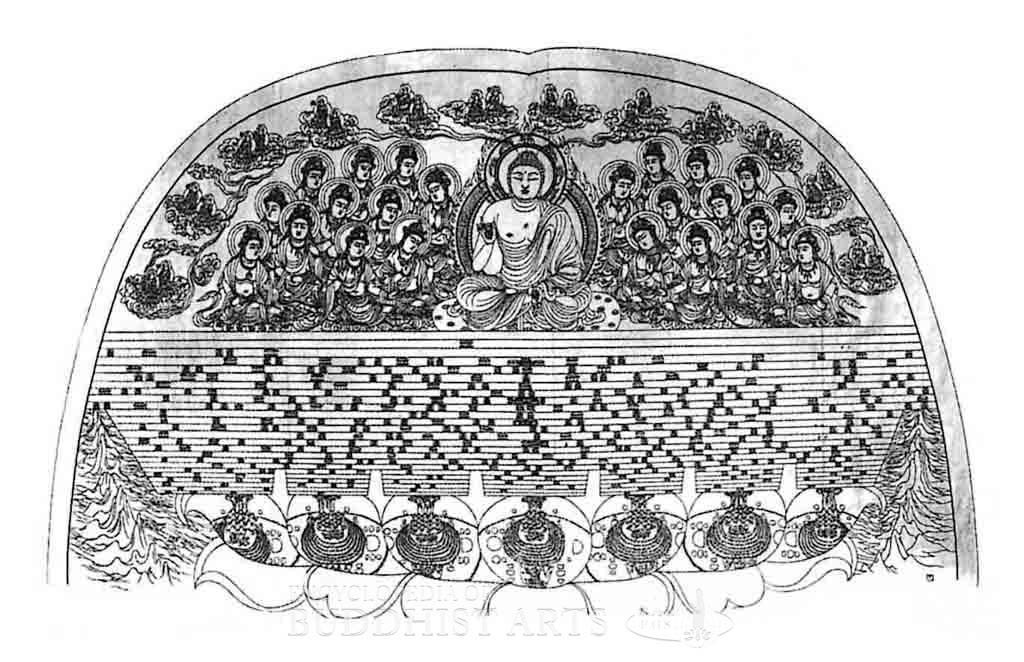
Todaiji Temple Golden Hall: Vairocana Buddha - Engraving of Petal from Lotus Throne
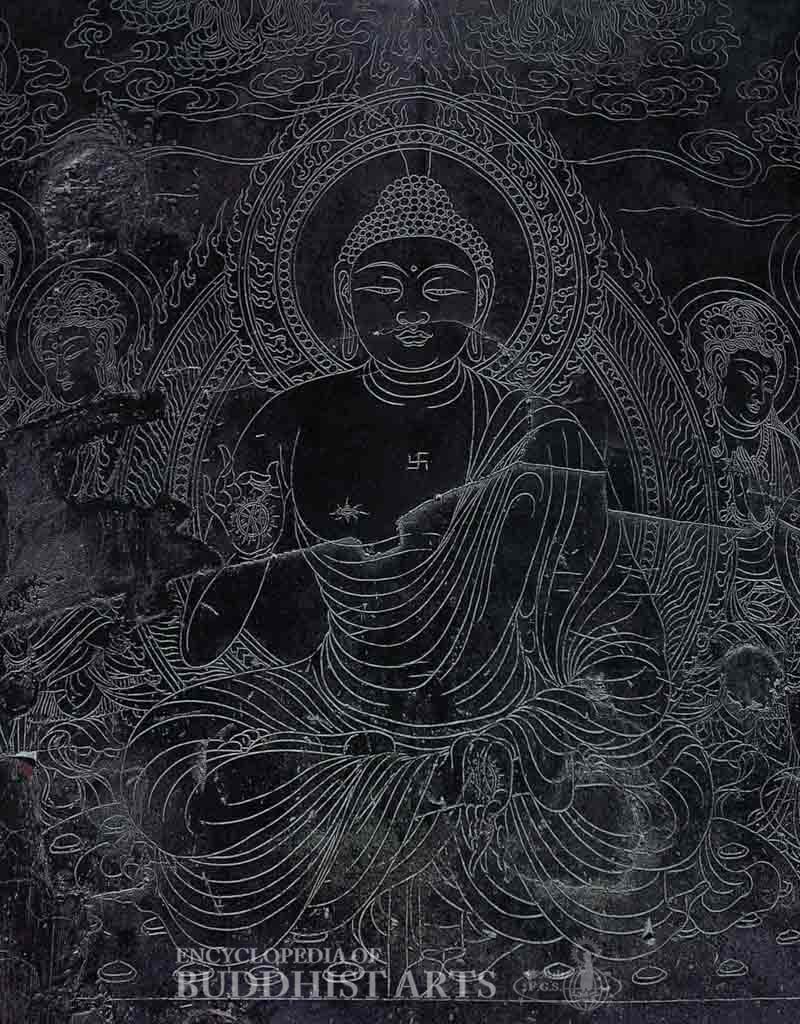
Todaiji Temple Golden Hall: Vairocana Buddha - Lotus Throne Petal - Engravings (detail)
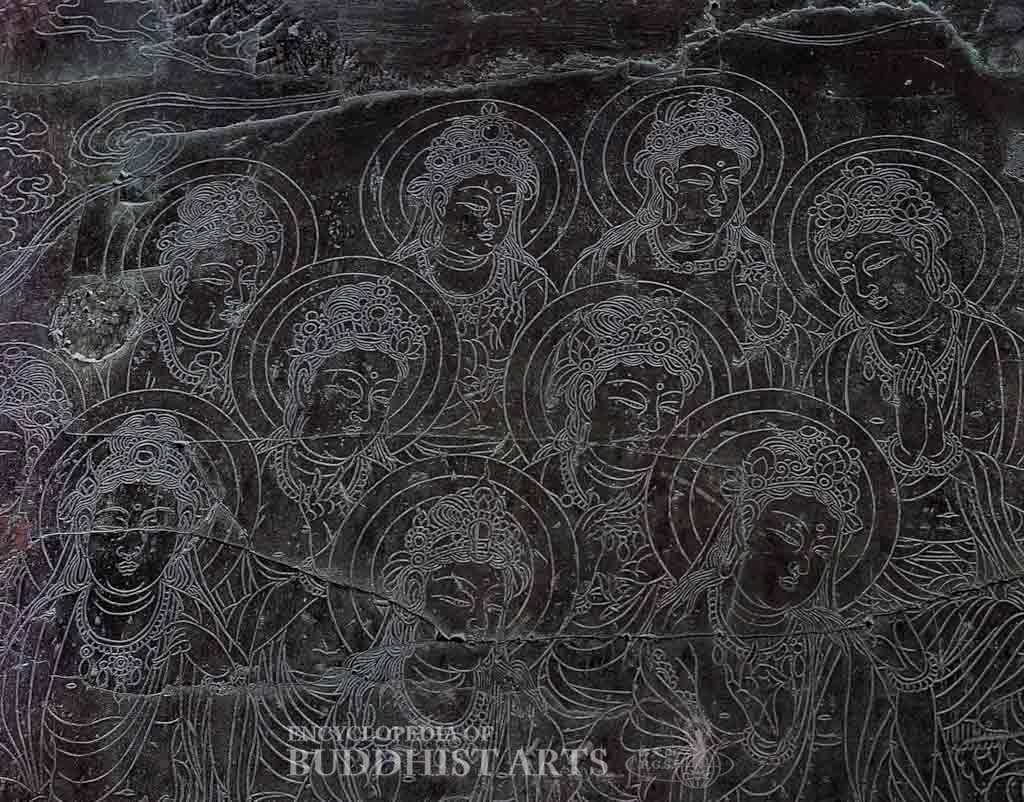
Todaiji Temple Golden Hall: Vairocana Buddha - Lotus Throne Petal - Engravings (detail)
Todaiji Temple Golden Hall: Vairocana Buddha
JAPAN, Nara; Nara period
Also known as the Great Buddha of Nara, this enormous image of Vairocana was recognized as a Japanese National Treasure in 1958. Emperor Shomu (reigned 724–749) ordered the making of a Vairocana Buddha statue in 743 and construction began in 747. Supervised by Kuninaka no Muraji Kimimaro, it took 372,075 goldsmiths and 514,902 artisans to construct the 500 t gilt bronze Buddha. Cast in eight sections, the statue was consecrated in 752. The mandorla, however, was completed in 771. The statue has been damaged and restored many times. The present head was cast in 1690.
The Avatamsaka Sutra and Brahmajala Sutra, of which the statue is a visual representation, describes a cosmos of infinite realms upon realms, mutually containing one another, with Sakyamuni Buddha in the center, surrounded by attendant Bodhisattvas and manifestations of Buddhas on floating clouds. A seated Vairocana Buddha is above the lotus throne of three thousand chiliocosms. The golden mandorla with its sixteen meditating Buddhas symbolizes Vairocana manifesting as a thousand Sakyamuni Buddhas.
For more details, go to the Encyclopedia of Buddhist Arts: Sculpture St-Z, page 1217.
Cite this article:
author = Hsingyun and Youheng and Lovelock, Yann and Chou, Yuan and Huntington, Susan and Edson, Gary and Neather, Robert,
booktitle = {Encyclopedia of Buddhist Arts: Sculpture St-Z},
pages = 1217,
title = {{Todaiji Temple Golden Hall: Vairocana Buddha}},
volume = 13,
year = {2016}}