
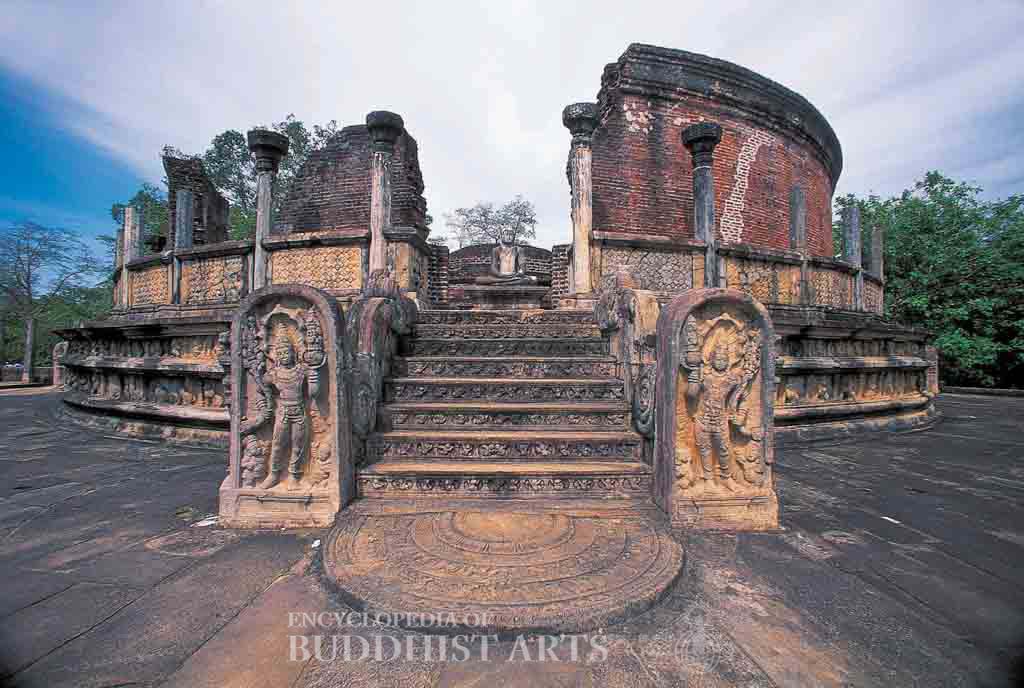
Polonnaruwa: Vatadage
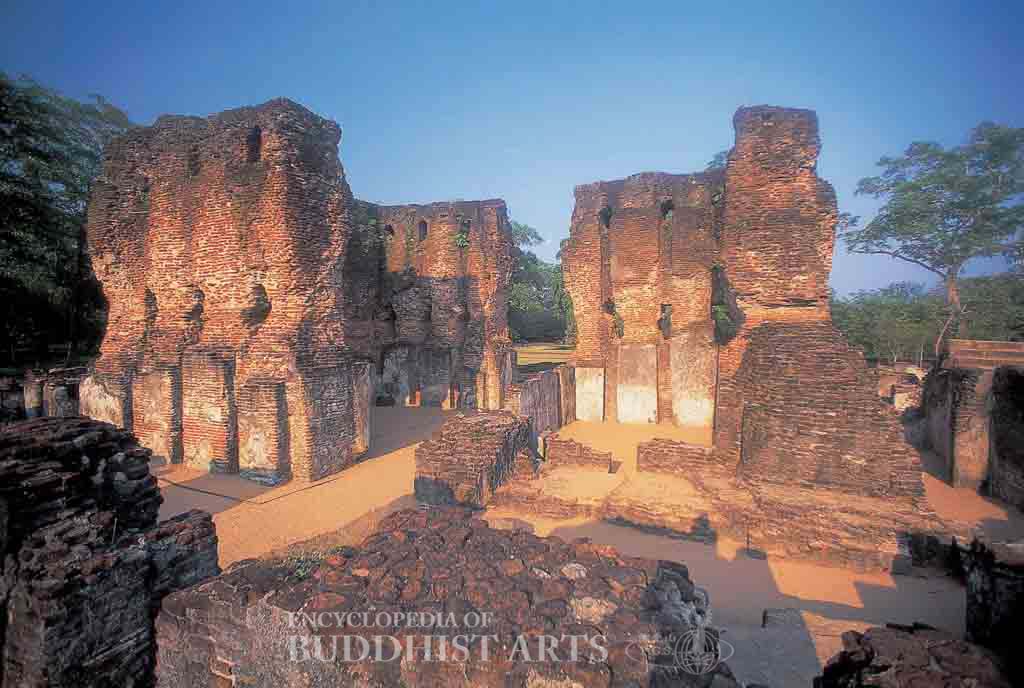
Polonnaruwa: Royal Palace of King Parakramabahu I
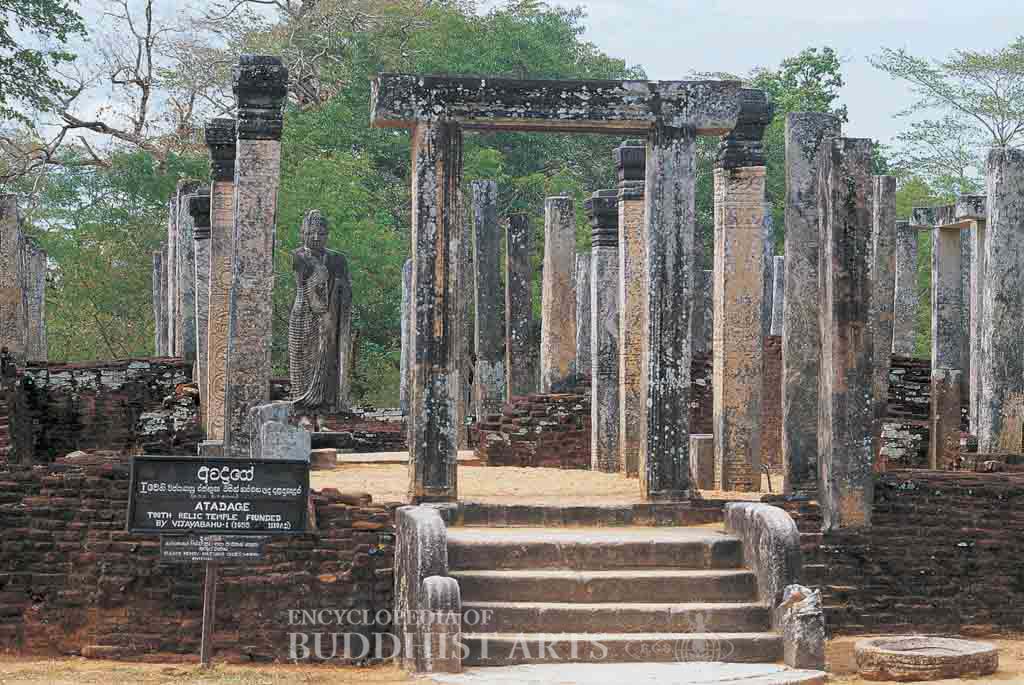
Polonnaruwa: Atadage
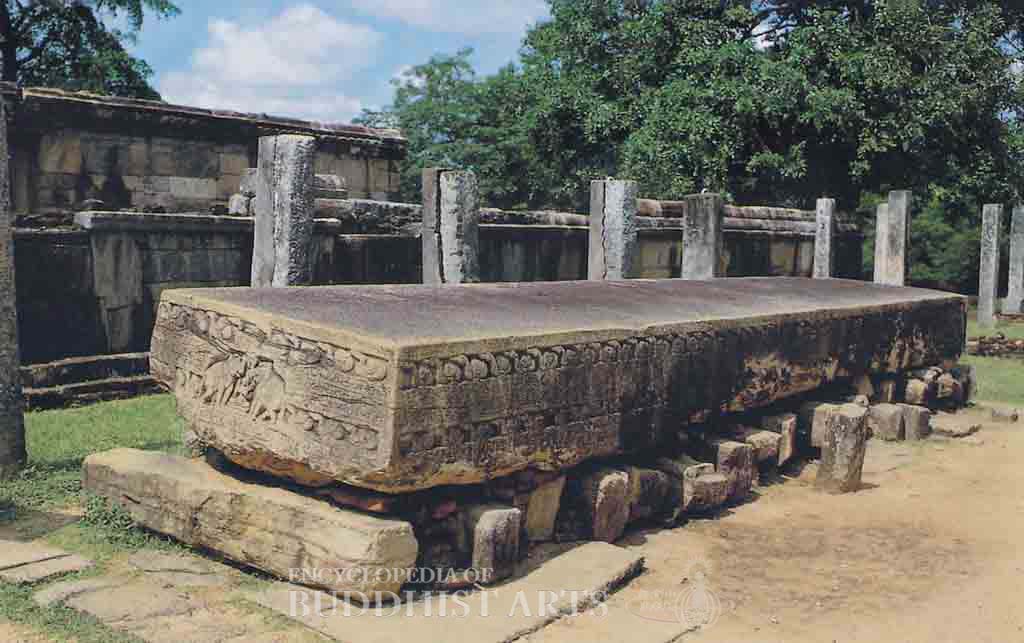
Polonnaruwa: Galpota
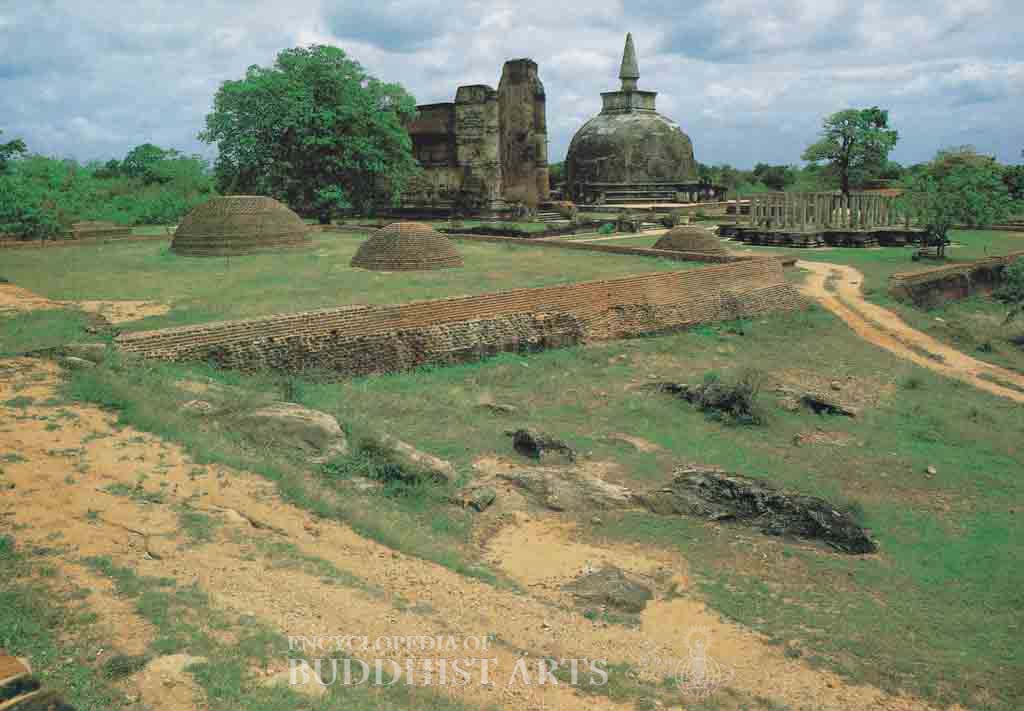
Polonnaruwa: Kiri Vihara
Polonnaruwa
SRI LANKA, North Central Province
Located approximately 210 km from Colombo, Polonnaruwa is a city of both historical and religious importance in Sri Lanka. After King Vijayabahu I (reigned 1055–1110) successfully completed the reconquest of Sri Lanka in 1073, he established the capital at Polonnaruwa and devoted his efforts to reviving Buddhism. King Parakramabahu I (reigned 1153–1186) and King Nissanka Malla (reigned circa 1187–1196) were both devoted followers of Buddhism and vigorously supported the building of temples and stupas, the carving of Buddhist statues, and the painting of murals. Within 200 years of development of the capital, the number of Buddhist temples rose and there was a continuous stream of monastics from Myanmar and Thailand to the site. The city’s Buddhist art evolved as a fusion of various Southeast Asian styles and its artistic accomplishments surpassed that of Anuradhapura. The Ancient City of Polonnaruwa was listed as a UNESCO World Heritage Site in 1982.
Polonnaruwa’s major historical sites are concentrated in the inner city and include the ruins of the seven-story Royal Palace of King Parakramabahu I. It was constructed in brick and timber, with 3 m thick walls, and contains a total of 1,000 rooms. The Royal Palace of King Nissanka Malla is smaller in scale. The Sacred Quadrangle once served as a place for members of the royal family to worship, pray, and meditate. It consists of a 100 sq m raised terrace, surrounded by buildings such as the Vatadage, the Hatadage, and the Atadage, all of which have been used to enshrine the Buddha’s tooth relic. Other important structures include the Thuparama Image House and the Galpota, which is a large stone book with inscriptions. The Alahana Pirivera, which used to be the Buddhist University, occupies the largest area. Within its compound, there are structures such as the imposing Lankatilaka Image House, which can hold thousands of people, as well as the well-preserved Kiri Vihara and Rankot Vihara Stupa. The Gal Vihara houses Buddha statues carved out of the granite rock face.
This historical site contains some of the most valuable works of Buddhist architecture, sculpture, and painting in Sri Lanka.
For more details, go to the Encyclopedia of Buddhist Arts: Architecture M-S, page 830.
Cite this article:
author = Hsingyun and Youheng and Johnson, Peter and Mankuang and Lancaster, Lewis,
booktitle = {Encyclopedia of Buddhist Arts: Architecture M-S},
pages = 830,
title = {{Polonnaruwa}},
volume = 3,
year = {2016}}