
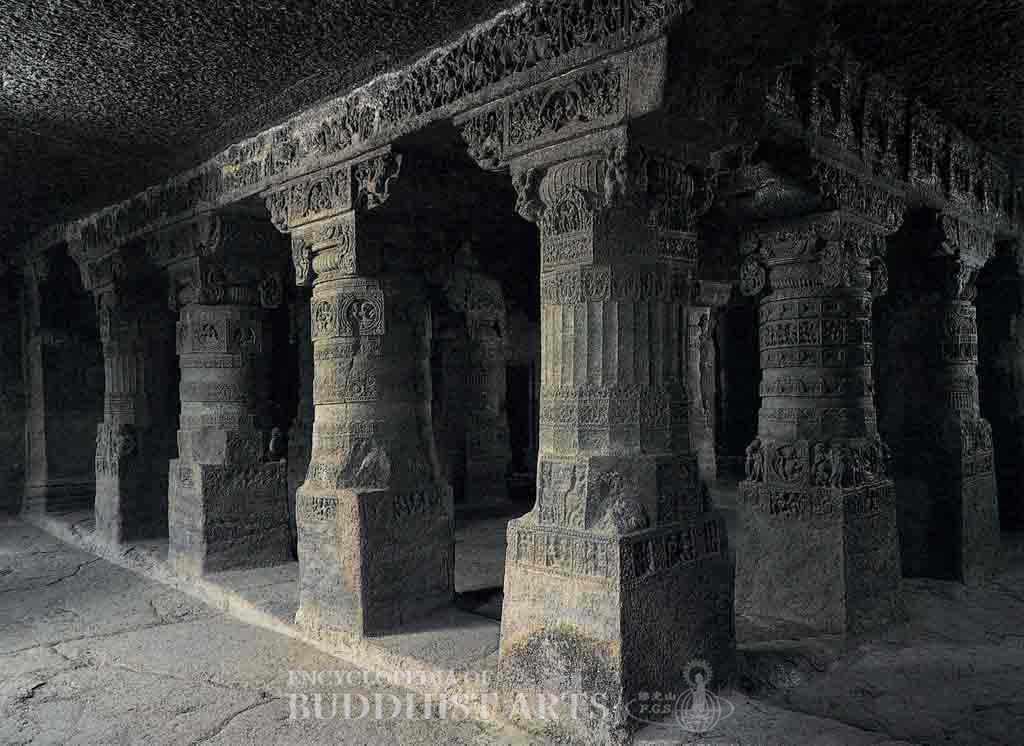
Aurangabad Cave 3: Hall
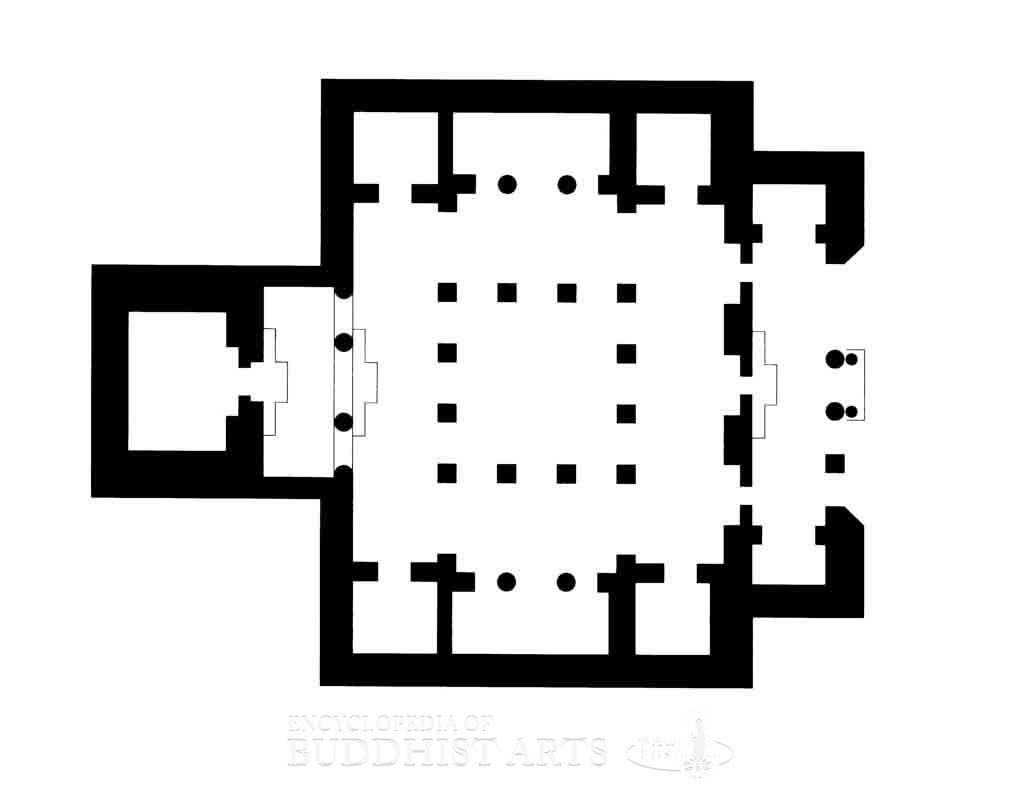
Aurangabad Cave 3 (plan)
Aurangabad Cave 3
INDIA, Maharashtra, Aurangabad
This cave is the largest and most significant in the west group. It was created in the mid-6th century and is the only cave at Aurangabad with the same layout as the later vihara caves at Ajanta Caves.
The cave consists of a portico, hall, antechamber, and shrine. Columns support the portico and a cell is constructed at each end. The hall is square, and there are 12 columns in the center, forming a corridor. Three cells are found on each side of the hall, and on the back wall is an entrance which leads to the antechamber and the shrine. Inside the shrine is a Buddha seated on a lotus throne. A group of devotees are depicted at his side with joined palms, and the reliefs of two naga kings are carved on the wall. The columns in the main hall are embellished with patterns and figures.
For more details, go to the Encyclopedia of Buddhist Arts: Caves A-E, page 89.
Cite this article:
author = Hsingyun and Youheng and Johnson, Peter and Mankuang and Huntington, Susan and Edson, Gary and Neather, Robert,
booktitle = {Encyclopedia of Buddhist Arts: Caves A-E},
pages = 89,
title = {{Aurangabad Cave 3}},
volume = 5,
year = {2016}}