
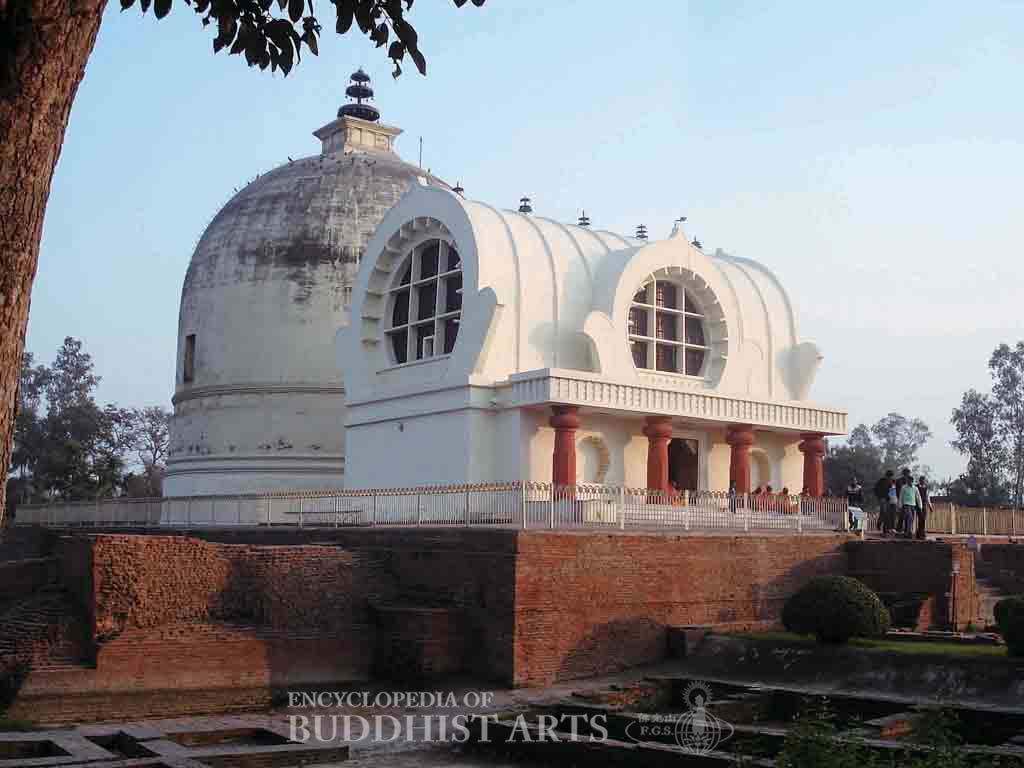
Kushinagar: Mahaparinirvana Temple and Nirvana Stupa
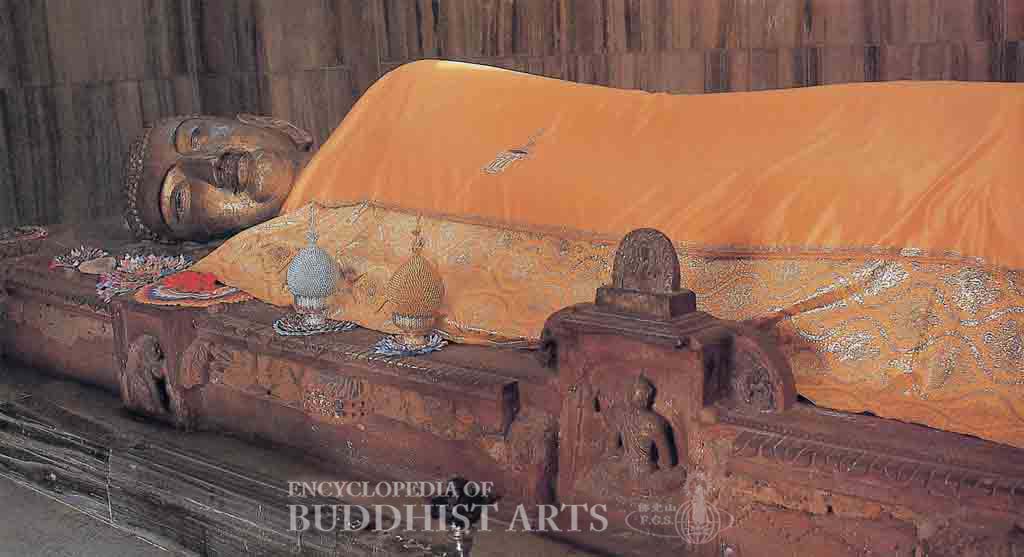
Kushinagar: Mahaparinirvana Temple - Reclining Buddha
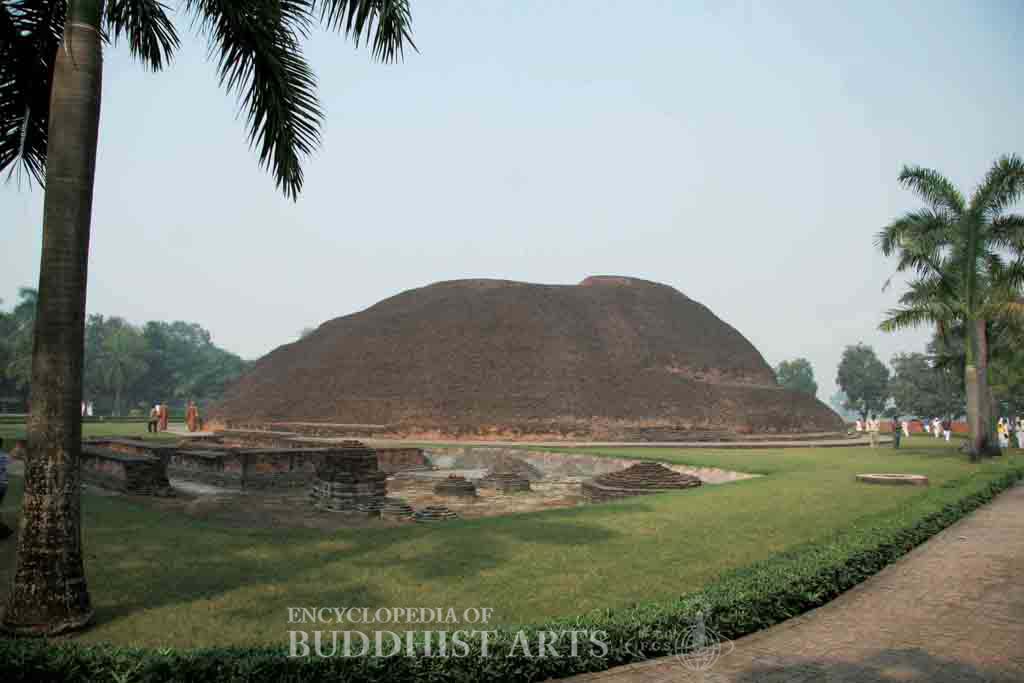
Kushinagar: Ramabhar Stupa
Kushinagar
INDIA, Uttar Pradesh
Also spelled Kushinagar or Kasia, Kushinagar is famous for three things: it was here that Sakyamuni Buddha gave his last teaching, the Buddha entered parinirvana, and the Buddha’s relics were divided into eight portions. There are Four Major Buddhist Sites: Lumbini, where the Buddha was born; Bodhgaya, where the Buddha attained enlightenment; Sarnath, where the Buddha gave his first Dharma teaching; and this place, Kushinagar, where the Buddha entered parinirvana. Many stupas and monasteries were erected here from the 3rd century BCE to the 5th century CE, during which time Kushinagar was at its peak. Chinese pilgrim Master Faxian visited this place in the 5th century and noted the many monasteries here, but when Master Xuanzang traveled to this area in the 7th century, the site was almost deserted. Xuanzang recorded seeing an Asoka stupa and an Asoka pillar at Kushinagar, but the pillar no longer exists.
The site was rediscovered and excavated by British archaeologist Carlleyle in 1867. Excavation has revealed artifacts and structures related to all schools of Buddhism. The site underwent major renovations in 1876 and 1956. Currently the site includes Mahaparinirvana Temple, Nirvana Stupa, Ramabhar Stupa, and ruins of ancient monasteries, as well as newly built Chinese, Japanese, and Thai temples. A museum has also been built to display artifacts excavated from the site.
The Mahaparinirvana Temple was reconstructed in 1956. It is a horizontal cylindrical structure with circular windows. The temple contains a 5th century statue of the Reclining Buddha excavated by Carlleyle. The statue is 6 m long, reclining on the right side with the head pointing toward the north. The whole statue is gilded and covered in yellow silk.
The Nirvana Stupa is located behind the Mahaparinirvana Temple. It is said that the stupa contains the Buddha’s relics, and that it marks the place where the Buddha attained parinirvana. The core of this stupa is probably the Asoka Stupa that Master Xuanzang mentioned. Over time it has been improved and enlarged. After the decline of Buddhism in India, the stupa was damaged. Following its rediscovery in the 19th century, Burmese Buddhists donated money for its reconstruction in 1927. At present, the stupa stands at a height of 2.74 m. The structure is beige and shaped like an inverted bowl. Its surface is smooth with no carvings. The Mahaparinirvana Temple and Nirvana Stupa used to be surrounded by numerous smaller stupas that were erected to commemorate Buddha’s passing, but now only the platforms and bases still exist.
The Ramabhar Stupa is located about 1.5 km to the southeast of the Nirvana Stupa. It is said that this is where the Buddha was cremated after parinirvana and where his relics were divided into eight portions. During the Maurya Empire (circa 321–185 BCE), a structure was built here which later became ruins, upon which later generations reconstructed the stupa. The present Rambhar Stupa is made of red brick and earth. It is 15 m high with a diameter of about 40 m.
For more details, go to the Encyclopedia of Buddhist Arts: Architecture G-L, page 637.
Cite this article:
author = Hsingyun and Youheng and Johnson, Peter and Mankuang and Lancaster, Lewis,
booktitle = {Encyclopedia of Buddhist Arts: Architecture G-L},
pages = 637,
title = {{Kushinagar}},
volume = 2,
year = {2016}}