
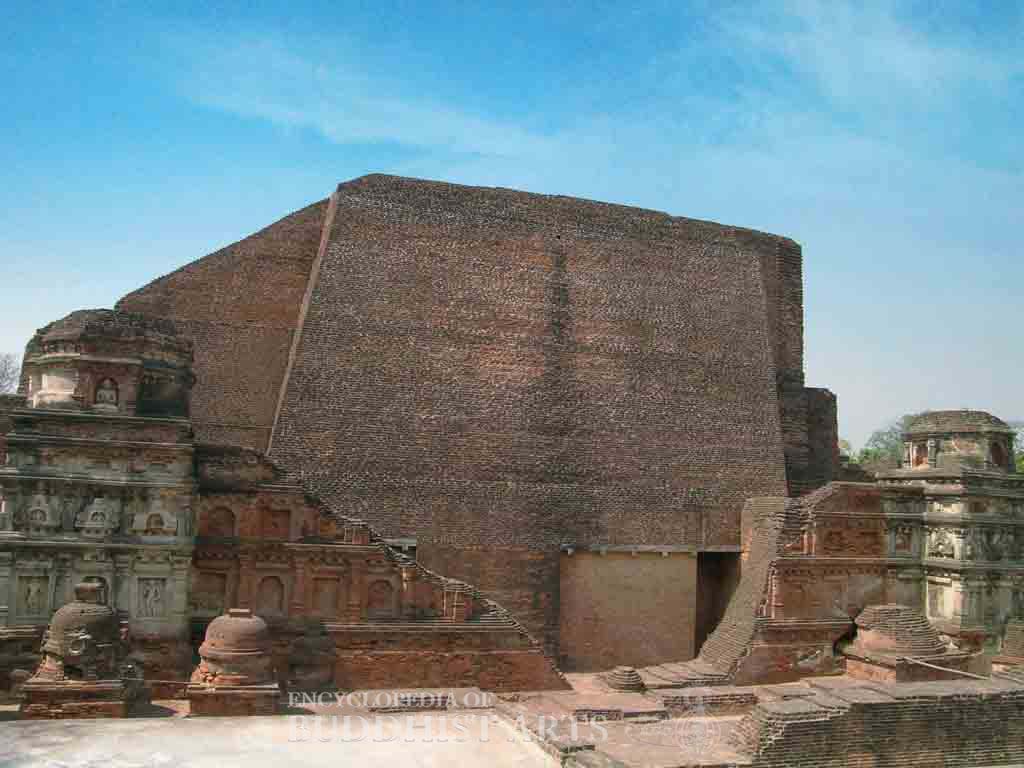
Nalanda: Sariputra Stupa
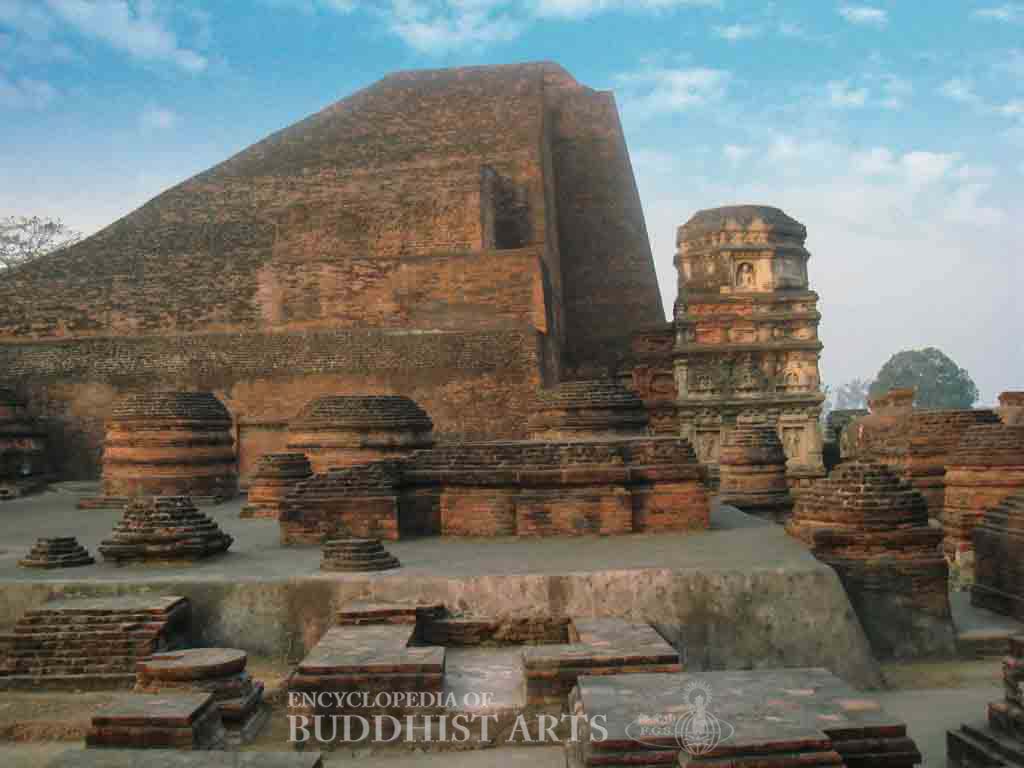
Nalanda: Sariputra Stupa
Nalanda
INDIA, Bihar
Nala means lotus and da means to give, so Nalanda means Giver of Knowledge. It is also known as Nalanda Mahavihara or Nalanda University. It was the first Buddhist university and has been recognized as one of the greatest universities in recorded history. Currently it is one of the Eight Major Buddhist Sites. It was an international Buddhist center of learning and at its height accommodated over 10,000 students and 2,000 teachers. It was the largest Buddhist monastery during the golden age of Buddhist scholarship. The Biography of Master Xuanzang states, “The king has great respect for the monastery and has granted them over a hundred villages.”
The monastery was founded in the early 5th century during the rule of King Kumaragupta I (reigned 415–455) of Gupta and was subsequently expanded. It reached its prime in the 7th century, during the time of King Siladitya (reigned 605–647). In 1193 Muslims burned down almost the entire university and the site fell into ruin. The site was discovered and excavated in 1861 by the British archaeologist Alexander Cunningham, who followed the English translation of Great Tang Records on the Western Regions, a text written by Chinese pilgrim Master Xuanzang in the 7th century. Cunningham found an inscribed seal which reads Sri Nalandamahavihariya Arya Bhikshu Sanghasya (Sangha Formed by the Noble Monks at the Great Nalanda Monastery).
The site of Nalanda covers an area of 15 ha. It was enclosed by a lofty wall with a gate and resembled a castle. The structures were built in brick. The complex had eight separate compounds and ten temples. With monks’ living quarters in the east and stupas and temples in the west, it had a similar layout to Sarnath. The library had three main buildings, with the highest building consisting of nine stories. It is believed that the library contained nine million manuscripts before it was burned down in 1193.
Among the many remains, the Sariputra Stupa is located in the west and consists of three levels. Its exterior walls are decorated with Buddha niches and floral patterns. The niches at the four corners are engraved with various scenes, including the Buddha’s enlightenment, the First Turning of the Dharma Wheel at Sarnath, and the Buddha Teaching the Dharma on Vulture Peak.
The Nava Nalanda Mahavihara was established nearby after India gained its independence. It offers courses in Buddhist Studies, as well as in Pali, Sanskrit, Chinese, Japanese, and Tibetan. It is open to anyone in the international community who wishes to further their studies. The library includes books, journals, and a rare collection of manuscripts. In 1957 the Chinese government built the Xuanzang Memorial Hall near the site.
For more details, go to the Encyclopedia of Buddhist Arts: Architecture M-S, page 773.
Cite this article:
author = Hsingyun and Youheng and Johnson, Peter and Mankuang and Lancaster, Lewis,
booktitle = {Encyclopedia of Buddhist Arts: Architecture M-S},
pages = 773,
title = {{Nalanda}},
volume = 3,
year = {2016}}