
Nagarjunakonda
Nagarjunakonda

Nagarjunakonda: Mahacaitya (plan)
Nagarjunakonda
INDIA, Andhra Pradesh
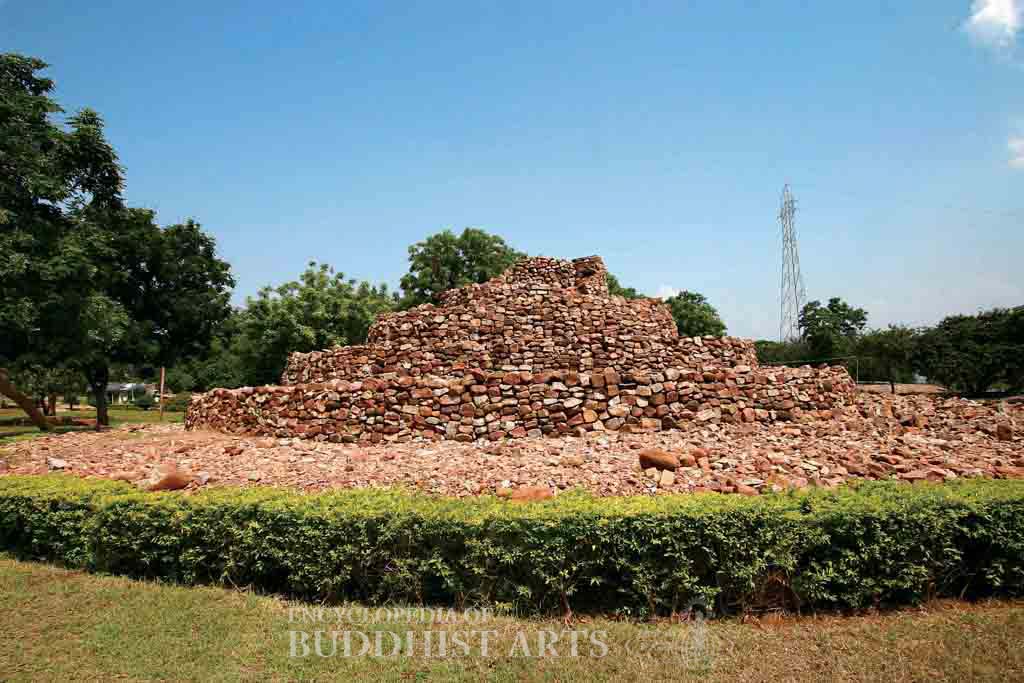
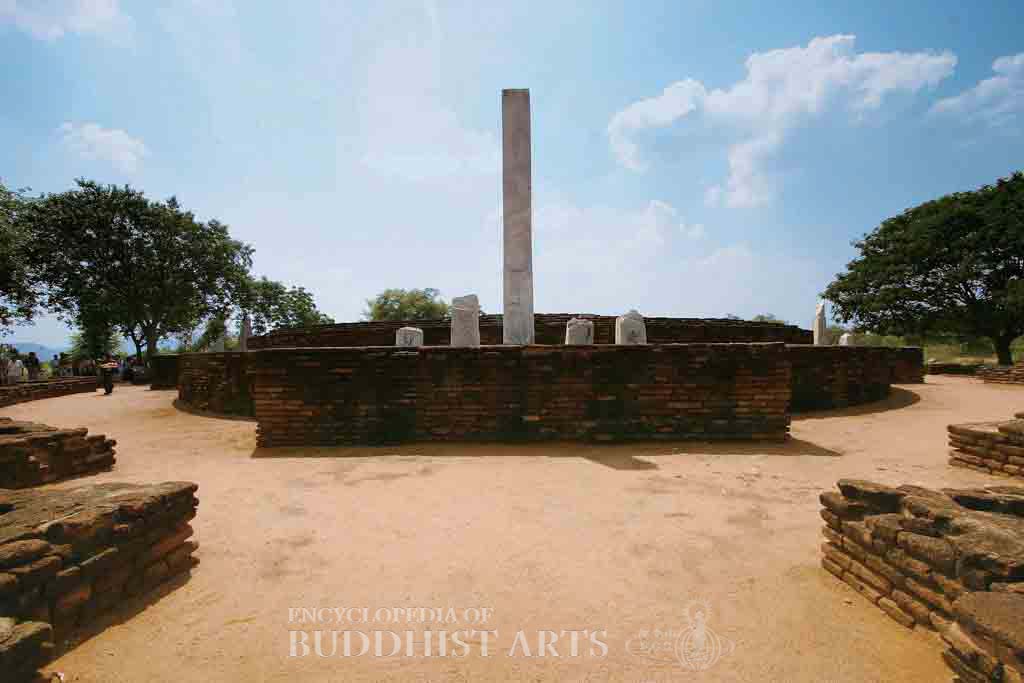
Nagarjunakonda means the hill of Nagarjuna. This site was known in ancient times as Vijayapur. It was one of the largest and most important Buddhist centers in South India from the 2nd century BCE to the 3rd century CE. It was named after Nagarjuna, the founder of the Madhyamika school of Buddhism, who taught and propagated the Dharma here in the 2nd century. During the 3rd century it was made the capital of the Ikshvaku period (3rd–4th century). In 1926, archaeologist A.R. Saraswati discovered the site. Two major excavations were carried out before 1953, when it became known that the area would be flooded following the construction of the Nagarjunasagar Dam in 1960. In order to preserve the historical remains, a major six-year excavation was undertaken and unearthed artifacts were moved to the summit of a hill, where a museum was built. That hill has now become an island in the reservoir, and the remaining ruins on the site were submerged.
The remains of 30 sites were excavated, including Buddhist monasteries, stupas, shrines, and pillared pavilions. Among the biggest uncovered was the brick-built Mahacaitya (Great Stupa). The layout of the base platform suggests that the middle of the monument was the main chamber in the shape of an inverted alms bowl, where the Buddha’s relics were kept. It was encircled by two rings of small stone chambers. The main chamber and the stone chambers made up concentric circles that spread outward with inter-connected passageways on every level. There are four gates in the outermost section with an arrangement that resembles the spokes of a wheel. A statue of Nagarjuna stands inside the monument today to allow people to pay respect to him.
A large number of white-green limestone fragments of reliefs based on the story of the Buddha have been excavated from here. Although parts of the reliefs are presented in symbols, such as Bodhi trees or Dharma wheels, the carvings of realistic figures make up the majority. The reliefs display scenes from the Jataka tales, Lalitavistara Sutra, and Divyavadana.
For more details, go to the Encyclopedia of Buddhist Arts: Architecture M-S, page 767.
Cite this article:
author = Hsingyun and Youheng and Johnson, Peter and Mankuang and Lancaster, Lewis,
booktitle = {Encyclopedia of Buddhist Arts: Architecture M-S},
pages = 767,
title = {{Nagarjunakonda}},
volume = 3,
year = {2016}}