
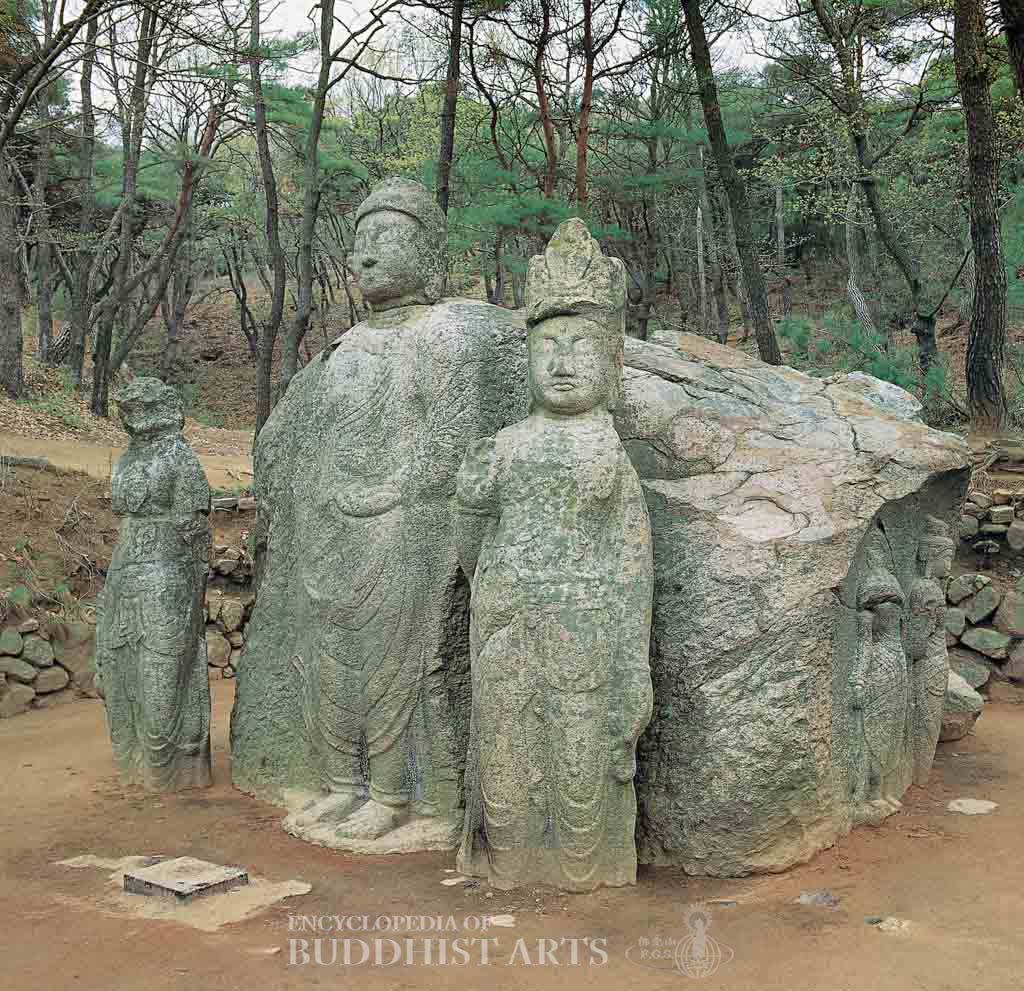
Gulbulsa Temple Rock Carvings: Amitabha Buddhas Triad (west side)
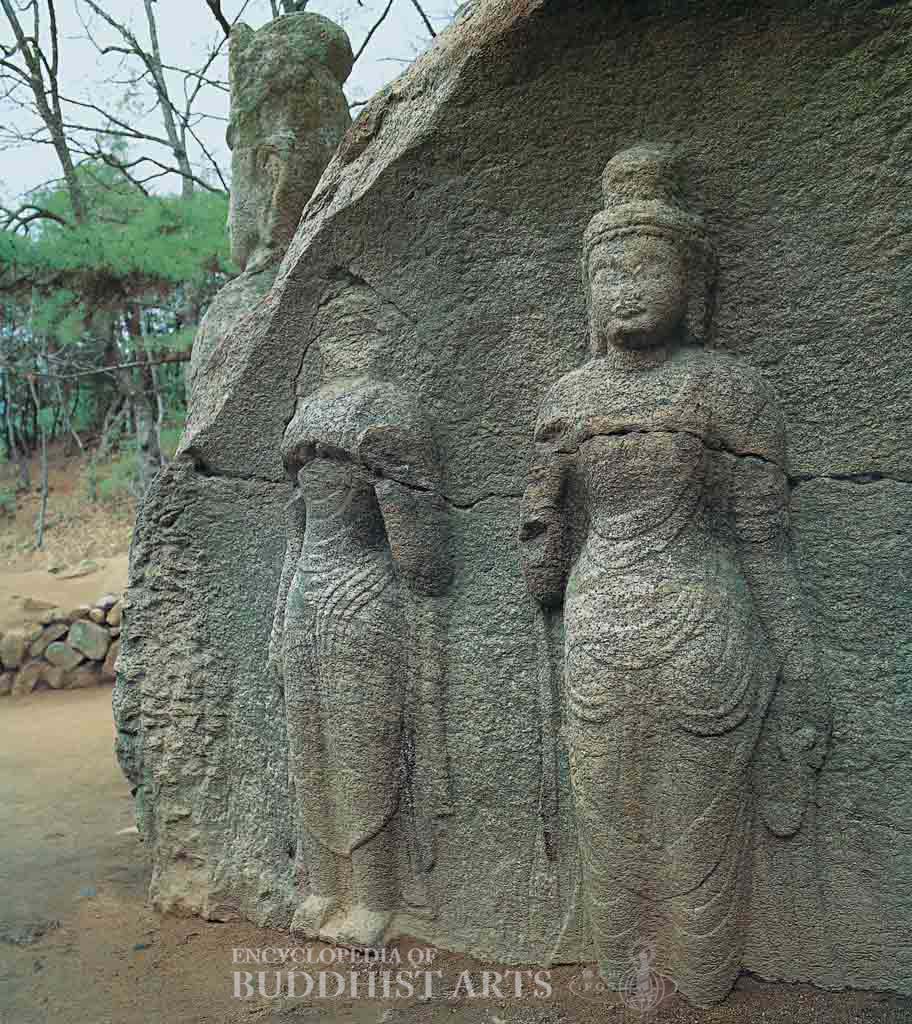
Gulbulsa Temple Rock Carvings: Standing Figures (south side)
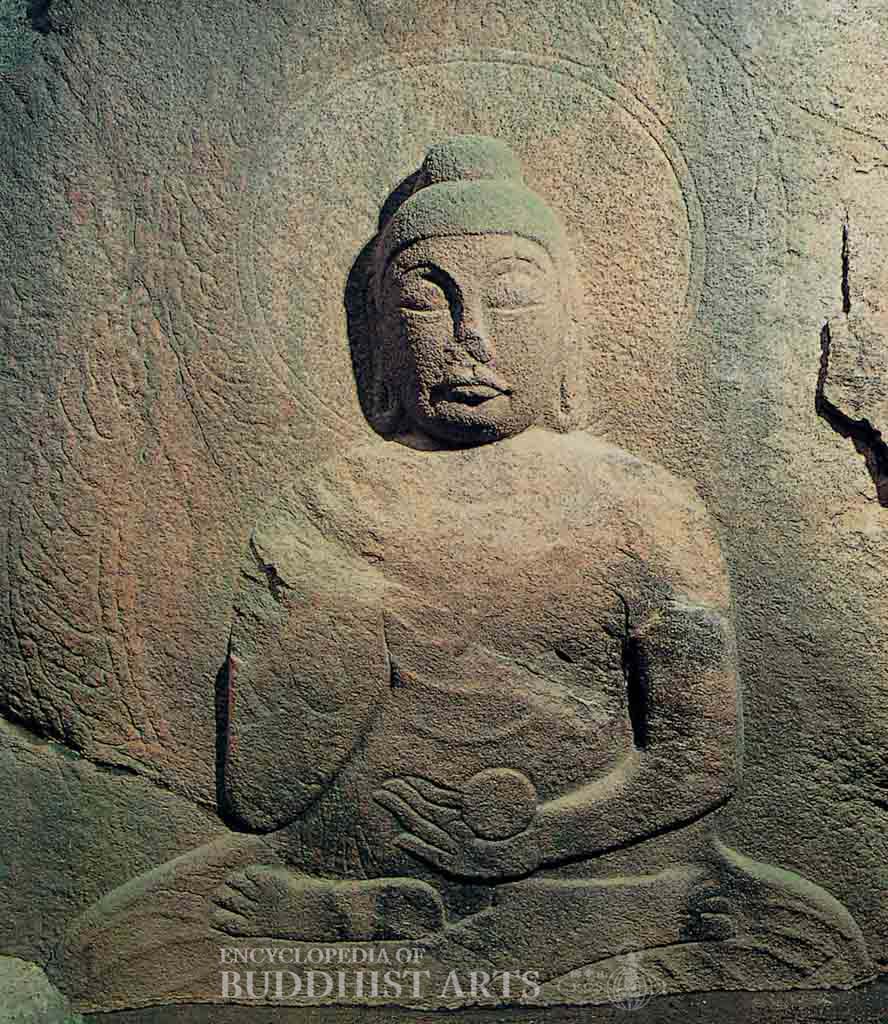
Gulbulsa Temple Rock Carvings: Medicine Buddha (east side)
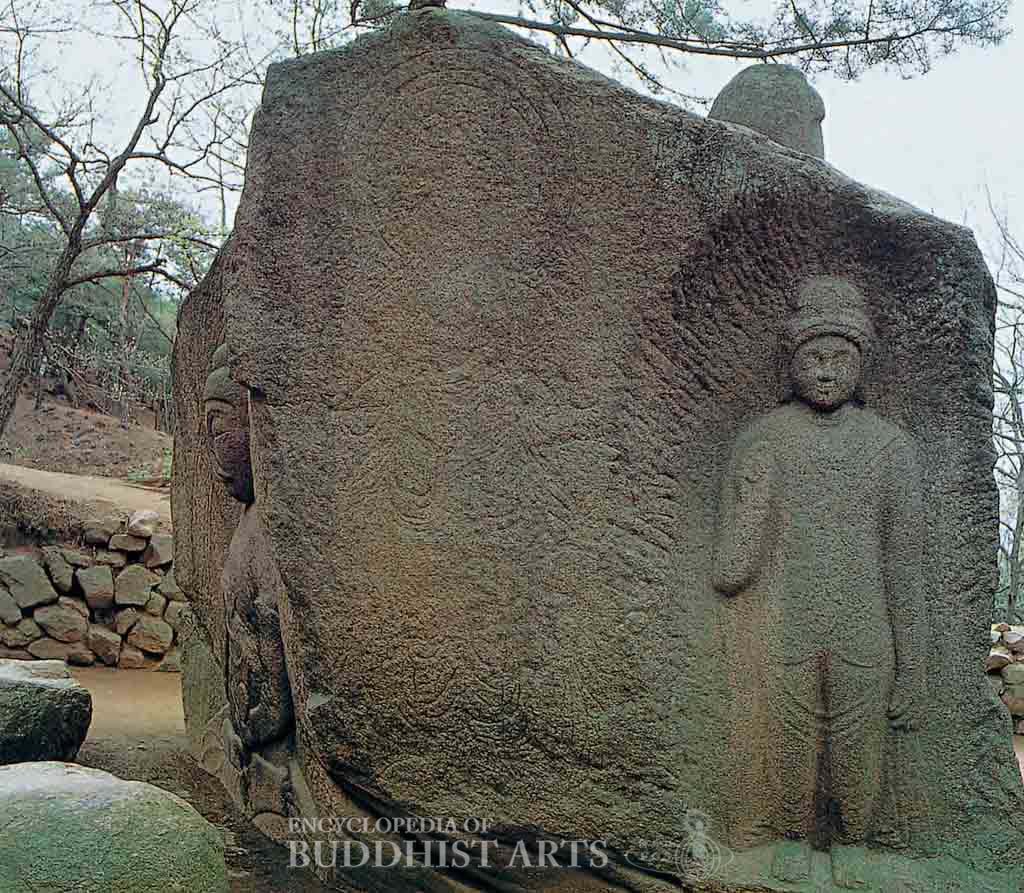
Gulbulsa Temple Rock Carvings: Eleven-Headed, Six-Armed Avalokitesvara Bodhisattva and Standing Buddha (north side)
Gulbulsa Temple Rock Carvings
SOUTH KOREA, North Gyeongsang, Gyeongju
According to the Memorabilia of the Three Kingdoms, King Kyongdok (reigned 742–764) heard the chanting of the Buddha’s name from underground while on a journey in this area. He ordered an excavation, and this rectangular boulder carved on all four sides was discovered. The Gulbulsa (Excavated Buddha Temple) was subsequently built at this site. The carvings were listed as Treasure No. 121 in 1963.
The largest figures are the Amitabha Buddha Triad on the west side of the rock. Two of the figures are freestanding, and only the body of the Buddha in the center is actually carved into the rock; the head was added later, making the figure 3.51 m high. On the south side there were three freestanding figures; one is now missing and another has a damaged head. The robes of the latter figure are folded vertically between the legs, a common feature of statues of the Buddha from the Unified Silla dynasty (668–935). The flowing folds in the robe of the figure on the right are completely different.
A well-preserved relief of the Medicine Buddha with a flaming aureole and nimbus can be found on the east side. The Buddha sits in full lotus position holding a medicine ball. A faintly incised Eleven-Headed, Six-Armed Avalokitesvara Bodhisattva and a mid-relief standing Buddha are located on the north side. The varying sizes and appearances of these figures suggest that they were the work of different people.
For more details, go to the Encyclopedia of Buddhist Arts: Caves R-L, page 416.
Cite this article:
author = Hsingyun and Youheng and Johnson, Peter and Mankuang and Huntington, Susan and Edson, Gary and Neather, Robert,
booktitle = {Encyclopedia of Buddhist Arts: Caves R-L},
pages = 416,
title = {{Gulbulsa Temple Rock Carvings}},
volume = 6,
year = {2016}}